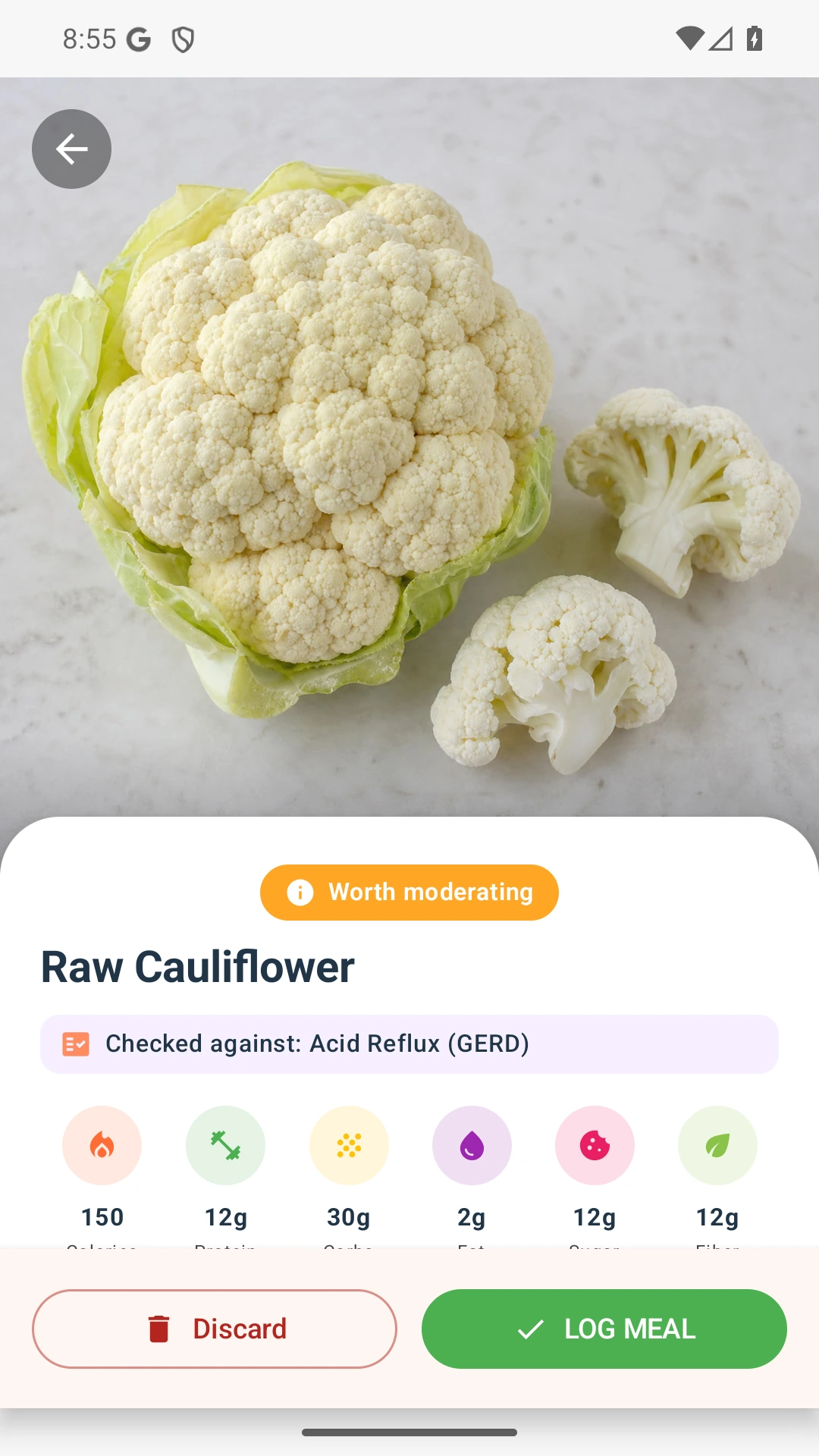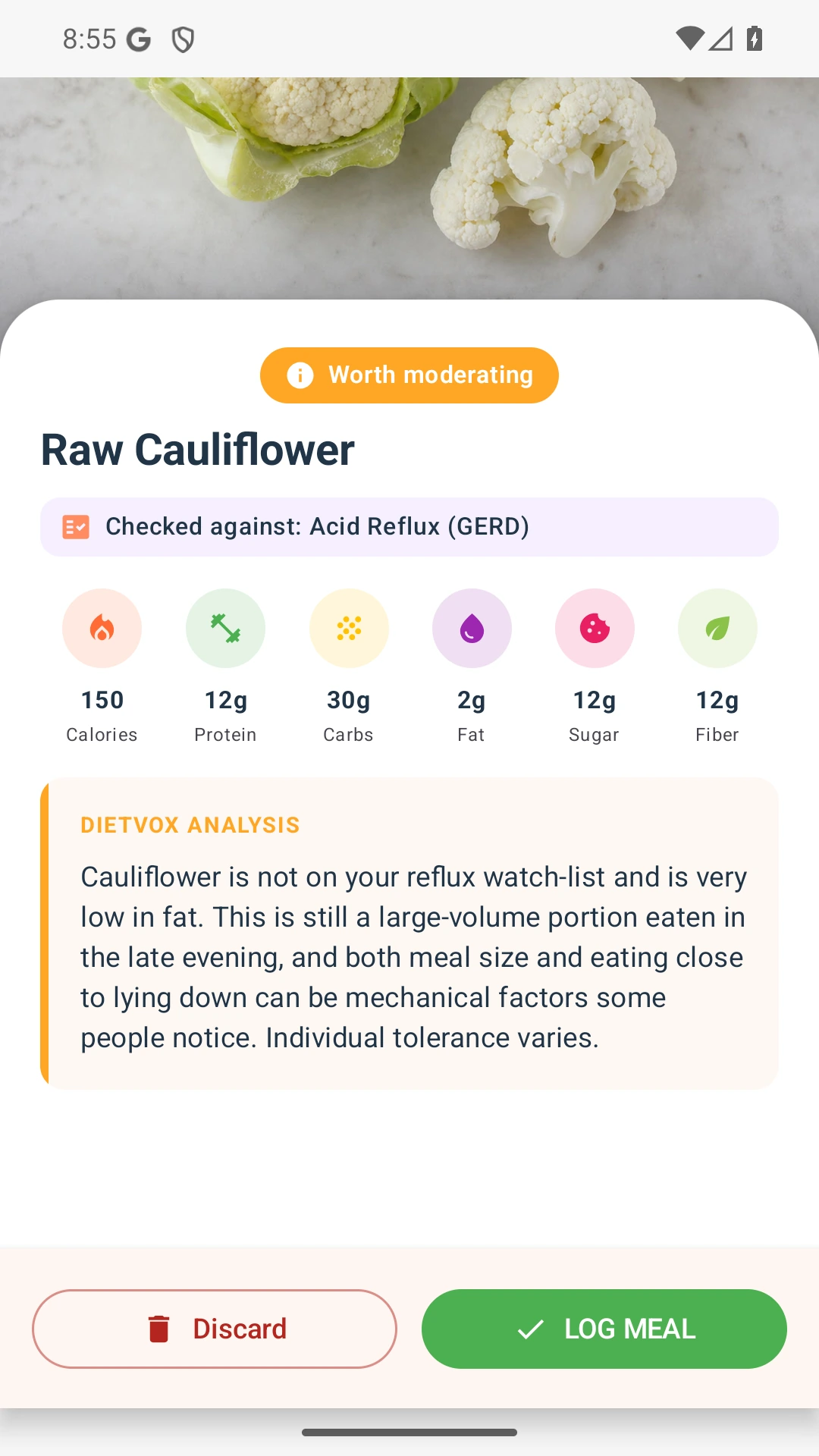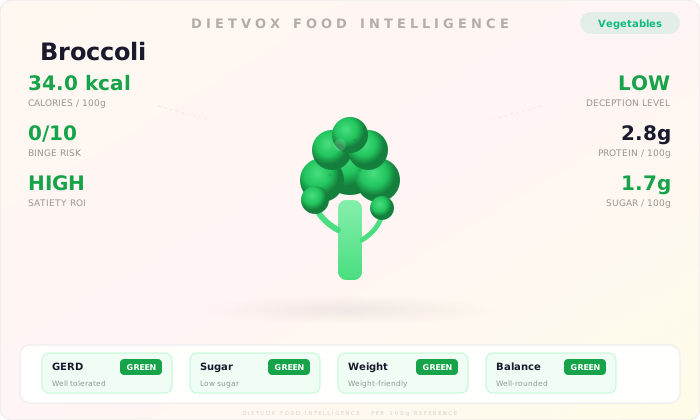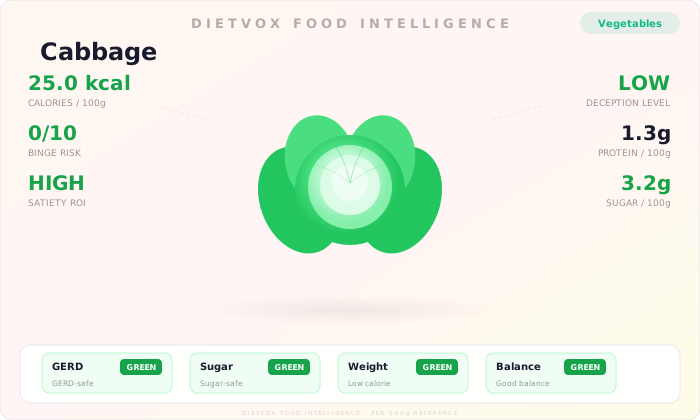
DietVox Rating: GREEN
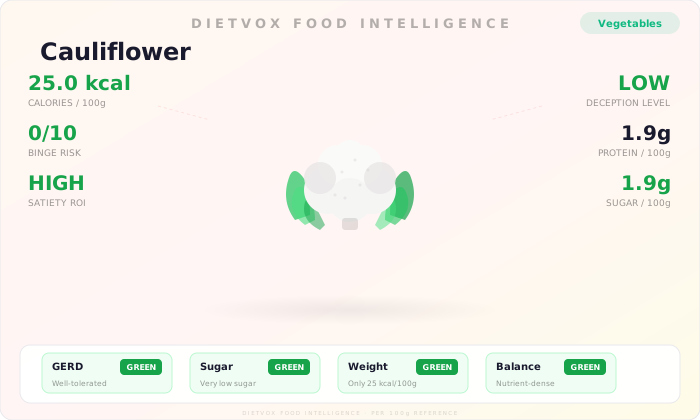
Cauliflower is a cruciferous vegetable that earns a GREEN rating from DietVox for its exceptional suitability within a Weight Loss Diet protocol. This means that cauliflower is highly recommended for individuals aiming to lose weight, offering significant nutritional benefits without hindering caloric goals. The primary reason for this strong endorsement is its remarkably low-calorie density and versatile nature, making it a powerful ally in achieving sustainable cauliflower weight loss goals.
DietVox's expert assessment indicates that cauliflower provides only 25 kcal per 100g, positioning it as a low-calorie, moderate-fibre food USDA FoodData Central. Its macronutrient profile, featuring 1.9g protein, 0.3g fat, and 5.0g carbohydrates per 100g, is highly conducive to a calorie-controlled eating plan. The inclusion of 2.0g of dietary fibre further enhances its value for satiety and digestive health, crucial aspects of any successful weight management strategy CDC healthy weight guidance.
Nutritional Breakdown: Cauliflower for Weight Loss
Understanding the specific nutritional composition of cauliflower highlights why it's so beneficial for weight management USDA FoodData Central:
- Calories: 25 kcal per 100g – Extremely low, promoting a negative energy balance required for weight loss.
- Protein: 1.9g per 100g – Contributes to satiety and muscle maintenance.
- Fat: 0.3g per 100g (of which 0.1g saturated) – Very low fat content, making it suitable for low-fat dietary approaches.
- Carbohydrates: 5.0g per 100g – Low carbohydrate content, useful for those monitoring carb intake. * Dietary Fibre: 2.0g per 100g – Essential for satiety, digestive health, and blood sugar regulation. * Sugars: 1.9g per 100g – Naturally occurring sugars, minimal impact on blood glucose.
- Vitamin C: 48.2mg per 100g (over 50% of the Daily Value) – An important antioxidant that supports overall health, crucial during periods of caloric restriction NHS.
- Folate (Vitamin B9): 57µg per 100g – Supports cell function and metabolism MedlinePlus vitamins overview.
This comprehensive nutrient profile means that cauliflower not only aids in calorie reduction but also provides essential vitamins and minerals, helping to prevent nutrient deficiencies that can sometimes occur on restrictive diets.
Practical Tips for Incorporating Cauliflower into Your Weight Loss Diet
Making cauliflower a regular part of your weight loss diet is straightforward due to its adaptability. Here are some practical tips:
- Roast It: Toss florets with a little olive oil, salt, and pepper, then roast until tender and slightly caramelized. Roasting brings out its natural sweetness and creates a delicious side dish or snack CDC healthy eating guidance.
- Steam or Boil: For a quick and simple preparation, steam or boil cauliflower florets until tender-crisp. Serve as a vegetable side or add to salads and stir-fries.
- Cauliflower Rice: Use a grater or food processor to create "rice" from raw cauliflower. Sauté it with your favourite seasonings as a base for curries, stir-fries, or burrito bowls.
- Mashed Cauliflower: Steam or boil cauliflower until very soft, then mash with a small amount of low-fat milk, garlic, and herbs for a creamy, low-calorie alternative to mashed potatoes.
- Pizza Crusts and "Breadsticks": Many recipes are available for making cauliflower-based pizza crusts or breadsticks. These can significantly reduce the calorie and carb content of these popular foods.
- Add to Soups and Stews: Blend cooked cauliflower into creamy soups to add thickness and nutrients without excessive calories, or simply add florets to stews.
- Raw in Salads: Thinly slice or finely chop raw cauliflower and add it to salads for extra crunch and nutrients.
Common Misconceptions About Cauliflower and Weight Loss
- "Cauliflower is bland and boring." While raw cauliflower has a mild flavour, its taste profile transforms significantly with different cooking methods and seasonings. Roasting, grilling, or spicing it up can create incredibly flavourful dishes.
- "It causes bloating." As a cruciferous vegetable, cauliflower contains complex carbohydrates that can cause gas and bloating in some individuals, especially if consumed in large quantities or if not accustomed to a high-fibre diet MedlinePlus gas overview. Gradually increasing intake and ensuring adequate hydration can help mitigate this.
- "It's just a filler food." While it can act as a low-calorie filler, cauliflower is far from nutritionally empty. It's packed with vitamins, minerals, and antioxidants, contributing significantly to overall health during weight loss WHO.
The Safety Protocol
Cauliflower poses no significant safety concerns for the general population at normal consumption levels EFSA. Individuals with specific conditions, such as irritable bowel syndrome (IBS), may find that certain cruciferous vegetables, including cauliflower, can trigger symptoms due to their fermentable carbohydrates (FODMAPs) MedlinePlus irritable bowel syndrome overview. In such cases, consulting a healthcare professional or registered dietitian is advisable.
Conclusion: A Powerhouse for Weight Loss
Cauliflower is an exemplary food for anyone embarking on a Weight Loss Diet. Its low-calorie density, high fibre content, and remarkable versatility make it an invaluable asset for creating satisfying, nutrient-rich meals that support calorie reduction. By incorporating cauliflower into your diet, you can enjoy generous portions, feel fuller for longer, and effectively manage your caloric intake, all while benefiting from a wealth of essential nutrients. DietVox confidently rates cauliflower as GREEN for weight loss, encouraging its widespread use in healthy eating plans.
Disclaimer: This article is for informational purposes only and does not constitute medical advice. Always consult a healthcare provider before making changes to your diet, especially if you have a medical condition.
Scan your foods with the DietVox app to get personalized ratings based on your specific dietary needs and health goals.
Last reviewed: June 2026
How It Works
Why Cauliflower is Rated GREEN
Cauliflower's GREEN rating for the Weight Loss Diet is rooted in several key nutritional and practical advantages:
Low Calorie Density One of the most significant factors supporting cauliflower's GREEN rating is its exceptionally low-calorie density, at just 25 kcal per 100g USDA FoodData Central. This characteristic is vital for weight loss because it allows individuals to consume larger portions of food, promoting feelings of fullness and satisfaction, without significantly increasing their overall calorie intake CDC healthy eating for a healthy weight. Eating foods with low-calorie density can help reduce hunger and prevent overeating, which are common challenges during a weight loss journey CDC healthy weight guidance.
Rich in Dietary Fibre Cauliflower delivers 2.0g of dietary fibre per 100g USDA FoodData Central. Dietary fibre is a non-digestible carbohydrate that plays a crucial role in weight management. It adds bulk to food, slowing down digestion and promoting a prolonged sense of satiety, thereby reducing the likelihood of snacking between meals CDC healthy weight guidance. Fibre also supports healthy bowel function and can help regulate blood sugar levels, preventing spikes and crashes that might lead to increased hunger and cravings WHO.
Moderate Protein Content While not a primary protein source, cauliflower contributes 1.9g of protein per 100g USDA FoodData Central. Protein is well-known for its role in increasing satiety and helping preserve lean muscle mass during weight loss PubMed/NIH. When combined with other protein-rich foods, cauliflower can contribute to a meal that keeps you feeling fuller for longer.
Versatility as a Calorie-Saving Substitute Perhaps one of cauliflower's most practical benefits for weight loss is its incredible versatility as a substitute for higher-calorie, higher-carbohydrate foods. Its mild flavour and adaptable texture allow it to mimic: * Cauliflower Rice: A low-carb, low-calorie alternative to traditional rice, significantly reducing the energy density of meals MedlinePlus dietary guidelines overview. * Mashed Cauliflower: A creamy, comforting substitute for mashed potatoes, drastically cutting carbohydrate and calorie intake CDC healthy eating guidance. * Cauliflower Pizza Crust: A popular option for reducing the caloric and carbohydrate load of pizza, making this favourite food more diet-friendly. * Cauliflower Steaks/Roasts: A satisfying vegetable alternative to meat-based entrees, especially when trying to increase vegetable intake.
This ability to replace energy-dense ingredients with a nutrient-rich, low-calorie alternative makes cauliflower an indispensable tool for anyone following a Weight Loss Diet.
Scan any food. Get an instant RED/AMBER/GREEN rating.
DietVox analyses every food across 4 diet protocols — no guesswork.
Try DietVox Free →Try These Instead
Safer alternatives that won't trigger your symptoms.
Frequently Asked Questions
How does the fibre in cauliflower aid weight loss?
The 2.0g of dietary fibre per 100g in cauliflower helps increase feelings of fullness and satiety, slowing digestion and reducing the likelihood of overeating or snacking between meals CDC healthy weight guidance.
Can cauliflower effectively replace high-carb foods like rice or potatoes in a weight loss diet?
Yes, cauliflower is an excellent low-calorie, low-carb substitute for traditional rice or mashed potatoes. Its versatility allows you to significantly reduce the energy density of meals while still enjoying familiar textures and dishes, supporting calorie reduction for weight loss MedlinePlus dietary guidelines overview.
Are there any specific cooking methods for cauliflower that are best for weight loss?
For weight loss, cooking methods that add minimal fat are ideal. Roasting, steaming, boiling, or grilling cauliflower are excellent choices. These methods enhance its flavour and texture without significantly increasing its caloric value, making it a healthy and satisfying addition to your diet CDC healthy eating guidance.
Does cauliflower provide enough nutrients when used as a primary food for weight loss?
While cauliflower is low in calories, it is rich in essential nutrients like Vitamin C and Folate USDA FoodData Central. When incorporated into a balanced weight loss diet that includes a variety of other vegetables, lean proteins, and healthy fats, it contributes significantly to nutrient intake without excessive calories WHO.
Can eating too much cauliflower cause digestive issues during weight loss?
As a cruciferous vegetable, cauliflower contains certain carbohydrates that can cause gas and bloating in some sensitive individuals, particularly when consumed in large quantities or if not accustomed to high-fibre foods. Gradually increasing intake and ensuring adequate hydration can help manage these potential effects MedlinePlus gas overview.