DietVox Rating: GREEN

Verdict: Spinach is rated GREEN for a Weight Loss Diet. This rating indicates that spinach is an excellent food choice that actively supports weight management goals. Its nutritional profile makes it highly compatible with a calorie-controlled eating plan. Our analysis confirms the strong link between incorporating high-volume, low-calorie foods like spinach and successful spinach weight loss outcomes, as they help manage hunger without contributing significantly to daily calorie intake.

The source support: Why Spinach Supports Weight Loss

Spinach's effectiveness in a weight loss protocol is not based on any single 'miracle' property but on a combination of clinically-backed nutritional characteristics. We evaluate its suitability based on calorie density, its ability to promote satiety, and its overall nutrient contribution.

Exceptionally Low Calorie Density

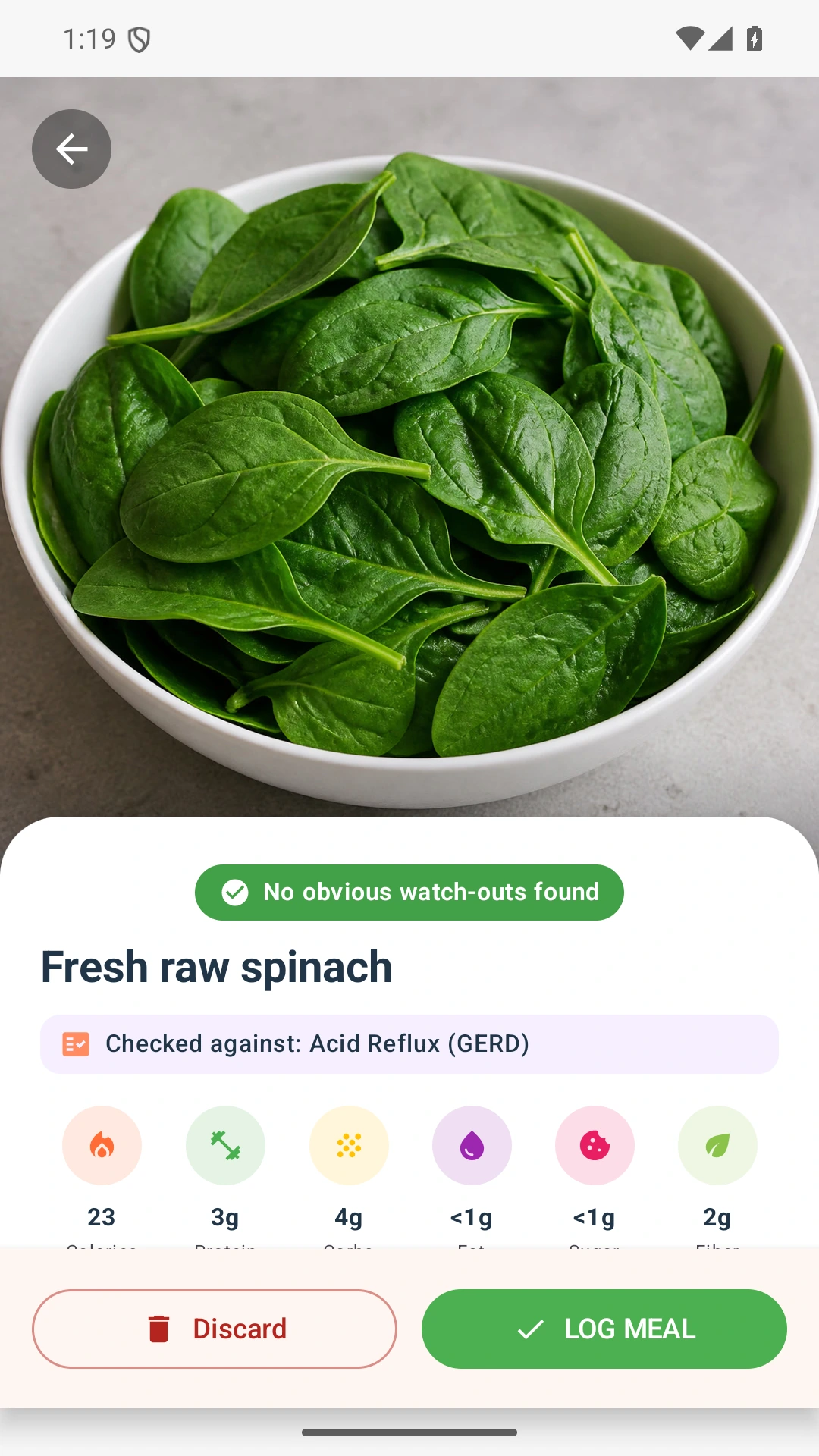
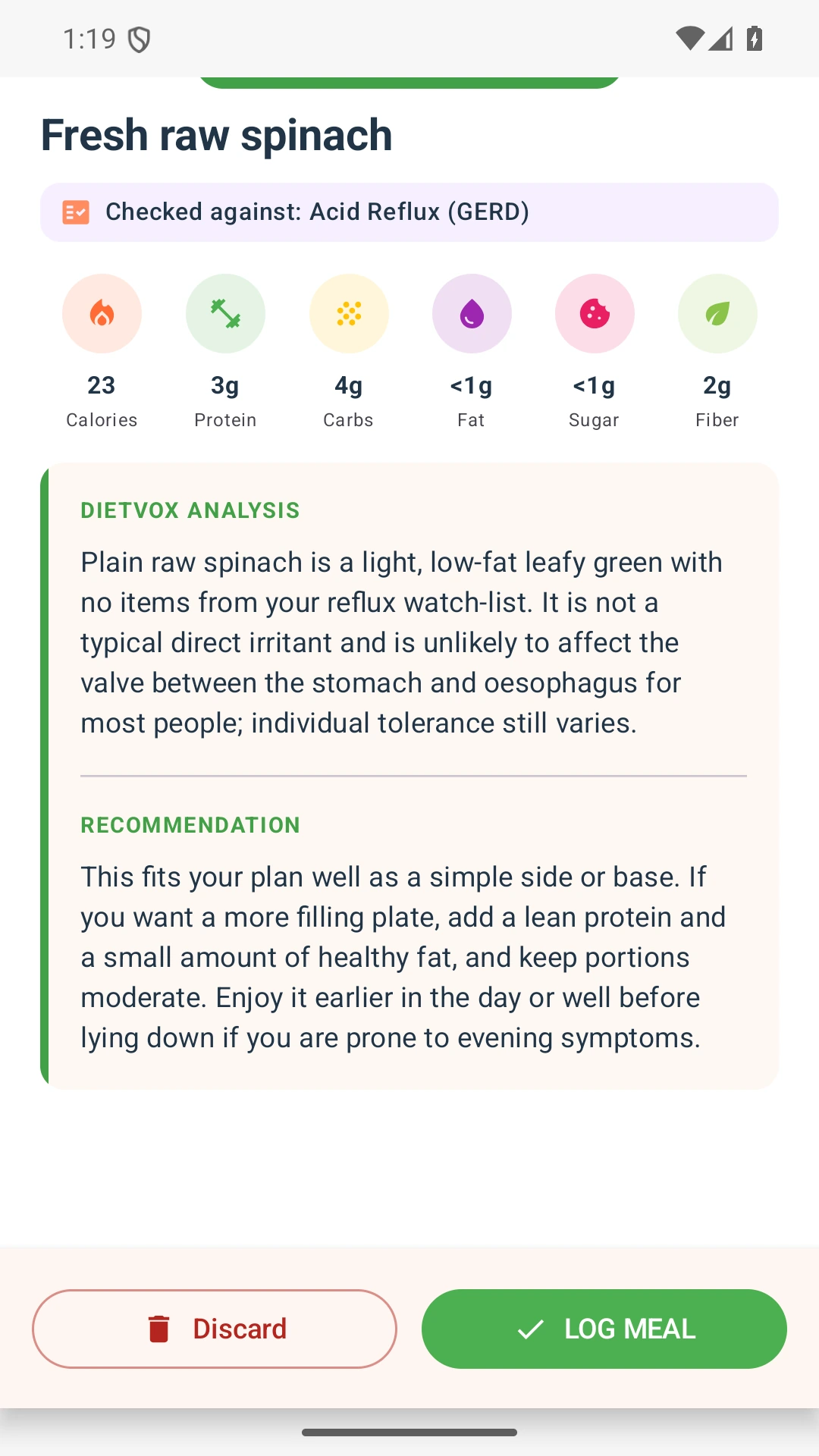
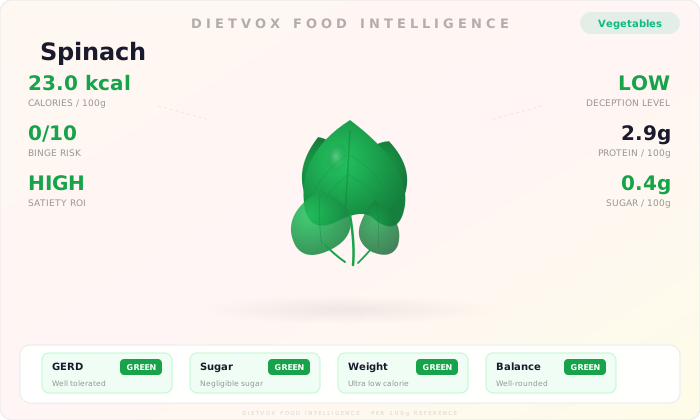
The most critical factor for spinach's GREEN rating is its extremely low calorie density. Calorie density refers to the number of calories in a given weight of food. Spinach contains just 23 kcal per 100g serving USDA FoodData Central (FDC ID 168462).

This allows you to consume a large, visually satisfying portion, which can help with the psychological aspects of dieting, without a significant caloric cost. Diets rich in foods with low energy density, like fruits and vegetables, are associated with better weight management because they help individuals feel full on fewer calories CDC healthy weight guidance. Eating a large salad with a spinach base, for example, adds substantial bulk to a meal for a negligible calorie count, making it easier to maintain a necessary calorie deficit.

Moderate Satiety from Fibre and Protein

Satiety, or the feeling of fullness and satisfaction after a meal, is crucial for preventing overeating. Spinach contributes to satiety in two ways:

  1. Dietary Fibre: With 2.2g of dietary fibre per 100g, spinach adds bulk to your digestive system. Fibre slows down digestion and the absorption of nutrients, leading to a more gradual release of energy and a prolonged feeling of fullness. Clinical reviews have consistently shown that an increased intake of dietary fibre is associated with lower body weight PubMed.
  2. Protein Content: Spinach provides 2.9g of protein per 100g. While not a high-protein food in absolute terms, this is a significant amount for a leafy green vegetable with so few calories. Protein is widely recognized as the most satiating macronutrient, helping to reduce appetite and subsequent calorie intake PubMed.

This combination of fibre and protein provides a moderate 'Satiety ROI' (Return on Investment), meaning for the minimal calories you invest, you get a reasonable degree of hunger management in return.

High Nutrient Density

When restricting calories for weight loss, it is vital to consume nutrient-dense foods to avoid nutritional deficiencies. Spinach is a powerhouse of essential vitamins and minerals. Per 100g, it is a notable source of:

  • Folate (194µg): Crucial for cell growth and metabolism.
  • Vitamin C (28.1mg): An important antioxidant that supports the immune system.
  • Potassium (558mg): Helps regulate fluid balance and blood pressure.
  • Iron (2.7mg): Essential for oxygen transport and energy production.

Consuming nutrient-rich foods like spinach ensures your body gets the micronutrients it needs to function optimally, even within a reduced calorie budget. This principle is a cornerstone of healthy eating guidelines from global health authorities World Health Organization (WHO).

Practical Tips for Your Weight Loss Diet

Incorporating spinach is simple due to its versatility and low tracking difficulty. Its consistent nutritional profile makes it easy to log accurately in any food tracking app.

  • Build a Better Salad: Use 2-3 cups of fresh spinach as the base for your lunch or dinner salad. This creates a large, filling meal for under 30 calories, leaving plenty of room in your budget for a lean protein source and a healthy dressing.
  • Boost Your Smoothies: Add a large handful of spinach to your morning smoothie. Its mild flavour is easily masked by other ingredients like berries or a scoop of protein powder, providing a nutrient boost without altering the taste.
  • Add Volume to Cooked Meals: Wilt a large amount of spinach into soups, stews, curries, or pasta sauces near the end of cooking. Cooking dramatically reduces its volume, allowing you to consume a high quantity of nutrients and fibre easily. Remember to account for any oil or butter used in the cooking process.
  • Smarter Scrambles: Mix spinach into scrambled eggs or tofu for a more filling and nutritious breakfast that supports satiety throughout the morning.

Addressing Common Questions

Is raw or cooked spinach better for weight loss?

Both are excellent choices. From a weight loss perspective, the form doesn't matter as the low-calorie nature is the primary benefit. Nutritionally, there are minor trade-offs. Raw spinach retains more water-soluble vitamins like Vitamin C. Cooking can reduce these but makes other nutrients, such as iron and beta-carotene, more easily absorbed by the body MedlinePlus vitamins overview. The best approach is to eat the version you enjoy most, as consistency is key to any successful diet plan.

Does spinach 'burn' belly fat?

No single food can target and burn fat from a specific area of the body. The concept of 'spot reduction' is a persistent myth. Weight loss occurs when you consistently consume fewer calories than your body expends, leading to fat loss from all over your body, including the abdomen. Spinach is a powerful tool to help you achieve this calorie deficit by providing volume and nutrients for very few calories, but it does not have a direct fat-burning effect CDC healthy weight guidance.

What about oxalates in spinach?

Spinach is high in oxalates, which are natural compounds that can bind with calcium and, in susceptible individuals, contribute to the formation of kidney stones. For the vast majority of the population, consuming spinach in normal dietary amounts poses no risk. If you have a history of oxalate-based kidney stones, your doctor may advise you to limit high-oxalate foods. Cooking spinach can also help reduce its oxalate content NIDDK kidney stone diet guidance.


Disclaimer: This article is for informational purposes only and does not constitute medical advice. Always consult a healthcare provider before making changes to your diet, especially if you have a medical condition.

Scan your foods with the DietVox app to get personalized ratings based on your specific dietary needs and health goals.

Last reviewed: June 2026

How It Works

Why Spinach is Rated GREEN for Weight Loss

Spinach earns a GREEN rating for its powerful combination of properties that align perfectly with the principles of effective weight management.

  1. Extremely Low Calorie Density: At only 23 kcal per 100g, spinach allows for large, satisfying portions that add bulk and volume to meals without a significant caloric penalty. This makes it easier to achieve and maintain a calorie deficit.
  1. Satiety Support: The presence of 2.2g of dietary fibre and 2.9g of protein per 100g helps to promote feelings of fullness. Fibre slows digestion while protein is the most satiating macronutrient, a combination that helps control appetite and reduce overall calorie consumption.
  1. High Nutrient Density: During calorie restriction, obtaining adequate vitamins and minerals is crucial. Spinach is packed with essential micronutrients like folate, potassium, iron, and Vitamin C, ensuring your body remains well-nourished while you lose weight.

Scan any food. Get an instant RED/AMBER/GREEN rating.

DietVox analyses every food across 4 diet protocols — no guesswork.

Try DietVox Free →

Try These Instead

Safer alternatives that won't trigger your symptoms.

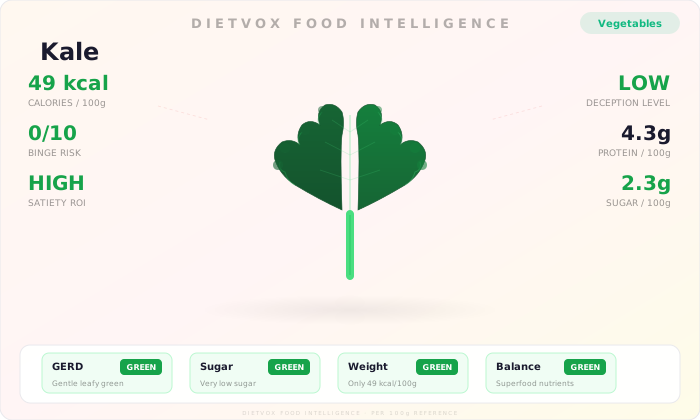
Kale illustration

Kale

49 kcal Vegetables
GREEN GERD
GREEN Sugar
GREEN Weight
GREEN Balance
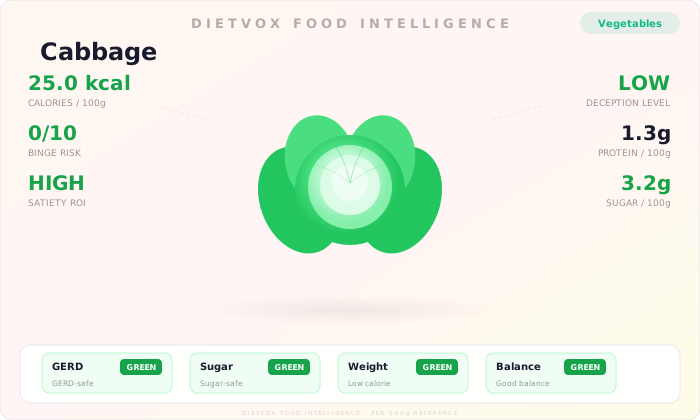
Cabbage illustration

Cabbage

25 kcal Vegetables
GREEN GERD
GREEN Sugar
GREEN Weight
GREEN Balance
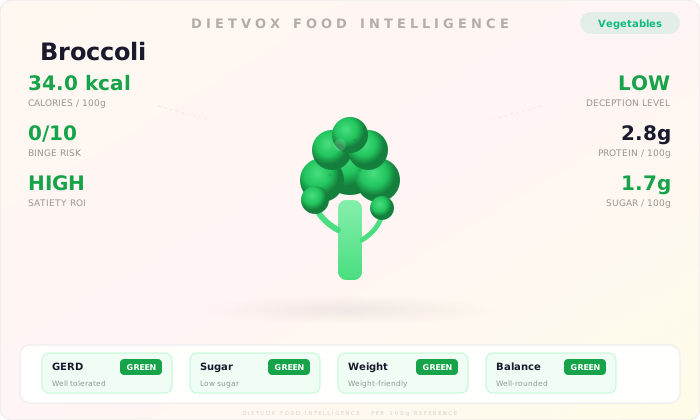
Broccoli illustration

Broccoli

34 kcal Vegetables
GREEN GERD
GREEN Sugar
GREEN Weight
GREEN Balance
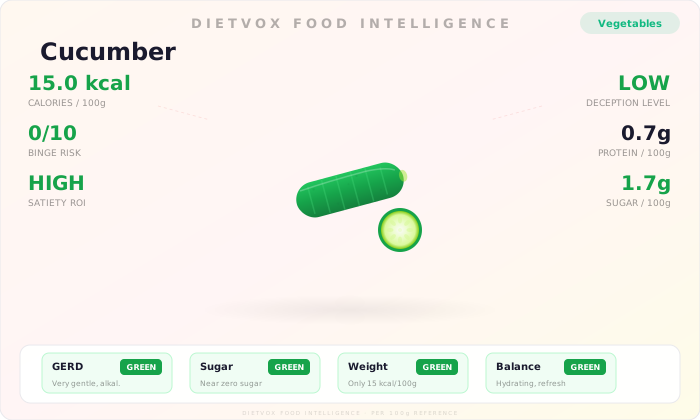
Cucumber illustration

Cucumber

15 kcal Vegetables
GREEN GERD
GREEN Sugar
GREEN Weight
GREEN Balance

Frequently Asked Questions

Can I eat Spinach on a weight loss diet?

Yes, absolutely. DietVox rates Spinach GREEN for a weight loss diet. It provides only 23 kcal/100g and is extremely nutrient-dense with virtually no caloric cost. You can use it generously in salads, smoothies, and cooked meals to add volume and nutrients, which helps with satiety and makes it easier to stick to a calorie deficit.

How much spinach should I eat daily for weight loss?

There is no strict limit on spinach intake for weight loss due to its very low calorie content. Consuming 100-200 grams (about 3-6 cups raw) daily is perfectly reasonable and can easily fit into a calorie-controlled diet. The most important principle is to maintain variety in your vegetable intake to ensure a wide range of nutrients.

Will eating spinach in a smoothie make me gain weight?

Spinach itself will not cause weight gain in a smoothie. However, the total calorie count of the smoothie is determined by all its ingredients. To keep it weight-loss friendly, avoid high-calorie additions like large amounts of nut butter, sugary juices, or sweeteners. A smoothie with spinach, a lean protein source (like Greek yogurt or protein powder), and low-sugar fruit is an excellent choice for a weight loss diet.

Does frozen spinach have the same weight loss benefits as fresh?

Yes, frozen spinach offers the same excellent benefits for weight loss. It is flash-frozen at peak ripeness, which preserves most of its vitamins and minerals, and it has the same low-calorie, high-fibre profile as fresh spinach. It is a convenient and often more affordable option that is equally effective in a weight management plan.

Related Reading