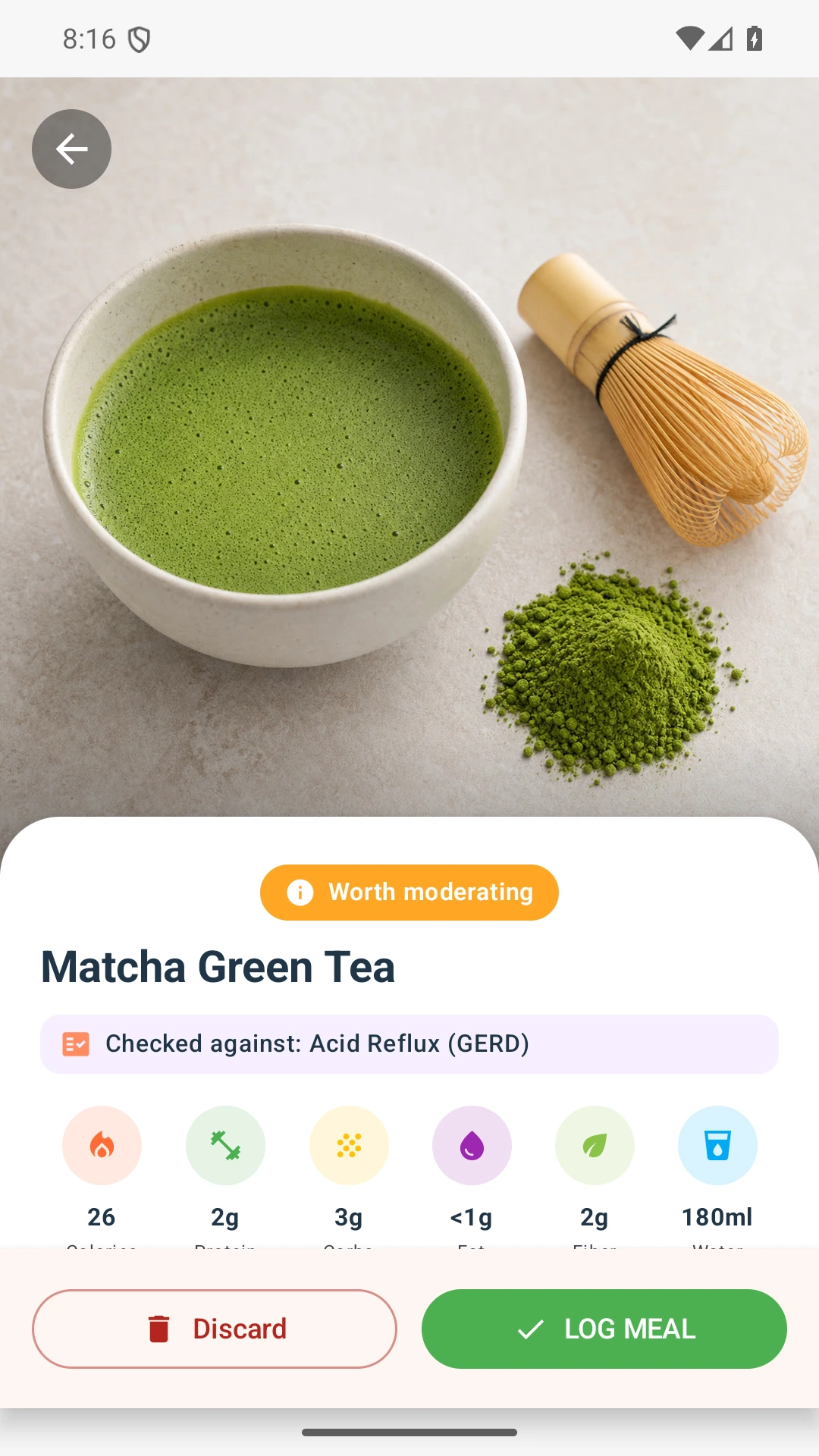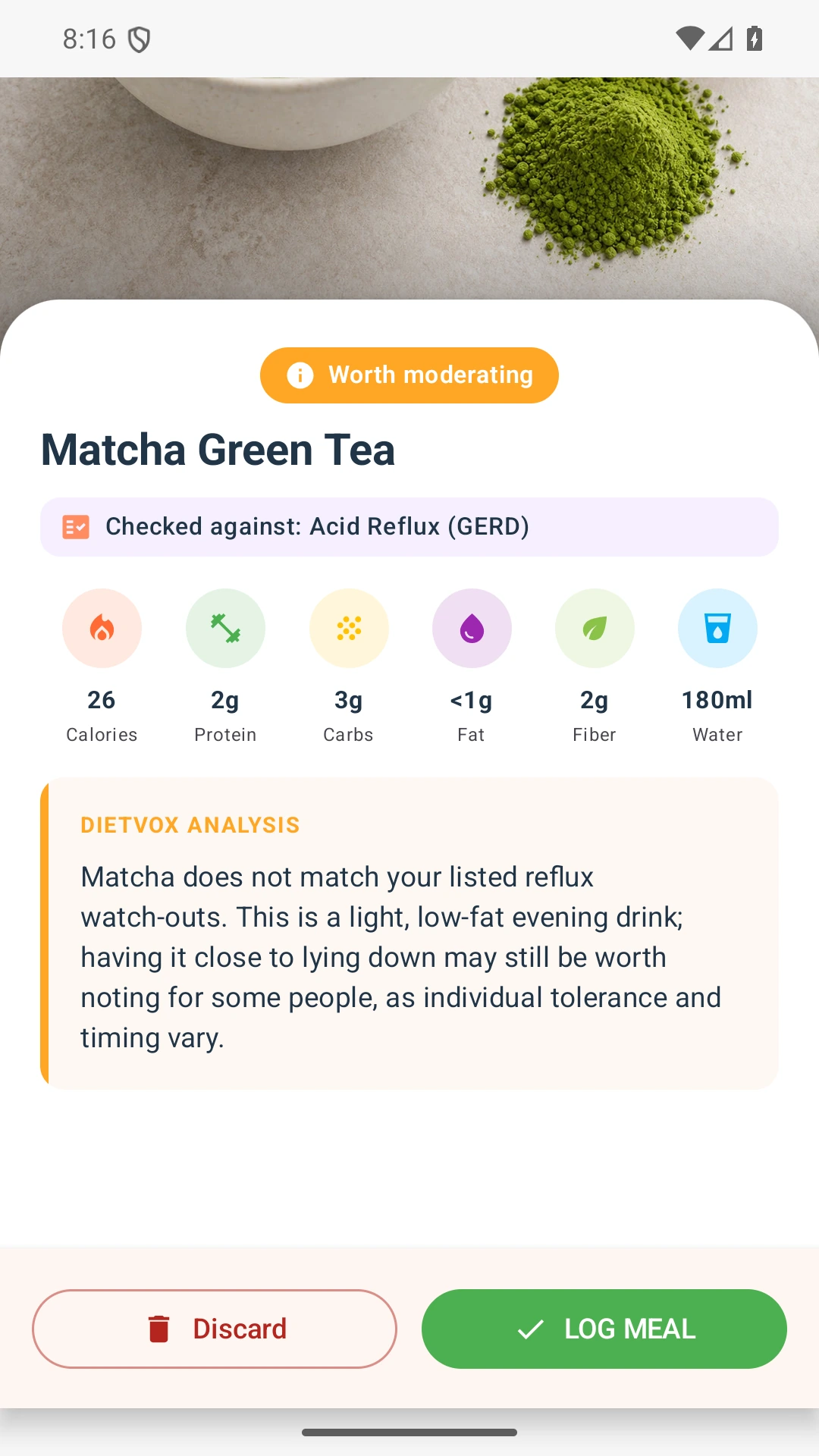
DietVox Rating: GREEN

Verdict: Unsweetened matcha is an excellent choice for a low-sugar diet. It contains zero sugar and a negligible amount of carbohydrates, making it fully compliant with the principles of reducing sugar intake for metabolic health. Many people ask, is matcha low carb? The answer is a definitive yes, provided it is prepared without added sugars. The key to maintaining its GREEN rating is preparation; commercial matcha lattes and pre-sweetened mixes often contain high levels of added sugar and should be avoided.

Matcha's Nutritional Profile for a Low Sugar Diet

When evaluating any food for a low-sugar protocol, the primary metrics are sugar and total carbohydrate content. Pure matcha excels in this regard.

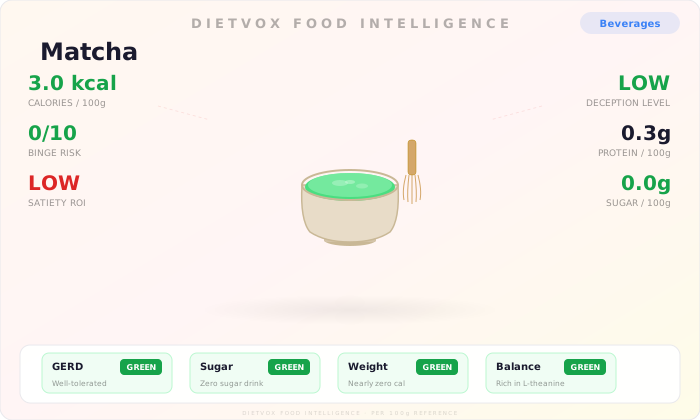
Prepared matcha (1g of powder in 100ml of water) contains: - Sugar: 0.0g - Carbohydrates: 0.4g - Calories: 3.0 kcal

This data, supported by the USDA FoodData Central, confirms that a standard serving of matcha has a minimal impact on daily carbohydrate and sugar limits. Its extremely low calorie density (3 kcal per 100g) means it can be consumed freely without contributing significantly to daily energy intake, supporting both sugar reduction and weight management goals.

It is important to distinguish between prepared matcha and the concentrated powder. Matcha powder itself is more nutrient-dense. Per 100g, matcha powder contains approximately 324 kcal and around 38g of carbohydrates. However, a typical serving uses only 1-2 grams of powder, making the per-serving impact negligible.

The Critical Distinction: Unsweetened Matcha vs. Matcha Lattes

The primary pitfall for individuals on a low-sugar diet is the popular matcha latte. While delicious, commercially prepared matcha lattes are often vehicles for significant amounts of added sugar. A standard 16-ounce (approx. 475ml) matcha latte from a coffee shop can contain 25-35 grams of sugar, which can exceed the daily recommended limit for added sugars set by health authorities.

The World Health Organization (WHO) recommends that free sugars constitute less than 10% of total daily energy intake, with further benefits seen by reducing this to below 5% WHO. For an average adult, 10% is about 50 grams of sugar per day. A single sweetened latte can therefore account for over half of this allowance.

To keep matcha in the GREEN category for your low-sugar diet, always opt for unsweetened preparations. When ordering at a café, explicitly ask for an unsweetened matcha latte made with unsweetened milk (like almond or soy) and no added syrups.

Health Benefits of Matcha Beyond Sugar Content

Beyond its suitability for a low-sugar diet, matcha offers several potential health benefits attributed to its unique composition.

1. Rich in Antioxidants: Matcha is made from whole, ground tea leaves, meaning you consume the entire leaf rather than just an infusion. This results in a higher concentration of beneficial compounds, particularly catechins. The most notable catechin in matcha is epigallocatechin gallate (EGCG). Available sources suggest that EGCG has potent antioxidant properties that may help protect cells from oxidative damage PubMed.

2. L-Theanine for Calm Alertness: Matcha contains a unique amino acid called L-theanine. This compound is known to promote a state of relaxation and well-being without causing drowsiness. source reviews indicate that L-theanine can increase alpha wave activity in the brain, which is associated with a state of 'wakeful relaxation' PubMed. This effect can counteract the jitteriness sometimes associated with caffeine, providing a smoother, more sustained energy boost.

3. Potential Metabolic Support: Some source review has explored the role of green tea catechins in supporting metabolic health. A systematic review and meta-analysis listed in the American Journal of Clinical Nutrition found that green tea consumption was associated with modest reductions in body weight and body fat PubMed. While matcha is not a weight-loss solution on its own, its inclusion in a balanced, low-sugar diet may be supportive.

Practical Tips for a Low Sugar Matcha Lifestyle

Integrating matcha into your low-sugar diet is simple with a few key strategies:

  • Prepare it Yourself: The best way to control sugar content is to make matcha at home. Sift 1-2 teaspoons of ceremonial grade matcha powder into a bowl, add a small amount of hot (not boiling) water, and whisk vigorously with a bamboo whisk (chasen) until frothy. Top up with more hot water or unsweetened milk of your choice.
  • Read Labels Carefully: If buying pre-made matcha powders or drinks, always check the nutrition facts panel for "Added Sugars." Choose products that list 0g of added sugar.
  • Choose Smart Sweeteners: If you prefer a sweeter taste, use a zero-calorie, low-glycemic sweetener like stevia, monk fruit, or erythritol. Use them sparingly to allow your palate to adjust to less sweetness over time.
  • Be Specific When Ordering Out: Clearly request "no sugar" or "no syrup" in your matcha beverages. Confirm that the milk alternative used is also unsweetened.

Matcha, Satiety, and Tracking

From a Health Forensics perspective, matcha has a LOW Satiety ROI. With only 0.3g of protein and minimal fibre per serving, it does not provide a feeling of fullness. It should be considered a hydrating beverage and a source of phytochemicals, not a snack or meal replacement.

Conversely, its Tracking Difficulty is LOW. Measuring 1-2 grams of powder is straightforward with a kitchen scale or measuring spoon, making it easy to log accurately in any diet tracking application. Its consistent nutritional profile makes it a reliable component of a structured eating plan.


Disclaimer: This article is for informational purposes only and does not constitute medical advice. Always consult a healthcare provider before making changes to your diet, especially if you have a medical condition.

Scan your foods with the DietVox app to get personalized ratings based on your specific dietary needs and health goals.

Last reviewed: June 2026

How It Works

Why Matcha is Rated GREEN for a Low Sugar Diet

DietVox's GREEN rating for matcha is based on its intrinsic nutritional properties when consumed in its pure, unsweetened form. The mechanism for this rating is clear and supported by nutrition profile.

  1. Zero Sugar Content: The primary reason for the GREEN rating is that pure matcha powder contains 0g of sugar per serving USDA FoodData Central. For a diet protocol focused on minimizing sugar intake, a food with no sugar is an ideal choice. This aligns perfectly with guidelines from health organizations like the FDA added sugars label guidance that advocate for reducing free and added sugars.
  1. Negligible Carbohydrate Impact: With only 0.4g of carbohydrates per 100ml prepared serving, matcha has a virtually non-existent impact on blood glucose levels. This makes it highly suitable for low-sugar and low-carbohydrate diets, as it does not contribute to the glycaemic load of a meal.
  1. The Preparation Proviso: The GREEN rating is conditional on preparation. The rating applies exclusively to matcha prepared with water or unsweetened milk alternatives and without any added caloric sweeteners (e.g., sugar, honey, syrup). The addition of these ingredients fundamentally changes the food's profile, shifting it from a GREEN (recommended) to a RED (avoid) food within the context of a low-sugar diet.

Scan any food. Get an instant RED/AMBER/GREEN rating.

DietVox analyses every food across 4 diet protocols — no guesswork.

Try DietVox Free →

Try These Instead

Safer alternatives that won't trigger your symptoms.

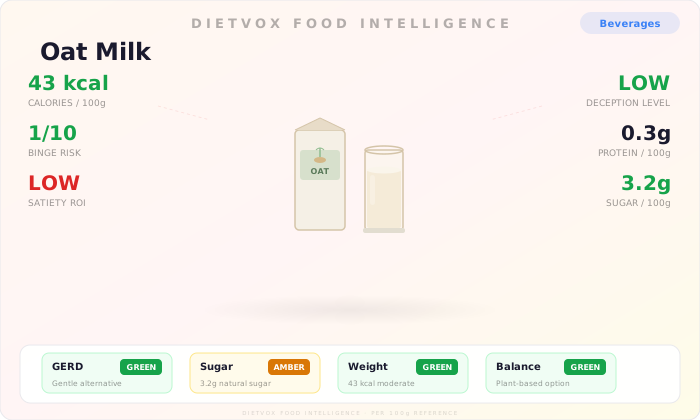
Oat Milk illustration

Oat Milk

43 kcal Beverages
GREEN GERD
GREEN Sugar
GREEN Weight
GREEN Balance
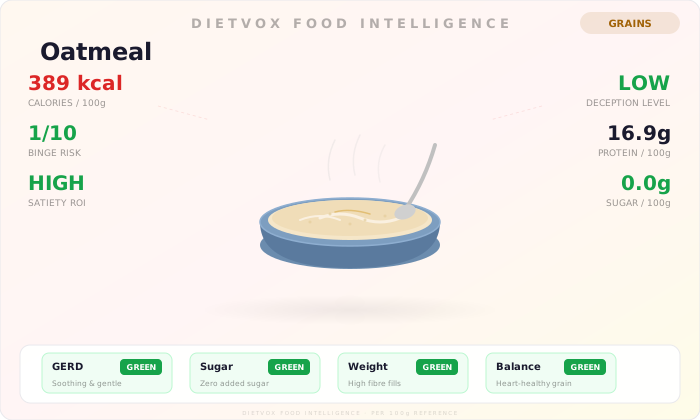
Oatmeal illustration

Oatmeal

389 kcal Grains
GREEN GERD
GREEN Sugar
GREEN Weight
GREEN Balance
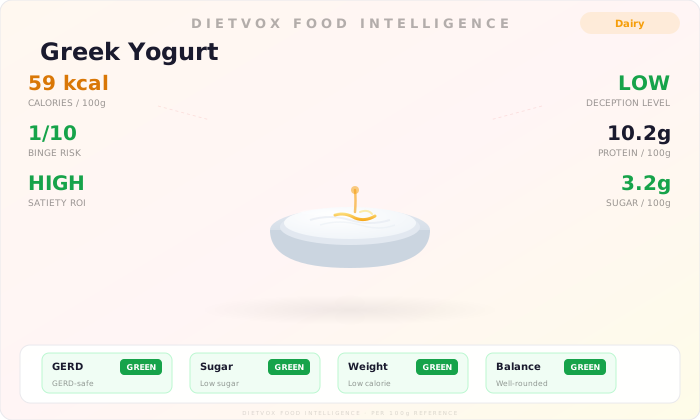
Greek Yogurt illustration

Greek Yogurt

59 kcal Dairy
GREEN GERD
GREEN Sugar
GREEN Weight
GREEN Balance
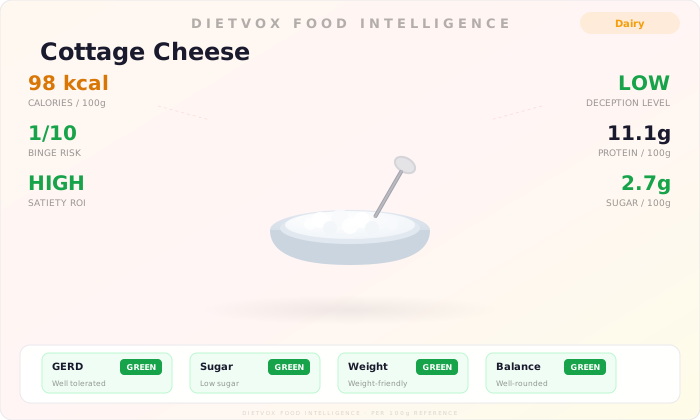
Cottage Cheese illustration

Cottage Cheese

98 kcal Dairy
GREEN GERD
GREEN Sugar
GREEN Weight
GREEN Balance

Frequently Asked Questions

Is matcha keto-friendly?

Yes, unsweetened matcha is very keto-friendly. A typical serving contains less than 1 gram of net carbohydrates, making it an excellent beverage choice that fits easily within the strict carbohydrate limits of a ketogenic diet.

What is the best way to sweeten matcha on a low-sugar diet?

For a low-sugar diet, the best sweeteners are non-nutritive and do not impact blood sugar. Options include stevia, monk fruit extract, and sugar alcohols like erythritol. Always start with a small amount, as these can be much sweeter than sugar.

How much caffeine is in matcha compared to coffee?

Matcha generally contains less caffeine than a standard cup of coffee. A typical serving of matcha (using 1 teaspoon of powder) has about 35-70mg of caffeine. In comparison, an 8-ounce cup of brewed coffee contains 95mg or more FDA caffeine safety guidance. The presence of L-theanine in matcha can also modulate the effects of caffeine, leading to a more sustained energy release without the jitters.

Can matcha help with blood sugar control?

Some sources suggest that compounds in green tea, which are abundant in matcha, may have a beneficial effect on glucose metabolism. A systematic review of several source reviews indicated that green tea consumption was associated with modest reductions in fasting glucose and HbA1c levels PubMed. However, matcha should not be considered a treatment for any medical condition and should be consumed as part of an overall healthy, low-sugar diet.

Related Reading