DietVox Rating: GREEN
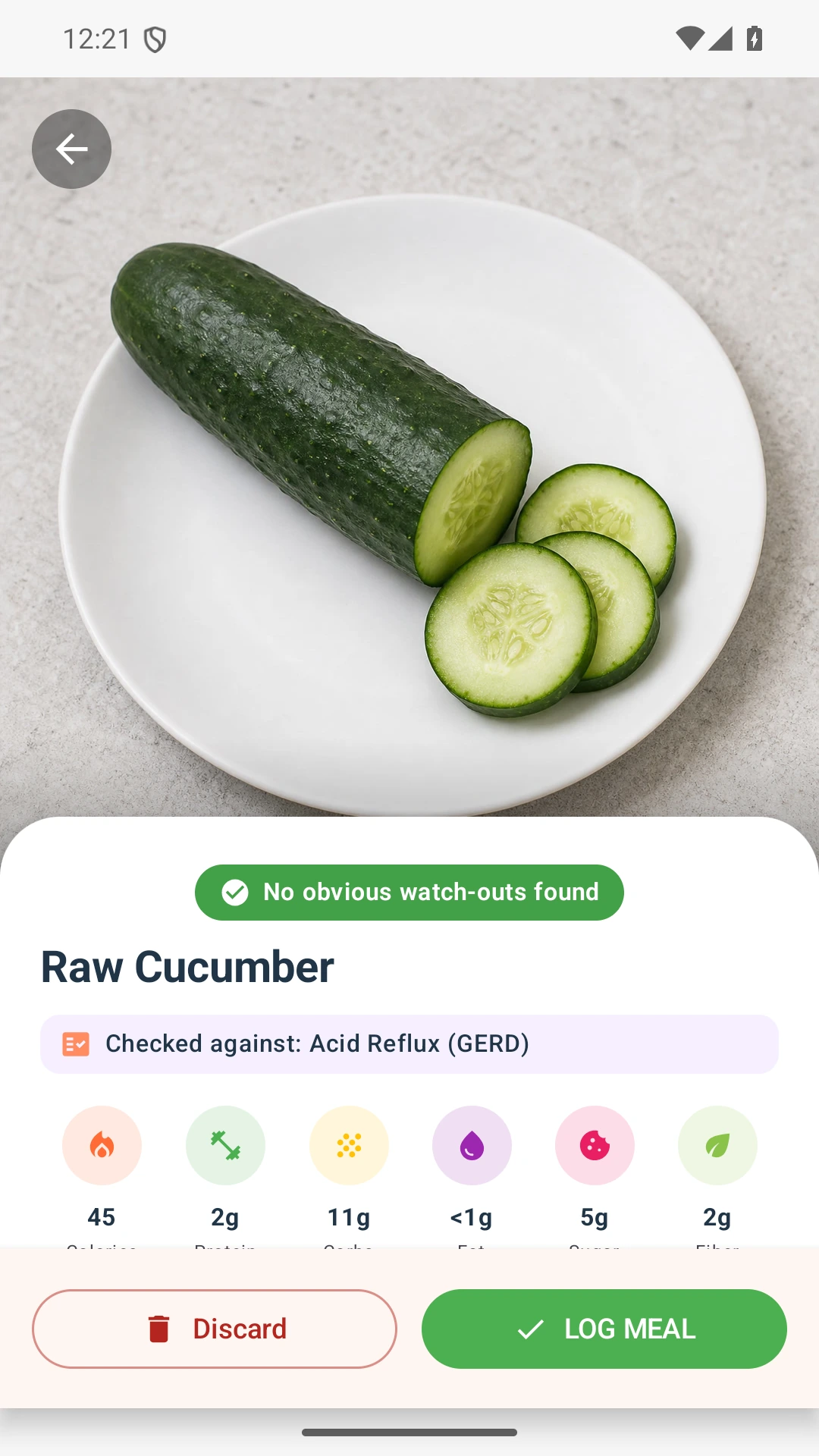
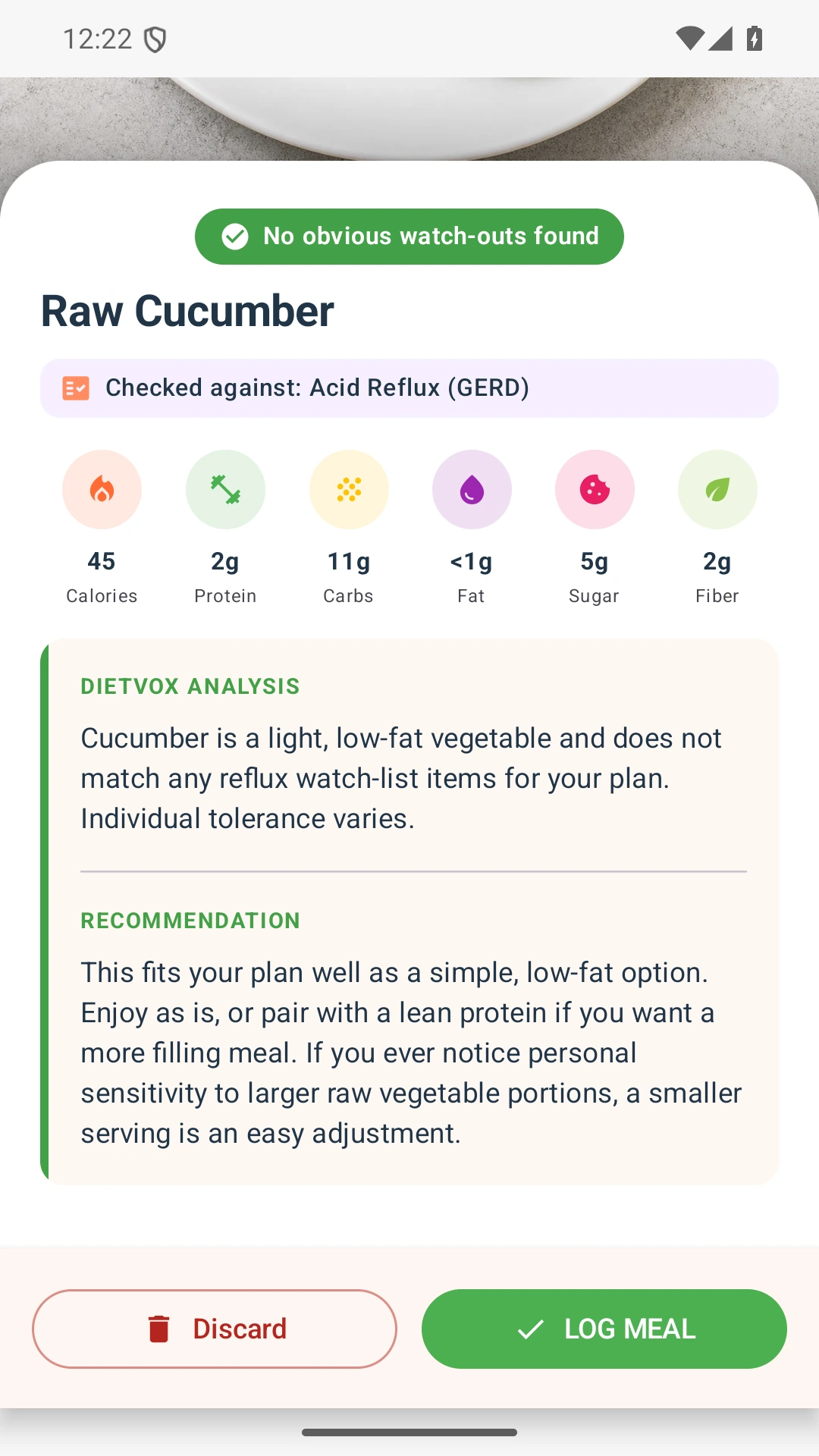
Cucumber is rated GREEN for a Low Sugar Diet. This rating signifies that it is an excellent and highly compatible food choice for individuals aiming to minimise their sugar intake. A common question is is cucumber low carb, and the answer is a definitive yes. Its low carbohydrate profile, of which a tiny fraction is sugar, makes it a staple for anyone following this dietary protocol. This analysis will delve into the nutrition profile behind cucumber's GREEN rating, its role in blood sugar management, and practical ways to incorporate it into your daily meals.
A Clinical Look at Cucumber's Nutritional Profile
Understanding the nutritional composition of cucumber is key to appreciating its value in a low-sugar lifestyle. The data, primarily from the USDA FoodData Central (FDC ID 169249), provides a clear picture of why this vegetable is so highly recommended.
Per 100g serving (raw):
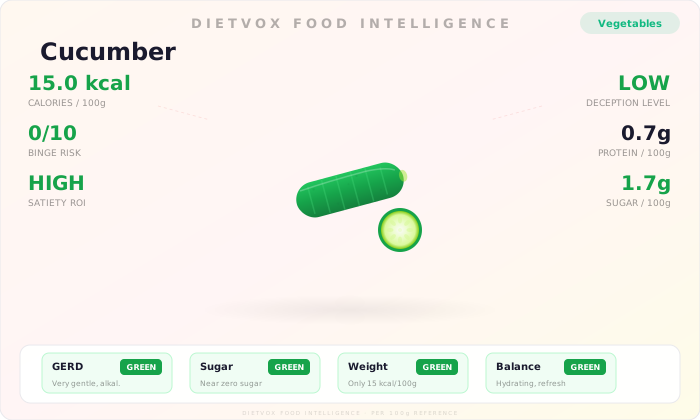
- Total Carbohydrates: 3.6g
- Dietary Fibre: 0.5g
- Sugars: 1.7g
- Protein: 0.7g
- Fat: 0.1g
- Calories: 15 kcal
- Water: 95.2g
This profile is exceptional for a Low Sugar Diet. The total carbohydrate count is very low, and the sugar content is minimal at just 1.7g per 100g. This amount is naturally occurring and is not considered a 'free sugar', the type that health organisations like the World Health Organization (WHO) recommend limiting. Furthermore, its extremely high water content (over 95%) means it provides significant volume and hydration with very few calories, aiding in both satiety and overall health.
Micronutrient Contributions
While low in macronutrients, cucumber provides valuable micronutrients. It is a source of Vitamin K, which is essential for blood clotting and bone health, and contains small amounts of potassium, an important electrolyte for fluid balance and blood pressure regulation Harvard Health Publishing. These contributions, while modest, add to the overall health benefits of including cucumber in a balanced diet.
Health Forensics: Cucumber on a Low Sugar Diet
Our Health Forensics model evaluates foods on practical metrics crucial for dietary success. Here’s how cucumber scores:
Calorie Density: LOW
With only 15 calories per 100g, cucumber has an extremely low calorie density. This is a significant advantage. Low-density foods allow you to eat larger, more satisfying portions without a high caloric cost, a principle that is effective for weight management CDC healthy weight guidance. For those on a Low Sugar Diet to manage weight or metabolic health, cucumber is an ideal food to add bulk and volume to meals.
Satiety ROI: LOW
Satiety Return on Investment (ROI) measures how full a food makes you feel relative to its calories. Cucumber scores low in this regard. Its minimal protein (0.7g) and dietary fibre (0.5g) content do not provide significant long-term feelings of fullness. While its high water content can create temporary stomach volume, it's best viewed as a component of a meal rather than a standalone, satiating snack. To improve its Satiety ROI, pair cucumber with sources of protein and healthy fats, such as Greek yogurt dip, hummus, or alongside a chicken or fish salad.
Tracking Difficulty: LOW
Cucumber is very easy to track. It is a whole food with a consistent and predictable nutritional profile. Whether you measure by weight (grams) or by common units (e.g., half a medium cucumber), logging its intake in a food diary or app is straightforward and accurate, which is vital for maintaining adherence to a structured Low Sugar Diet.
Practical Tips for Your Low Sugar Meal Plan
Integrating cucumber into your low-sugar lifestyle is simple and versatile. Its mild, refreshing flavour complements a wide variety of dishes.
- Hydrating Snacks: Keep sliced cucumber sticks in the fridge for a quick, crunchy, and hydrating snack. Pair them with a sugar-free dip for added flavour and nutrients.
- Salad Foundation: Use cucumber as a primary ingredient in salads to add bulk and crunch without adding sugar. It pairs well with leafy greens, lean proteins, and a simple vinaigrette dressing.
- Sugar-Free Hydration: Add slices of cucumber and mint to a pitcher of water. This creates a refreshing, infused drink that can help you avoid sugary beverages like juice and soda, a key recommendation from the FDA added sugars label guidance for reducing sugar intake.
- Carbohydrate Swaps: Use thick cucumber slices or hollowed-out cucumber 'boats' as a base for toppings instead of crackers or bread. This is an effective way to reduce both carbohydrates and sugar in appetizers and snacks.
- Cooling Soups and Smoothies: Blend cucumber into a cold gazpacho soup or add it to a green smoothie (with other low-sugar ingredients like spinach and avocado) for a hydrating nutrient boost.
Disclaimer: This article is for informational purposes only and does not constitute medical advice. Always consult a healthcare provider before making changes to your diet, especially if you have a medical condition.
Scan your foods with the DietVox app to get personalized ratings based on your specific dietary needs and health goals.
Last reviewed: June 2026
How It Works
Why Cucumber is Rated GREEN
Cucumber earns its GREEN rating for a Low Sugar Diet due to a combination of four key factors, making it one of the safest and most beneficial choices for this protocol.
- Extremely Low Sugar Content: The primary reason for its top rating is its minimal sugar content. At just 1.7 grams of sugar per 100 grams, cucumber's impact on blood glucose is negligible USDA FoodData Central (FDC ID 169249). This low level is well within the strictest guidelines for a diet focused on minimising sugar consumption.
- Low Glycemic Index (GI): Cucumber is a non-starchy vegetable and has a very low glycemic index. The GI is a measure of how quickly a food containing carbohydrates raises blood sugar levels. Low-GI foods are digested and absorbed more slowly, leading to a more gradual rise in blood sugar, which is a cornerstone of managing metabolic health and is highly recommended for individuals with diabetes or insulin resistance American Diabetes Association food and nutrition guidance.
- High Water Content for Hydration: Comprising over 95% water, cucumber is exceptionally hydrating. Proper hydration is vital for all bodily functions, including metabolism. Staying hydrated can also help manage feelings of hunger, which can sometimes be mistaken for thirst, supporting adherence to a dietary plan.
- Low Overall Carbohydrate and Calorie Count: Beyond just sugar, the total carbohydrate count of 3.6g per 100g is very low. This makes cucumber not only ideal for a Low Sugar Diet but also highly compatible with general low-carbohydrate eating patterns. Its ultra-low calorie count (15 kcal/100g) allows it to be consumed in generous quantities without concern for caloric overload.
Scan any food. Get an instant RED/AMBER/GREEN rating.
DietVox analyses every food across 4 diet protocols — no guesswork.
Try DietVox Free →Try These Instead
Safer alternatives that won't trigger your symptoms.
Frequently Asked Questions
Can I eat Cucumber on a low sugar diet?
DietVox rates Cucumber GREEN for low sugar diet. Cucumber contains only 1.7g sugar per 100g. Its very high water content and minimal sugar make it one of the safest low-sugar foods.
Is cucumber a good snack for managing blood sugar?
Yes. With its very low carbohydrate (3.6g/100g) and sugar (1.7g/100g) content, cucumber has a minimal impact on blood glucose levels. Its high water content also aids in hydration. It is considered a low-glycemic food, making it an excellent choice for individuals monitoring their blood sugar, as recommended by health bodies like the American Diabetes Association food and nutrition guidance.
Does the peel of the cucumber affect its sugar content for a low-sugar diet?
The difference in sugar content between a peeled and unpeeled cucumber is negligible. However, the peel contains a significant portion of the cucumber's fibre and nutrients, such as vitamin K USDA FoodData Central (FDC ID 169249). For a low-sugar diet, eating cucumber with the peel on is recommended for these added benefits without negatively impacting your sugar intake.
Are pickled cucumbers (gherkins) also suitable for a low-sugar diet?
This depends entirely on the preparation. Many commercially available pickles are preserved in a brine that contains significant amounts of added sugar. It is essential to read the nutrition label carefully. Look for varieties specifically labelled 'no added sugar' or those pickled in a simple brine of vinegar, water, and salt to ensure they fit within your low-sugar diet.
Can I drink cucumber-infused water on a low-sugar diet?
Absolutely. Cucumber-infused water is an excellent way to stay hydrated without consuming any sugar or calories. It serves as a refreshing and healthy alternative to sugary drinks, sodas, and juices, which are major sources of the 'free sugars' that the World Health Organization (WHO) advises limiting.