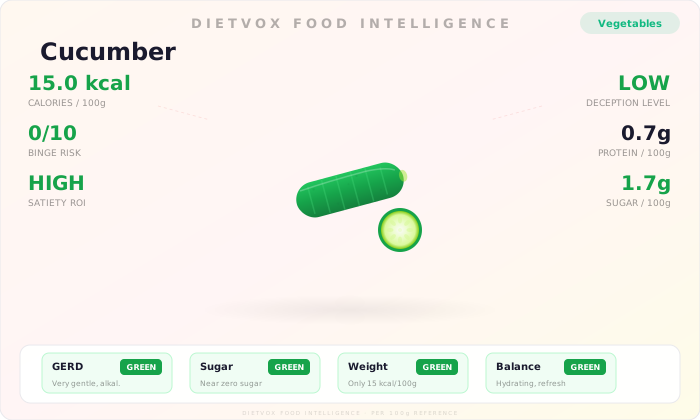
DietVox Rating: GREEN

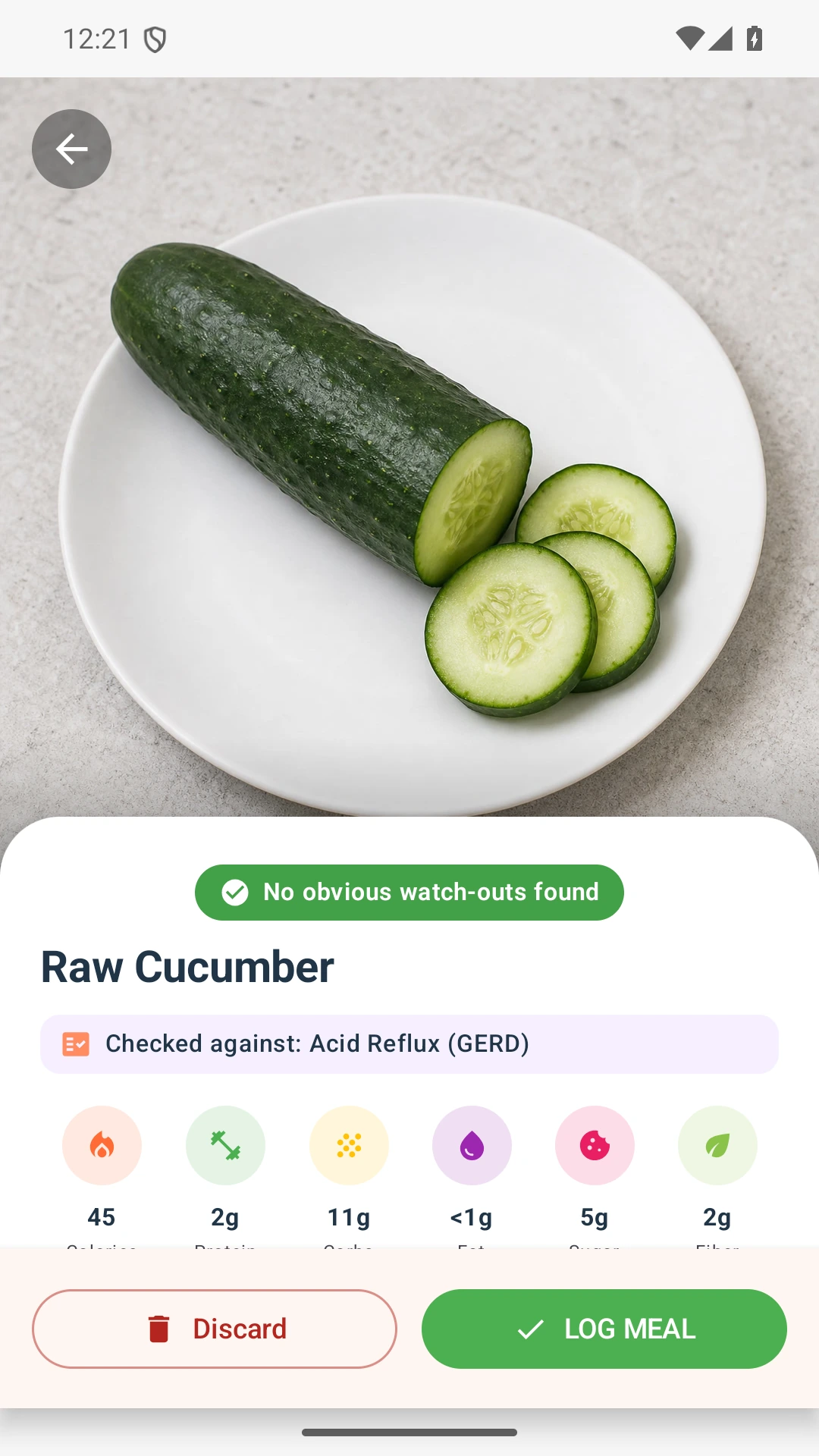
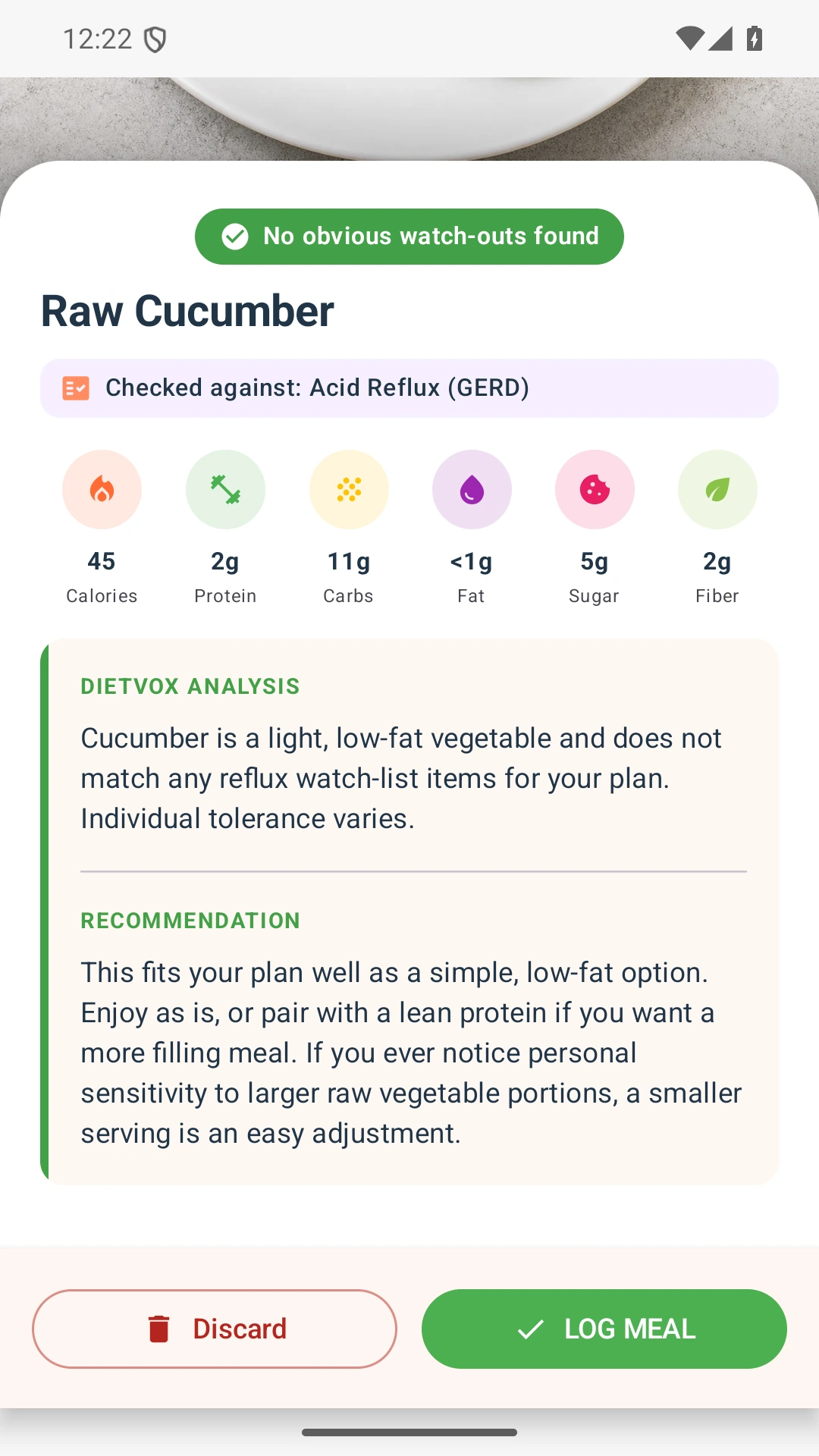
DietVox rates Cucumber as GREEN for a GERD (Acid Reflux) diet. This rating directly addresses the common question, is cucumber good for gerd, with a strong affirmative based on its nutritional profile and established dietary guidelines for managing reflux. A GREEN rating indicates that cucumber is a safe, well-tolerated food that is highly unlikely to trigger symptoms and can be freely included in your diet.

Our analysis concludes that cucumber's high water content, low acidity, and negligible fat content make it an exemplary choice for individuals managing gastroesophageal reflux disease. It aligns perfectly with recommendations from leading health authorities to consume low-fat, non-acidic foods to minimise symptoms like heartburn and regurgitation American College of Gastroenterology acid reflux guidance.

Nutritional Profile of Cucumber for GERD

The nutritional composition of cucumber is central to its suitability for a GERD diet. Its profile is characterised by low energy density and an absence of common reflux triggers.

Macronutrient Breakdown

Per 100g, raw cucumber with peel contains the following USDA FoodData Central (FDC ID 169261):

  • Calories: 15 kcal
  • Fat: 0.1g
  • Carbohydrates: 3.6g
  • Sugars: 1.7g
  • Protein: 0.7g
  • Dietary Fibre: 0.5g

The most critical value for GERD management is the extremely low fat content. High-fat meals are known to delay stomach emptying and relax the lower esophageal sphincter (LES), the muscle that prevents stomach acid from flowing back into the esophagus NHS. At just 0.1g of fat per 100g, cucumber poses virtually no risk of triggering this mechanism.

High Water Content

One of the most significant benefits of cucumber is its high water content, which is approximately 95%. Adequate hydration is essential for overall digestive health WHO. For individuals with GERD, water-rich foods like cucumber can help dilute the concentration of stomach acid, potentially reducing its irritant effect on the esophageal lining during a reflux event.

Why This Matters: Cucumber and Acid Reflux Management

While direct direct trials on cucumber for GERD are scarce, its components align with the foundational principles of medical nutrition therapy for the condition.

The Role of Low-Acid Foods

Dietary management of GERD often involves avoiding acidic foods that can irritate an already inflamed esophagus or potentially worsen heartburn. Common trigger foods include citrus fruits, tomatoes, and vinegar-based products Harvard Health Publishing. Cucumber has a pH level typically between 5.1 and 5.7, making it a low-acid food. Consuming it does not add to the acid load in the stomach, making it a safe choice that helps maintain a more neutral digestive environment.

Avoiding LES Pressure

Two primary factors that increase pressure on the lower esophageal sphincter (LES) are large meals and high-fat foods. Large meals physically distend the stomach, while fatty foods slow digestion, keeping food in the stomach for longer. health guidance from the American College of Gastroenterology (ACG) recommend lifestyle modifications, including avoiding trigger foods like those high in fat, to manage GERD symptoms ACG. Cucumber's low calorie and fat content allow for consumption in reasonable volumes without contributing to these pressure-inducing factors.

Practical Tips for Including Cucumber in a GERD Diet

Incorporating cucumber into your diet is simple, but preparation is key to ensuring it remains GERD-friendly.

Best Ways to Prepare Cucumber

  • Raw and Sliced: The simplest and safest method. Enjoy cucumber slices on their own, as a side to a meal, or as a crunchy snack.
  • In Salads: Add to salads with other GERD-friendly ingredients like lettuce, celery, and lean protein like grilled chicken. Use a non-fat, non-acidic dressing.
  • Cucumber Water: Infuse a pitcher of water with cucumber slices for a refreshing, hydrating beverage that won't trigger reflux.
  • Smoothies: Blend cucumber with other low-acid fruits like melon or banana, and a source of protein like non-fat Greek yogurt, for a gentle and nutritious meal or snack.

What to Avoid

  • Pickled Cucumbers: Pickles are preserved in a brine of vinegar, which is highly acidic and a very common GERD trigger. They should be strictly avoided.
  • Spicy Preparations: Many cucumber salads in various cuisines include chili, raw garlic, or raw onion, all of which are known to provoke heartburn in sensitive individuals.
  • High-Fat Dressings: Avoid pairing cucumber with creamy, high-fat dressings like ranch, blue cheese, or full-fat mayonnaise. These fats can negate the benefits of the cucumber itself.

Health Forensics Deep Dive

  • Calorie Density: LOW With only 15 kcal per 100g, cucumber has a very low calorie density. This is advantageous for GERD management as it allows you to eat a satisfyingly large portion, promoting feelings of fullness through volume without overfilling the stomach—a key strategy to prevent pressure on the LES American College of Gastroenterology acid reflux guidance.
  • Satiety ROI: LOW Cucumber provides a poor return on investment for satiety. Its low protein (0.7g) and fibre (0.5g) content mean it won't keep you full for long on its own. To create a balanced and satisfying GERD-friendly meal, it's best to pair cucumber with a lean protein source like turkey breast or a low-fat carbohydrate like brown rice.
  • Tracking Difficulty: LOW Cucumber is very easy to track. Its form is consistent, and its nutritional content is predictable, whether measured by weight or by the unit (e.g., one medium cucumber). This makes it a straightforward food to log for those monitoring their dietary intake to identify symptom patterns.

Disclaimer: This article is for informational purposes only and does not constitute medical advice. Always consult a healthcare provider before making changes to your diet, especially if you have a medical condition.

Scan your foods with the DietVox app to get personalized ratings based on your specific dietary needs and health goals.

Last reviewed: June 2026

How It Works

Why Cucumber is Rated GREEN for GERD

Cucumber's GREEN rating is based on three core, source-aligned mechanisms that make it exceptionally safe for individuals with GERD (Acid Reflux) Diet.

  1. Low Acidity (Non-Acidic Nature): With a pH ranging from 5.1 to 5.7, cucumber is a non-acidic food. Unlike trigger foods such as citrus or tomatoes, it does not introduce excess acid into the digestive system. This prevents direct irritation of the esophageal lining and avoids contributing to an acidic stomach environment Harvard Health Publishing.
  1. High Water Content (~95%): The substantial water content in cucumber serves a dual purpose. It aids in overall hydration, which is crucial for healthy digestion, and may help to dilute the contents of the stomach. This dilution can lower the concentration of gastric acid, potentially making any reflux that does occur less caustic and irritating.
  1. Virtually Fat-Free (0.1g/100g): High-fat foods are a primary dietary trigger for GERD because they can relax the lower esophageal sphincter (LES) and delay gastric emptying. Cucumber's negligible fat content ensures it does not cause this effect, helping to keep the LES functioning properly and preventing the backward flow of stomach acid NHS.

Scan any food. Get an instant RED/AMBER/GREEN rating.

DietVox analyses every food across 4 diet protocols — no guesswork.

Try DietVox Free →

Try These Instead

Safer alternatives that won't trigger your symptoms.

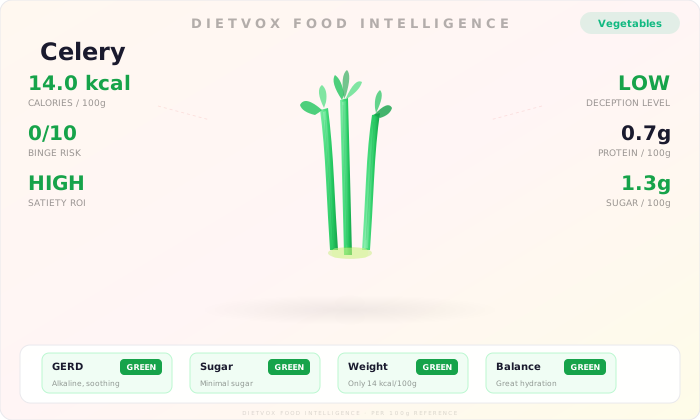
Celery illustration

Celery

14 kcal Vegetables
GREEN GERD
GREEN Sugar
GREEN Weight
GREEN Balance
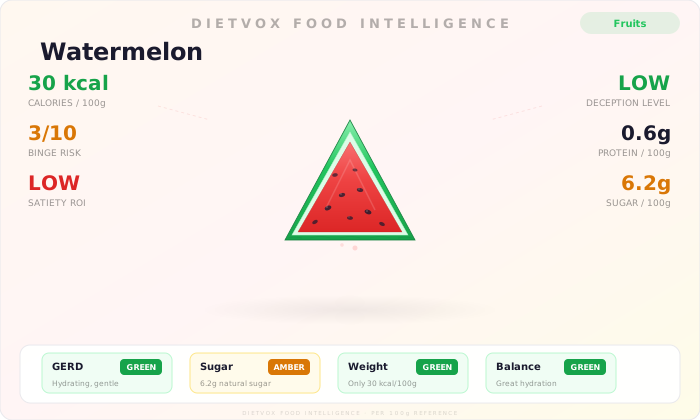
Watermelon illustration

Watermelon

30 kcal Fruits
GREEN GERD
AMBER Sugar
GREEN Weight
GREEN Balance
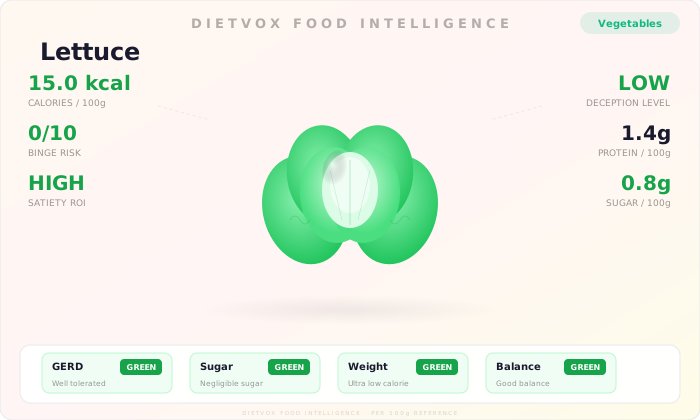
Lettuce illustration

Lettuce

15 kcal Vegetables
GREEN GERD
GREEN Sugar
GREEN Weight
GREEN Balance
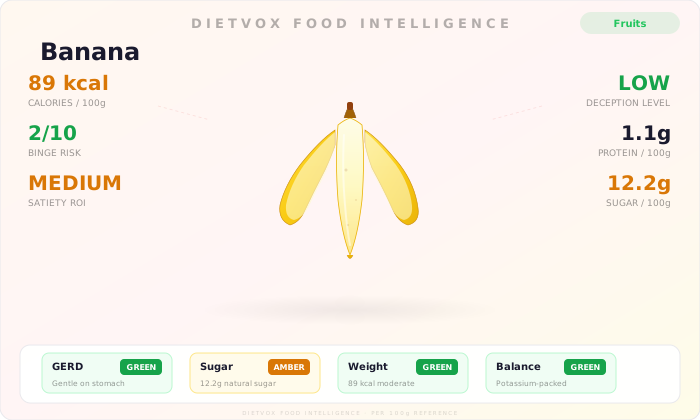
Banana illustration

Banana

89 kcal Fruits
GREEN GERD
AMBER Sugar
AMBER Weight
GREEN Balance

Frequently Asked Questions

Can I eat Cucumber on a gerd (acid reflux) diet?

Yes. DietVox rates Cucumber GREEN for a GERD (acid reflux) diet. Cucumber is a low-acid food, high in water content, and virtually fat-free, making it one of the safest and least likely foods to trigger reflux symptoms.

Are pickled cucumbers (pickles) okay for GERD?

No, pickled cucumbers should be avoided on a GERD diet. The pickling process uses vinegar, which is highly acidic. Acidic foods are a common trigger for heartburn and can irritate the esophagus, as noted in dietary guidelines from sources like the NHS.

Can I drink cucumber juice for acid reflux?

Pure cucumber juice is generally a safe and hydrating option for a GERD diet. However, check labels on store-bought juices for added citric acid, a common preservative that can trigger symptoms. A better option is to make it at home or blend a whole cucumber into a smoothie with other GERD-friendly ingredients like melon or a non-fat yogurt.

Does cucumber skin make GERD worse?

For most people, cucumber skin is well-tolerated and does not worsen GERD. The skin contains insoluble fibre, which can cause bloating in highly sensitive individuals, and bloating can increase pressure on the stomach. If you know you are sensitive to fibre, you can try peeling the cucumber to see if it makes a difference.

What kind of dip can I eat with cucumber on a GERD diet?

Choosing the right dip is crucial. Avoid high-fat, spicy, or acidic dips. Common triggers include traditional hummus (high in garlic and lemon juice), ranch dressing (high-fat), and spicy salsas. A safer alternative is a dip made from non-fat Greek yogurt mixed with gentle herbs like dill or parsley.

Related Reading