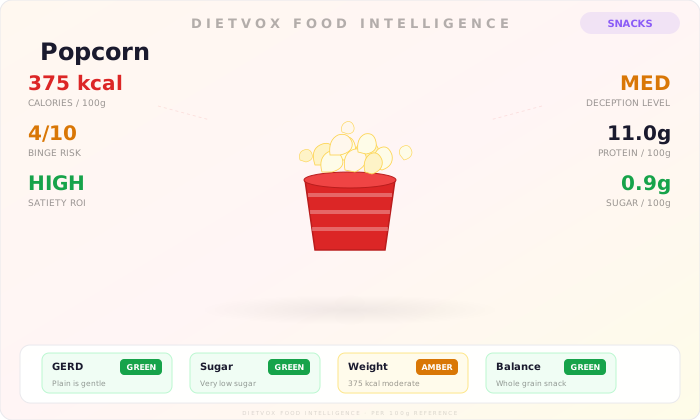
DietVox Rating: GREEN
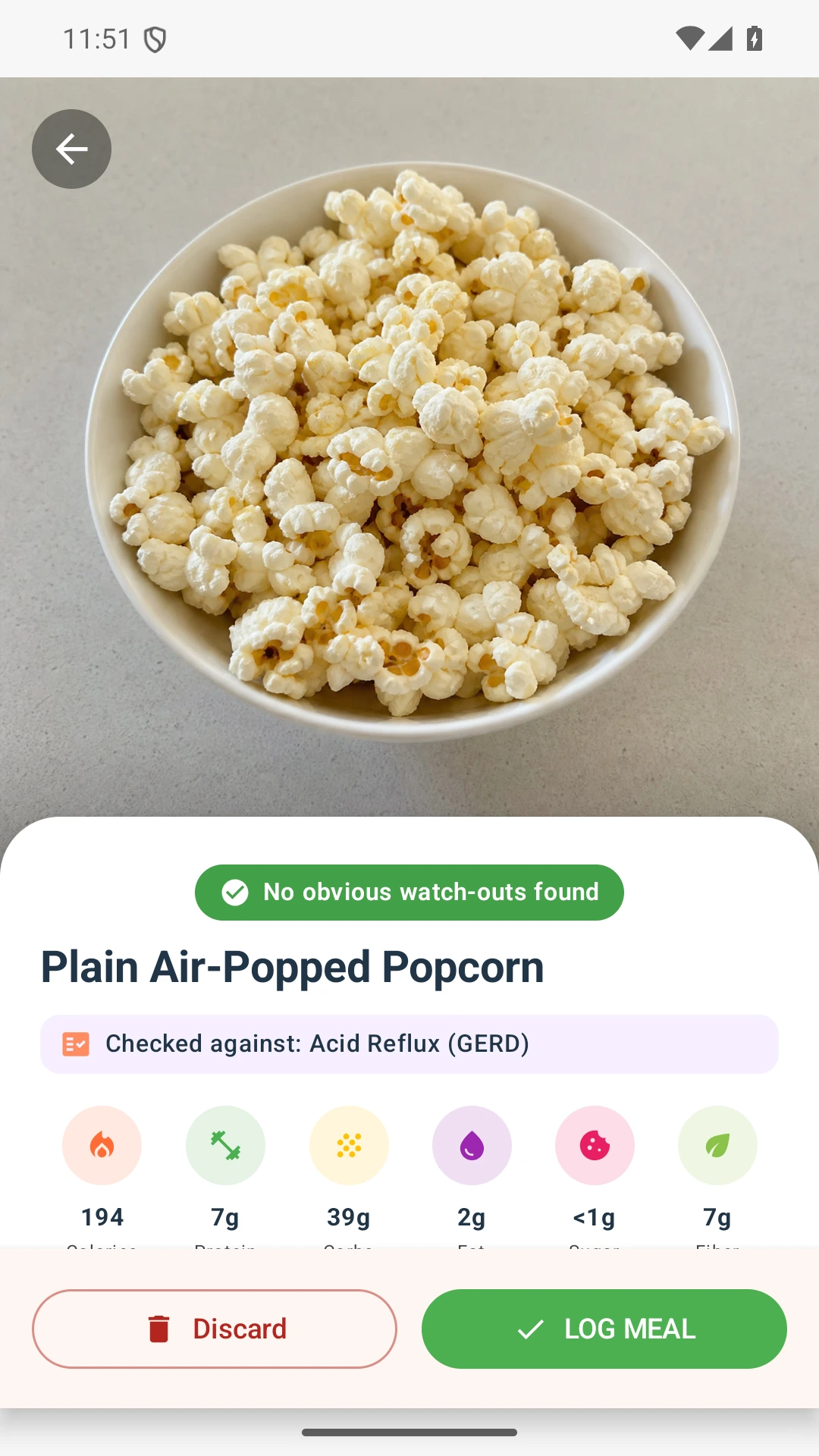
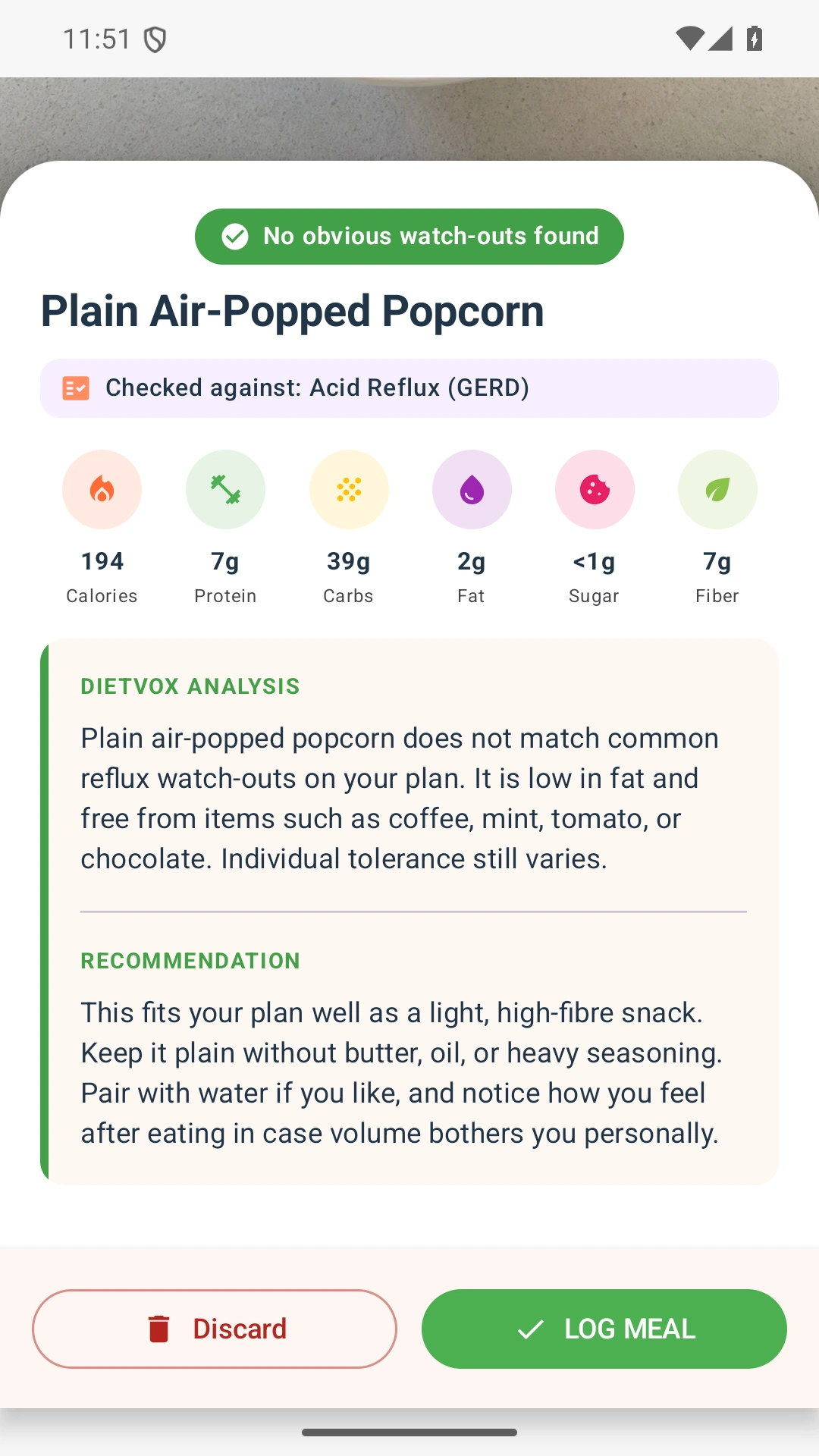
For individuals managing Gastroesophageal Reflux Disease (GERD), finding a satisfying snack that doesn't trigger symptoms like heartburn can be challenging. The question often arises: is popcorn good for gerd? Based on direct source support, DietVox rates plain, air-popped popcorn as GREEN for a GERD (Acid Reflux) diet. This rating signifies that it is generally well-tolerated and can be safely included in your eating plan, provided it is prepared correctly.
This comprehensive analysis will explore the nutritional properties of popcorn, explain the mechanisms by which it benefits a GERD diet, and provide practical guidance on how to enjoy it without risking discomfort.
Nutritional Profile: A GERD-Friendly Analysis
The suitability of a food for a GERD diet often hinges on its fat content, acidity, and fibre. Plain popcorn's nutritional makeup is well-aligned with the dietary recommendations for managing acid reflux.
Per 100 grams, air-popped popcorn contains approximately USDA FoodData Central (FDC ID 168903): - Calories: 375 kcal - Fat: 4.5g - Carbohydrates: 74.0g - Dietary Fibre: 15.0g - Protein: 11.0g
The key takeaway for GERD management is the low fat content. High-fat foods are a known trigger for acid reflux symptoms. They can delay gastric emptying, meaning food sits in the stomach longer, increasing the opportunity for acid to reflux into the esophagus. Furthermore, dietary fats can relax the lower esophageal sphincter (LES), the muscular valve that prevents stomach acid from flowing upwards American College of Gastroenterology acid reflux guidance. At just 4.5g of fat per 100g, air-popped popcorn is a significantly better choice than other common snacks like potato chips or pastries.
The Role of Fibre and Whole Grains in Digestive Health
Popcorn is a whole grain, and its high fibre content is another major advantage for those with GERD. A 100g serving delivers an impressive 15.0g of dietary fibre. There is growing source support that diets rich in fibre may be protective against GERD. A source review listed in PubMed found a significant inverse relationship between dietary fibre intake and the risk of GERD, suggesting that fibre may help reduce reflux episodes PubMed.
Fibre aids in promoting regular bowel movements and preventing constipation. Increased abdominal pressure from constipation can exacerbate GERD symptoms by pushing stomach contents upward against the LES NHS. By supporting overall digestive motility, the fibre in popcorn contributes to a healthier gut environment that is less conducive to reflux.
Preparation is Paramount: The Popcorn Pitfalls to Avoid
While plain, air-popped popcorn receives a GREEN rating, its GERD-friendliness can be quickly compromised by preparation methods and toppings. The difference between a safe snack and a symptom trigger lies entirely in these additions.
What to Avoid: * Butter and Oil: Cinema-style popcorn, or popcorn made with significant amounts of oil or melted butter, dramatically increases the fat content. This added fat can relax the LES and trigger heartburn, turning a safe snack into a problematic one. * Spicy Seasonings: Common reflux triggers include spicy ingredients. Avoid adding chili powder, cayenne pepper, black pepper, or hot sauce to your popcorn. * Known Irritants: For many individuals, garlic and onion powders can also irritate the esophagus or trigger reflux. It is best to avoid these seasonings until you know your personal tolerance levels. * Excessive Salt: While not a direct trigger for reflux, high salt intake can contribute to bloating and is generally not recommended for overall health. * Kettle Corn: The high sugar content in kettle corn may be a trigger for some people with GERD. The added fat from the cooking oil also makes it a less ideal choice.
GERD-Friendly Preparation and Topping Ideas: 1. Air-Pop: The best method for a GERD diet is using an air-popper, which uses only hot air to pop the kernels. This method adds no extra fat or calories. 2. Stovetop (Minimal Oil): If you don't have an air-popper, you can make it on the stovetop with a minimal amount of a stable, high-smoke-point oil. Use just enough to coat the bottom of the pan (e.g., one teaspoon). 3. Safe Seasonings: Instead of butter and irritating spices, consider these GERD-friendly options: * A very light mist of olive oil spray to help seasonings stick, if tolerated. * Nutritional yeast for a cheesy, nutty flavour without dairy fat. * A pinch of salt. * Dried herbs like basil, oregano, or thyme. * A light dusting of cinnamon for a slightly sweet flavour.
Portion Size and Satiety
Popcorn has a high Satiety ROI (Return on Investment), meaning it provides a significant feeling of fullness for the calories consumed. This is due to its high volume and fibre content. This can be beneficial for managing GERD, as overeating and distending the stomach is a primary cause of reflux. A standard serving of 2-3 cups of air-popped popcorn is a satisfying snack that is unlikely to cause excessive stomach pressure.
However, it's important to be mindful. Even a safe food can cause issues in very large quantities. The high fibre, while beneficial, could lead to bloating or gas if you consume an unusually large portion, which in turn could increase abdominal pressure. As with any food, moderation is key.
Disclaimer: This article is for informational purposes only and does not constitute medical advice. Always consult a healthcare provider before making changes to your diet, especially if you have a medical condition.
Scan your foods with the DietVox app to get personalized ratings based on your specific dietary needs and health goals.
Last reviewed: June 2026
How It Works
Why Popcorn is Rated GREEN for a GERD Diet
Popcorn's GREEN rating is based on its inherent nutritional properties when prepared correctly. The primary mechanisms that make it a suitable food for individuals managing acid reflux are:
- Low Fat Content: Plain, air-popped popcorn is naturally low in fat (4.5g per 100g). Diets high in fat are known to delay stomach emptying and reduce the pressure of the lower esophageal sphincter (LES), a primary contributor to reflux episodes American College of Gastroenterology acid reflux guidance. By choosing air-popped popcorn, you avoid this common trigger.
- High in Dietary Fibre: Popcorn is a significant source of dietary fibre (15.0g per 100g). Clinical guidance often suggests that adequate fibre intake supports healthy digestion. This helps prevent constipation, which can increase intra-abdominal pressure and worsen GERD symptoms NHS. Some source review also suggests a direct link between higher fibre intake and a lower risk of GERD PubMed.
- Non-Acidic Nature: Popcorn is not an acidic food. Unlike citrus fruits, tomatoes, or coffee, it does not add to the acid load in the stomach, making it a neutral and safe choice for a sensitive esophagus.
- Whole Grain: As a 100% unprocessed whole grain, popcorn contributes to a balanced diet rich in complex carbohydrates and nutrients. General dietary guidelines from authorities like the World Health Organization (WHO) recommend whole grains as part of a healthy eating pattern, which supports the overall bodily functions that help manage conditions like GERD.
Scan any food. Get an instant RED/AMBER/GREEN rating.
DietVox analyses every food across 4 diet protocols — no guesswork.
Try DietVox Free →Try These Instead
Safer alternatives that won't trigger your symptoms.
Frequently Asked Questions
Is microwave popcorn okay for acid reflux?
It depends on the type. Many microwave popcorn varieties contain high levels of fat, butter, and sodium, which can trigger GERD symptoms. Look for 'plain' or 'natural' versions with minimal added ingredients. The best option is to check the nutrition label for low fat content. Air-popping plain kernels gives you the most control.
What are the best GERD-friendly toppings for popcorn?
To keep popcorn safe for a GERD diet, avoid butter and spicy seasonings. Instead, try a light sprinkle of nutritional yeast for a cheesy flavor, a dash of cinnamon for sweetness, or finely chopped fresh or dried herbs like basil or oregano. A very small pinch of salt is also generally well-tolerated.
Can popcorn cause bloating or gas with GERD?
Yes, for some individuals, the high fibre content in popcorn can lead to gas and bloating, especially if consumed in large quantities or if your body isn't used to a high-fibre diet. Since bloating can increase abdominal pressure and worsen reflux, it's best to start with a small portion (e.g., 1-2 cups) and see how you tolerate it.
Is kettle corn (sweet popcorn) bad for GERD?
Kettle corn is less ideal for a GERD diet than plain popcorn. It's typically made with both oil and sugar. The added fat can relax the lower esophageal sphincter (LES), and for some people, high sugar intake can also be a reflux trigger. It is best to avoid it or consume it in very small, infrequent portions.