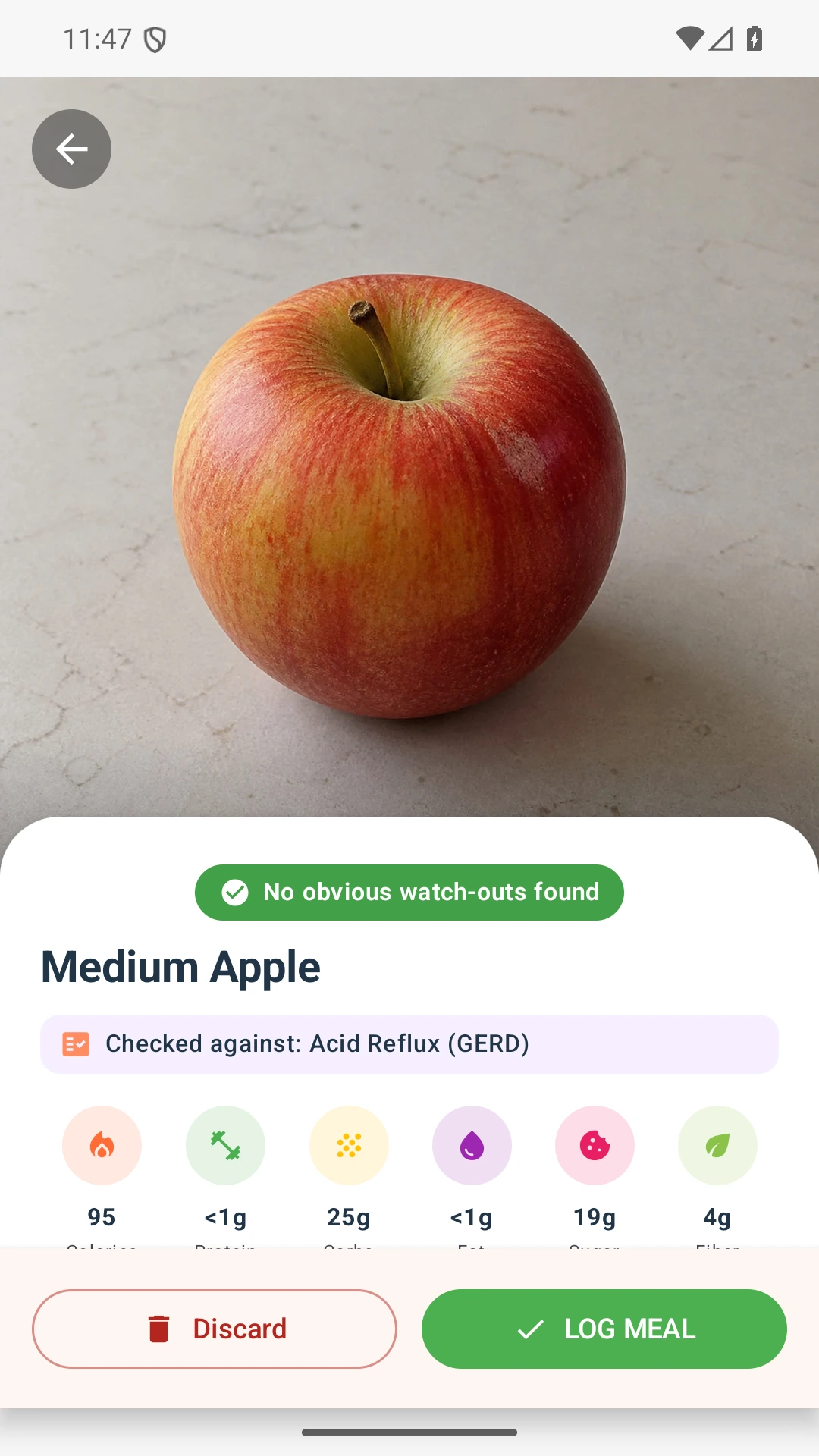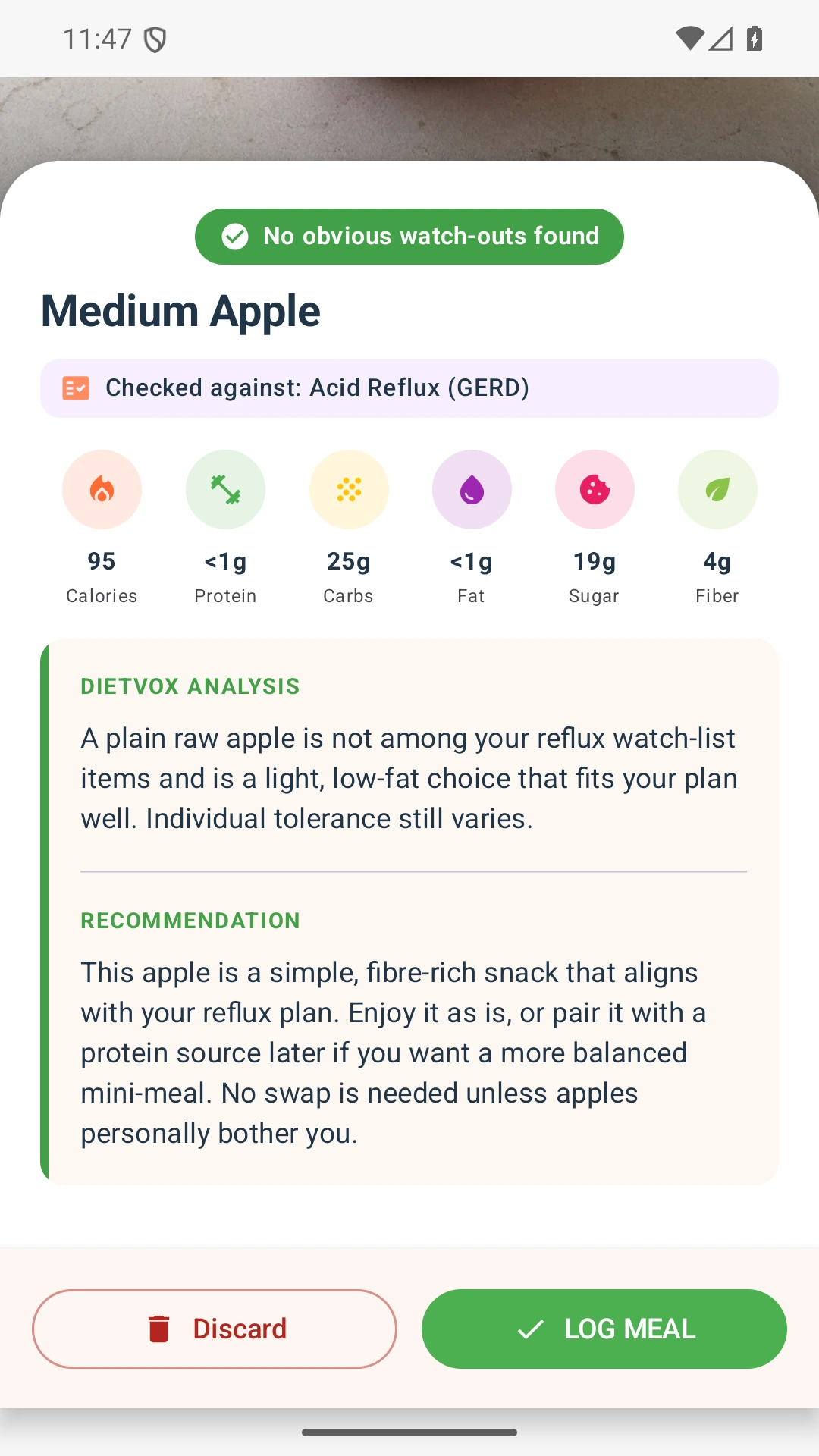
DietVox Rating: GREEN

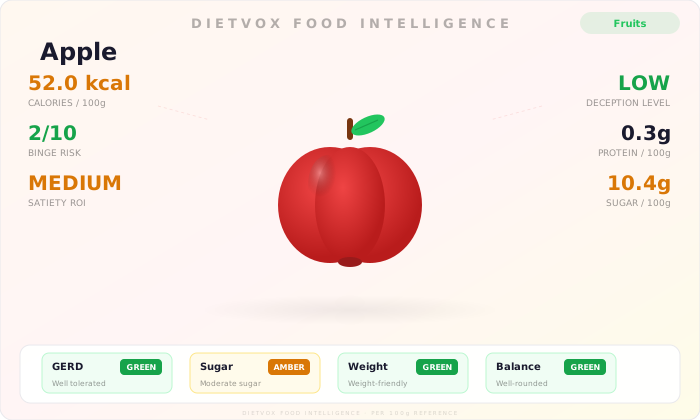
For individuals managing a GERD (Acid Reflux) Diet, the question is apple good for gerd is a common and important one. DietVox assigns Apple a GREEN rating, indicating it is generally well-tolerated and can be a beneficial component of a GERD-friendly eating plan. This rating is based on its favourable nutritional profile, including its low acidity relative to other fruits, beneficial fibre content, and low-fat nature, all of which are key considerations for preventing acid reflux symptoms.

While individual triggers can vary, the biochemical properties of Apple make it a safe choice for most people with GERD. This article will provide a detailed clinical analysis of why Apple earns this rating, how its nutritional components interact with GERD physiology, and practical tips for incorporating it into your diet without issue.

Nutritional Profile of Apple: A GERD-Focused Analysis

Understanding the nutritional composition of Apple is essential to appreciate its role in a GERD diet. Per 100g, Apple contains 52 calories, 0.2g of fat, and 2.4g of dietary fibre USDA FoodData Central (FDC ID 1750340).

Key factors for GERD management include:

  • Fat Content: At just 0.2g of fat per 100g, Apple is a very low-fat food. This is critically important, as high-fat meals are known to relax the lower esophageal sphincter (LES), the muscular valve that keeps stomach acid from flowing back into the esophagus. A relaxed LES is a primary mechanism behind acid reflux American College of Gastroenterology acid reflux guidance.
  • Fibre Content: The 2.4g of fibre, particularly the soluble fibre pectin, plays a constructive role. Fibre promotes healthy digestion and gut motility. By ensuring the digestive system moves efficiently, it can help reduce abdominal pressure and the likelihood of reflux. Some sources suggest that diets rich in fibre are associated with a lower risk of GERD symptoms PubMed.
  • Acidity (pH Level): Apple is a non-citrus fruit with a pH typically ranging from 3.3 to 4.0. While this is acidic, it is significantly less so than classic trigger fruits like lemons (pH 2.0-2.6) or oranges (pH 3.7-4.3). The fibre and water content in an apple also help to buffer its natural malic acid, reducing its potential to irritate the esophagus for most people.

Choosing the Best Apple Varieties for GERD

Not all apples are created equal when it comes to acidity. The taste of an apple is a good indicator of its acid content. Sweeter varieties are generally better tolerated on a GERD diet.

  • Recommended (Sweeter, Lower-Acid): Fuji, Gala, Red Delicious, Honeycrisp.
  • Use with Caution (Tarter, Higher-Acid): Granny Smith, McIntosh, Braeburn.

If you are particularly sensitive to acidic foods, starting with a small portion of a sweet apple variety is a sensible approach. Observing your body's response is always the best guide for personalising your diet NHS.

Practical Tips for Eating Apple on a GERD Diet

How you prepare and consume Apple can be as important as the food itself. To maximise its benefits and minimise any potential for triggering symptoms, consider the following strategies:

  1. Opt for Fresh and Whole: Eating a raw, fresh apple with the skin on provides the most dietary fibre, which aids digestion. The skin is a rich source of insoluble fibre.
  2. Consider Cooked Preparations: For some individuals, cooked apple in the form of unsweetened applesauce or baked apples can be even easier to digest. The cooking process breaks down some of the fibres, making it gentler on the stomach.
  3. Mind Your Portions: A single, medium-sized apple is a reasonable serving. Overeating any food, even a healthy one, can increase stomach pressure and lead to reflux.
  4. Avoid Problematic Pairings: Enjoy your apple on its own or with other GERD-friendly foods. Avoid pairing it with high-fat items like full-fat cheese, nut butters in large quantities, or caramel dips, as the fat content can negate the apple's benefits.
  5. Timing is Key: Avoid eating apples, or any food, within 2-3 hours of lying down. Eating close to bedtime can make it easier for stomach acid to travel up the esophagus American College of Gastroenterology.

Health Forensics: A Deeper Look for the GERD Patient

  • Calorie Density: LOW With only 52 kcal per 100g, Apple is a low-calorie-density food. This is highly beneficial for a GERD diet, as maintaining a healthy weight is one of the most effective lifestyle modifications for reducing reflux symptoms. Excess body weight, particularly around the abdomen, increases pressure on the stomach, which can force acid past the LES NICE.
  • Satiety ROI: LOW Apple has a low Satiety Return on Investment, meaning it provides minimal fullness for its calories due to low protein and moderate fibre. For GERD management, this means it's best used as a snack or part of a larger meal, rather than a meal replacement. To improve satiety, pair it with a small portion of a GERD-friendly protein source like low-fat Greek yogurt or a handful of almonds (if tolerated).
  • Tracking Difficulty: LOW The consistent size and form of an apple make it easy to track for calorie and nutrient intake. This simplicity is helpful when managing a specific dietary protocol like the one for GERD, where careful monitoring of food choices is often necessary.

Disclaimer: This article is for informational purposes only and does not constitute medical advice. Always consult a healthcare provider before making changes to your diet, especially if you have a medical condition.

Scan your foods with the DietVox app to get personalized ratings based on your specific dietary needs and health goals.

Last reviewed: June 2026

How It Works

Why Apple is Rated GREEN

Apple is rated GREEN for a GERD (Acid Reflux) Diet due to a combination of three clinically relevant factors that work together to minimise the risk of triggering symptoms.

  1. Low in Fat: Apple is virtually fat-free, containing only 0.2g of fat per 100g USDA FoodData Central (FDC ID 1750340). High-fat foods are a well-established trigger for acid reflux because they delay gastric emptying and can decrease the pressure of the lower esophageal sphincter (LES), making it easier for acid to splash back into the esophagus American College of Gastroenterology acid reflux guidance.
  1. Contains Beneficial Fibre: The dietary fibre in an apple, including soluble pectin, aids in digestion and promotes regularity. A well-functioning digestive system can reduce intra-abdominal pressure, a key contributor to reflux. sources suggest that increasing dietary fibre intake may help reduce GERD symptoms PubMed.
  1. Moderate Acidity Profile: While technically acidic, an apple's pH (3.3–4.0) is much higher (less acidic) than that of citrus fruits, which are common reflux triggers. Furthermore, the high water and mineral content (like potassium and calcium) in apples can have a mild buffering effect on stomach acid, making it a safer fruit choice for most individuals with GERD.

Scan any food. Get an instant RED/AMBER/GREEN rating.

DietVox analyses every food across 4 diet protocols — no guesswork.

Try DietVox Free →

Try These Instead

Safer alternatives that won't trigger your symptoms.

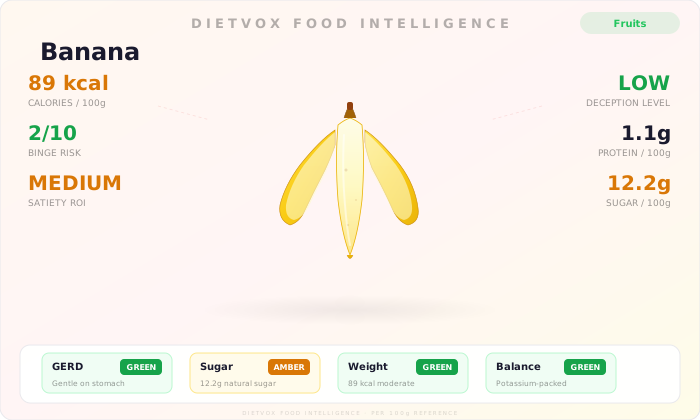
Banana illustration

Banana

89 kcal Fruits
GREEN GERD
AMBER Sugar
AMBER Weight
GREEN Balance
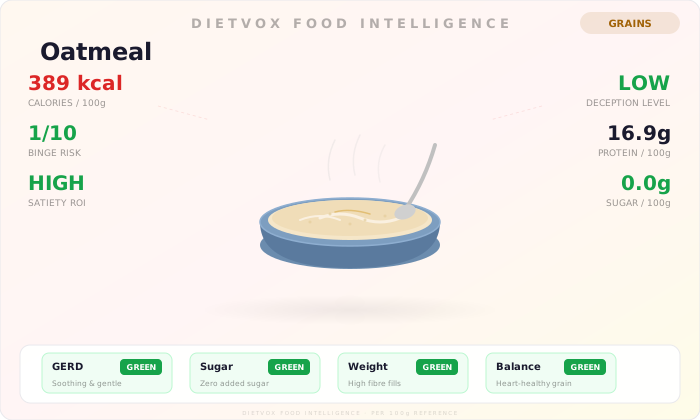
Oatmeal illustration

Oatmeal

389 kcal Grains
GREEN GERD
GREEN Sugar
GREEN Weight
GREEN Balance
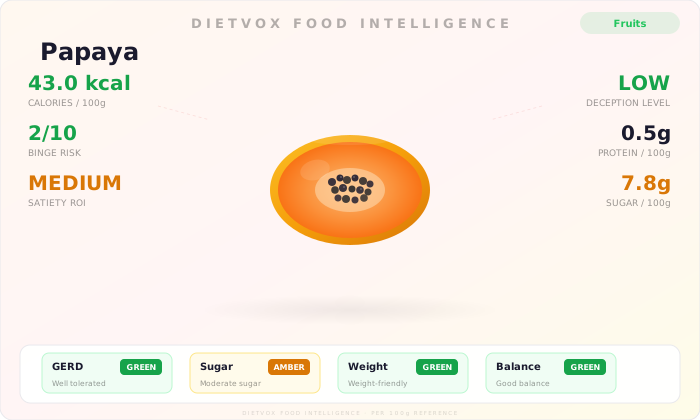
Papaya illustration

Papaya

43 kcal Fruits
GREEN GERD
AMBER Sugar
GREEN Weight
GREEN Balance
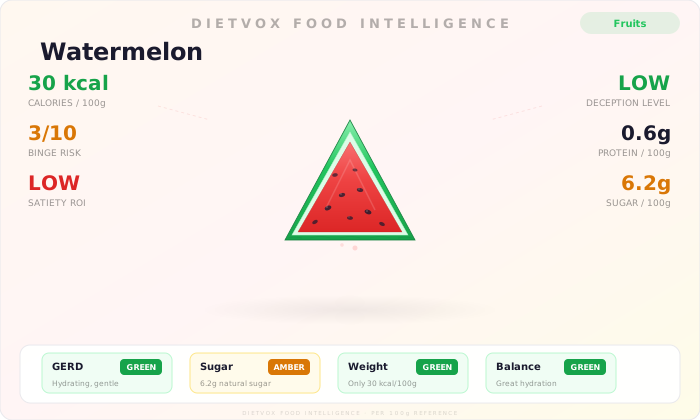
Watermelon illustration

Watermelon

30 kcal Fruits
GREEN GERD
AMBER Sugar
GREEN Weight
GREEN Balance

Frequently Asked Questions

Are red or green apples better for acid reflux?

Generally, red apples are a better choice for a GERD diet. Varieties like Red Delicious, Fuji, and Gala are sweeter and tend to be lower in malic acid compared to tart green apples like Granny Smith. This lower acidity makes them less likely to trigger reflux symptoms in sensitive individuals.

Can I drink apple juice if I have GERD?

Apple juice is often not recommended for GERD. The juicing process removes the dietary fibre, which helps buffer the apple's natural acidity. This results in a more concentrated source of acid and sugar that can trigger heartburn. It is better to consume the whole fruit American College of Gastroenterology acid reflux guidance.

Is unsweetened applesauce a good option for a GERD diet?

Yes, unsweetened applesauce can be an excellent choice. The cooking process breaks down the apple, making it very easy to digest. It retains some of the nutrients and is often better tolerated than raw apples, especially during a flare-up. Ensure you choose a brand with no added sugar or high-fructose corn syrup.

Does eating an apple help stop an active heartburn attack?

While an apple is not a medical treatment for heartburn, some people find that eating a few bites of a sweet, low-acid apple can provide temporary relief. The high water content can help dilute stomach acid, and the fibre may help absorb excess acid. However, for persistent heartburn, it is best to consult a healthcare provider for appropriate treatment NHS.

Related Reading