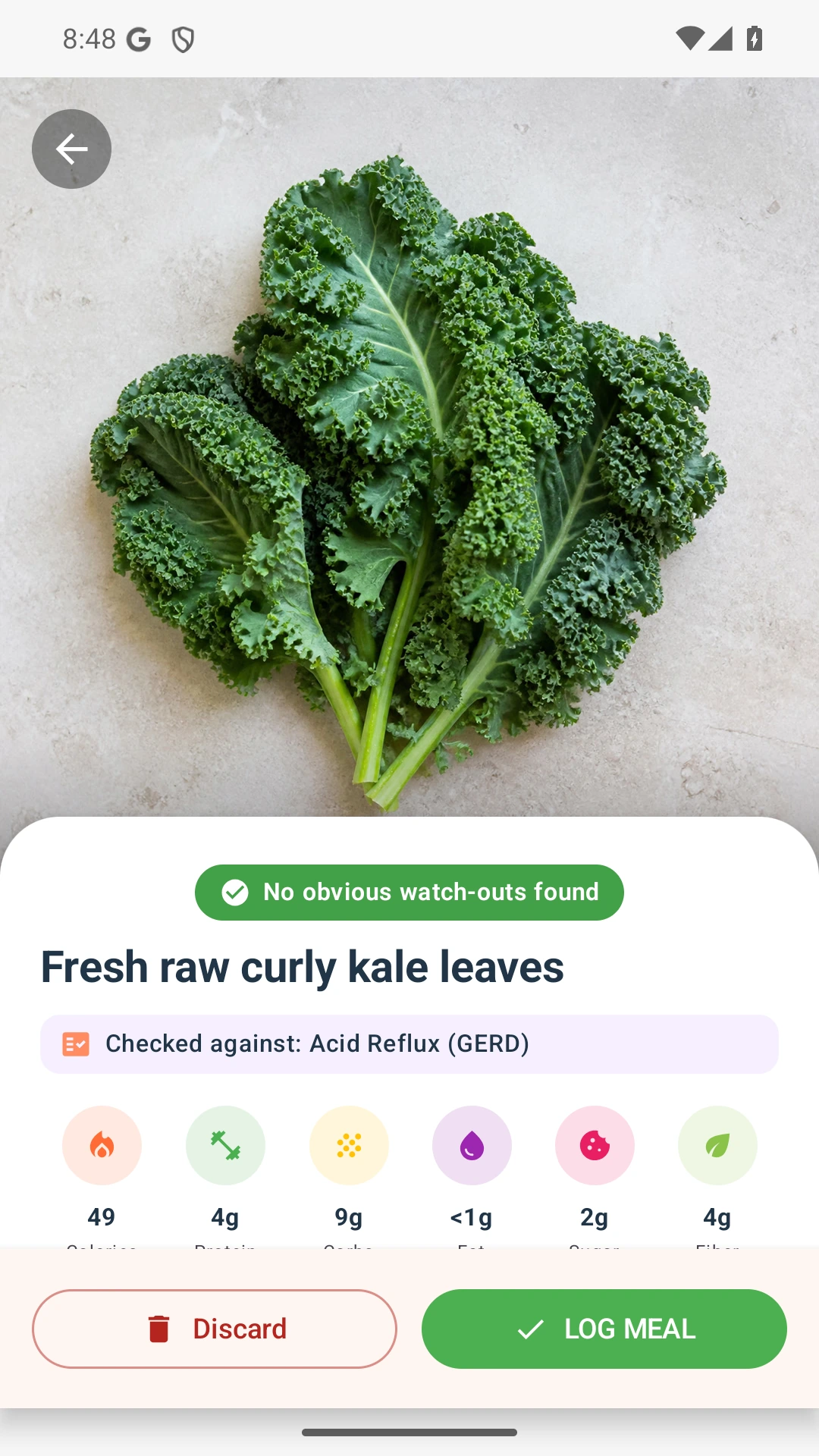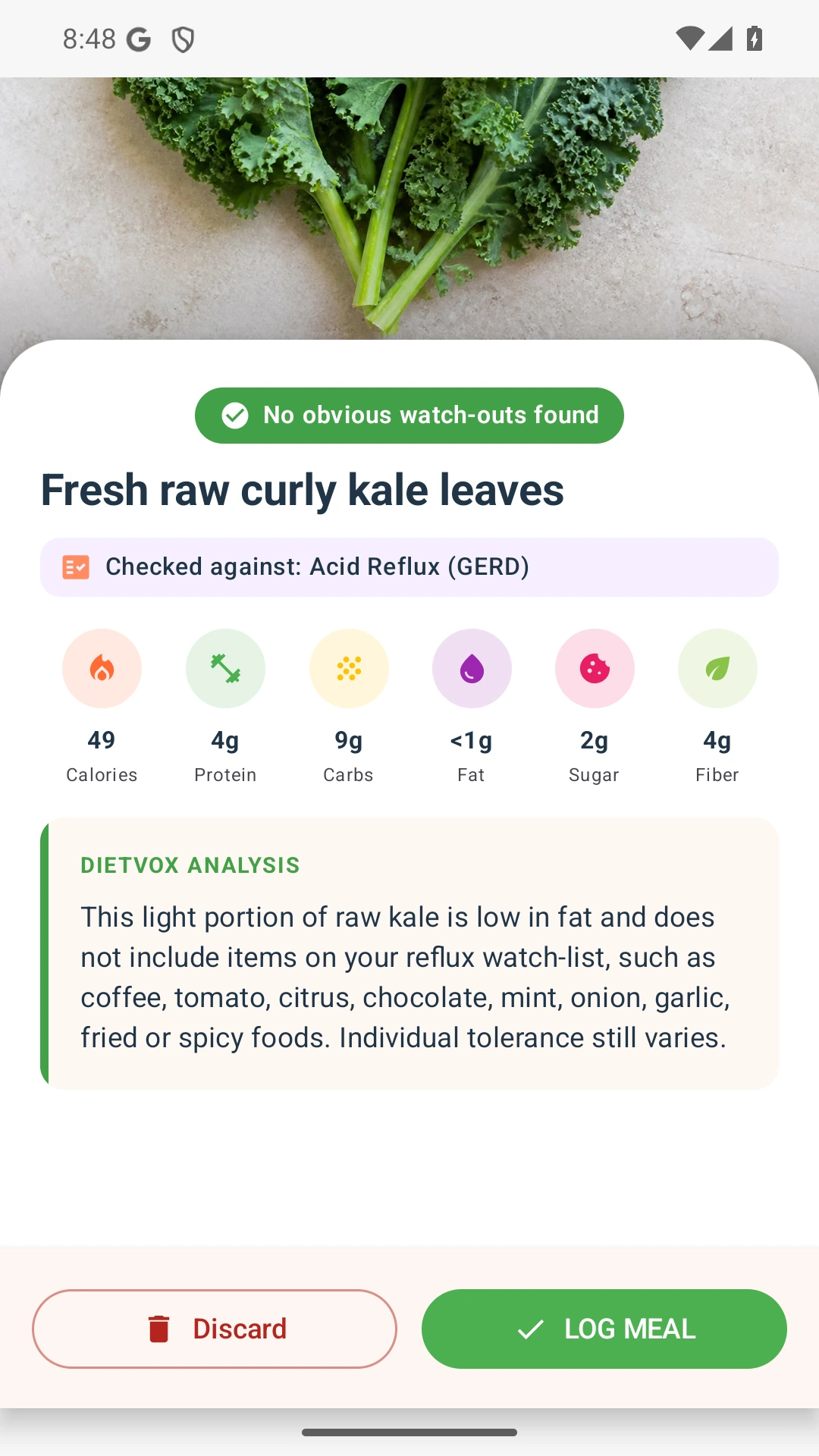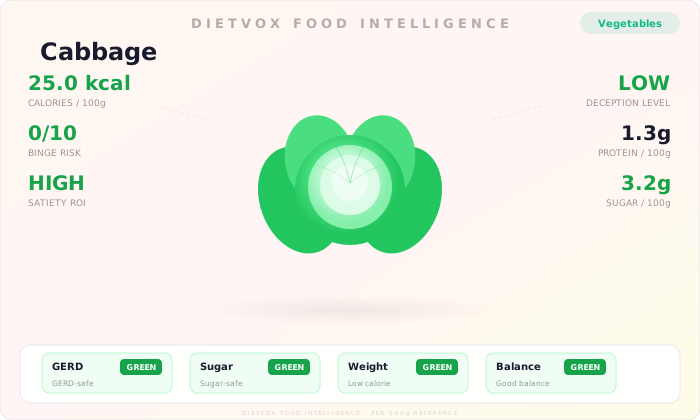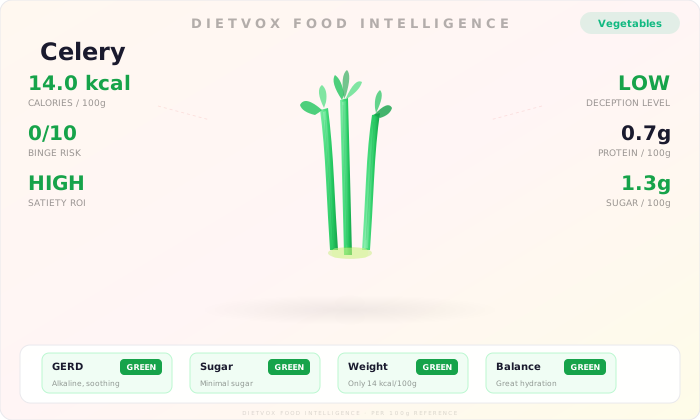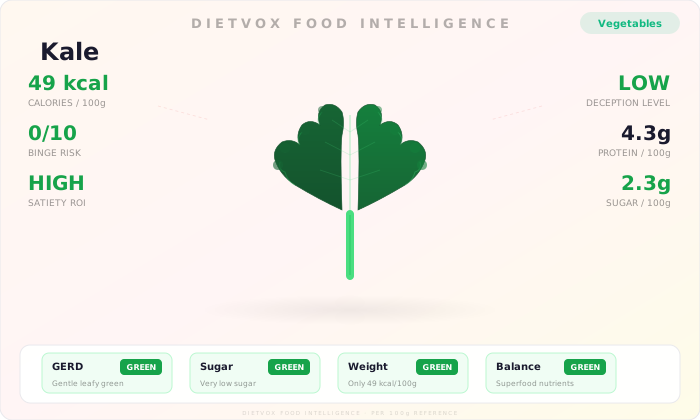
DietVox Rating: GREEN
For individuals managing Gastroesophageal Reflux Disease (GERD), the question is kale good for gerd is a common and important one. According to the DietVox rating system, kale is classified as GREEN, indicating it is a safe and often beneficial food for an acid reflux diet. This rating is based on kale's nutritional profile, which is low in common reflux triggers like fat and acid, and its potential positive impact on digestive health. This article will delve into the direct source support supporting kale's place in a GERD-friendly eating plan.
Understanding Kale's GERD-Friendly Nutrients
Kale's suitability for a GERD diet is rooted in its macronutrient and micronutrient composition. It is a nutrient-dense food that provides significant health benefits without containing compounds known to exacerbate reflux symptoms.
Low in Fat and Acid: A Primary Benefit Per 100g, kale contains only 0.9g of fat USDA FoodData Central (FDC ID 169246). This is a critical factor for GERD management. High-fat foods can delay stomach emptying and relax the lower esophageal sphincter (LES), the muscular valve that prevents stomach acid from flowing back into the esophagus. By choosing low-fat foods like kale, you avoid this common trigger mechanism American College of Gastroenterology acid reflux guidance. Furthermore, kale is a non-acidic vegetable, meaning it is unlikely to cause direct irritation to an already sensitive esophagus, a common issue with acidic foods like citrus and tomatoes Harvard Health Publishing.
Alkaline-Forming Properties While the concept of an "alkaline diet" for GERD is complex, choosing foods that are less acidic is a standard recommendation. Vegetables like kale are considered alkaline-forming, which may help to buffer the highly acidic environment of the stomach. While eating kale won't neutralize all your stomach acid, it certainly won't contribute to the acid load, making it a safe base for meals.
Rich in Dietary Fibre Kale provides 3.6g of dietary fibre per 100g USDA FoodData Central (FDC ID 169246). Available sources suggest a diet rich in fibre can be beneficial for those with GERD. Adequate fibre intake is associated with improved digestive motility and may help reduce symptoms. Some source reviews indicate that a higher intake of dietary fibre can lead to a decreased risk of GERD, possibly by reducing the frequency of transient LES relaxations PubMed.
The Science Behind Kale and Acid Reflux
To understand why kale is a safe choice, it's helpful to look at the primary mechanisms that trigger GERD and how kale interacts with them.
No Negative Impact on LES Pressure Common dietary triggers, including caffeine, alcohol, and chocolate, contain compounds that can cause the lower esophageal sphincter (LES) to relax inappropriately. Kale is free from these compounds. Its consumption does not affect LES pressure, ensuring the barrier between your stomach and esophagus remains secure American College of Gastroenterology.
Does Not Stimulate Excess Gastric Acid Unlike spicy foods, peppermint, or highly acidic fruits, kale is a bland food that does not stimulate the stomach to produce excess acid. It is easily digested without provoking an aggressive acid response, making it gentle on the digestive system.
Supports Healthy Weight Management With a low calorie density of just 49 kcal per 100g, kale is an excellent food for weight management. Maintaining a healthy weight is a primary lifestyle recommendation for managing GERD. Excess body weight, particularly around the abdomen, increases pressure on the stomach, which can force acid up into the esophagus. Incorporating low-calorie, high-volume foods like kale can help you feel full and satisfied, aiding in weight control and, consequently, symptom reduction NHS.
Practical Tips for Incorporating Kale into a GERD Diet
While kale itself is safe, how you prepare and consume it can make a significant difference in your tolerance.
- Choose Gentle Cooking Methods: Raw kale can be tough and fibrous, which may cause bloating in some individuals. Bloating can increase intra-abdominal pressure and worsen reflux. Steaming, boiling, or lightly sautéing kale with a minimal amount of a safe oil (like olive oil) can make it much easier to digest.
- Avoid High-Fat and Acidic Additions: A common mistake is to pair a GERD-safe food with trigger ingredients. Avoid creamy, cheese-based sauces, heavy dressings, excessive butter, or large amounts of garlic and onion powder. Instead, season with fresh herbs or a tiny pinch of salt.
- Mind Your Portions: Even with safe foods, overly large meals can trigger reflux by distending the stomach. Start with a moderate portion of kale as part of a balanced meal to see how your body responds.
- Blend into Smoothies: For a very gentle option, blend a small amount of kale into a smoothie with other GERD-friendly ingredients like banana, oatmeal, and a non-dairy milk like almond milk. This pre-processes the fibre, making it easier on your digestive system.
The Final Verdict on Kale for GERD
Based on its nutritional profile and the known mechanisms of acid reflux, kale is a highly recommended food for a GERD management diet. Its low-fat, non-acidic, and high-fibre nature makes it a safe and beneficial choice. By preparing it thoughtfully and avoiding common trigger ingredients, you can enjoy the extensive health benefits of this leafy green without fear of aggravating your symptoms. Kale's role in supporting a healthy weight further solidifies its position as a GREEN-rated food on the DietVox platform.
Disclaimer: This article is for informational purposes only and does not constitute medical advice. Always consult a healthcare provider before making changes to your diet, especially if you have a medical condition.
Scan your foods with the DietVox app to get personalized ratings based on your specific dietary needs and health goals.
Last reviewed: June 2026
How It Works
Why Kale is Rated GREEN
Kale's GREEN rating for GERD is based on its favourable interaction with the key physiological factors of acid reflux. The source review points to four primary reasons for its safety and suitability:
- Low Fat Content: Kale contains less than 1 gram of fat per 100g USDA FoodData Central (FDC ID 169246). High-fat foods are known triggers for GERD because they delay stomach emptying and can decrease lower esophageal sphincter (LES) pressure, allowing acid to reflux. Kale's minimal fat content avoids this mechanism entirely American College of Gastroenterology acid reflux guidance.
- Non-Acidic Nature: As a leafy green vegetable, kale is not acidic. It does not irritate the esophageal lining upon consumption, unlike acidic trigger foods such as citrus fruits or tomatoes. It is often considered an "alkaline-forming" food, meaning it does not contribute to the body's acid load, which is a core principle of a GERD-friendly diet Harvard Health Publishing.
- Absence of Known Trigger Compounds: Kale is free from substances like caffeine, capsaicin (in spicy foods), or theobromine (in chocolate) that are known to relax the LES or directly stimulate stomach acid production. Its composition is inherently non-irritating to the gastrointestinal system.
- Supports Healthy Weight and Digestion: The low calorie density and high fibre content in kale support two key lifestyle strategies for GERD management. Maintaining a healthy weight reduces physical pressure on the stomach, a primary recommendation from clinical bodies NHS. The dietary fibre promotes regular digestion, which can also help alleviate symptoms.
Scan any food. Get an instant RED/AMBER/GREEN rating.
DietVox analyses every food across 4 diet protocols — no guesswork.
Try DietVox Free →Try These Instead
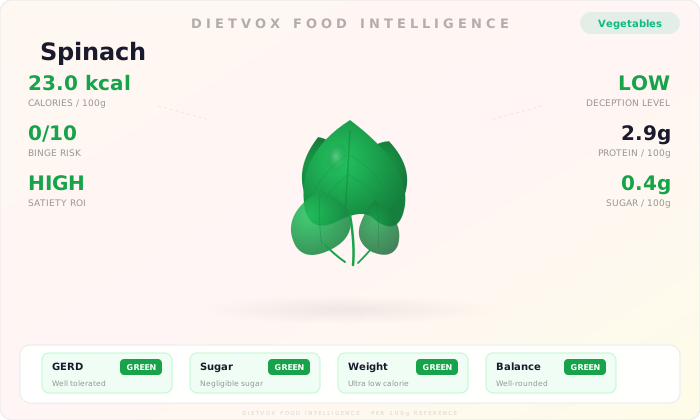
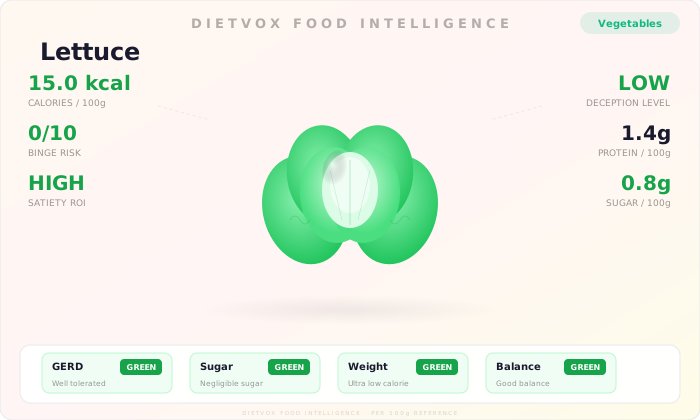
Safer alternatives that won't trigger your symptoms.
Frequently Asked Questions
Is raw kale okay for acid reflux, or should I cook it?
While raw kale is not an acid reflux trigger, cooking it is often better for a GERD diet. Raw kale's tough fibres can be difficult for some people to digest, potentially leading to gas and bloating. This bloating can increase pressure on the stomach and indirectly worsen reflux symptoms. Steaming or lightly sautéing kale breaks down these fibres, making it much gentler on the digestive system.
Can kale cause bloating or gas that makes GERD worse?
Yes, for some individuals, particularly those not accustomed to a high-fibre diet, kale can cause gas and bloating. While this is not a direct acid trigger, the resulting abdominal pressure can physically push stomach contents upward, potentially aggravating reflux. To minimize this, introduce kale into your diet slowly, drink plenty of water, and ensure it is well-cooked.
What are the best GERD-friendly ways to season kale?
To keep kale GERD-friendly, avoid common trigger seasonings like garlic powder, onion powder, cayenne pepper, and black pepper. Instead, opt for gentle herbs such as basil, parsley, or dill. A very small amount of high-quality olive oil and a tiny pinch of salt are generally well-tolerated. Avoid acidic additions like vinegar or large amounts of lemon juice.
Does the type of kale (e.g., curly, Lacinato/dinosaur) matter for a GERD diet?
No, the specific type of kale does not significantly matter for a GERD diet. All varieties, including curly, Lacinato (dinosaur), and Red Russian, share a similar nutritional profile: low in fat, non-acidic, and high in fibre. The most important factor is preparation. Choose the type you prefer and cook it in a GERD-friendly manner.