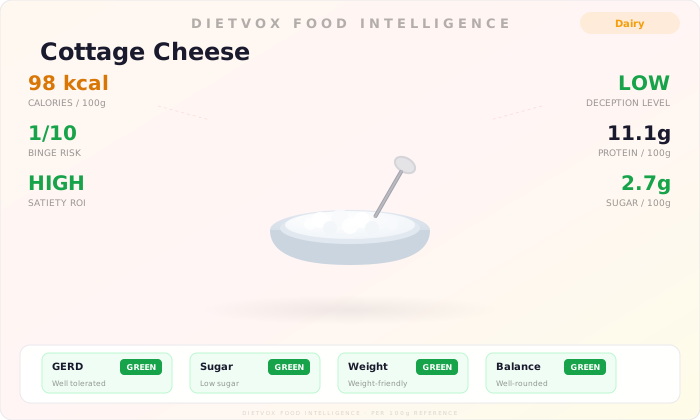
DietVox Rating: GREEN
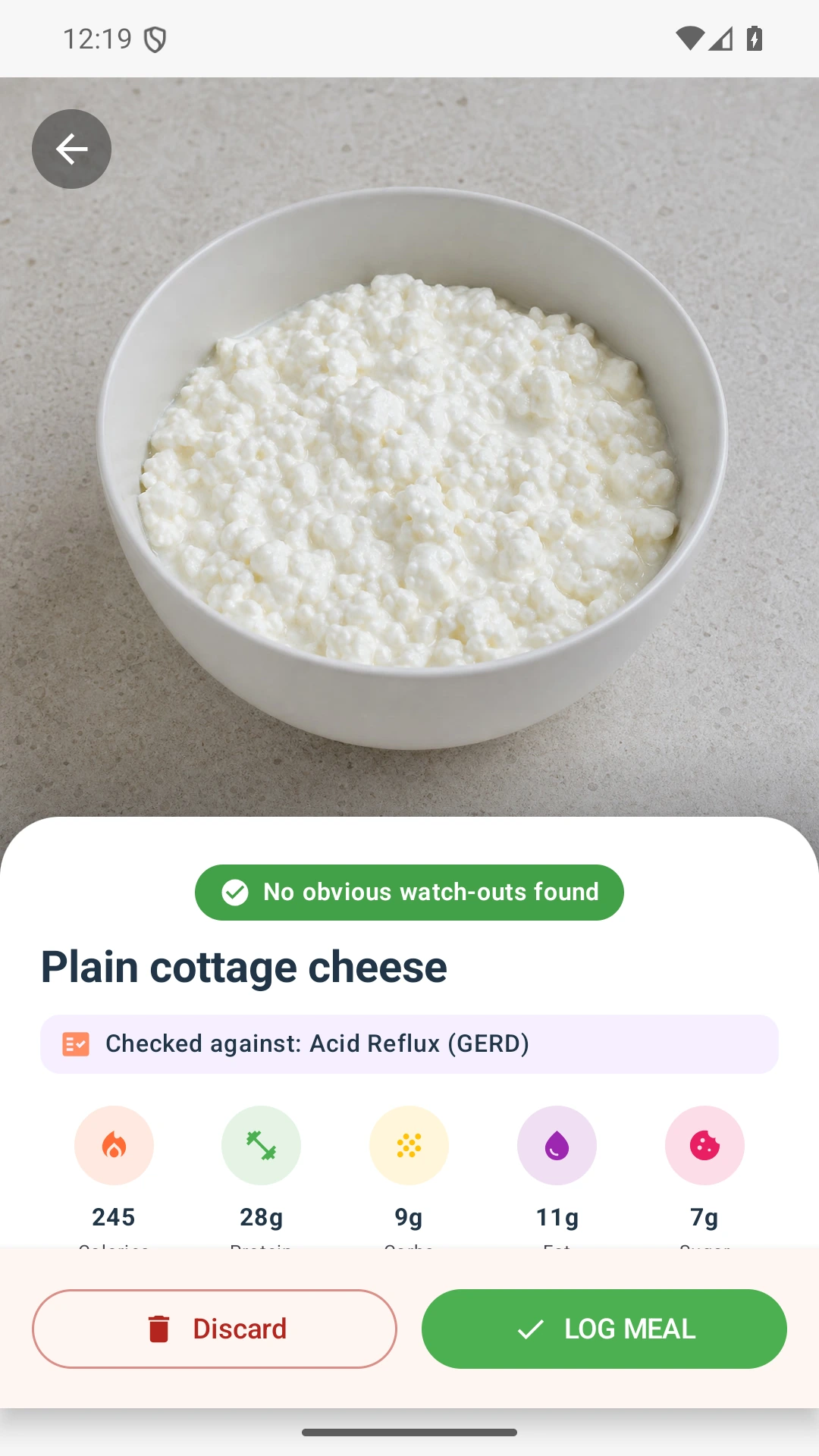
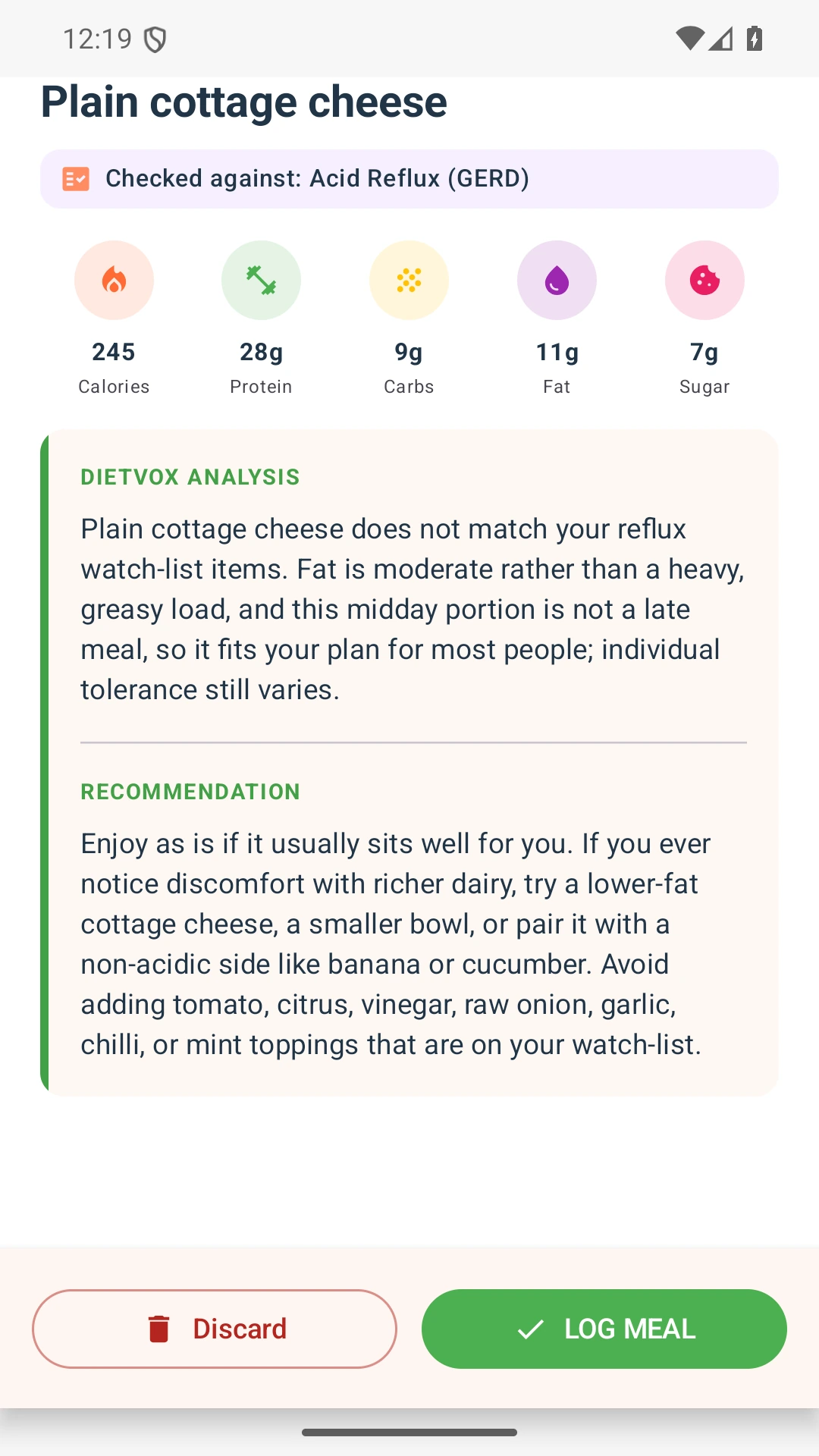
DietVox rates Cottage Cheese as GREEN for a GERD (Acid Reflux) diet. For individuals managing symptoms and asking, is cottage cheese good for GERD, our analysis of direct source support indicates that it is a safe and often beneficial choice. A GREEN rating signifies that the food is unlikely to trigger symptoms for most people with GERD and can be incorporated regularly into a balanced, reflux-friendly eating plan. However, the key lies in selecting the right type—specifically, plain, low-fat, or non-fat varieties.
This rating is based on its favourable macronutrient profile, low acidity, and its impact on digestive processes known to influence reflux, such as gastric emptying speed and lower esophageal sphincter (LES) pressure.
Why This Matters for Cottage Cheese and GERD
Understanding why cottage cheese is well-tolerated requires examining its nutritional properties in the context of GERD pathophysiology. The primary factors that make it a suitable choice are its low fat content, high protein, and non-acidic nature.
Low Fat Content and Gastric Emptying
One of the most critical dietary strategies for managing GERD is limiting the intake of high-fat foods. According to clinical guidance from the American College of Gastroenterology acid reflux guidance, fatty foods can relax the lower esophageal sphincter (LES) and delay stomach emptying. When food stays in the stomach longer, there is more opportunity for acid to reflux back into the esophagus, causing heartburn and other symptoms.
Cottage cheese, particularly the low-fat version, aligns perfectly with this recommendation. A standard 100g serving contains only 4.3g of fat, with just 1.7g of that being saturated fat USDA FoodData Central. This low fat content means it is digested relatively quickly and is less likely to cause the delayed gastric emptying associated with reflux episodes. Choosing non-fat versions further minimizes this risk.
High Protein for Satiety and LES Support
With 11.1g of protein per 100g, cottage cheese is an excellent source of this crucial macronutrient. Protein plays a dual role in a GERD-friendly diet:
- Satiety: Protein is highly satiating, meaning it helps you feel full and satisfied for longer. This can help prevent overeating, which is a significant mechanical trigger for reflux. A large volume of food in the stomach increases intragastric pressure, physically pushing stomach contents up against the LES American College of Gastroenterology.
- LES Pressure: Some source support suggests that adequate protein intake may help maintain or even increase LES pressure, strengthening the barrier between the stomach and esophagus. While this effect is complex, a diet that includes lean protein sources is consistently recommended for GERD management.
Mild and Non-Acidic Nature
Dietary triggers for GERD often include acidic foods that can directly irritate the lining of the esophagus or worsen heartburn symptoms. Common culprits include citrus fruits, tomatoes, and vinegar-based dressings. Cottage cheese is a mild, alkaline-forming food, making it inherently gentle on the digestive system. Its lack of acidity means it won't contribute to the irritation of an already sensitive esophagus, a key consideration for those experiencing frequent reflux or esophagitis.
Nutritional Profile: A GERD-Friendly Analysis
A detailed look at the nutritional data for 100g of cottage cheese highlights its suitability for an acid reflux diet.
- Calories: 98 kcal
- Protein: 11.1g
- Fat: 4.3g (1.7g saturated)
- Carbohydrates: 3.4g
- Sugar: 2.7g
- Fibre: 0g
- Sodium: 364mg
The low calorie density (98 kcal/100g) is particularly beneficial. Maintaining a healthy weight is one of the most effective lifestyle modifications for reducing GERD symptoms. The NHS highlights that excess weight, especially around the abdomen, increases pressure on the stomach, which can cause acid reflux. Low-calorie, high-satiety foods like cottage cheese are ideal for weight management without sacrificing nutrition.
The moderate sodium content (364mg) should be noted. While not a direct GERD trigger, monitoring overall sodium intake is important for cardiovascular health. When possible, compare brands to find a lower-sodium option.
Practical Tips for Including Cottage Cheese in Your GERD Diet
To ensure cottage cheese remains a GERD-friendly food, follow these simple guidelines:
- Prioritise Low-Fat or Non-Fat: This is the most important rule. Always check the label and choose varieties with 1% or 2% milk fat, or non-fat versions. Avoid full-fat (4% or higher) cottage cheese.
- Stick to Plain Varieties: Flavoured cottage cheese often contains added sugars or fruit purees that can be problematic. Pineapple, peach, or other fruit-on-the-bottom options frequently use acidic fruits and syrups that can trigger reflux.
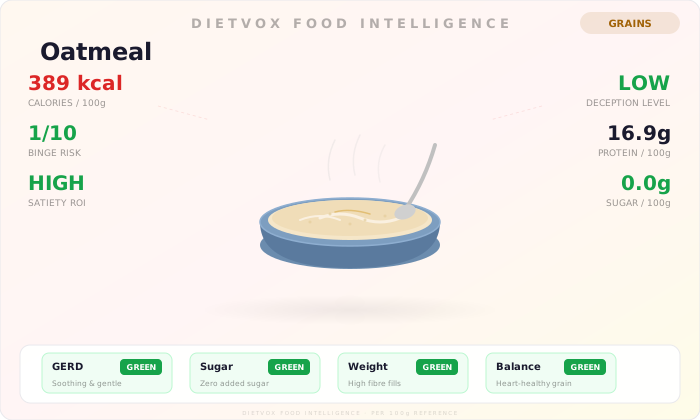
- Mind Your Toppings: How you serve cottage cheese matters. Pair it with other GERD-safe foods. Good options include sliced bananas, melon, a sprinkle of oatmeal, or a few slivered almonds. Avoid adding acidic fruits, tomatoes, onions, or spicy seasonings.
- Watch Portion Sizes: While cottage cheese is a safe food, any large meal can trigger reflux. A typical serving size of a half-cup to one cup is appropriate. Avoid eating a very large bowl, especially close to bedtime.
- Timing Matters: As with all foods, it's best to avoid eating cottage cheese (or anything else) within 2-3 hours of lying down. This gives your stomach time to empty and reduces the risk of nighttime reflux.
Common Misconceptions About Dairy and Acid Reflux
Navigating dietary advice for GERD can be confusing, and dairy products are often a source of misunderstanding.
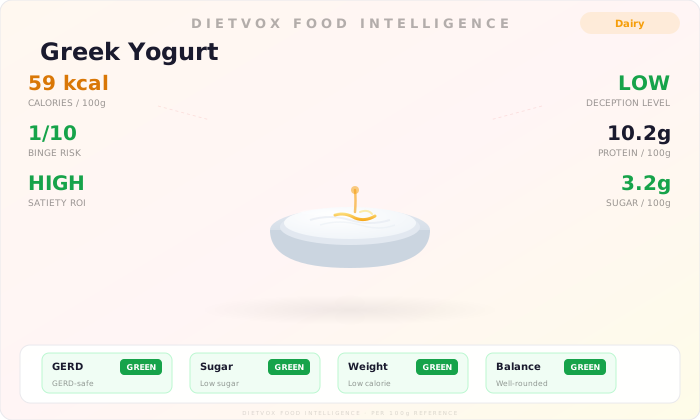
Misconception 1: "All dairy products are bad for GERD." This is incorrect. The fat content is the primary determinant. While high-fat dairy like whole milk, heavy cream, and full-fat hard cheeses can worsen reflux, low-fat options are generally well-tolerated. Low-fat cottage cheese, skim milk, and plain, low-fat yogurt are excellent choices for a GERD diet.
Misconception 2: "Cottage cheese causes mucus and worsens reflux." The belief that milk and dairy products increase mucus production is a persistent myth. A systematic review of the available literature listed in the journal Archives of Disease in Childhood found no causal link between dairy intake and increased mucus production PubMed. For the vast majority of people, cottage cheese will not cause phlegm or mucus that could complicate GERD symptoms.
Disclaimer: This article is for informational purposes only and does not constitute medical advice. Always consult a healthcare provider before making changes to your diet, especially if you have a medical condition.
Scan your foods with the DietVox app to get personalized ratings based on your specific dietary needs and health goals.
Last reviewed: June 2026
How It Works
Why Cottage Cheese is Rated GREEN
Cottage cheese earns a GREEN rating from DietVox for the GERD (Acid Reflux) diet due to a combination of four rating factors that make it a safe and beneficial choice for most individuals managing this condition.
- Low in Fat: The primary mechanism is its low fat content (in low-fat or non-fat varieties). High-fat foods are known to delay gastric emptying and relax the lower esophageal sphincter (LES), two key contributors to acid reflux events. By being low in fat, cottage cheese is processed more quickly by the stomach, reducing the time window for reflux to occur American College of Gastroenterology acid reflux guidance.
- High in Protein: Its high protein content (11.1g per 100g) promotes satiety. This feeling of fullness helps prevent overeating—a major mechanical trigger that increases pressure inside the stomach and forces acid upward American College of Gastroenterology.
- Non-Acidic and Mild: Cottage cheese is not an acidic food. It is bland and gentle on the esophagus, unlike common trigger foods such as citrus, tomatoes, or spicy ingredients. This makes it less likely to cause direct irritation to an already inflamed esophageal lining.
- Supports Weight Management: With a low calorie density of 98 kcal per 100g, cottage cheese is an excellent food for weight management. health guidance consistently identify maintaining a healthy weight as a cornerstone of long-term GERD control, as excess abdominal fat increases pressure on the stomach NHS.
Scan any food. Get an instant RED/AMBER/GREEN rating.
DietVox analyses every food across 4 diet protocols — no guesswork.
Try DietVox Free →Try These Instead
Safer alternatives that won't trigger your symptoms.
Frequently Asked Questions
Should I choose full-fat or low-fat cottage cheese for GERD?
You should always choose low-fat or non-fat cottage cheese for a GERD diet. High-fat foods are a well-established trigger for acid reflux because they delay stomach emptying and can relax the valve between the stomach and esophagus. The higher fat content in full-fat cottage cheese can increase the likelihood of symptoms.
Can I eat cottage cheese with fruit if I have acid reflux?
Yes, but be selective with the fruit. Pairing cottage cheese with low-acid fruits like bananas, melons (cantaloupe, honeydew), or pears is generally a safe and healthy option. You should strictly avoid pairing it with high-acid citrus fruits like oranges, grapefruit, and pineapple, as these are common GERD triggers.
Does the sodium in cottage cheese affect GERD?
Sodium is not considered a direct trigger for GERD symptoms. However, many brands of cottage cheese can be moderately high in sodium. A high-sodium diet is linked to other health concerns, so it is wise to be mindful of your intake. If you consume cottage cheese regularly, consider comparing brands and choosing a lower-sodium option for better overall health.
Is cottage cheese a good late-night snack for someone with GERD?
It can be a better choice than many other snacks, but timing is crucial. health guidance from the NHS recommend not eating for at least 2-3 hours before lying down to prevent nighttime reflux. If you need a snack, a small portion of plain, low-fat cottage cheese is a good option because it's high in protein and low in fat and sugar. However, it's always best to avoid eating right before bed.