DietVox Rating: GREEN
Onion is rated GREEN for a low sugar diet. This rating signifies that it is an excellent choice and can be consumed regularly without significant concern for its sugar content. Many people following this protocol ask, is onion low carb and low in sugar? The source support indicates yes; while it contains carbohydrates, its sugar content is modest, especially within typical serving sizes. This article provides a detailed clinical analysis of onion's nutritional profile and its compatibility with a low sugar lifestyle, based on data from leading health authorities.
A Deeper Look at Onion's Nutritional Profile
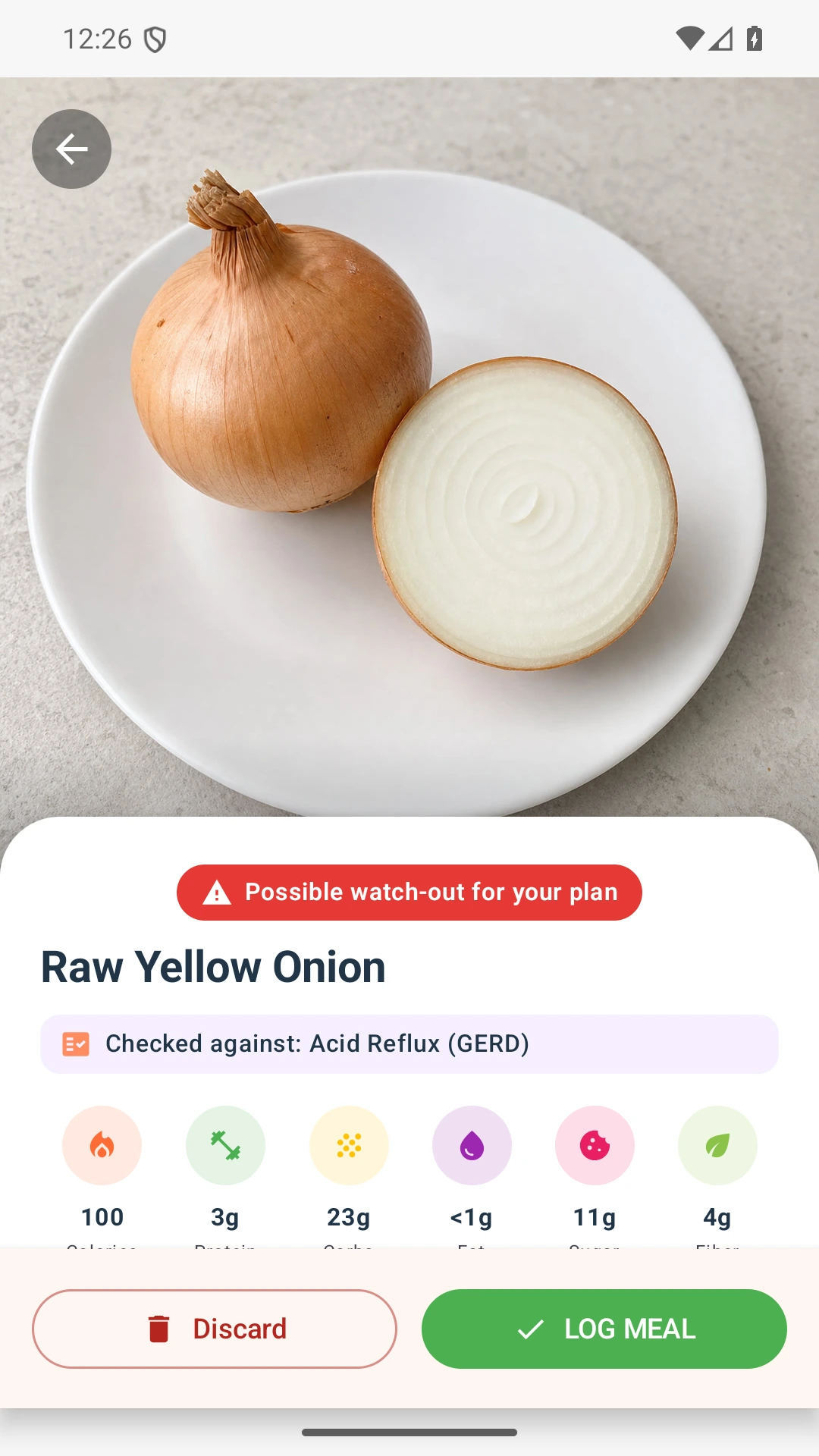
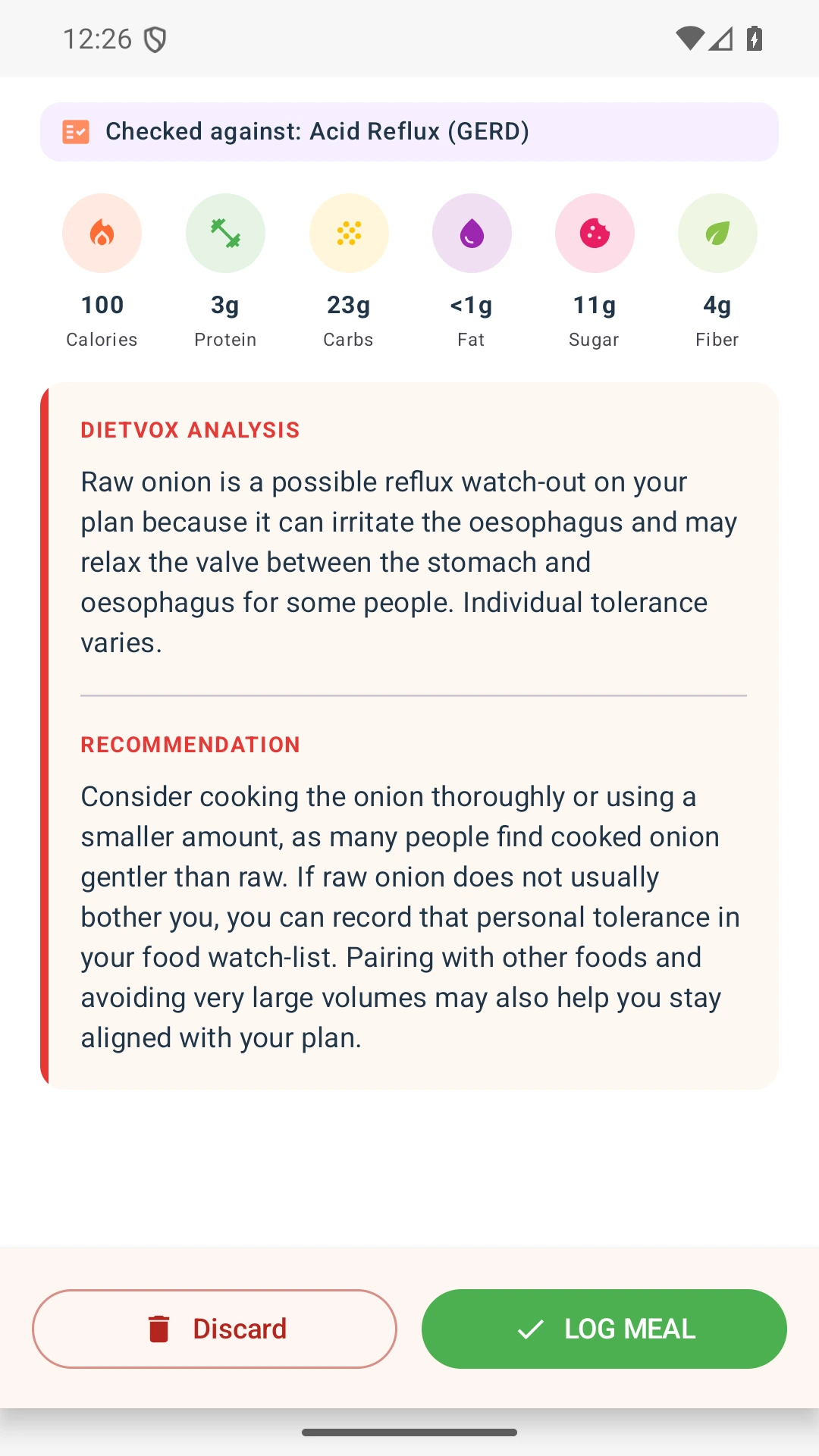
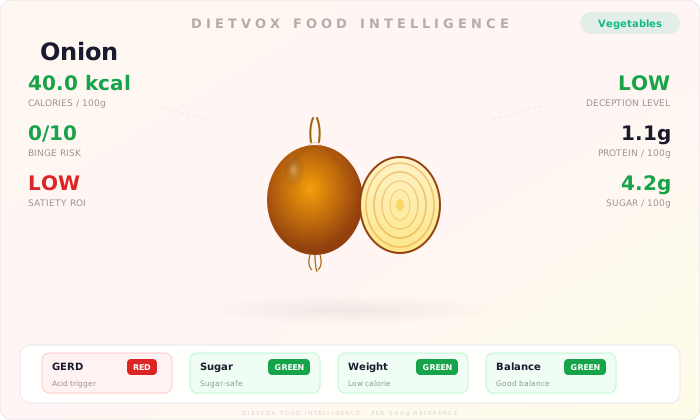
To understand why onion earns a GREEN rating, we must examine its macronutrient composition. According to the USDA FoodData Central (FDC ID 170000), 100 grams of raw onion contains:
- Calories: 40 kcal
- Carbohydrates: 9.34 g
- Sugars: 4.24 g
- Dietary Fibre: 1.7 g
- Protein: 1.1 g
- Fat: 0.1 g
The key figure for a low sugar diet is the 4.24 grams of sugar. This amount is relatively low, positioning onion favourably against many other vegetables. The World Health Organization (WHO) recommends reducing the intake of free sugars to less than 10% of total energy intake WHO. The sugars in whole vegetables like onions are intrinsic, not free, and are consumed alongside fibre, which helps to moderate their absorption.
The 1.7 grams of dietary fibre also plays a crucial role. Fibre slows down digestion and the absorption of sugar into the bloodstream, preventing sharp spikes in blood glucose levels. This is a cornerstone principle of a low sugar or low glycemic diet, as recommended by institutions like the American Diabetes Association food and nutrition guidance for managing blood sugar.
Health Forensics: Onion on a Low Sugar Diet
Our Health Forensics model provides further context on how onion performs within a structured eating plan.
- Calorie Density: LOW With only 40 kcal per 100g, onion is a low-calorie-density food. This means you can add a substantial amount of flavour and volume to your meals for a very small caloric cost. Foods with low calorie density are beneficial for weight management, a common goal associated with low sugar diets, as they help promote fullness without excess calories CDC healthy weight guidance.
- Satiety ROI: LOW Onion has a low Satiety Return on Investment. With just 1.1g of protein and 1.7g of fibre, it does not significantly contribute to feelings of fullness on its own. This is not a drawback but rather a clarification of its role. Onion should be viewed as a foundational flavouring agent and component of a larger meal, not as a primary source of satiating nutrients. To create a balanced, low-sugar meal, onion should be paired with high-satiety foods like lean protein (chicken, fish) or high-fibre legumes.
direct source support and Health Benefits
Beyond its low sugar content, onion possesses other health-promoting properties relevant to metabolic health. Onions are rich in flavonoids, particularly a potent antioxidant called quercetin. Numerous source reviews have investigated quercetin's effects on health.
source review listed in PubMed suggests that quercetin may have beneficial effects on blood pressure and endothelial function. A systematic review and meta-analysis found that quercetin supplementation resulted in a significant reduction in systolic blood pressure. While eating onions is not the same as taking a supplement, a diet rich in quercetin-containing foods is a hallmark of healthy eating patterns like the Mediterranean diet MedlinePlus Mediterranean diet overview.
Furthermore, the anti-inflammatory properties of compounds in onions may help mitigate the low-grade chronic inflammation often associated with metabolic syndrome and high-sugar diets. A diet rich in vegetables and fruits, including alliums like onions, is consistently recommended by global health bodies for reducing the risk of chronic diseases.
Practical Tips for Using Onion in Your Low Sugar Diet
Incorporating onion into your low sugar diet is straightforward. Its versatility makes it a staple in kitchens worldwide.
- Mindful of Cooking Methods: Raw or lightly sautéed onions are excellent. Caramelizing onions involves slow-cooking them until their natural sugars break down and sweeten. While this process doesn't add external sugar, it does concentrate the existing sugars as water evaporates, increasing the sugar density. A small amount of caramelized onion is generally fine, but be mindful of the quantity.
- Focus on Portion Size: While onion is rated GREEN, portion context is key. A typical recipe might call for one medium onion (approx. 110g), which is often split between multiple servings. A single serving might contain only 25-50g of onion, contributing just 1-2g of sugar to your meal.
- Use as a Flavour Base: Use finely chopped onion as the foundation for low-sugar soups, stews, curries, and sauces. It adds a depth of flavour that can reduce the need for sugar-laden pre-made sauces.
- Add to Salads and Omelettes: Thinly sliced raw red onion adds a sharp, pleasant crunch to salads. Diced onion is a perfect addition to egg-based dishes like omelettes and frittatas, boosting flavour and nutrient content without impacting blood sugar.
Disclaimer: This article is for informational purposes only and does not constitute medical advice. Always consult a healthcare provider before making changes to your diet, especially if you have a medical condition.
Scan your foods with the DietVox app to get personalized ratings based on your specific dietary needs and health goals.
Last reviewed: June 2026
How It Works
Why Onion is Rated GREEN
DietVox assigns a GREEN rating to Onion for a low sugar diet based on three primary factors: its modest sugar content, the impact of typical serving sizes, and its minimal effect on blood glucose levels.
- Low Absolute Sugar Content: Per 100 grams, raw onion contains 4.24 grams of sugar USDA FoodData Central (FDC ID 170000). This quantity is considered low and fits comfortably within the daily limits of a diet focused on sugar reduction. The sugars present are naturally occurring and are packaged with fibre and micronutrients, which is fundamentally different from the 'free sugars' found in processed foods and sugary drinks that health organizations like the WHO advise limiting.
- Realistic Serving Sizes: The most critical factor in this rating is practicality. It is uncommon for an individual to consume 100g (about the size of a medium onion) in a single sitting. A more realistic serving, when used as an ingredient, is between 25-50g. At this quantity, the total sugar contribution is only 1.1 to 2.1 grams—a negligible amount in the context of a full day's intake. This portion-based reality makes onion a safe and reliable choice for flavouring meals.
- Low Glycemic Impact: The combination of low sugar and the presence of 1.7g of dietary fibre per 100g results in a low glycemic load. This means that consuming onion is unlikely to cause a rapid or significant spike in blood sugar levels. Maintaining stable blood glucose is a primary objective of a low sugar diet, and onion's nutritional profile supports this goal effectively, as outlined in principles from International glycemic index tables review.
Scan any food. Get an instant RED/AMBER/GREEN rating.
DietVox analyses every food across 4 diet protocols — no guesswork.
Try DietVox Free →Try These Instead
Safer alternatives that won't trigger your symptoms.
Frequently Asked Questions
Are cooked onions higher in sugar than raw onions?
Cooking does not create sugar, but it can change the form and concentration. Slow cooking or caramelizing breaks down complex carbohydrates in the onion into simpler, sweeter-tasting sugars. Additionally, as water evaporates during cooking, the sugar becomes more concentrated by weight. However, for a typical serving, the total sugar amount remains low and is generally acceptable on a low sugar diet.
Which type of onion is best for a low sugar diet: red, yellow, or white?
The nutritional differences between red, yellow, and white onions in terms of sugar and carbohydrates are minimal. All are excellent choices for a low sugar diet. Sweet onions, like Vidalia, are specifically bred for higher sugar content (around 6-8g per 100g) and lower pungency, but even they can be used in moderation. It is more important to focus on portion size than the specific type of common onion.
How much onion can I eat per day on a low sugar diet?
There is no strict official limit. A practical approach is to use onion as a flavouring ingredient rather than a main component. A typical daily intake might be one medium onion (around 100-150g) spread across several meals. This amount fits easily within the carbohydrate and sugar targets of most low sugar dietary plans. Always consider it as part of your total daily intake.
Does onion powder have more sugar than fresh onion?
Yes, on a gram-for-gram basis, onion powder is much more concentrated than fresh onion. The dehydration process removes all water, concentrating the sugars, carbohydrates, and other nutrients. For example, 100g of onion powder contains about 7.9g of sugar USDA FoodData Central (FDC ID 170962). However, a typical serving is very small (e.g., one teaspoon, ~3g), making its sugar contribution minimal. Always check labels for additives.