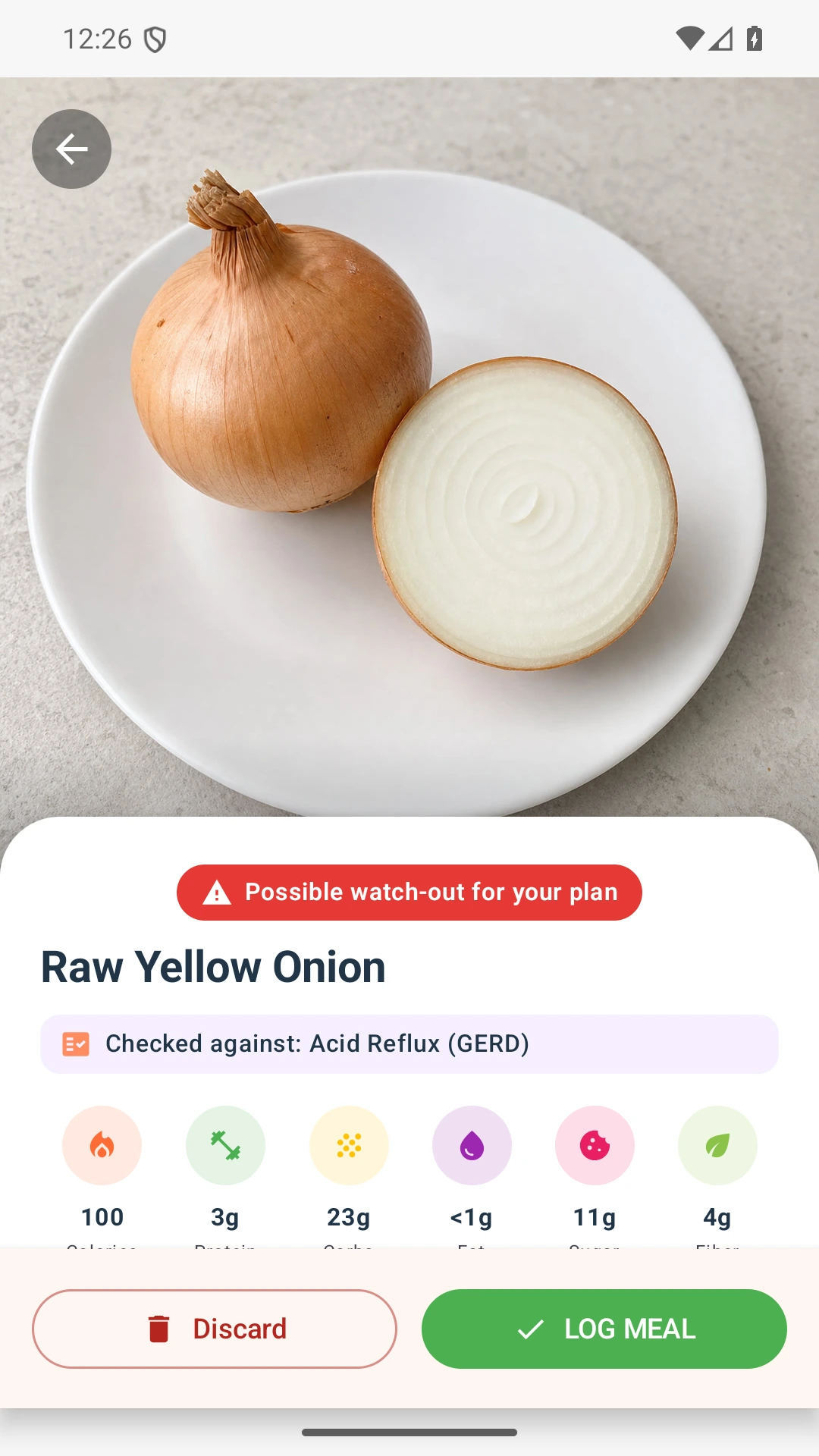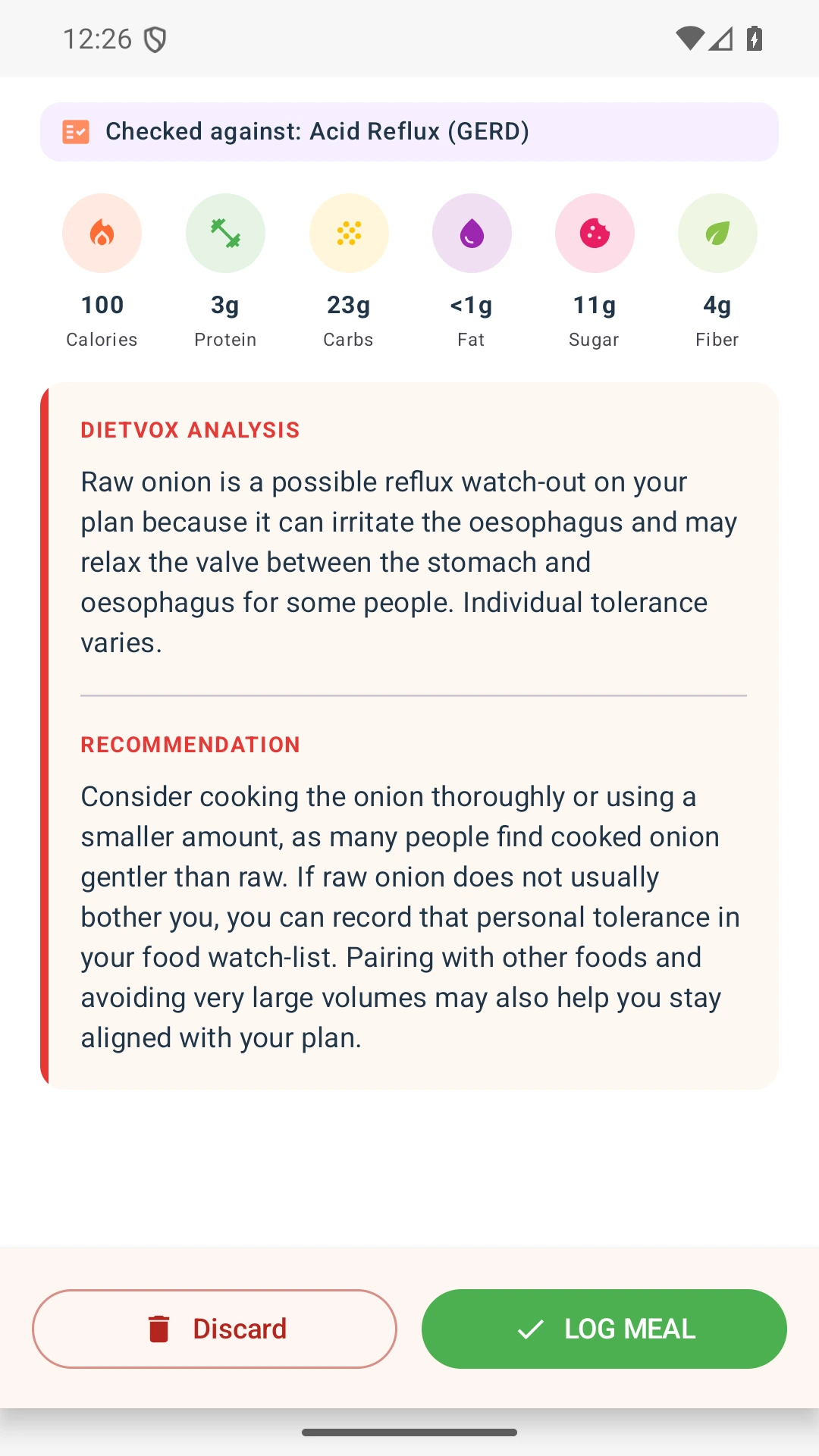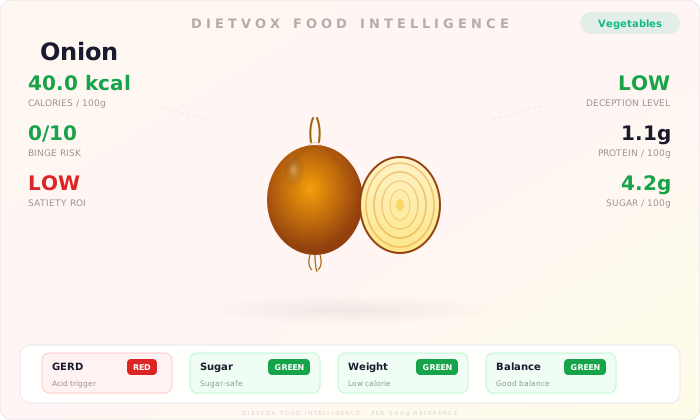
DietVox Rating: RED
For individuals managing Gastroesophageal Reflux Disease (GERD), the question is onion bad for gerd is a frequent and critical one. Based on extensive clinical guidance and patient-reported data, DietVox assigns Onion a RED rating. This indicates that it is a common and potent trigger for acid reflux symptoms and should generally be avoided by those following a GERD management diet. While a foundational ingredient in many cuisines, its physiological effects on the digestive system can significantly worsen symptoms like heartburn, regurgitation, and chest pain.
This rating is supported by recommendations from major health organisations, including the American College of Gastroenterology (ACG) and the NHS, which identify onions as a food that can exacerbate GERD. This article will delve into the specific mechanisms behind this rating, examine the nutritional profile of onion in the context of GERD, and provide practical strategies for navigating a diet without this common flavouring agent.
Nutritional Profile of Onion
From a purely macronutrient perspective, onion appears benign. According to the USDA FoodData Central (FDC ID 170004), 100 grams of raw onion contains:
- Calories: 40 kcal
- Protein: 1.1 g
- Fat: 0.1 g
- Carbohydrates: 9.3 g
- Dietary Fibre: 1.7 g
- Sugars: 4.2 g
Its low calorie and fat content do not typically raise flags for a GERD diet. However, the issue with onion lies not in its macronutrient profile but in its specific chemical compounds, particularly fermentable carbohydrates and volatile sulphur compounds.
Why This Matters: Onion's Impact on GERD Symptoms
The link between onion consumption and increased reflux episodes is well-documented in source-reviewed literature. The primary issues stem from its effects on the lower esophageal sphincter (LES) and its potential to increase gastric pressure.
Relaxation of the Lower Esophageal Sphincter (LES)
The LES is a ring of muscle at the bottom of the esophagus that acts as a valve, opening to let food into the stomach and closing to keep stomach acid and contents from flowing back up. A properly functioning LES is crucial for preventing reflux.
source review has shown that certain foods, including onion, can cause transient LES relaxations (TLESRs), where the valve relaxes inappropriately, allowing reflux to occur. A key source review listed in the American Journal of Gastroenterology found that consuming raw onion significantly increased the number of reflux episodes, the duration of acid exposure in the esophagus, and the frequency of heartburn symptoms in individuals with GERD PubMed. While the exact compound responsible is debated, it's clear that onion has a direct pharmacological effect on the LES, weakening this critical barrier.
Fermentable Carbohydrates and Gastric Pressure
Onions are high in fructans, a type of fermentable oligosaccharide, disaccharide, monosaccharide, and polyol (FODMAP). These short-chain carbohydrates are poorly absorbed in the small intestine. When they travel to the large intestine, gut bacteria ferment them, producing gas American College of Gastroenterology acid reflux guidance. This gas production can lead to bloating and an increase in intra-abdominal pressure. This elevated pressure can physically push against the stomach, forcing the LES open and promoting the reflux of gastric contents.
Raw vs. Cooked Onion: Is There a Difference?
Many people with GERD report that raw onion is a more potent trigger than cooked onion. There is a logical basis for this observation. Cooking can alter the chemical structure of onion, breaking down some of the volatile sulphur compounds and fructans. This may lessen its impact for some individuals.
However, cooking does not eliminate the triggering compounds entirely. Even well-cooked onion can still cause symptoms in sensitive individuals. Therefore, while cooked onion might be less problematic, it is not considered a 'safe' food within a GERD protocol. The DietVox RED rating applies to onion in all its forms, with a particular emphasis on avoiding it raw. The most prudent approach is to eliminate it and observe symptoms, then cautiously test tolerance with a very small amount of cooked onion if desired, while tracking any reaction in a food diary.
Practical Tips for an Onion-Free GERD Diet
Eliminating onion can seem daunting, as it is a base for countless recipes. However, with strategic substitutions, you can maintain flavour without triggering reflux.
- Embrace Aromatic Vegetables: Finely chopped celery, carrots, and fennel can create a savoury base (a 'soffritto' or 'mirepoix') for soups and stews. These are generally well-tolerated on a GERD diet.
- Use Fresh and Dried Herbs: Boost flavour with GERD-friendly herbs. Basil, parsley, dill, oregano, thyme, and rosemary add complexity without irritation. Add fresh herbs towards the end of cooking for the best flavour.
- Explore Spices Carefully: Spices like cumin and coriander are often well-tolerated, but 'hot' spices like cayenne and chili powder are common triggers. Asafoetida (hing) is a spice used in Indian cooking that mimics the flavour of onion and garlic and can be a suitable substitute in small amounts.
- Read Ingredient Labels: Onion is a hidden ingredient in many processed foods. Be vigilant when checking labels on broths, stocks, soups, sauces, marinades, spice blends, and packaged meals. Look for 'onion powder,' 'dehydrated onion,' or simply 'spices' or 'natural flavourings,' which can sometimes include onion.
Disclaimer: This article is for informational purposes only and does not constitute medical advice. Always consult a healthcare provider before making changes to your diet, especially if you have a medical condition.
Scan your foods with the DietVox app to get personalized ratings based on your specific dietary needs and health goals.
Last reviewed: June 2026
How It Works
Why Onion is Rated RED
Onion is rated RED for the GERD (Acid Reflux) Diet due to two primary, source-reviewed mechanisms that promote reflux symptoms:
- Relaxation of the Lower Esophageal Sphincter (LES): Onion contains bioactive compounds that have been clinically shown to reduce the resting pressure of the LES. The LES is the muscular valve that separates the esophagus from the stomach. A weakened or relaxed LES allows acidic stomach contents to flow back (reflux) into the esophagus, directly causing heartburn and other GERD symptoms PubMed. This effect is particularly pronounced with raw onion.
- Increased Gastric Pressure via Fermentation: Onions are rich in fructans, a type of fermentable carbohydrate (FODMAP). These are not fully digested and are fermented by bacteria in the gut, producing gas. This gas can lead to bloating and increased intra-gastric and intra-abdominal pressure. This pressure can physically overcome the LES barrier, forcing stomach acid upwards into the esophagus American College of Gastroenterology acid reflux guidance.
- Direct Esophageal Irritation: For individuals who already have an inflamed esophagus due to chronic reflux (esophagitis), the pungent compounds in onion can act as a direct irritant to the sensitive lining, causing a burning sensation and discomfort independent of an active reflux event NHS.
Scan any food. Get an instant RED/AMBER/GREEN rating.
DietVox analyses every food across 4 diet protocols — no guesswork.
Try DietVox Free →Try These Instead
Safer alternatives that won't trigger your symptoms.
Frequently Asked Questions
Why does raw onion seem worse for my acid reflux than cooked onion?
Cooking helps break down some of the volatile compounds and fermentable fructans in onions that are known to trigger GERD symptoms. Raw onion delivers the highest concentration of these substances, which can more potently relax the lower esophageal sphincter (LES) and cause gas and bloating. While cooked onion may be better tolerated by some, it is still considered a common trigger and should be approached with caution.
Are some types of onions (red, white, yellow) better or worse for GERD?
There is no strong direct source support suggesting that one type of onion is significantly safer for GERD than another. All common varieties—including red, white, yellow, and sweet onions—contain the fructans and sulphur compounds responsible for triggering reflux. While flavour profiles differ, their fundamental impact on the digestive system is similar. It is best to avoid all types when managing GERD.
What can I use instead of onion for flavour in a GERD-friendly diet?
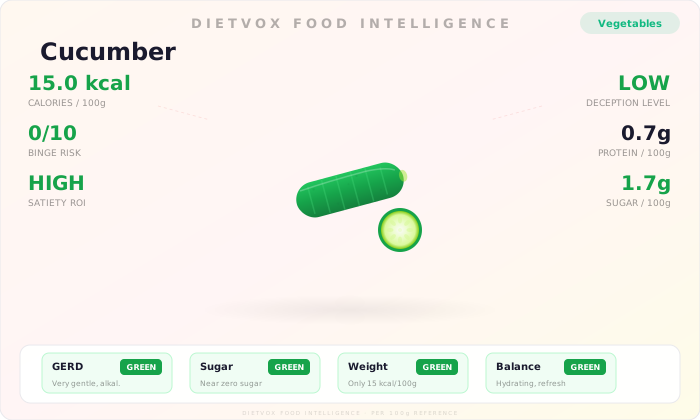
Excellent alternatives for adding savoury flavour without onion include finely chopped celery, fennel, or carrots as a base for soups and sauces. Fresh, non-acidic herbs like basil, parsley, oregano, and thyme add significant flavour. For a direct onion-like taste, a small amount of asafoetida (hing) powder can be an effective substitute.
Is onion powder also bad for acid reflux?
Yes, onion powder is highly problematic for GERD. It is a concentrated form of onion and contains a high density of the compounds that trigger reflux. It is a very common hidden ingredient in processed foods, so it's crucial to read labels carefully on spice blends, broths, sauces, and packaged meals to avoid it.