DietVox Rating: GREEN
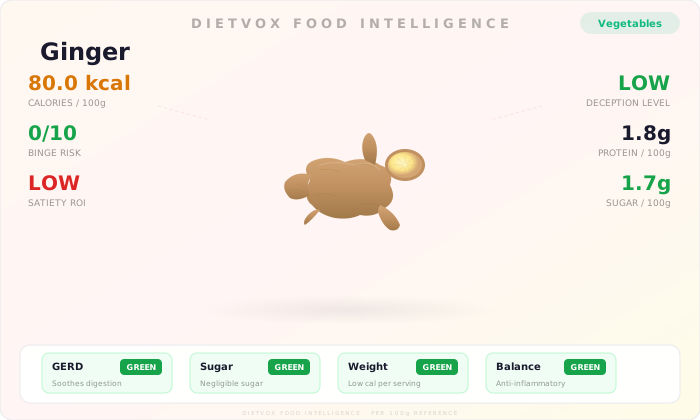
For individuals navigating the complexities of a GERD (Gastroesophageal Reflux Disease) diet, a frequent question arises: is ginger good for acid reflux? Based on a review of nutrition data and relevant guidance, DietVox rates ginger as GREEN. This rating signifies that ginger is generally well-tolerated and, when consumed in moderation, may offer therapeutic benefits for managing GERD symptoms.
A GREEN rating on the DietVox platform means the food is unlikely to trigger symptoms and may possess properties that actively support the goals of the dietary protocol. For the GERD diet, this includes foods that are low in fat, non-acidic, and potentially soothing to the digestive system. Ginger fits this profile due to its unique biochemical composition and historical use as a digestive aid.
This article will delve into the rationale behind ginger's GREEN rating, its nutritional profile in the context of GERD, and practical ways to incorporate it into your diet safely and effectively.
Nutritional Analysis: How Ginger Fits into a GERD Diet
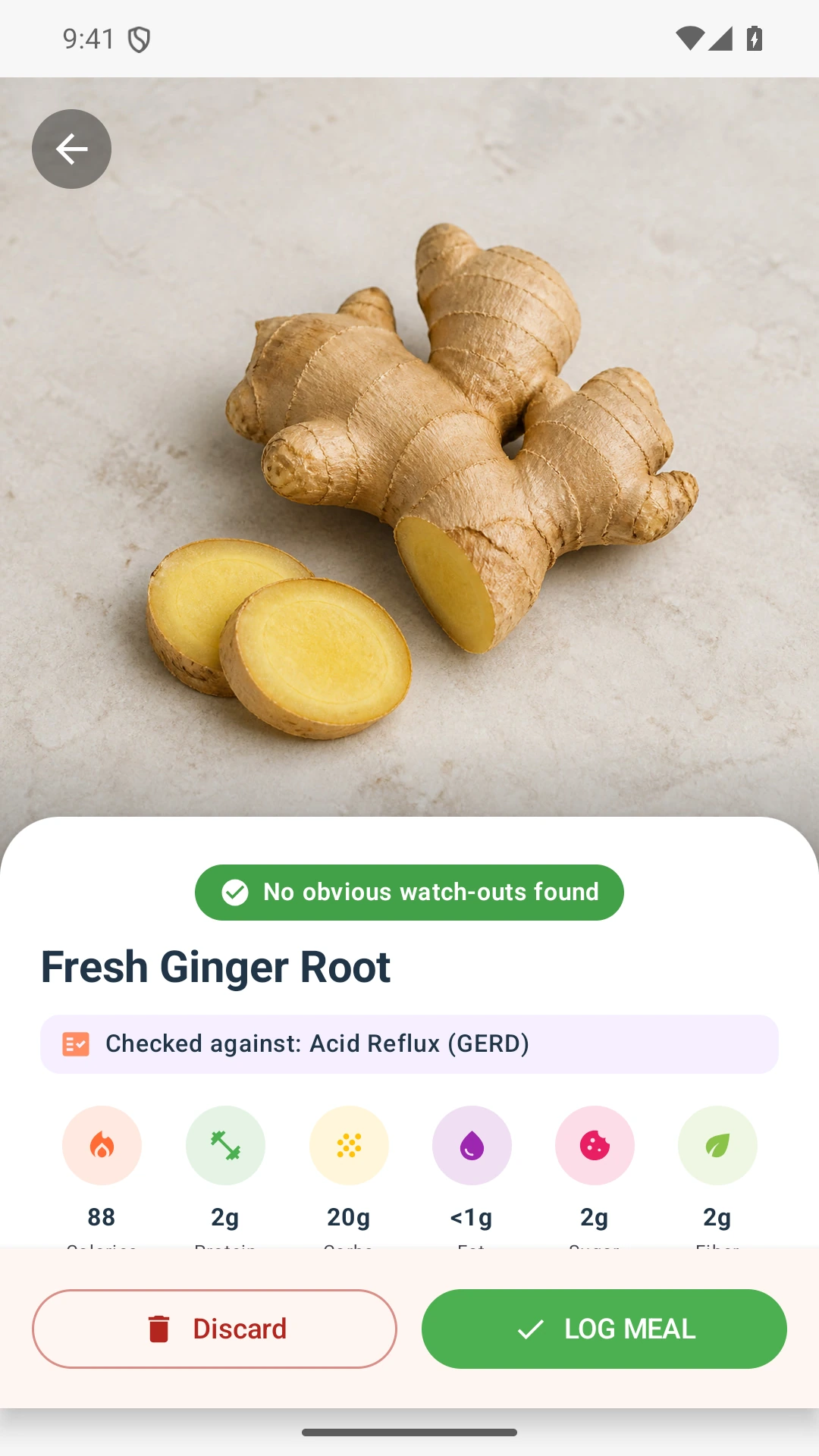
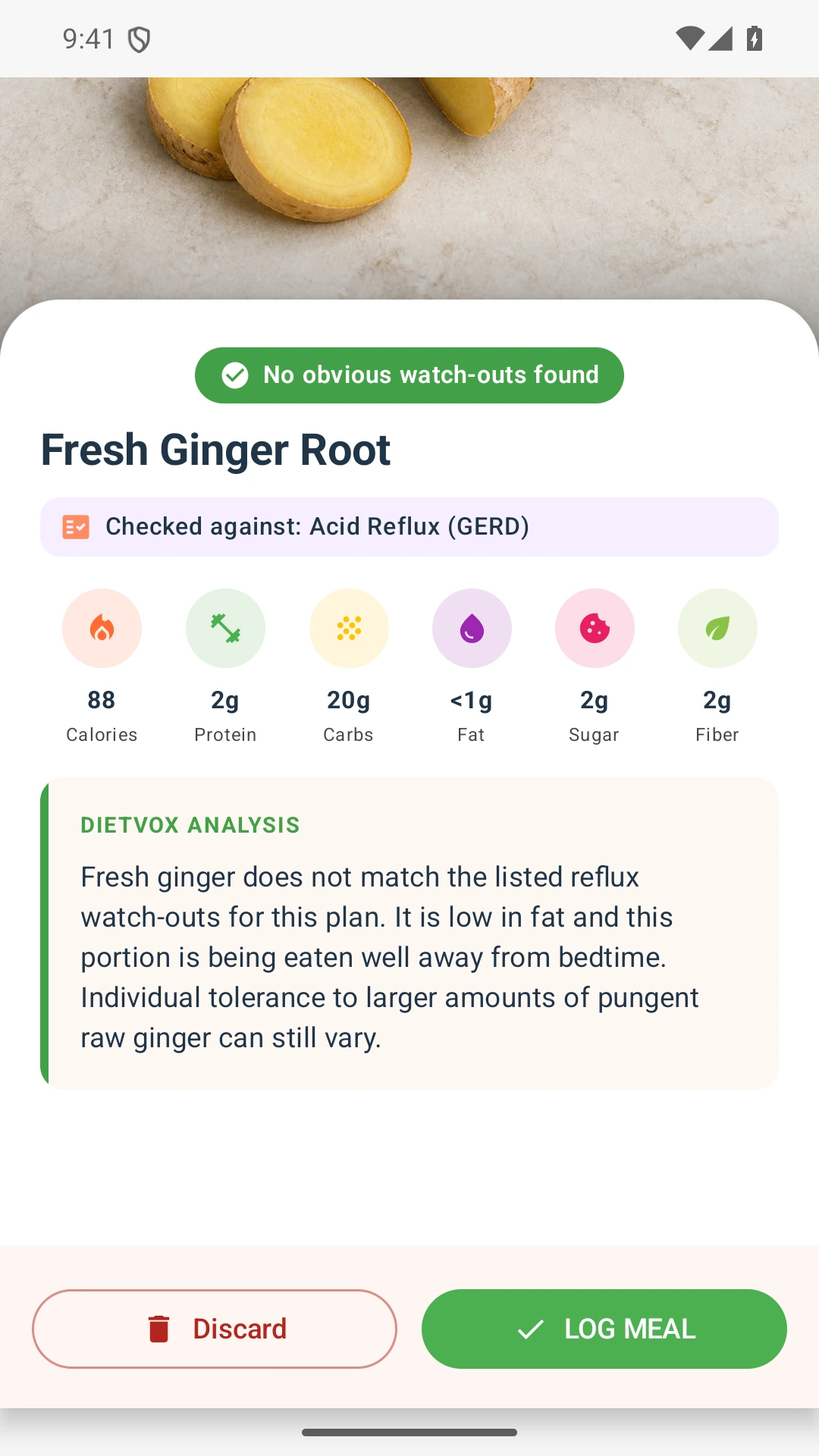
Understanding the nutritional composition of ginger is key to appreciating its suitability for a GERD-friendly diet. According to the USDA FoodData Central, 100g of raw ginger contains approximately 80 calories, 0.8g of fat, and 17.8g of carbohydrates USDA FoodData Central (FDC ID 169231).
Here’s a breakdown of why this profile is advantageous for GERD management:
- Low in Fat: With less than 1 gram of fat per 100g, ginger aligns perfectly with GERD dietary guidelines. High-fat foods can delay stomach emptying and relax the lower esophageal sphincter (LES), the muscular valve that prevents stomach acid from flowing back into the esophagus. Opting for low-fat foods like ginger is a cornerstone of symptom management American College of Gastroenterology acid reflux guidance.
- Low Calorie Density: At 80 kcal per 100g, ginger has a low calorie density. While typical serving sizes are small (5-10g), its low caloric impact means it can be added freely to meals and beverages without contributing significantly to daily energy intake, which is helpful for maintaining a healthy weight—a key factor in reducing pressure on the abdomen and LES.
- Low in Sugar: Ginger contains only 1.7g of sugar per 100g. While sugar is not a direct trigger for all GERD sufferers, high-sugar foods can contribute to inflammation and are often found in processed products that contain other triggers.
- Source of Fibre: With 2.0g of dietary fibre per 100g, ginger contributes to overall digestive health. A diet rich in fibre can support regular bowel movements and a healthy gut microbiome, which are important components of long-term digestive wellness Harvard Health Publishing.
Why This Matters: What source reviews Say About Ginger and Acid Reflux
source review has focused on ginger's active compounds, primarily gingerols and shogaols, which are responsible for its pungent flavour and therapeutic properties. Several source reviews highlight mechanisms relevant to GERD management.
A systematic review listed in the journal Nutrients and available on PubMed explored the effects of ginger on gastrointestinal function. The review concluded that ginger can accelerate gastric emptying and stimulate antral contractions PubMed. By helping the stomach empty more quickly, ginger reduces the amount of time food and acid are present in the stomach, thereby lowering the opportunity for reflux to occur.
Furthermore, ginger's anti-inflammatory effects are well-documented. A source review in the Journal of Medicinal Food found that ginger extract exhibited significant anti-inflammatory activity, comparable in some models to non-steroidal anti-inflammatory drugs (NSAIDs) PubMed. Since esophagitis (inflammation of the esophagus) is a primary complication of chronic GERD, consuming foods with natural anti-inflammatory properties may help soothe irritation and protect the esophageal lining.
Practical Tips: Incorporating Ginger into Your GERD Diet
While ginger is beneficial, the method and quantity of consumption are critical for avoiding potential irritation. The key is moderation.
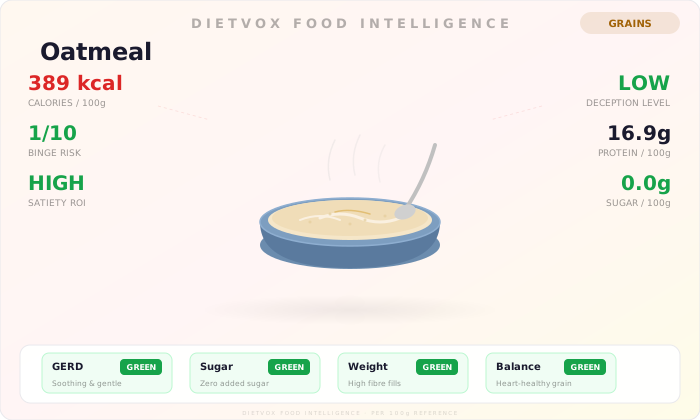
Recommended Forms: * Fresh Ginger Tea: This is one of the best methods. Steep a few thin slices (about 1-2 grams) of fresh, peeled ginger root in a cup of hot water for 5-10 minutes. Avoid adding common triggers like lemon (citrus) or large amounts of sugar/honey. * Grated or Minced Ginger: Add a teaspoon of finely grated fresh ginger to smoothies (made with GERD-friendly fruits like banana or melon), stir-fries with lean protein, soups, or oatmeal. * Powdered Ginger: Dried ginger powder is more concentrated. If using it in cooking, start with a small amount (1/4 teaspoon) and see how you tolerate it.
Forms to Approach with Caution: * Candied or Crystallized Ginger: These are very high in sugar and should generally be avoided on a GERD diet. * Ginger Ale: Most commercial ginger ales are not recommended. They are typically carbonated (a known GERD trigger) and contain high-fructose corn syrup and little to no real ginger American College of Gastroenterology acid reflux guidance. Look for non-carbonated, naturally sweetened ginger drinks if you choose this route.
Risks and Considerations
Moderation is paramount. Consuming very large quantities of ginger (generally considered more than 4-5 grams per day) can paradoxically cause mild heartburn, stomach upset, or gas in some individuals. It's always best to start with a small amount to assess your personal tolerance.
Additionally, ginger has mild blood-thinning properties. Individuals taking anticoagulant medications such as warfarin should consult their healthcare provider before significantly increasing their ginger intake to avoid potential interactions NIH.
Disclaimer: This article is for informational purposes only and does not constitute medical advice. Always consult a healthcare provider before making changes to your diet, especially if you have a medical condition.
Scan your foods with the DietVox app to get personalized ratings based on your specific dietary needs and health goals.
Last reviewed: June 2026
How It Works
Why Ginger is Rated GREEN
Ginger's GREEN rating for the GERD (Acid Reflux) Diet is based on its unique combination of physiological effects that directly address several underlying factors of reflux. The primary mechanisms are its anti-inflammatory properties and its positive influence on gastrointestinal motility.
- Potent Anti-Inflammatory Effects: The main bioactive compounds in ginger, gingerols and shogaols, are powerful anti-inflammatory agents. Chronic acid reflux leads to inflammation of the esophageal lining, a condition known as esophagitis. By inhibiting pro-inflammatory pathways in the body, ginger may help reduce this irritation and soothe the digestive tract. This effect is supported by numerous source reviews, including source review showing ginger can suppress inflammatory compounds like prostaglandins PubMed. A less inflamed digestive system is often a more resilient one.
- Promotion of Gastric Emptying: One of the key contributors to acid reflux is delayed gastric emptying, where food sits in the stomach for an extended period, increasing the likelihood of acid backing up into the esophagus. direct source support demonstrates that ginger helps to speed up this process. By encouraging the stomach to empty its contents into the small intestine more efficiently, ginger reduces intragastric pressure and the window of opportunity for reflux to occur PubMed.
- Nausea and Symptom Relief: Ginger is widely recognized for its anti-emetic (anti-nausea) properties, a benefit acknowledged by health authorities like the NHS for managing nausea in various contexts NHS. Many individuals with GERD also experience nausea and indigestion. By calming the stomach and reducing nausea, ginger can improve overall digestive comfort and quality of life for those managing the condition.
It is important to note that the impact of ginger on the lower esophageal sphincter (LES) is dose-dependent. While small to moderate amounts are beneficial, very high doses could potentially relax the LES, which would be counterproductive. This is why our recommendation emphasizes moderation, allowing individuals to reap the pro-motility and anti-inflammatory benefits without risking negative effects on the LES.
Scan any food. Get an instant RED/AMBER/GREEN rating.
DietVox analyses every food across 4 diet protocols — no guesswork.
Try DietVox Free →Try These Instead
Safer alternatives that won't trigger your symptoms.
Frequently Asked Questions
Is ginger tea good for acid reflux?
Yes, ginger tea can be very good for acid reflux when prepared correctly. Use 2-3 thin slices of fresh ginger steeped in hot water. This method provides the soothing, anti-inflammatory benefits of ginger without added triggers. Avoid adding citrus (like lemon) or excessive sweeteners. Commercial, sugary, or carbonated ginger beverages should be avoided.
How much ginger is safe to take for GERD?
For managing GERD, moderation is key. A general guideline is to consume between 1 to 3 grams of fresh ginger per day. This is equivalent to about 1-2 teaspoons of grated ginger or a few thin slices in tea. Consuming more than 4-5 grams daily may increase the risk of side effects like mild heartburn.
Can ginger make acid reflux worse?
In rare cases and primarily at high doses, ginger can potentially make acid reflux worse. Very large amounts may irritate the stomach lining or relax the lower esophageal sphincter (LES). This is why starting with a small amount to test your individual tolerance is crucial. For most people, moderate consumption is beneficial, not harmful.
What's the best way to consume ginger for GERD symptoms?
The best way is to use fresh ginger root. Making a simple tea by steeping slices in hot water or adding a small amount of grated fresh ginger to GERD-friendly foods like oatmeal, soups, or lean protein dishes are excellent methods. This ensures you get the natural compounds without the added sugars, carbonation, or preservatives found in many commercial ginger products.
Can I take ginger supplements for acid reflux?
While ginger supplements exist, it is best to consult with a healthcare professional before taking them for GERD. Supplements are highly concentrated and may not be suitable for everyone. Using fresh ginger in food and tea is a gentler and generally safer approach to start with for dietary management of reflux.