DietVox Rating: GREEN

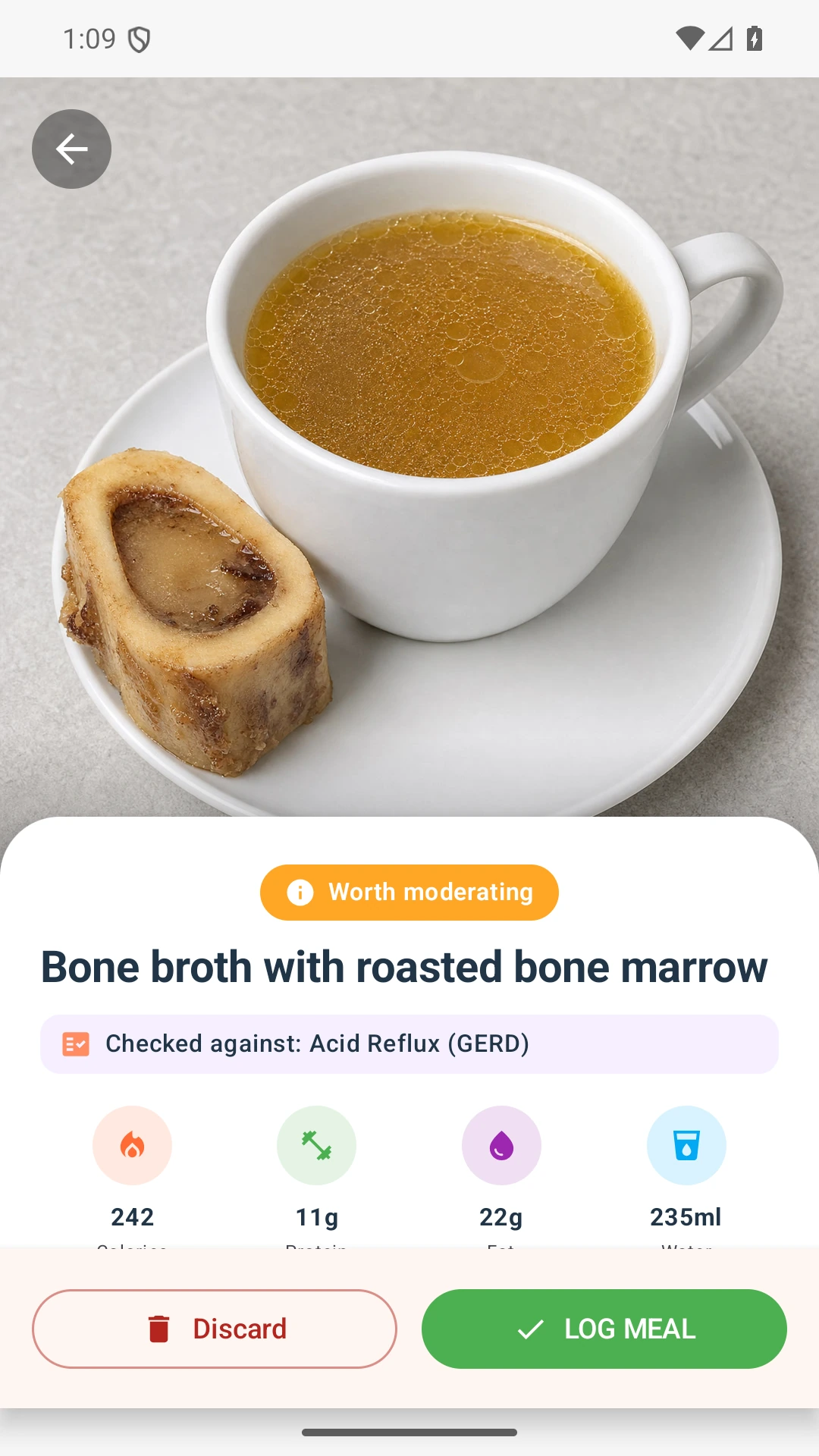
For individuals navigating the complexities of a GERD (Acid Reflux) diet, finding foods that are both nourishing and non-irritating is paramount. When considering the question, is bone broth good for gerd, our DietVox protocol analysis assigns a GREEN rating. This indicates that bone broth is generally well-tolerated and can be a beneficial component of a dietary strategy to manage acid reflux symptoms.

Bone broth is a simple, hydrating liquid made by simmering animal bones and connective tissue. Its gentle nature, low fat content, and lack of common acidic triggers make it a safe and often soothing choice for those with a sensitive esophagus. This article will delve into the specific nutritional properties and protocol reasoning behind this GREEN rating, providing a comprehensive guide to incorporating bone broth into your GERD management plan.

Nutritional Profile for GERD Management

The suitability of any food for a GERD diet is determined by its macronutrient composition and potential to trigger symptoms. Bone broth's nutritional profile is exceptionally well-aligned with the dietary principles recommended for acid reflux.

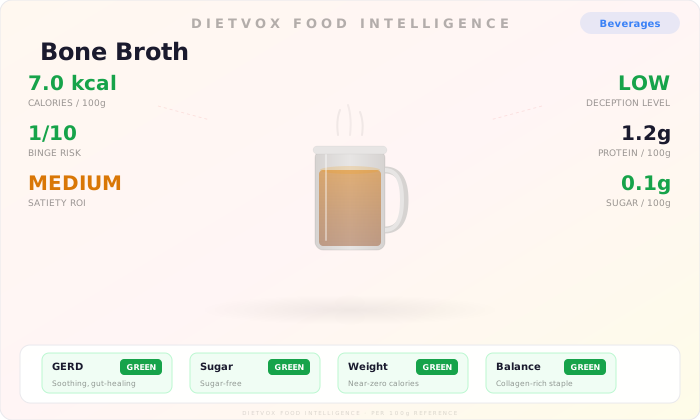
Based on standard data, a 100ml serving of bone broth contains approximately USDA FoodData Central:

  • Calories: 7.0 kcal
  • Protein: 1.2 g
  • Fat: 0.2 g
  • Carbohydrates: 0.4 g
  • Sugar: 0.1 g
  • Fibre: 0 g

Two key factors make this profile ideal for GERD management:

  1. Extremely Low Fat Content: High-fat foods are a well-documented trigger for acid reflux. They can delay stomach emptying and relax the lower esophageal sphincter (LES), the muscular valve that prevents stomach acid from flowing back into the esophagus American College of Gastroenterology acid reflux guidance. With only 0.2g of fat per 100ml, bone broth avoids this mechanism entirely, allowing for smooth, rapid digestion without placing pressure on the LES.
  1. Non-Acidic Nature: Acidic foods, such as citrus fruits and tomatoes, can directly irritate an already inflamed esophageal lining, worsening the pain and discomfort of reflux Harvard Health Publishing. Bone broth is a neutral or slightly alkaline liquid, meaning it does not contribute to the acid load in the stomach and is gentle on sensitive tissues.

Why This Matters: Bone Broth in a GERD Diet

While direct direct trials on bone broth as a primary treatment for GERD are not available, its components and characteristics align perfectly with established dietary guidelines from leading health authorities like the NHS and the American College of Gastroenterology (ACG).

The Role of Low-Fat Liquids

Dietary management of GERD focuses on avoiding foods that exacerbate symptoms. The NHS explicitly recommends reducing the intake of fatty foods. Bone broth serves as an excellent low-fat, savoury liquid. It provides hydration and flavour without the risks associated with creamy, high-fat soups or broths, which can trigger reflux.

Supporting Gut Health and Digestion

Bone broth is rich in amino acids like glycine, proline, and glutamine, which are derived from the breakdown of collagen and connective tissues during the simmering process. These amino acids are fundamental building blocks for the body's own tissues, including the lining of the digestive tract. While the claim that bone broth can single-handedly "heal" a damaged esophagus is not substantiated by large-scale direct trials, providing the body with these nutrients is supportive of its natural repair processes. A source review listed in PubMed notes the role of specific amino acids in maintaining intestinal barrier function, which is crucial for overall gut health PubMed. A healthy, efficient digestive system is a cornerstone of long-term GERD management.

Hydration and Volume

Staying adequately hydrated is important, but consuming large volumes of liquid at once can increase stomach pressure and potentially lead to reflux. Bone broth, being very low in calories, can be sipped in smaller, more frequent quantities throughout the day. This approach provides hydration and nutrients without distending the stomach, making it a safe way to maintain fluid balance.

Health Forensics: A Deeper Analysis

  • Calorie Density: LOW With only 7 kcal per 100ml, bone broth has a very low calorie density. This is advantageous for a GERD diet, as it allows for consumption without contributing to weight gain—a significant risk factor for GERD. It also means you can consume a reasonable portion to feel satisfied without overloading the stomach.
  • Satiety ROI: LOW Bone broth is not a meal replacement. Its low protein (1.2g) and non-existent fibre content mean it provides minimal fullness (satiety) for its volume. It is best viewed as a light, supplemental food, a starter to a meal, or a soothing warm drink between meals rather than a source of significant energy or satiety.
  • Tracking Difficulty: LOW For those who monitor their food intake, bone broth is very easy to track. It has a consistent liquid form, and its nutritional content is predictable per serving, whether homemade (if prepared consistently) or store-bought.

Practical Guide: Choosing and Using Bone Broth for Acid Reflux

Not all bone broths are created equal, especially for someone on a GERD diet. Here’s how to make the right choices.

How to Select a GERD-Friendly Bone Broth

  • Check the Fat Content: Ensure the broth is well-skimmed and low in fat. When it cools, any residual fat should solidify at the top and be easily removed.
  • Read the Ingredient List: Many commercial broths contain common GERD triggers. Scrutinise the label for: - Onions and Garlic: These are frequent reflux triggers and should be avoided. - Tomatoes: Tomato-based products are acidic and should be excluded. - Spices: Avoid broths with pepper, chilli, or other spicy seasonings. - High Sodium: Excessive sodium is not ideal for overall health. Opt for low-sodium versions.
  • Look for Simplicity: The best bone broth for GERD contains minimal ingredients: bones, water, and perhaps a small amount of GERD-friendly vegetables like carrots or celery for flavour.

How to Incorporate Bone Broth into Your Diet

  1. Sip It Warm: Drinking a warm cup of bone broth between meals can be very soothing for the digestive tract and helps maintain hydration.
  2. Use as a Soup Base: Use it as a foundation for a simple, GERD-friendly soup. Add lean protein like shredded chicken breast, easily digestible vegetables like carrots, spinach, or green beans, and a non-acidic carbohydrate like rice or potatoes.
  3. Cook Grains: Enhance the flavour and nutritional value of rice or quinoa by cooking them in bone broth instead of water.

Common Misconceptions about Bone Broth and GERD

  • Myth: Bone broth can cure GERD. Fact: There is no cure for GERD, but it can be effectively managed. Bone broth is a tool for symptom management, not a cure. It fits into a broader lifestyle approach that includes dietary changes, weight management, and other recommendations from your healthcare provider American College of Gastroenterology acid reflux guidance. It helps by being a non-triggering, gentle food, not by reversing the underlying condition.
  • Myth: All bone broths are safe for acid reflux. Fact: As detailed above, the preparation and added ingredients are critical. A fatty, un-skimmed broth or one loaded with garlic, onions, and spices can actively trigger severe reflux symptoms. Always choose or prepare a simple, plain, and low-fat version.

Disclaimer: This article is for informational purposes only and does not constitute medical advice. Always consult a healthcare provider before making changes to your diet, especially if you have a medical condition.

Scan your foods with the DietVox app to get personalized ratings based on your specific dietary needs and health goals.

Last reviewed: June 2026

How It Works

Why Bone Broth is Rated GREEN

Bone broth earns a GREEN rating for the GERD (Acid Reflux) Diet due to a combination of four key factors that align with established dietary management principles:

  1. Extremely Low in Fat: With just 0.2g of fat per 100ml, bone broth does not trigger the relaxation of the lower esophageal sphincter (LES) or delay stomach emptying. High-fat foods are a primary trigger for reflux, and bone broth's composition effectively avoids this mechanism American College of Gastroenterology acid reflux guidance.
  1. Non-Acidic Profile: Bone broth is a neutral or slightly alkaline liquid. It does not irritate the sensitive lining of the esophagus, a common issue with acidic foods and beverages like citrus, tomatoes, or coffee Harvard Health Publishing.
  1. Easy to Digest: As a simple, low-fibre liquid, bone broth requires minimal digestive effort. This gentleness prevents stomach distension and pressure, reducing the likelihood of acid backflow.
  1. Soothing and Hydrating: The warm liquid can have a soothing effect on the digestive tract. It also provides excellent hydration without the need to consume large volumes at once, which can be beneficial for preventing reflux episodes.

Scan any food. Get an instant RED/AMBER/GREEN rating.

DietVox analyses every food across 4 diet protocols — no guesswork.

Try DietVox Free →

Try These Instead

Safer alternatives that won't trigger your symptoms.

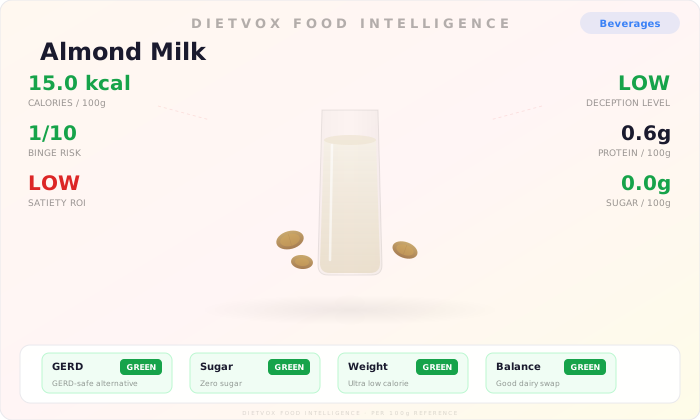
Almond Milk illustration

Almond Milk

15 kcal Beverages
GREEN GERD
GREEN Sugar
GREEN Weight
GREEN Balance
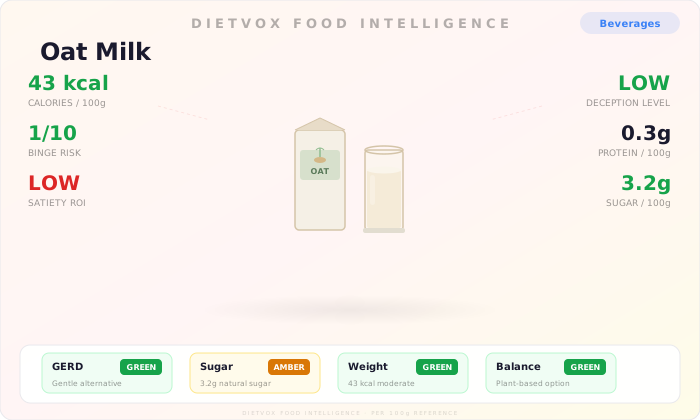
Oat Milk illustration

Oat Milk

43 kcal Beverages
GREEN GERD
GREEN Sugar
GREEN Weight
GREEN Balance
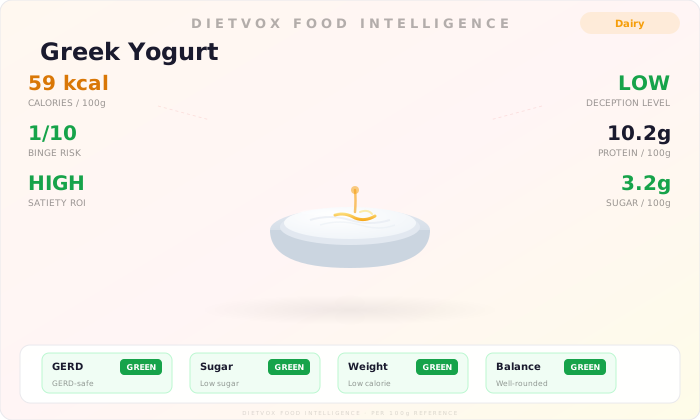
Greek Yogurt illustration

Greek Yogurt

59 kcal Dairy
GREEN GERD
GREEN Sugar
GREEN Weight
GREEN Balance
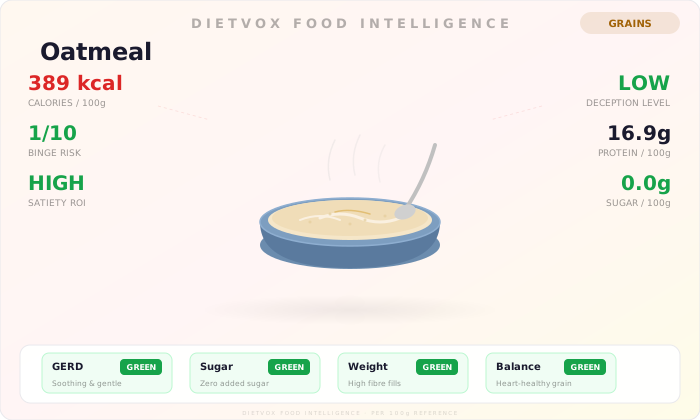
Oatmeal illustration

Oatmeal

389 kcal Grains
GREEN GERD
GREEN Sugar
GREEN Weight
GREEN Balance

Frequently Asked Questions

Can I eat Bone Broth on a gerd (acid reflux) diet?

Yes. DietVox rates Bone Broth as GREEN for a GERD (Acid Reflux) diet. Its key benefits are that it is extremely low in fat, non-acidic, and easy to digest, making it a gentle and soothing option that is unlikely to trigger reflux symptoms.

Can bone broth make my acid reflux worse?

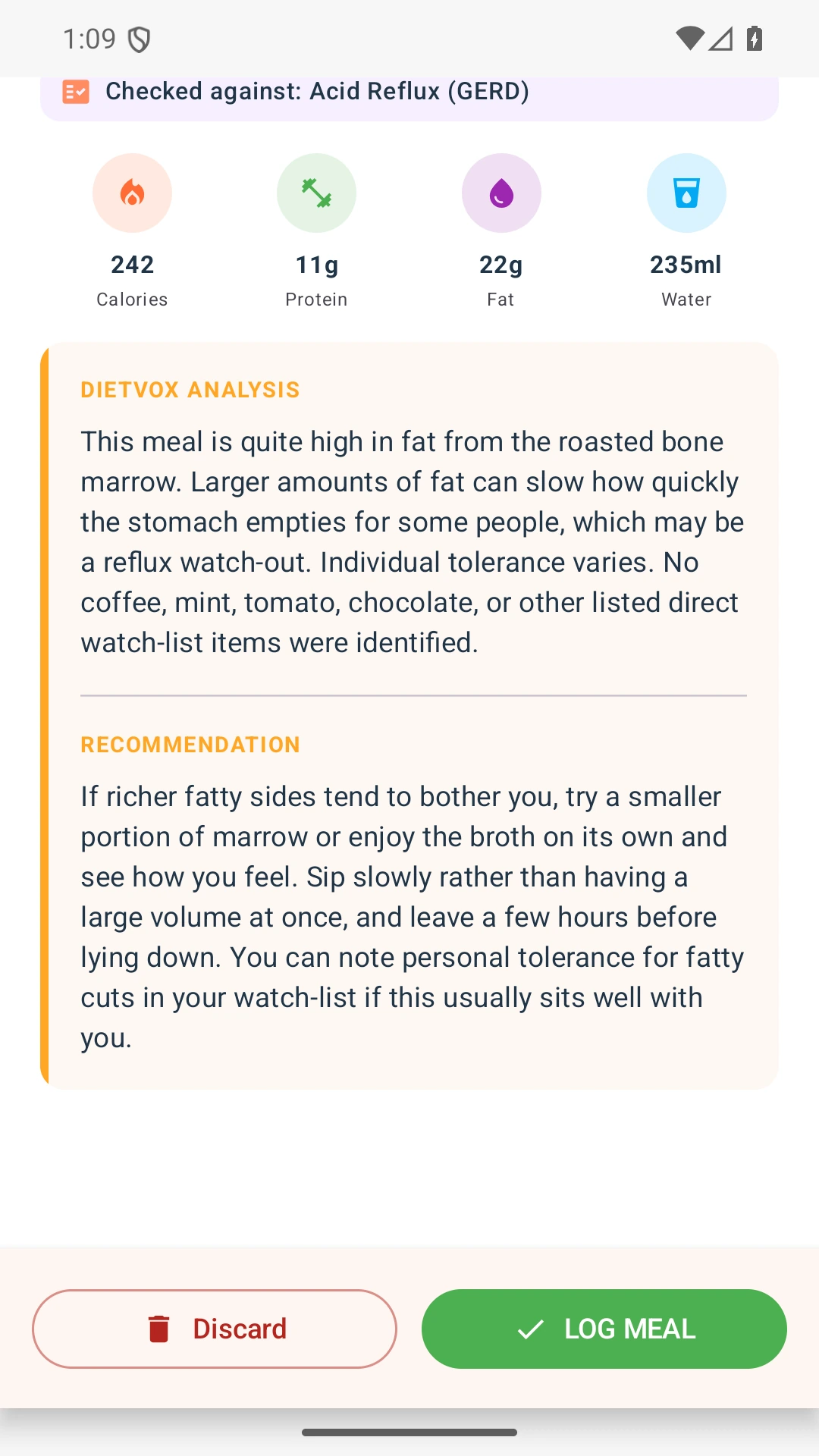
Yes, it is possible. While plain, low-fat bone broth is considered safe, versions that are high in fat or contain common GERD triggers like garlic, onions, or hot spices can definitely make acid reflux worse. Always check the ingredient label on store-bought broth or prepare it simply at home.

How much bone broth should I drink for GERD?

There is no official recommended dose. A good starting point is to have one small cup (around 150-200ml) per day, either as a warm drink between meals or as a base for a small soup. It's best to avoid drinking very large quantities at once, as this can increase stomach volume and pressure.

Should I choose chicken or beef bone broth for a GERD diet?

For a GERD diet, the type of bone (chicken, beef, turkey) is less important than the final preparation. Both chicken and beef bone broth can be excellent choices as long as they are low in fat (well-skimmed) and do not contain any added trigger ingredients like garlic, onion, or acidic flavourings.

Does the collagen in bone broth help heal an esophagus damaged by acid?

Bone broth contains amino acids from broken-down collagen, which are essential for tissue repair throughout the body. However, there is currently no direct direct source support from major health organizations like the NIH or ACG to support the specific claim that consuming bone broth can heal esophageal damage from GERD. Its primary benefit in a GERD diet is as a non-irritating, soothing, and nutritious liquid, not as a targeted medical treatment.

Related Reading