DietVox Rating: GREEN

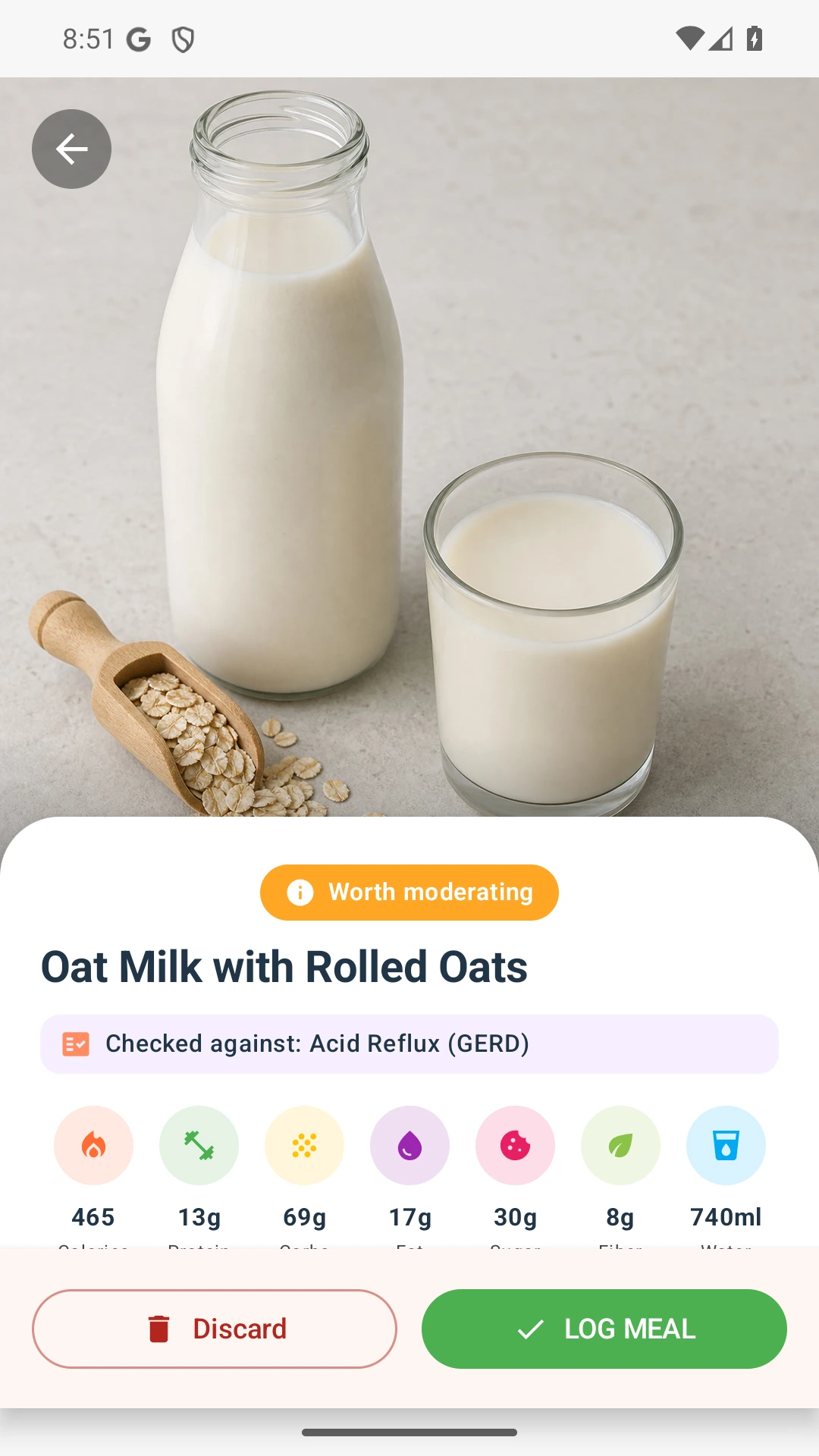
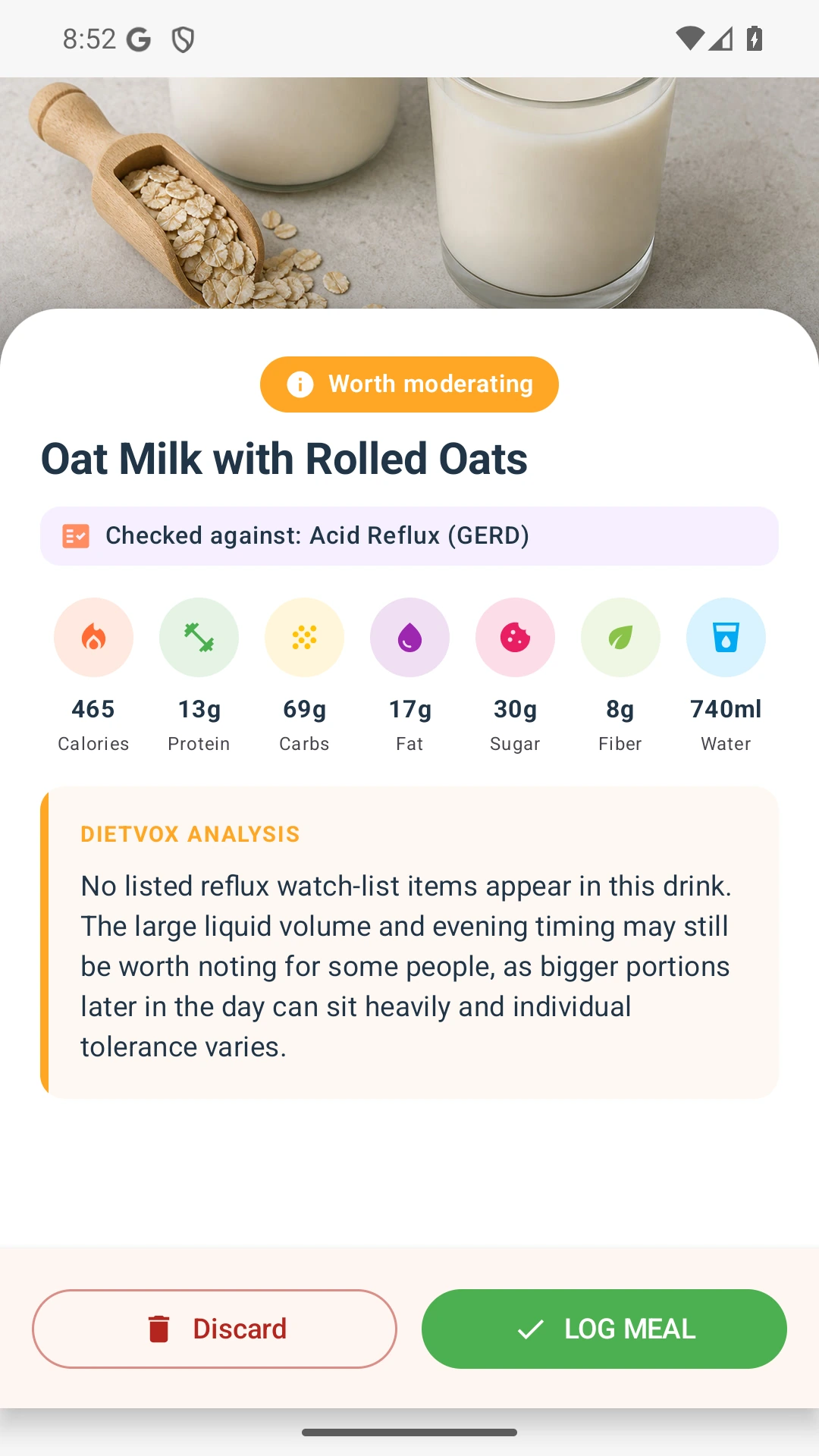
For individuals navigating the complexities of a gastroesophageal reflux disease (GERD) diet, a frequent and important question is, is oat milk good for acid reflux? At DietVox, our DietVox protocol analysis assigns a definitive GREEN rating for oat milk. This means it is generally well-tolerated, unlikely to trigger symptoms, and can be safely incorporated into a daily dietary plan for managing acid reflux.

This comprehensive guide explores the nutrition profile behind oat milk's suitability for a GERD diet, offers practical advice for its consumption, and clarifies its role in a symptom-management strategy based on health guidance from leading health authorities.

Understanding Oat Milk in the Context of GERD

Oat milk is a plant-based beverage made by blending water and oats, then straining the liquid. Its popularity has surged due to its creamy texture and dairy-free nature. For those with GERD, its key attributes are its low-fat profile and non-acidic character, which stand in contrast to common reflux triggers.

Dietary management is a cornerstone of controlling GERD symptoms. The American College of Gastroenterology (ACG) highlights lifestyle and dietary modifications as a primary treatment approach ACG. Choosing foods and beverages that do not relax the lower esophageal sphincter (LES) or increase stomach acid is crucial. Oat milk fits these criteria well, making it an excellent alternative to high-fat dairy milk.

A Nutritional Analysis for Acid Reflux Management

To understand why oat milk is a safe choice, let's examine its nutritional profile through the lens of GERD.

Key Nutrition Data (per 100ml):

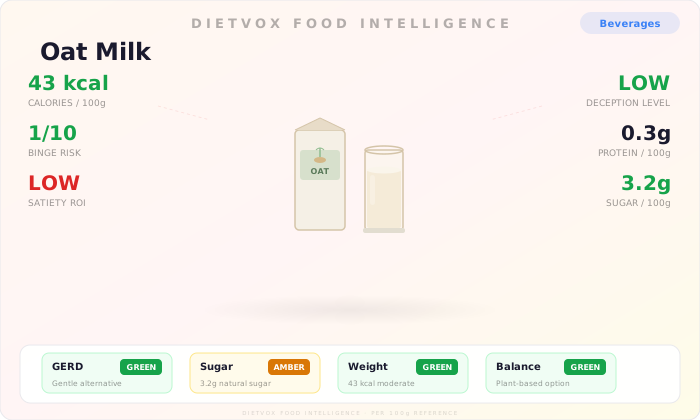
  • Calories: 43 kcal
  • Fat: 1.5g
  • Protein: 0.3g
  • Carbohydrates: 6.7g (of which 3.2g are sugars)
  • Fibre: 0.8g

(Source: USDA FoodData Central)

The Critical Role of Low Fat Content

High-fat foods are well-documented triggers for acid reflux. They can delay stomach emptying and relax the LES, the muscular valve that keeps stomach acid from flowing back into the esophagus American College of Gastroenterology acid reflux guidance. With only 1.5g of fat per 100ml, oat milk is a decidedly low-fat beverage. This is significantly lower than whole cow's milk (around 3.5-4g) and even many 2% milk varieties. This low-fat nature means it is less likely to provoke the physiological responses that lead to heartburn and regurgitation.

Acidity and Esophageal Irritation

While not strictly alkaline, oat milk is considered a non-acidic beverage. Unlike citrus juices, sodas, or coffee, it does not contribute to the acid load in the stomach. For individuals with an already inflamed esophagus (esophagitis), consuming non-acidic, soothing liquids can help prevent further irritation. The UK's National Health Service (NHS) recommends avoiding or cutting down on acidic foods as part of managing heartburn symptoms NHS. Oat milk's smooth texture and neutral pH make it a gentle choice.

A Dairy-Free Advantage

While dairy is not a universal trigger for GERD, a subset of the population experiences worsened symptoms with lactose-containing products. For these individuals, oat milk provides a creamy, satisfying alternative without the potential for dairy-related digestive distress. It allows for the enjoyment of cereals, smoothies, and other dishes without resorting to high-fat or potentially problematic dairy options.

Practical Tips for Using Oat Milk on a GERD Diet

Incorporating oat milk into your diet is simple, but a few considerations can optimize its benefits for GERD management.

  1. Choose Unsweetened Varieties: Many commercial oat milks contain added sugars. While sugar isn't a direct trigger for reflux, high-sugar diets can contribute to weight gain, which is a major risk factor for GERD Harvard Health Publishing. Always opt for "unsweetened" or "zero sugar" versions.
  1. Read the Ingredient List: Look for brands with a simple ingredient list: oats, water, perhaps some salt, and fortifications (like calcium and vitamin D). Some products contain thickeners, gums, or oils. While generally safe, individuals with sensitive digestive systems may prefer a cleaner formulation.
  1. Mind Your Mix-ins: Oat milk itself is safe, but what you combine it with matters. Avoid mixing it with common GERD triggers. * Good Combinations: Use it in smoothies with banana, melon, or spinach. Pour it over oatmeal or low-sugar, whole-grain cereals. Use it as a base for creamy, non-citrus soups. * Combinations to Avoid: Be cautious when adding it to coffee, as coffee is acidic. Avoid mixing it with chocolate syrup or mint flavourings, as both are known to relax the LES.
  1. Practice Portion Control: While oat milk is low in fat, drinking very large volumes of any liquid at once can fill the stomach and put pressure on the LES. Enjoy it in reasonable servings, such as a glass with a meal or a cup in your morning cereal.

Oat Milk vs. Other Milks for Acid Reflux

How does oat milk stack up against other popular choices for those with GERD?

  • Cow's Milk: High-fat versions (whole, 2%) are often problematic. Skim milk is a much better choice and is also considered safe for GERD. However, oat milk has the advantage of being lactose-free.
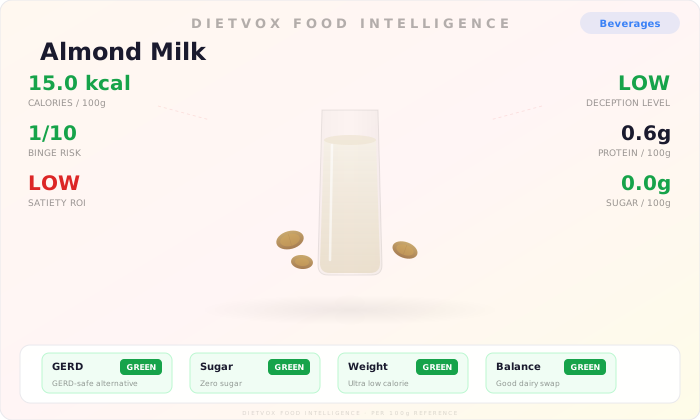
  • Almond Milk: Unsweetened almond milk is another excellent, GREEN-rated option. It is typically lower in calories and carbohydrates than oat milk and is also low in fat and alkaline-leaning.
  • Soy Milk: Soy milk is higher in protein, which can promote satiety. However, fat content can vary by brand, so it's important to choose a low-fat version. It is a good option for many, but some individuals have soy sensitivities.

Ultimately, oat milk's unique combination of a creamy texture, low-fat profile, and dairy-free nature makes it a top-tier choice for a GERD-friendly diet.


Disclaimer: This article is for informational purposes only and does not constitute medical advice. Always consult a healthcare provider before making changes to your diet, especially if you have a medical condition.

Scan your foods with the DietVox app to get personalized ratings based on your specific dietary needs and health goals.

Last reviewed: June 2026

How It Works

Why Oat Milk is Rated GREEN

Oat milk earns its GREEN rating from DietVox for the GERD (Acid Reflux) Diet due to a combination of three key factors that align perfectly with dietary strategies for symptom management. Our analysis shows it is a safe, non-triggering beverage for most people with acid reflux.

1. Exceptionally Low in Fat

The primary reason for oat milk's favourable rating is its low fat content. At just 1.5g of fat per 100ml, it avoids a major dietary trigger for GERD. Clinical guidance from institutions like the Mayo Clinic consistently identifies high-fat meals as a cause of reflux symptoms American College of Gastroenterology acid reflux guidance. Fat delays the rate at which your stomach empties its contents and can also cause the lower esophageal sphincter (LES) to relax. This combination increases the likelihood of stomach acid flowing back into the esophagus. By choosing low-fat oat milk over full-fat dairy, you directly mitigate this risk.

2. Non-Acidic and Soothing Texture

Acidic foods and drinks can directly irritate the sensitive lining of the esophagus, especially if it's already inflamed from chronic reflux. Oat milk is a non-acidic beverage, making it a gentle choice that will not exacerbate this irritation. Furthermore, its characteristically smooth and creamy texture can feel soothing, providing a stark contrast to coarse or abrasive foods that might be uncomfortable to swallow.

3. Free from Common Triggers like Dairy and Lactose

While not a trigger for everyone, dairy products can worsen GERD symptoms in individuals with lactose intolerance or a sensitivity to milk proteins. The gas and bloating associated with lactose malabsorption can increase intra-abdominal pressure, pushing stomach contents upward. As a plant-based alternative, oat milk is naturally free from both lactose and dairy proteins, eliminating this potential trigger entirely.

Scan any food. Get an instant RED/AMBER/GREEN rating.

DietVox analyses every food across 4 diet protocols — no guesswork.

Try DietVox Free →

Try These Instead

Safer alternatives that won't trigger your symptoms.

Almond Milk illustration

Almond Milk

15 kcal Beverages
GREEN GERD
GREEN Sugar
GREEN Weight
GREEN Balance
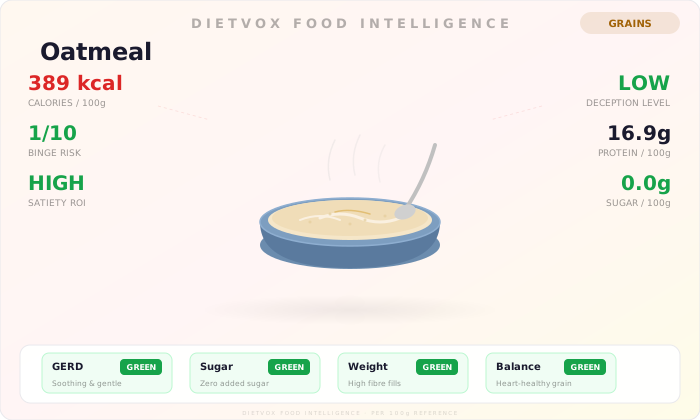
Oatmeal illustration

Oatmeal

389 kcal Grains
GREEN GERD
GREEN Sugar
GREEN Weight
GREEN Balance
Bone Broth illustration

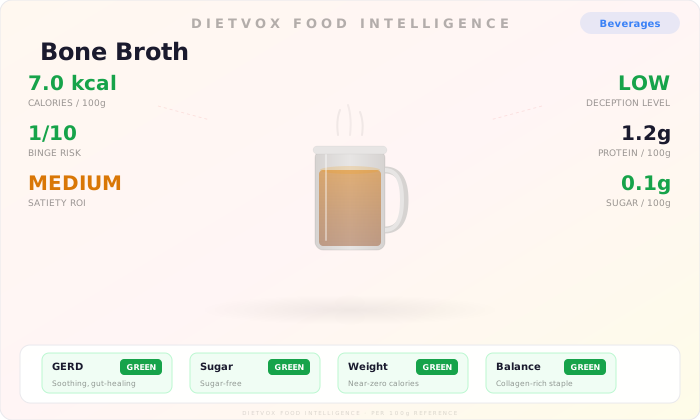
Bone Broth

7 kcal Beverages
GREEN GERD
GREEN Sugar
GREEN Weight
GREEN Balance
Yogurt illustration

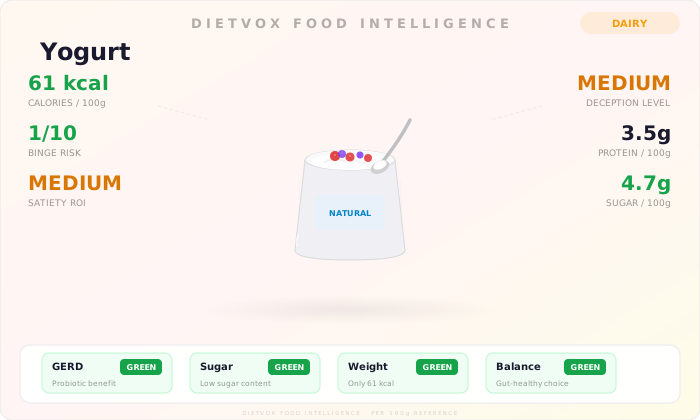
Yogurt

61 kcal Dairy
GREEN GERD
GREEN Sugar
GREEN Weight
GREEN Balance

Frequently Asked Questions

Can I eat Oat Milk on a gerd (acid reflux) diet?

DietVox rates Oat Milk GREEN for gerd (acid reflux) diet. Oat milk is alkaline-leaning, low in fat, and contains no compounds that trigger reflux. Its smooth texture makes it a well-tolerated dairy alternative.

Does oat milk cause bloating or gas with GERD?

Generally, no. Oat milk is relatively low in fibre (around 0.8g per 100ml) and is not typically associated with bloating or gas. However, individual sensitivities can vary, especially to added gums or thickeners in some brands. If you are new to oat milk, it's wise to introduce it in small amounts to see how your system responds.

Is sweetened or flavored oat milk bad for acid reflux?

It can be. While added sugar isn't a direct trigger, it can contribute to weight gain, a significant risk factor for GERD according to the NHS. More importantly, common flavourings like chocolate and mint are known to relax the lower esophageal sphincter (LES), which can directly cause reflux symptoms. It is best to choose plain, unsweetened oat milk.

Can I use oat milk in my coffee if I have GERD?

While coffee itself is acidic and a common trigger for many people with GERD, oat milk is a much better choice for a coffee addition than high-fat dairy cream or whole milk. If you find that you can tolerate small amounts of low-acid coffee, using oat milk will help you avoid the added risk from high-fat content.

What's the best brand of oat milk for acid reflux?

DietVox does not endorse specific brands. We recommend you look for an unsweetened variety with a simple, minimal ingredient list. Check the nutrition label to ensure it is low in fat (ideally under 2g per 100ml) and contains no added sugars or reflux-triggering flavourings like chocolate.

Related Reading