DietVox Rating: GREEN
DietVox rates Garlic as GREEN for a Low Sugar Diet. This rating signifies that garlic is an excellent choice and can be consumed freely within the context of this protocol. For those managing their sugar intake and asking questions like 'is garlic low carb?' or 'does garlic have sugar?', the source-reviewed data provides a clear and reassuring answer. While garlic contains carbohydrates, its typical use as a flavouring agent in small quantities means its contribution to your daily sugar and carbohydrate load is negligible, making it a powerful ally in a low-sugar lifestyle.
This article reviews garlic's nutritional profile, its impact on blood sugar, and practical ways to incorporate it into your low-sugar meal plan.
A Clinical Look at Garlic's Sugar and Carbohydrate Profile
To understand why garlic earns a GREEN rating, we must examine its nutritional composition through the lens of a low-sugar diet. The primary data comes from the most reliable source for food composition in the United States.
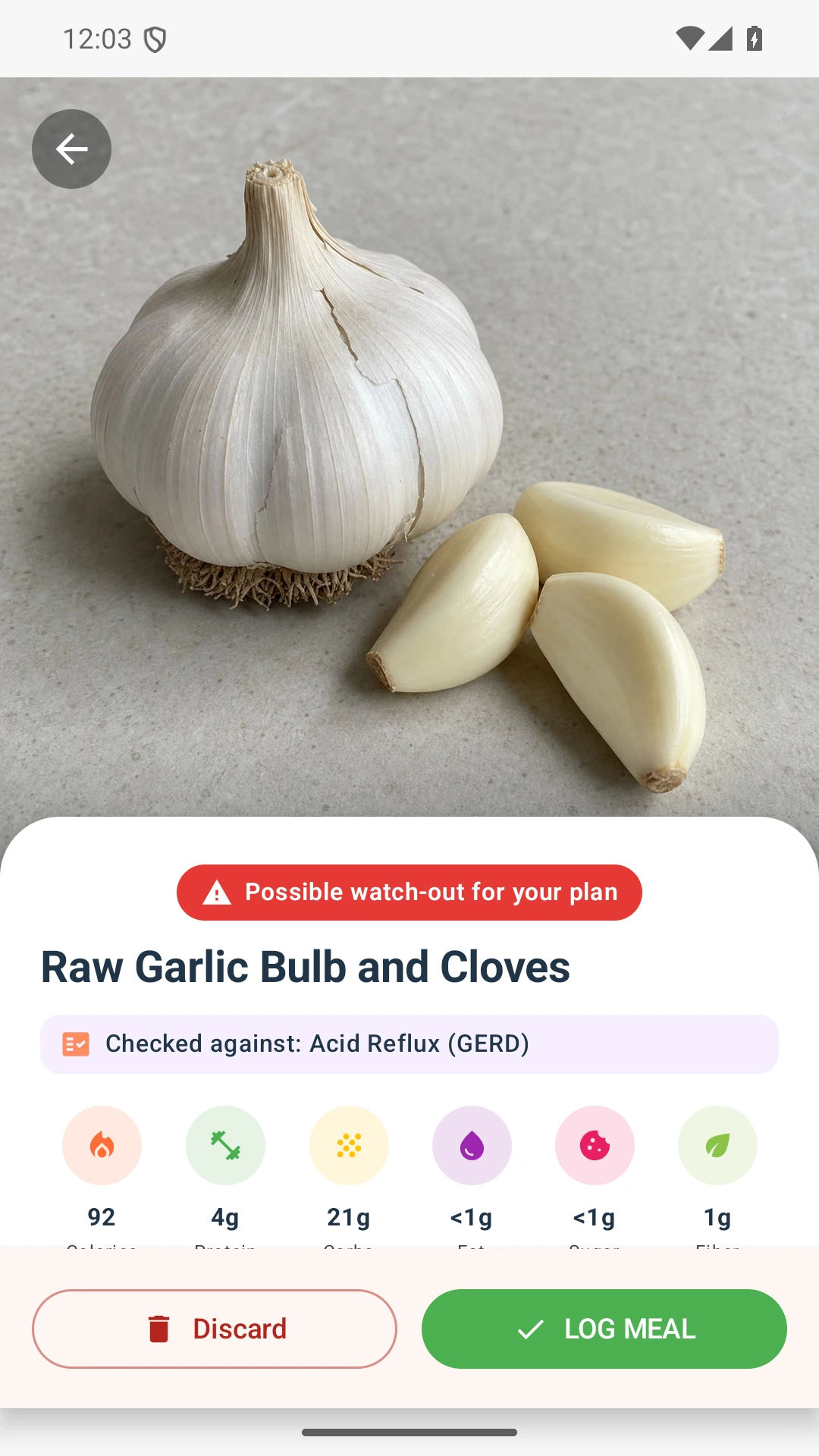
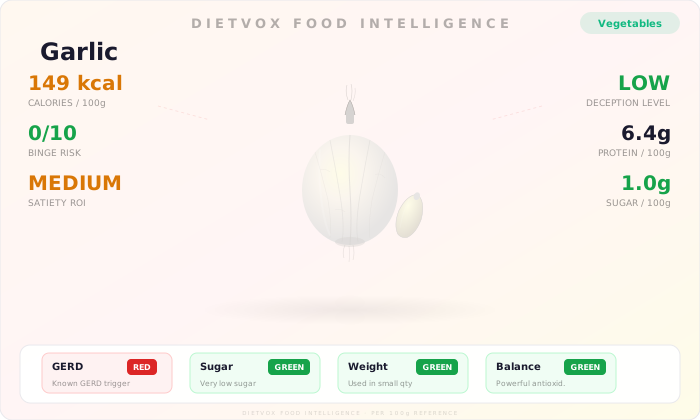
According to the USDA FoodData Central (FDC ID 169230), 100 grams of raw garlic contains:
- Total Carbohydrates: 33.1g
- Sugars: 1.0g
- Dietary Fibre: 2.1g
At first glance, 33.1g of carbohydrates might seem high. However, this figure is for 100g of garlic, which is a very large quantity—approximately 30-35 cloves. In culinary practice, a typical serving is one or two cloves. A single clove of garlic weighs about 3 grams.
Let's break down the nutrition for a realistic serving size of one 3g clove:
- Total Carbohydrates: ~1.0g
- Sugars: 0.03g
This amount of sugar is nutritionally insignificant. The World Health Organization (WHO) recommends limiting free sugar intake, and the trace amount in a clove of garlic does not meaningfully contribute to this limit. Furthermore, the presence of dietary fibre, although small per clove, helps to modulate the absorption of the carbohydrates that are present.
Understanding Garlic and Blood Sugar Response
A key goal of a low-sugar diet is to maintain stable blood glucose levels and avoid sharp spikes. Foods are often evaluated using the Glycemic Index (GI) and Glycemic Load (GL), which measure their effect on blood sugar.
Glycemic Index and Glycemic Load
The Glycemic Index (GI) is a scale from 0-100 that ranks carbohydrate-containing foods by how much they raise blood sugar levels International glycemic index tables review. Glycemic Load (GL) is often considered a more practical measure as it takes into account the serving size.
Garlic's GI is considered very low. More importantly, because it is consumed in such small quantities, its Glycemic Load is practically zero. This means that adding garlic to your meals will not cause a spike in your blood sugar levels, making it an ideal ingredient for a low-sugar or diabetic-friendly diet.
Potential Metabolic Benefits
Beyond its low sugar content, some sources suggest that garlic may offer benefits for metabolic health. Several source reviews have investigated the effects of garlic's active compounds, such as allicin, on glucose metabolism. A systematic review and meta-analysis listed in a peer-reviewed journal available on PubMed concluded that garlic supplementation appeared to improve blood glucose control in patients with type 2 diabetes. While eating garlic as a flavouring is not the same as taking a concentrated supplement, this source review highlights that the compounds within garlic are supportive of, rather than detrimental to, the goals of a low-sugar diet.
Practical Ways to Use Garlic on a Low Sugar Diet
Garlic is not just compatible with a low-sugar diet; it's a strategic tool for succeeding on one. Its robust, savoury flavour can compensate for the reduction of sugar, which is often used to make processed foods more palatable.
Flavour Without the Sugar
Many commercial sauces, marinades, and dressings are significant sources of hidden sugars. The FDA added sugars label guidance, as products like ketchup, barbecue sauce, and even some salad dressings can contain surprising amounts.
By making your own flavour bases with garlic, you can eliminate these hidden sugars entirely.
- Homemade Vinaigrette: Whisk together olive oil, vinegar, crushed garlic, and herbs instead of buying a bottled dressing.
- Savoury Marinades: Create marinades for meat, fish, or tofu using garlic, lemon juice, soy sauce (or tamari), and spices instead of a pre-made sugary glaze.
- Flavourful Roasts: Rub whole garlic cloves and herbs onto vegetables and proteins before roasting to infuse them with flavour without adding any sugar or high-calorie sauces.
Tracking and Portioning
From a tracking perspective, garlic has a LOW difficulty score. Its form is consistent, and its caloric and sugar contribution per clove is minimal and predictable. For most individuals on a low-sugar diet, there is no need to meticulously track the grams of sugar from garlic used in cooking. The focus should remain on eliminating added sugars and high-sugar processed foods.
Addressing Common Concerns
Misconception: "Garlic is a high-carb vegetable."
This is a classic case of confusing per-100g data with per-serving data. While garlic's carbohydrate content by weight is higher than that of leafy greens, the amount consumed is tiny. It functions more like a spice than a staple vegetable. The actual carbohydrate load from a typical serving is extremely low, making it perfectly suitable for both low-sugar and low-carbohydrate diets like keto.
Misconception: "Garlic powder is a processed, unhealthy option."
Pure garlic powder (not garlic salt) is simply dehydrated and ground garlic. It is a convenient and excellent low-sugar option. A teaspoon of garlic powder contains about 2g of carbohydrates and virtually no sugar. It's a great pantry staple, but as with all processed foods, it is wise to check the label to ensure no sugars, starches, or anti-caking agents have been added.
The DietVox Verdict: An Essential Low-Sugar Flavouring
Garlic's GREEN rating for the Low Sugar Diet is firmly supported by source-reviewed data. Its sugar content is exceptionally low on a per-serving basis, and its glycemic load is negligible, ensuring it will not disrupt blood sugar control.
More than just being permissible, garlic is a culinary asset. It provides a powerful, savoury flavour that can replace the need for sugar-laden sauces and condiments, actively helping you adhere to your dietary goals. By embracing garlic in your cooking, you can create delicious, satisfying meals that are fully compliant with a healthy, low-sugar lifestyle.
Disclaimer: This article is for informational purposes only and does not constitute medical advice. Always consult a healthcare provider before making changes to your diet, especially if you have diabetes or other medical conditions.
Scan your foods with the DietVox app to get personalized ratings based on your specific dietary needs and health goals.
Last reviewed: June 2026
How It Works
Why Garlic is Rated GREEN
Garlic is rated GREEN for a Low Sugar Diet based on four key rating factors:
- Extremely Low Sugar Content Per Serving: According to USDA FoodData Central (FDC ID 169230), garlic contains just 1.0g of sugar per 100g. A typical 3g clove contains only 0.03g of sugar, an amount that is nutritionally insignificant.
- Negligible Glycemic Impact: Due to the very small quantity of carbohydrates consumed in a normal serving, garlic has a glycemic load that is effectively zero. It does not cause a spike in blood glucose levels, a primary goal of any low-sugar protocol International glycemic index tables review.
- Displaces High-Sugar Flavourings: Garlic's potent flavour allows it to serve as a base for sauces, dressings, and marinades, replacing commercial products that are often high in added sugars. This actively supports adherence to a low-sugar diet, in line with FDA added sugars label guidance recommendations to reduce intake from such sources.
- Supportive Metabolic Profile: Beyond its lack of sugar, some sources suggest compounds in garlic may have a beneficial effect on glucose metabolism, making it a supportive, rather than just neutral, ingredient for those managing blood sugar PubMed.
Scan any food. Get an instant RED/AMBER/GREEN rating.
DietVox analyses every food across 4 diet protocols — no guesswork.
Try DietVox Free →Try These Instead
Safer alternatives that won't trigger your symptoms.
Frequently Asked Questions
Is garlic powder okay on a low sugar diet?
Yes, pure garlic powder is an excellent choice for a low sugar diet. A typical teaspoon contains less than 1 gram of net carbohydrates and a negligible amount of sugar. However, it's important to read the ingredients list to ensure you are buying 100% garlic powder, as some 'garlic salt' or seasoning blends can contain added sugars or fillers.
Does cooking garlic change its sugar content?
Cooking methods like roasting or sautéing can caramelize the natural sugars present in garlic, which enhances its sweetness and flavour. However, this process does not add any sugar or significantly alter its nutritional profile in a way that would make it unsuitable for a low-sugar diet. The total sugar content remains extremely low.
How much garlic can I eat on a low sugar diet?
From a sugar and carbohydrate standpoint, there is no practical limit to the amount of garlic you can consume on a low-sugar diet. The quantity needed to make a meaningful impact on your sugar intake would likely cause significant digestive issues first. Using several cloves per day in your cooking is perfectly acceptable and encouraged.
Does garlic raise blood sugar levels?
No, garlic does not raise blood sugar levels. Due to its minimal sugar content and near-zero glycemic load per serving, it has no discernible impact on blood glucose. In fact, some PubMed-listed work suggests that certain compounds in garlic may have a modest, beneficial effect on blood sugar regulation, although it should not be used as a medical treatment.