DietVox Rating: GREEN
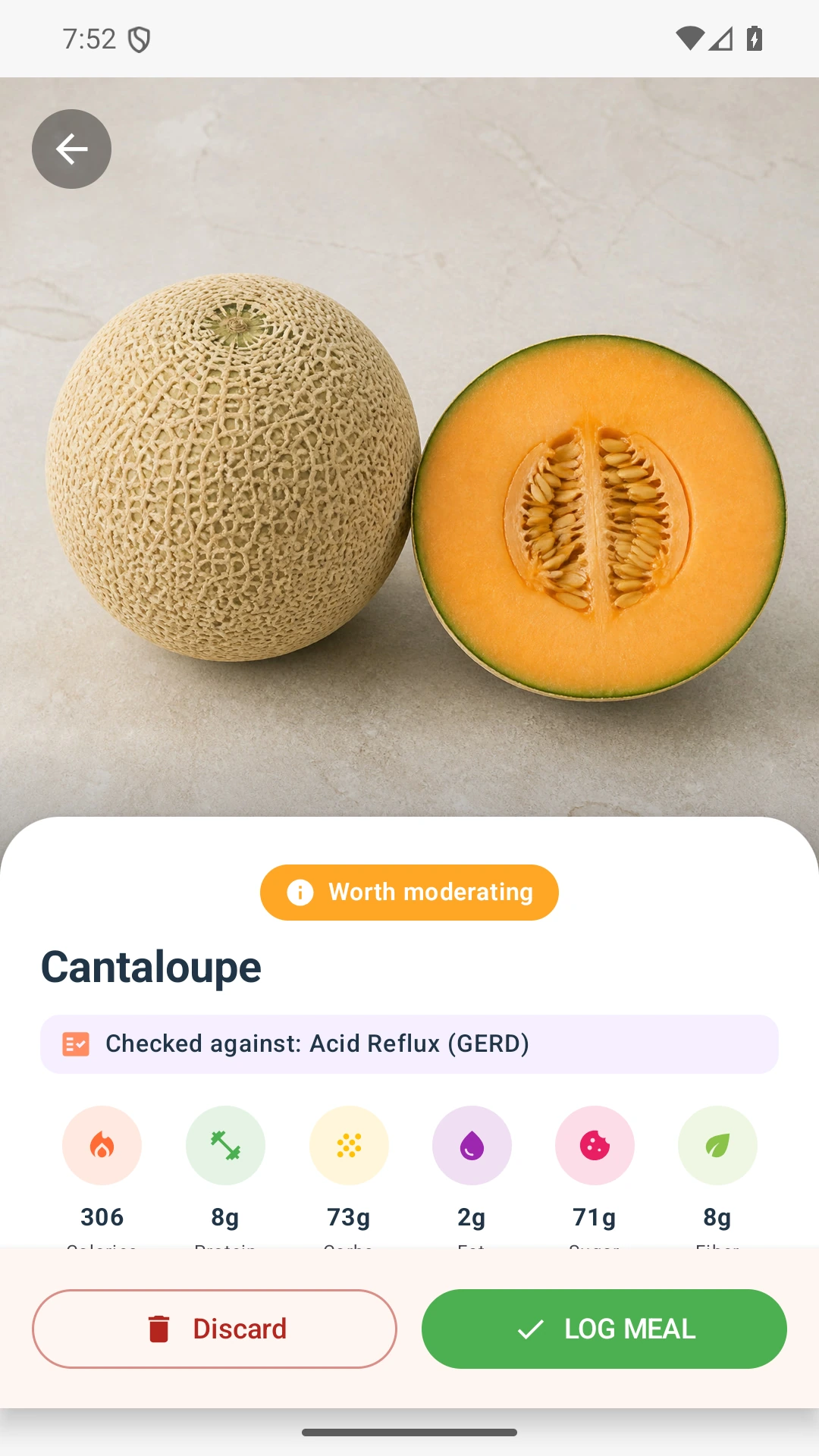
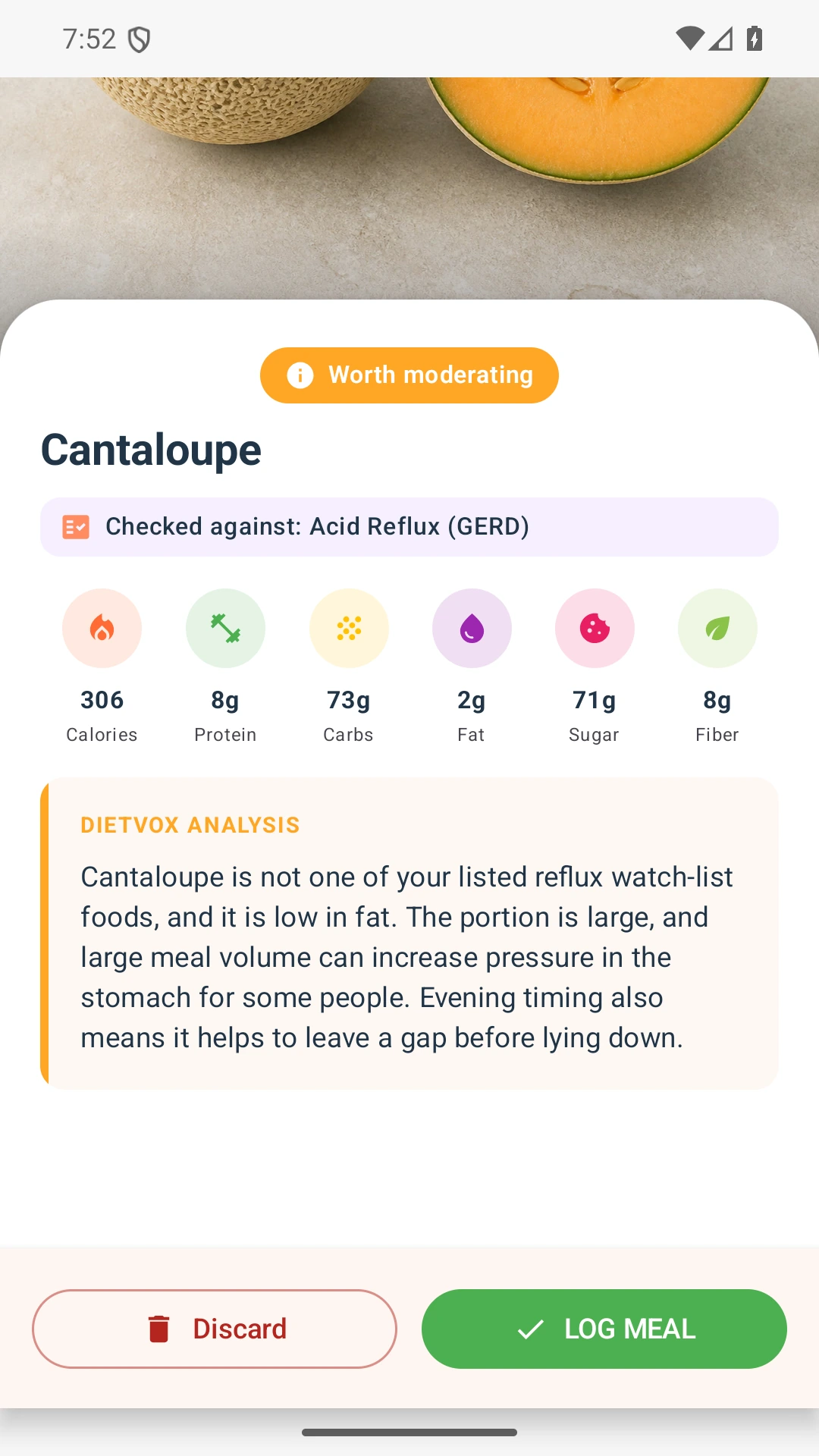
DietVox rates Cantaloupe as GREEN for a GERD (Acid Reflux) Diet. This rating indicates that cantaloupe is a safe, well-tolerated food that is highly unlikely to trigger reflux symptoms for the vast majority of individuals. For those managing Gastroesophageal Reflux Disease, a frequent question is is cantaloupe good for gerd? Based on its nutritional properties and low acidity, the source review supports cantaloupe as an excellent choice to include in a reflux-friendly eating plan.
This GREEN rating is based on cantaloupe's key characteristics: it is a low-acid fruit, has a high water content, and is extremely low in fat—all factors that are beneficial for managing GERD symptoms. health guidance frequently recommend choosing non-citrus fruits, like melons, over acidic fruits such as oranges or tomatoes American College of Gastroenterology acid reflux guidance.
The Clinical Verdict on Cantaloupe and GERD
Gastroesophageal Reflux Disease (GERD) occurs when stomach acid frequently flows back into the tube connecting your mouth and stomach (esophagus). This backwash (acid reflux) can irritate the lining of your esophagus. Dietary management is a cornerstone of controlling GERD symptoms, focusing on avoiding foods that can trigger reflux.
Cantaloupe fits well within these dietary strategies for several source-reviewed reasons:
- Low Acidity: Cantaloupe is one of the least acidic melons, with a pH typically ranging from 6.1 to 6.5. This is close to neutral (a pH of 7.0), making it far less likely to irritate an already-sensitive esophagus compared to high-acid fruits like grapefruit (pH ~3.0) or lemons (pH ~2.0).
- Low Fat Content: Dietary fat is a known contributor to reflux symptoms. High-fat meals can delay stomach emptying and relax the lower esophageal sphincter (LES), the muscle valve that keeps acid in the stomach American College of Gastroenterology. With only 0.2g of fat per 100g, cantaloupe is a virtually fat-free food, making it an ideal choice for a GERD-friendly diet USDA FoodData Central (FDC ID 169092).
- High Water Content: Cantaloupe is composed of about 90% water. Water-rich foods can help dilute stomach acid, which may lessen the severity of a reflux event. Staying hydrated with non-triggering foods and beverages is a helpful strategy for managing GERD.
Cantaloupe's Nutritional Profile: A GERD-Friendly Analysis
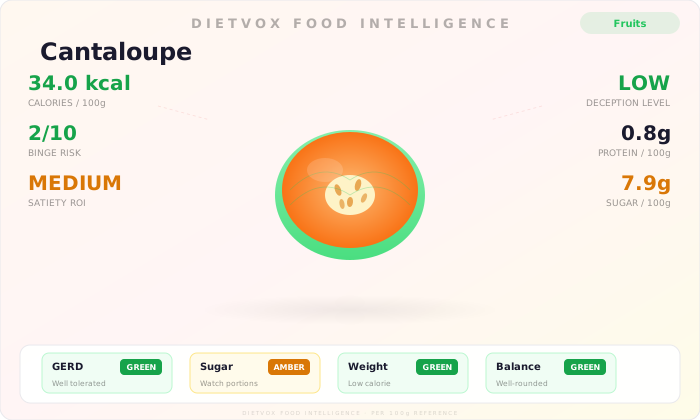
Understanding the nutritional composition of cantaloupe provides further insight into why it is a safe choice for a GERD diet. Per 100g, cantaloupe provides:
- Calories: 34 kcal
- Protein: 0.8 g
- Fat: 0.2 g
- Carbohydrates: 8.2 g
- Fibre: 0.9 g
- Sugars: 7.9 g
Source: USDA FoodData Central (FDC ID 169092)
Calorie Density and Weight Management
With a low calorie density of 34 kcal per 100g, cantaloupe allows for satisfying, generous portions without a significant caloric impact. This is important because maintaining a healthy weight is a key recommendation for reducing the frequency and severity of acid reflux. Excess weight, particularly around the abdomen, can increase pressure on the stomach and push acid up into the esophagus NHS.
Satiety and Fibre
While cantaloupe has a low Satiety ROI (Return on Investment) due to its low protein and fibre content, its high volume and water content can contribute to a feeling of fullness. For a more satiating GERD-friendly snack, consider pairing cantaloupe with a small portion of low-fat cottage cheese or a handful of almonds (if tolerated).
Practical Tips for Including Cantaloupe in Your GERD Diet
While cantaloupe is rated GREEN, individual tolerance can vary. The following tips can help you incorporate it into your diet without issue.
- Start with a Small Portion: If you are new to a GERD diet or reintroducing foods, start with a small serving (e.g., half a cup) to see how your body responds. Most people tolerate it well, but it's always wise to be cautious.
- Choose Ripe, Not Overripe: Select a cantaloupe that is fresh and perfectly ripe. Overly ripe or fermented fruit can sometimes cause digestive upset in sensitive individuals.
- Mind Your Pairings: Enjoy cantaloupe on its own as a refreshing snack. If you combine it with other foods, ensure they are also GERD-friendly. Avoid pairing it with high-fat items like full-fat cream or ice cream. A great combination is cantaloupe with a dollop of low-fat Greek yogurt or mixed into a bowl of oatmeal.
- Timing is Key: Avoid eating large amounts of any food, including cantaloupe, within 2-3 hours of bedtime. Lying down after eating can make it easier for stomach acid to flow back into the esophagus American College of Gastroenterology acid reflux guidance.
Addressing Common Misconceptions
Myth: All fruits are acidic and should be avoided with GERD.
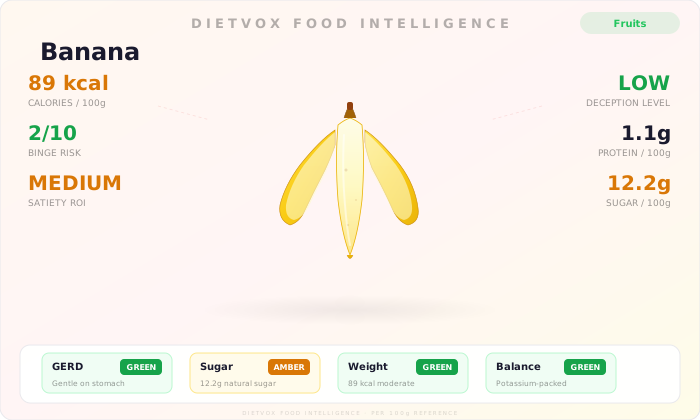
Fact: This is incorrect. While it is true that citrus fruits (oranges, lemons, grapefruit) and tomatoes are highly acidic and common triggers, many other fruits are not. Non-citrus fruits like melons, bananas, and pears are low-acid and generally recommended for those with acid reflux Harvard Health Publishing.
Myth: The sugar in cantaloupe will worsen my reflux.
Fact: The primary dietary triggers for GERD are typically fat, acid, and certain irritants like caffeine, alcohol, and spicy foods. The natural sugars found in whole fruits like cantaloupe are not a common trigger for most people when consumed in moderation. The overall food matrix—low-fat, high-water, low-acid—is far more important for GERD management.
The DietVox Verdict
Cantaloupe is a safe, healthy, and refreshing choice for individuals following a GERD (Acid Reflux) Diet. Its low acidity, minimal fat content, and high water volume align perfectly with clinical dietary recommendations for managing reflux symptoms. As a GREEN-rated food, it can be enjoyed with confidence as part of a balanced, trigger-free eating plan. However, since GERD triggers can be highly individual, it is always recommended to monitor your own symptoms, perhaps by keeping a food diary American College of Gastroenterology.
Disclaimer: This article is for informational purposes only and does not constitute medical advice. Always consult a healthcare provider before making changes to your diet, especially if you have a medical condition.
Scan your foods with the DietVox app to get personalized ratings based on your specific dietary needs and health goals.
Last reviewed: June 2026
How It Works
Why Cantaloupe is Rated GREEN for GERD
Cantaloupe's GREEN rating for the GERD (Acid Reflux) Diet is based on a combination of four key biochemical and nutritional properties that make it exceptionally well-tolerated.
- Low Acidity (Near-Neutral pH): Cantaloupe has a pH level between 6.1 and 6.5, which is very close to neutral (7.0). Highly acidic foods can directly irritate the esophageal lining and may worsen heartburn symptoms. Cantaloupe's low acidity means it is gentle on the esophagus and does not contribute to the overall acid load in the stomach.
- High Water Content: Comprising approximately 90% water, cantaloupe helps with hydration and can have a diluting effect on stomach acid. This can temporarily reduce the concentration of gastric acid, potentially soothing the stomach and lowering the risk of acidic backflow.
- Extremely Low Fat Content: health guidance consistently advise limiting dietary fat to manage GERD. Fat slows down gastric emptying and can decrease the pressure of the lower esophageal sphincter (LES), the muscular valve that prevents acid from escaping the stomach American College of Gastroenterology acid reflux guidance. At just 0.2g of fat per 100g, cantaloupe does not trigger this mechanism, making it a safe choice.
- Absence of Common Irritants: Cantaloupe is naturally free from well-established GERD triggers such as caffeine, theobromine (found in chocolate), capsaicin (in spicy foods), and alcohol. It is a simple, whole food that does not contain compounds known to irritate the digestive system or relax the LES.
Scan any food. Get an instant RED/AMBER/GREEN rating.
DietVox analyses every food across 4 diet protocols — no guesswork.
Try DietVox Free →Try These Instead
Safer alternatives that won't trigger your symptoms.
Frequently Asked Questions
Can I eat cantaloupe every day with GERD?
For most people with GERD, eating a moderate portion of cantaloupe daily is perfectly safe and can be part of a healthy, varied diet. Its low-acid and low-fat profile makes it an excellent choice. However, it's always best to listen to your body and ensure your diet includes a wide range of other GERD-friendly foods.
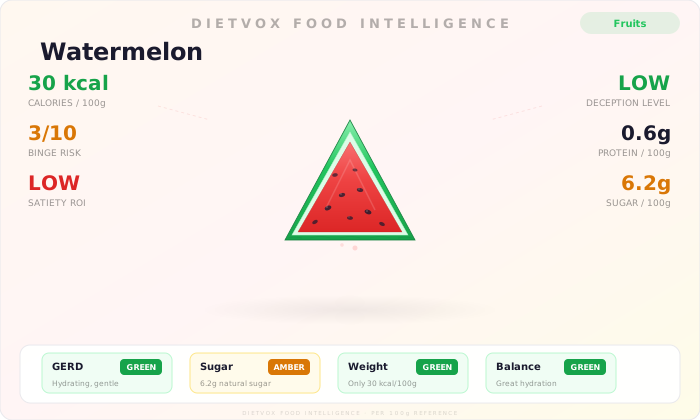
Are other melons like watermelon or honeydew also good for GERD?
Yes, other melons like honeydew and watermelon are also considered good choices for a GERD diet. They share similar properties with cantaloupe, including high water content and low acidity, making them unlikely to trigger reflux symptoms. They are excellent alternatives to keep your diet interesting.
Does the ripeness of cantaloupe affect acid reflux symptoms?
Potentially, yes. A perfectly ripe cantaloupe is ideal. An underripe melon might be harder to digest for some, while an overripe, fermenting melon could cause bloating or gas, which can increase pressure on the stomach and potentially worsen reflux. Stick to fresh, properly ripened fruit for the best results.
What is a good GERD-friendly way to serve cantaloupe?
The simplest way is best: fresh, chilled cubes on their own. You can also blend it into a smoothie with other low-acid fruits like banana and a splash of almond milk. Pairing it with a small serving of low-fat cottage cheese or yogurt can create a more balanced, protein-rich snack that is still gentle on the stomach.