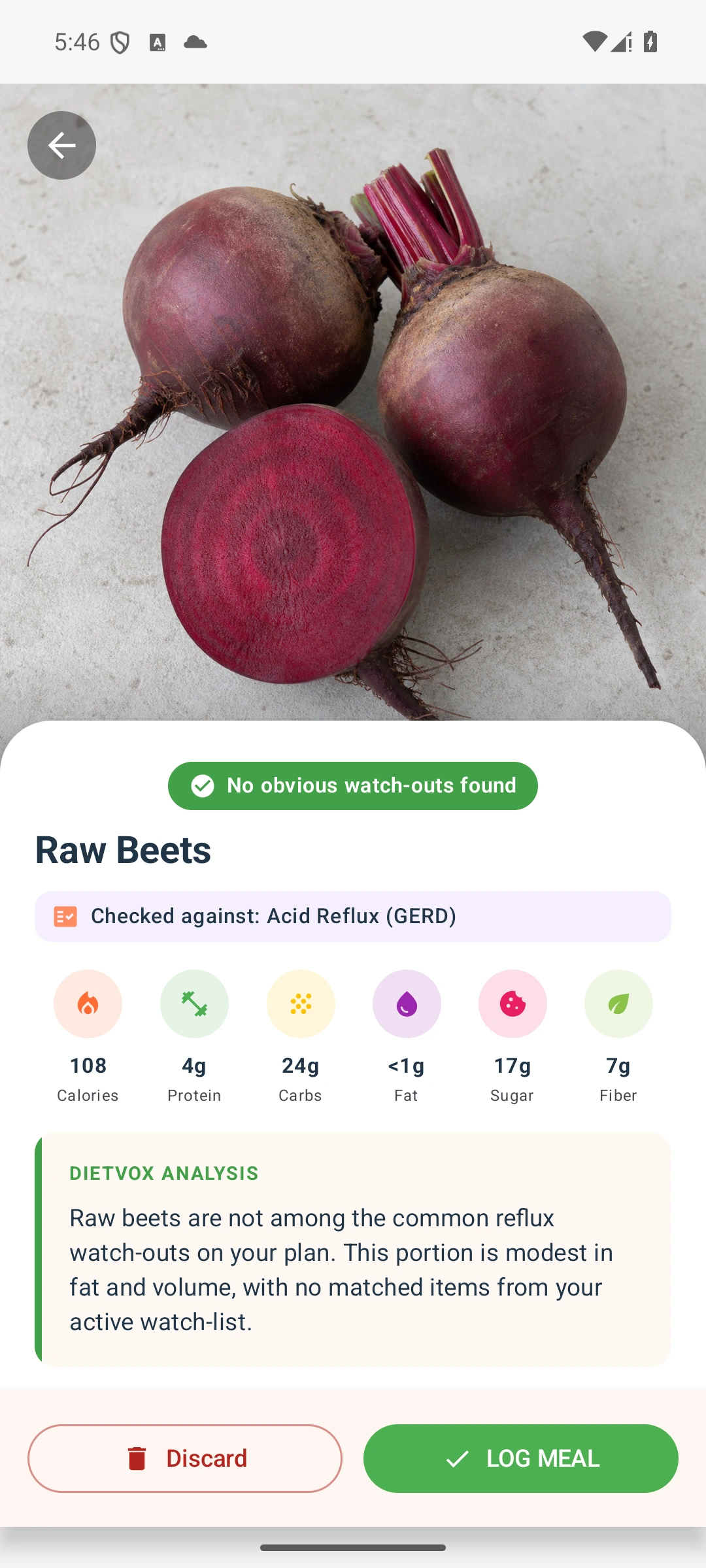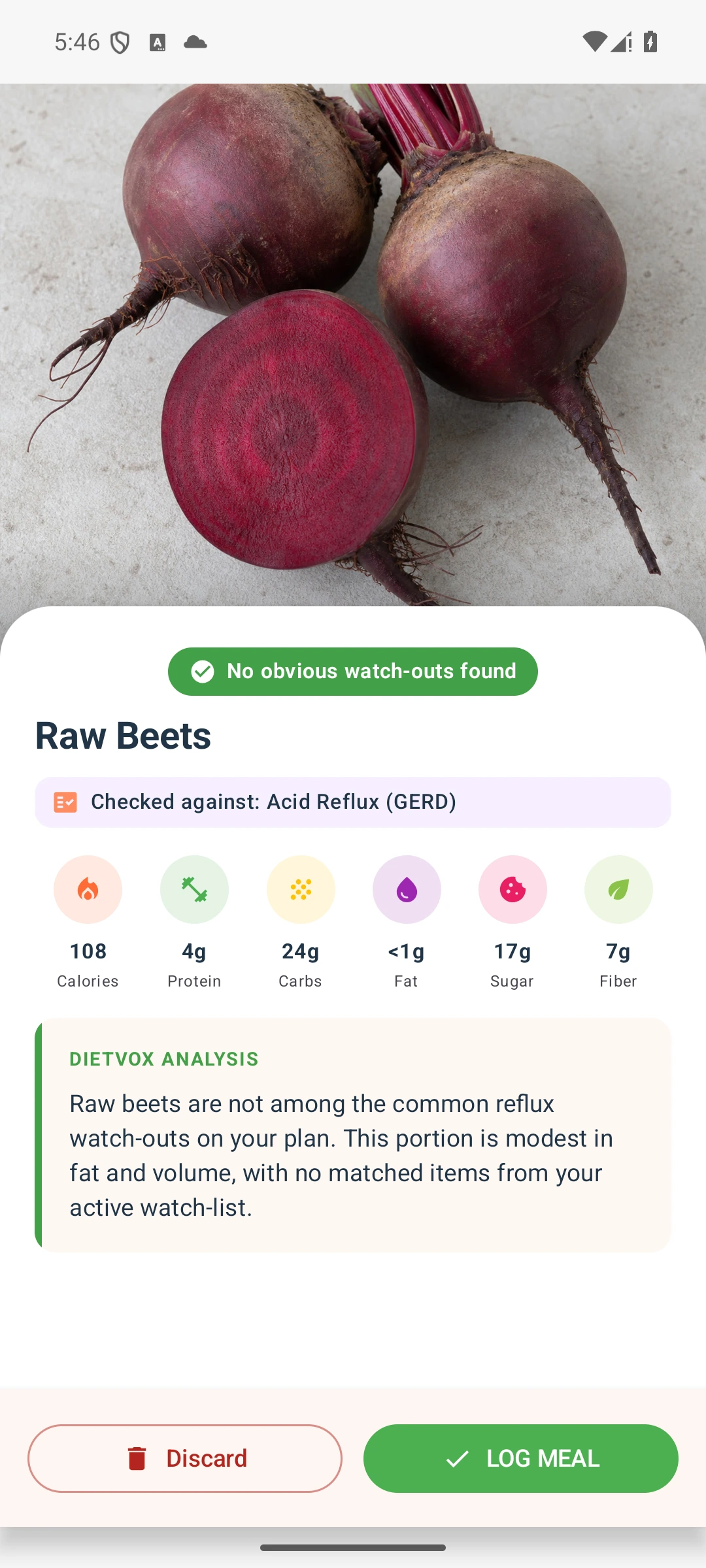
DietVox Rating: GREEN

For individuals managing Gastroesophageal Reflux Disease (GERD), navigating which foods are safe can be a significant challenge. The question of whether beets acid reflux symptoms is common, and our analysis provides a clear answer. DietVox rates beets as GREEN for a GERD diet, indicating they are generally well-tolerated and unlikely to trigger symptoms like heartburn, regurgitation, or chest pain. This rating is based on their favourable nutritional profile, which aligns with established dietary guidelines for managing acid reflux.

The Nutritional Profile of Beets for GERD Management

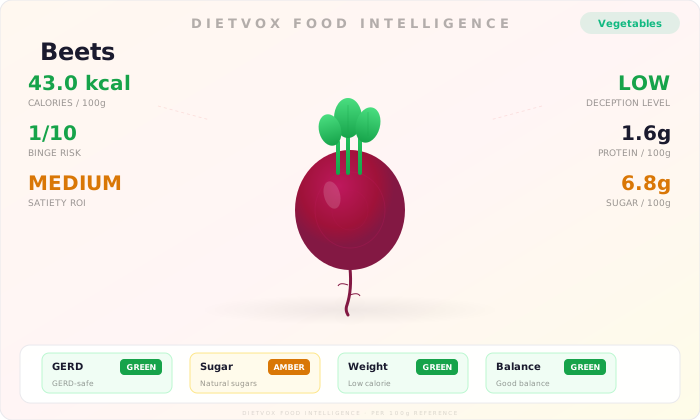
The suitability of beets for a GERD diet is rooted in their specific nutritional composition. According to data from the USDA, 100 grams of raw beets contain approximately 43 calories, 1.6g of protein, 0.2g of fat, and 9.6g of carbohydrates USDA FoodData Central (FDC ID 169145). A closer look at these components reveals why they are considered a safe choice.

Low in Fat Beets are virtually fat-free, with only 0.2g of fat per 100g. This is a critical factor for GERD management. High-fat foods are known to relax the lower esophageal sphincter (LES), the muscular valve that prevents stomach acid from flowing back into the esophagus. They also delay stomach emptying, which can increase gastric pressure and the likelihood of a reflux event American College of Gastroenterology acid reflux guidance. By choosing low-fat foods like beets, you avoid these common physiological triggers.

A Good Source of Dietary Fibre Each 100g serving of beets provides 2.8g of dietary fibre. Fibre plays a multifaceted role in digestive health and GERD management. A higher intake of dietary fibre has been associated with a reduced risk of GERD. source review listed in PubMed suggests that fibre can improve gastric motility, reduce the frequency of LES relaxations, and help maintain a healthy gut microbiome PubMed. Furthermore, adequate fibre intake helps prevent constipation, a condition that can increase intra-abdominal pressure and exacerbate reflux symptoms.

Low Acid Content While the specific pH of beets can vary, they are considered a low-acid or alkaline-forming vegetable. Dietary guidelines for GERD universally recommend avoiding highly acidic foods like citrus fruits, tomatoes, and vinegar, as they can directly irritate the esophageal lining and worsen heartburn NHS. Beets do not pose this risk, making them a safe base for meals and side dishes.

How to Incorporate Beets into Your GERD Diet

While beets themselves are GERD-friendly, the preparation method is paramount. How you cook and what you serve them with can turn a safe food into a potential trigger.

Best Preparation Methods * Roasting: Roasting brings out the natural sweetness of beets without adding fat. Simply toss them in a minimal amount of a GERD-friendly oil (like a light olive oil), season with salt and non-irritating herbs like thyme or rosemary, and roast until tender. * Steaming or Boiling: These methods are excellent as they require no added fat. Steamed or boiled beets can be served as a simple side dish, mashed, or added to salads. * Grating Raw: Raw beets can be grated into salads for added colour and crunch. Use in moderation, as large amounts of raw vegetables can be harder for some people to digest.

Ingredients and Pairings to Avoid * High-Fat Additions: Avoid serving beets with butter, heavy cream, sour cream, or fatty cheeses. These can negate the low-fat benefit of the beets themselves. * Acidic Ingredients: Do not prepare beets with vinegar (as in pickling) or large amounts of lemon juice. Pickled beets are a common GERD trigger due to their high acidity. * Spicy Seasonings: Avoid pairing beets with common reflux triggers like garlic, onions, or spicy peppers, especially if you are sensitive to them.

Addressing Common Concerns

Beeturia (Red Urine or Stools) After consuming beets, it is common to notice a red or pinkish colour in your urine or stools. This harmless condition is called beeturia and is caused by the pigment betacyanin passing through your system. It is not a sign of a digestive problem or bleeding and typically resolves within a day or two NCBI Bookshelf beeturia overview.

Gas and Bloating Beets contain fructans, a type of carbohydrate that can be difficult for some people to digest, potentially leading to gas and bloating. This is more commonly associated with Irritable Bowel Syndrome (IBS) than GERD. While this is not an acid reflux symptom, if you experience discomfort, try starting with smaller portions to assess your individual tolerance.

The Role of Beets in Overall Health and Weight Management

Maintaining a healthy weight is one of the most effective strategies for managing GERD, as excess body weight increases pressure on the abdomen and the LES ACG. Beets are a valuable tool for weight management due to their low calorie density (43 kcal per 100g) and moderate fibre content. They allow you to eat satisfying portions that contribute to fullness (satiety) without a significant caloric impact, supporting the dietary goals recommended by clinical bodies like the National Institute for Health and Care Excellence (NICE) for GERD management NICE.

The Final Verdict on Beets and GERD

Based on their nutritional profile, beets are an excellent addition to a GERD-friendly diet. Their low-fat, low-acid, and high-fibre nature aligns perfectly with dietary recommendations for symptom management. By preparing them simply and avoiding common trigger ingredients, you can enjoy the flavour and health benefits of beets without fear of worsening your acid reflux.


Disclaimer: This article is for informational purposes only and does not constitute medical advice. Always consult a healthcare provider before making changes to your diet, especially if you have a medical condition.

Scan your foods with the DietVox app to get personalized ratings based on your specific dietary needs and health goals.

Last reviewed: June 2026

How It Works

Why Beets are Rated GREEN

Beets earn a GREEN rating for the GERD protocol because their biochemical and nutritional properties do not engage the primary mechanisms known to trigger reflux symptoms. Our analysis shows they are safe based on three key factors:

  1. Do Not Lower LES Pressure: The lower esophageal sphincter (LES) is the muscular barrier that prevents stomach contents from refluxing. High-fat foods are a primary culprit in triggering transient LES relaxations, weakening this barrier. Beets are exceptionally low in fat (0.2g per 100g), meaning they do not exert this adverse effect on LES function American College of Gastroenterology acid reflux guidance.
  1. Low Acid Load: Foods high in acid can directly irritate the esophagus and may lower the pH of stomach contents, making any refluxate more damaging. Beets are a naturally low-acid vegetable, often described as alkaline-forming. They do not contribute to the overall acid load of a meal, which is a core principle of a GERD management diet NHS.
  1. Support Healthy Gastric Emptying: The dietary fibre in beets (2.8g per 100g) aids in digestive regularity and promotes efficient stomach emptying USDA FoodData Central (FDC ID 169145). By preventing constipation and bloating, fibre helps to reduce intra-abdominal pressure, a key physical factor that can force stomach acid up into the esophagus. health guidance often recommendss a fibre-rich diet to support overall digestive health in GERD patients ACG.

Scan any food. Get an instant RED/AMBER/GREEN rating.

DietVox analyses every food across 4 diet protocols — no guesswork.

Try DietVox Free →

Try These Instead

Safer alternatives that won't trigger your symptoms.

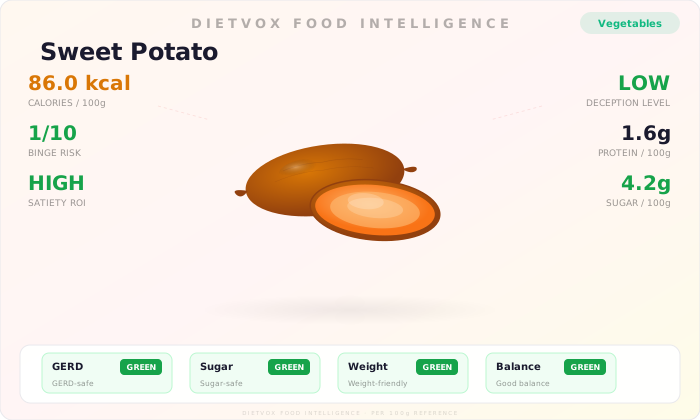
Sweet Potato illustration

Sweet Potato

86 kcal Vegetables
GREEN GERD
GREEN Sugar
AMBER Weight
GREEN Balance
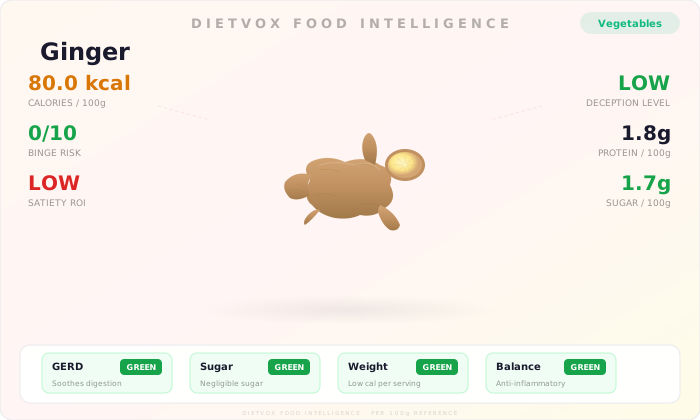
Ginger illustration

Ginger

80 kcal Vegetables
GREEN GERD
GREEN Sugar
GREEN Weight
GREEN Balance
Broccoli illustration

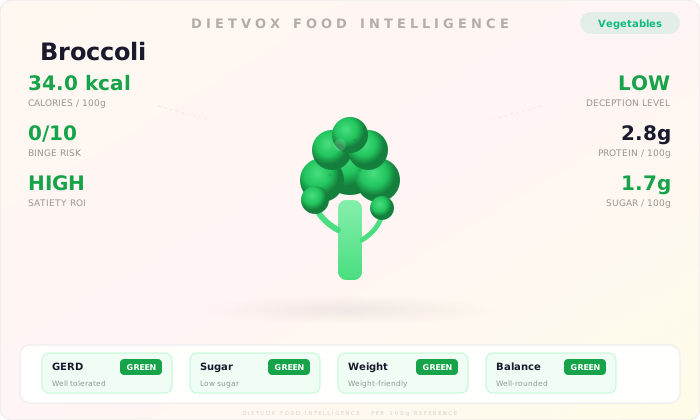
Broccoli

34 kcal Vegetables
GREEN GERD
GREEN Sugar
GREEN Weight
GREEN Balance
Spinach illustration

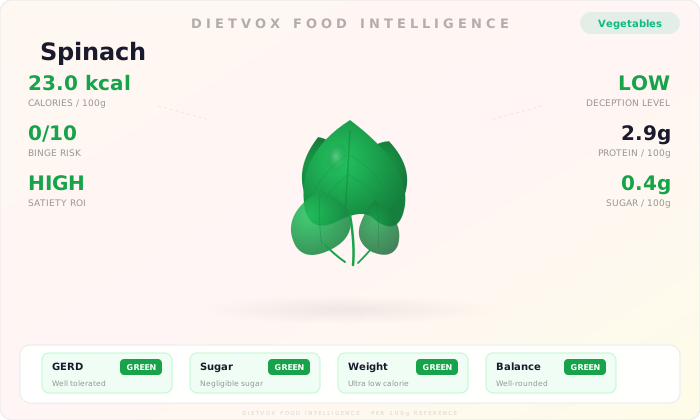
Spinach

23 kcal Vegetables
GREEN GERD
GREEN Sugar
GREEN Weight
GREEN Balance

Frequently Asked Questions

Can I eat Beets on a gerd (acid reflux) diet?

Yes, DietVox rates Beets GREEN for the GERD (acid reflux) diet. Beets are low-acid, high-fibre, and virtually fat-free, making them an excellent and safe choice that is unlikely to trigger reflux symptoms when prepared correctly.

Is pickled beet juice okay for acid reflux?

No, pickled beets and their juice should be strictly avoided on a GERD diet. The pickling process uses vinegar, which is highly acidic and a well-known trigger for heartburn and other reflux symptoms. Always choose fresh, steamed, or roasted beets instead.

Can I drink beet juice if I have GERD?

Beet juice can be suitable for some individuals with GERD, but caution is advised. Juicing removes the beneficial fibre, which aids digestion. If you choose to drink it, start with a small portion, consider diluting it with water or another low-acid juice like carrot, and consume it with a meal rather than on an empty stomach to gauge your tolerance.

Do beets cause gas or bloating with GERD?

While beets do not typically cause acid reflux, they contain fructans, which can lead to gas and bloating in some people, especially those with co-existing Irritable Bowel Syndrome (IBS). This is a separate digestive issue from GERD. If you are sensitive, start with a small portion to see how your body reacts.

Are canned beets as good as fresh for an acid reflux diet?

Canned beets can be a convenient and GERD-friendly option, provided you read the label carefully. Choose varieties that are canned in water or their own juice with no added salt. Avoid any canned beets that are pickled or contain acidic preservatives like citric acid.

Related Reading