DietVox Rating: GREEN
For individuals navigating the complexities of a GERD-friendly diet, finding a satisfying and safe snack can be a challenge. When it comes to almonds and acid reflux, its nutrition profile can fit a reflux-friendly pattern, earning them a GREEN rating from DietVox. This rating signifies that almonds are generally well-tolerated and may even offer symptomatic relief for many people with Gastroesophageal Reflux Disease (GERD).
However, this GREEN rating comes with a critical caveat: portion control. Almonds are a nutritionally dense food, and understanding their composition is key to incorporating them effectively into your GERD management plan. This article provides a comprehensive analysis of why almonds are considered a good choice, how their nutritional profile interacts with GERD mechanisms, and practical strategies for consumption.
Nutritional Profile: A GERD-Focused Analysis
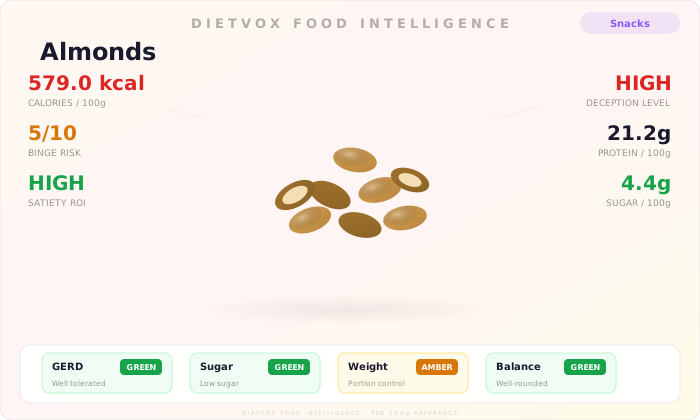
Understanding the nutritional composition of almonds is the first step in appreciating their role in an acid reflux diet. According to the USDA FoodData Central, 100g of almonds contains:
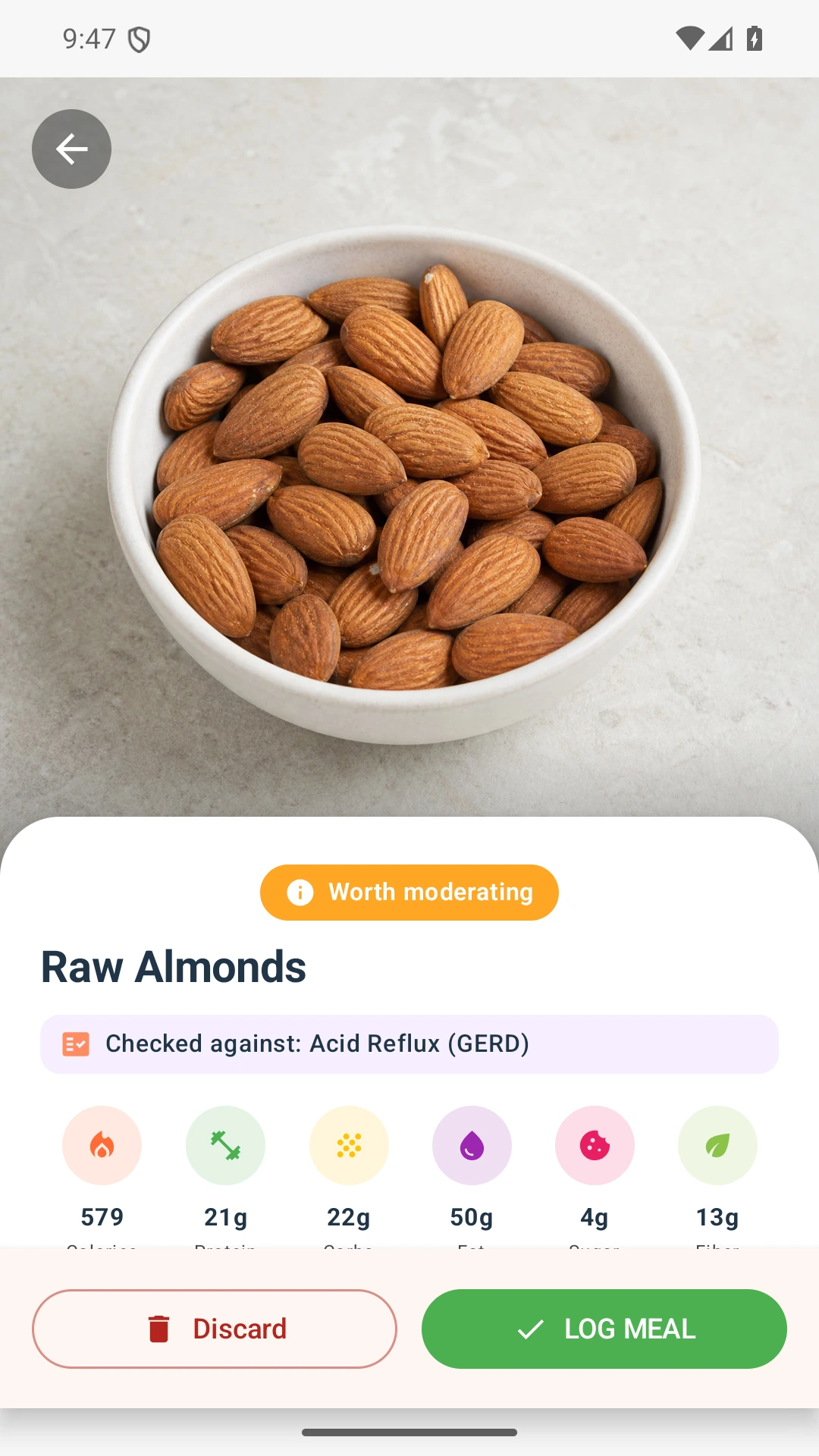
- Calories: 579 kcal
- Fat: 49.9g
- Protein: 21.2g
- Carbohydrates: 21.6g
- Dietary Fibre: 12.5g
- Calcium: 269mg
- Potassium: 733mg
Source: USDA FoodData Central (FDC ID 170567)
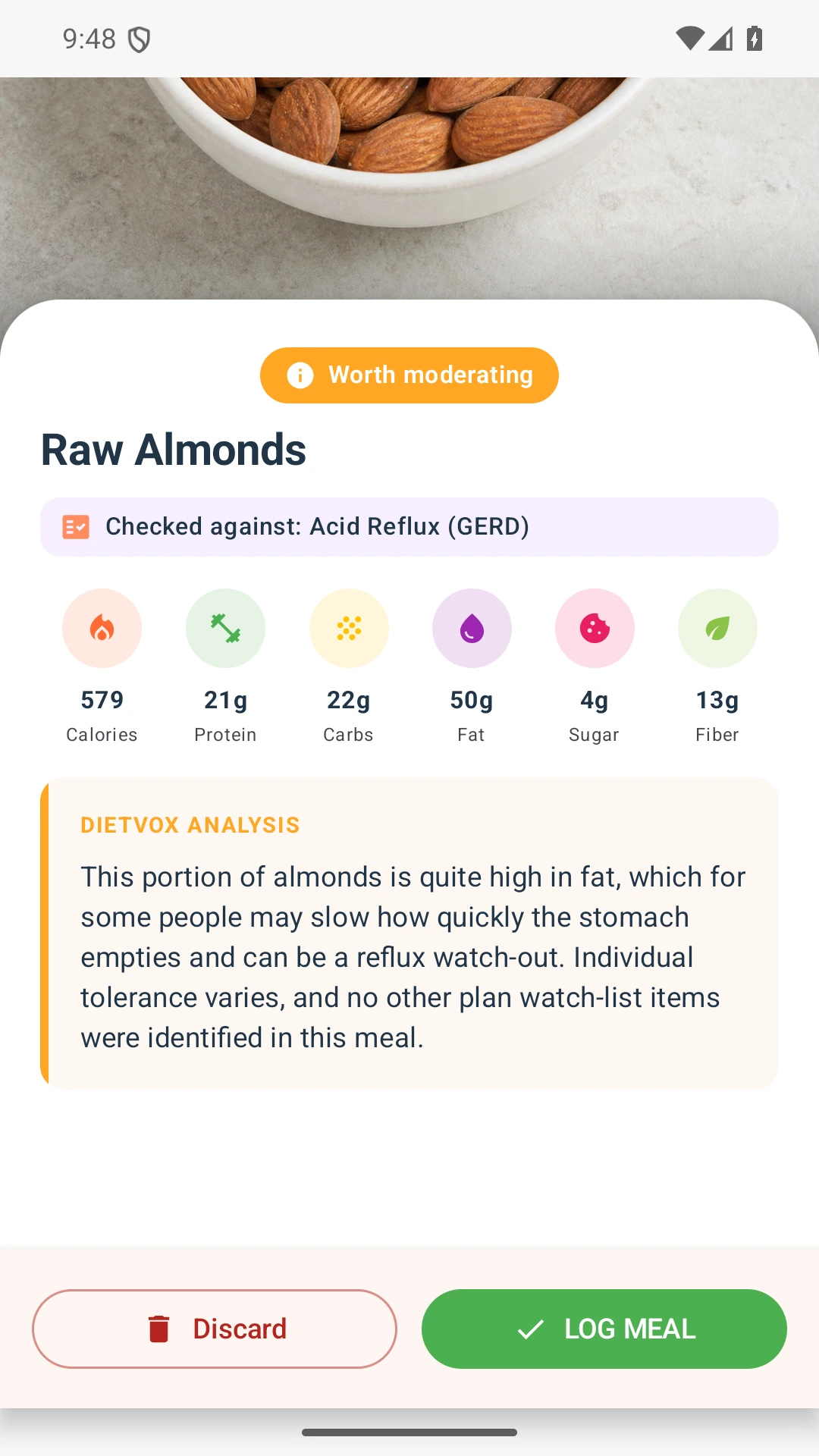
At first glance, the high fat content (49.9g) might raise a red flag, as high-fat foods are commonly cited as triggers for acid reflux American College of Gastroenterology acid reflux guidance. However, the type of fat is crucial. The majority of fat in almonds is monounsaturated and polyunsaturated, which are considered healthy fats. These are processed differently by the body than the saturated and trans fats found in fried foods, which are known to delay stomach emptying and relax the lower esophageal sphincter (LES), thereby promoting reflux.
The Critical Role of Portion Control
Despite their benefits, the high calorie and fat density of almonds cannot be ignored. Our Health Forensics team rates almonds as having HIGH Calorie Density and HIGH Tracking Difficulty.
Overeating any food, even a healthy one, can increase pressure inside the stomach, forcing acid up into the esophagus. A standard serving of almonds is typically considered to be about one ounce, or roughly 23 almonds. Sticking to this portion size is essential for reaping the benefits without triggering symptoms.
- Why Tracking is Difficult: It's easy to mindlessly eat nuts from a large bag. The difference between a safe 1-ounce serving (approx. 164 kcal) and a symptom-triggering 3-ounce serving (approx. 492 kcal) is significant. Using a digital food scale or pre-portioning almonds into small bags is a highly recommended strategy.
How to Incorporate Almonds into Your GERD Diet
Integrating almonds into your diet requires a mindful approach. Here are some practical, practical tips:
- As a Standalone Snack: A small handful of almonds between meals can help absorb excess stomach acid and provide a feeling of fullness (satiety), which can prevent overeating at your next meal. Their high protein and fibre content contributes to a HIGH Satiety ROI.
- Choose Plain Varieties: Opt for raw or dry-roasted, unsalted almonds. Commercially prepared almonds can be roasted in oils that may trigger GERD, and high salt intake can be problematic for overall health CDC sodium guidance.
- Meal Additions: Instead of eating a large portion at once, try sprinkling slivered or chopped almonds onto GERD-friendly foods like oatmeal, non-citrus yogurt, or salads. This adds texture, flavour, and nutrients without overwhelming your digestive system.
- Consider Almond Butter: Natural almond butter (with no added sugar or oils) can be a good alternative. A tablespoon spread on a slice of whole-grain toast or with apple slices makes for a balanced, GERD-friendly snack. Check the label carefully to avoid hydrogenated oils, which can be a source of trans fats.
- Listen to Your Body: While almonds are rated GREEN, individual food triggers can vary. Introduce them into your diet in small amounts and monitor your symptoms. Keeping a food diary can help you identify what works best for you, a strategy often recommended in health guidance American College of Gastroenterology.
Disclaimer: This article is for informational purposes only and does not constitute medical advice. Always consult a healthcare provider before making changes to your diet, especially if you have a medical condition.
Scan your foods with the DietVox app to get personalized ratings based on your specific dietary needs and health goals.
Last reviewed: June 2026
How It Works
Why Almonds are Rated GREEN for GERD
DietVox's GREEN rating for almonds is based on several key physiological mechanisms that make them beneficial for individuals managing acid reflux. While no single food is a cure, almonds possess a unique combination of properties that can help mitigate symptoms.
1. Alkaline-Forming Properties
While almonds are mildly acidic before consumption, they are considered an alkaline-forming food. This means that after they are metabolised, they contribute to a net alkaline effect in the body. For GERD sufferers, consuming alkaline-forming foods can be beneficial as they may help to buffer or neutralise the highly acidic contents of the stomach. This can provide temporary relief from the burning sensation of heartburn.
2. High Content of Healthy Fats
High-fat meals are a well-documented trigger for GERD because they can delay gastric emptying and reduce the pressure of the lower esophageal sphincter (LES) Harvard Health Publishing. However, the source-reviewed literature distinguishes between different types of fats. The fat in almonds is predominantly monounsaturated (around 31.6g per 100g) and polyunsaturated. These healthy fats are generally better tolerated and less likely to cause the significant delays in stomach emptying associated with saturated and trans fats found in fried or processed foods.
3. Source of Dietary Calcium
Almonds are a notable plant-based source of calcium, providing 269mg per 100g USDA FoodData Central (FDC ID 170567). Calcium is the active ingredient in many over-the-counter antacids (as calcium carbonate) due to its ability to neutralise acid. While the calcium in almonds won't act as powerfully as a concentrated antacid tablet, it may contribute a mild, natural acid-buffering effect when consumed as part of a meal or snack.
4. Excellent Source of Fibre
With 12.5g of dietary fibre per 100g, almonds are a high-fibre food. Diets rich in fibre have been associated with a lower risk of GERD. A source review listed in PubMed found that increased dietary fibre intake could reduce the frequency of heartburn and reflux events PubMed. Fibre promotes regular bowel movements and overall digestive health, which can help reduce pressure on the stomach and LES. Furthermore, fibre contributes to satiety, helping to prevent overeating—a primary trigger for reflux episodes.
Scan any food. Get an instant RED/AMBER/GREEN rating.
DietVox analyses every food across 4 diet protocols — no guesswork.
Try DietVox Free →Try These Instead
Safer alternatives that won't trigger your symptoms.
Frequently Asked Questions
How many almonds can I eat with acid reflux?
While almonds are rated GREEN for GERD, portion control is vital due to their high fat and calorie content. A generally safe serving size is about one ounce, which is approximately 23 almonds. This amount provides the nutritional benefits without being likely to trigger reflux by overfilling the stomach.
Is almond milk a good choice for GERD?
Unsweetened almond milk is often an excellent choice for people with GERD. It is alkaline and low in fat, making it a soothing alternative to cow's milk, which can sometimes be problematic. Always choose unsweetened varieties, as high sugar content can be a potential reflux trigger for some individuals.
Are roasted and salted almonds okay for an acid reflux diet?
Dry-roasted almonds are generally fine, but it's best to avoid almonds roasted in oil, as the added fat can trigger symptoms. Unsalted almonds are the preferred choice. While a small amount of salt is unlikely to cause reflux, high sodium intake is not recommended for overall health, as advised by health authorities like the NHS.
Can almonds ever cause acid reflux?
Yes, for some individuals or under certain conditions. The most common reason almonds might trigger acid reflux is by consuming too large a portion. Eating several handfuls can contribute excessive fat and calories, delaying stomach emptying and increasing pressure on the LES. Additionally, some people may have a specific intolerance or sensitivity to nuts.
Should I eat almonds raw or blanched for GERD?
Both raw and blanched (skinless) almonds can be suitable. Some people find that the skins on raw almonds contain tannins that can be slightly irritating to the digestive system. If you find raw almonds cause discomfort, trying blanched almonds may be a better option as they can be easier to digest.