DietVox Rating: GREEN
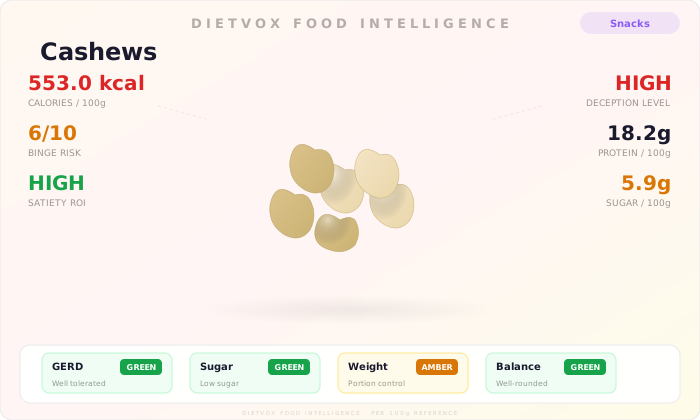
Cashews are rated GREEN for a GERD (Acid Reflux) Diet, meaning they are generally well-tolerated and unlikely to trigger symptoms when consumed in appropriate portions. For individuals managing cashews acid reflux concerns, this rating indicates they can be a safe and nutritious addition to a balanced diet. However, their high fat and calorie content necessitates mindful consumption.
This GREEN rating is based on the understanding that while high-fat foods are a known trigger for acid reflux, the type of fat and the overall composition of cashews, combined with strict portion control, allow them to fit into a GERD-friendly eating plan. Their nutritional profile offers benefits that can indirectly support GERD management, such as promoting satiety to prevent overeating.
A Clinical Look at Cashews and GERD
Navigating a GERD diet often involves identifying personal trigger foods. While health guidance from sources like the American College of Gastroenterology acid reflux guidance and the NHS consistently list fatty foods as common culprits, the advice is not a blanket ban on all fats. The focus is on limiting large, high-fat meals that can delay stomach emptying and relax the lower esophageal sphincter (LES), the muscular valve that keeps stomach acid from flowing back into the esophagus.
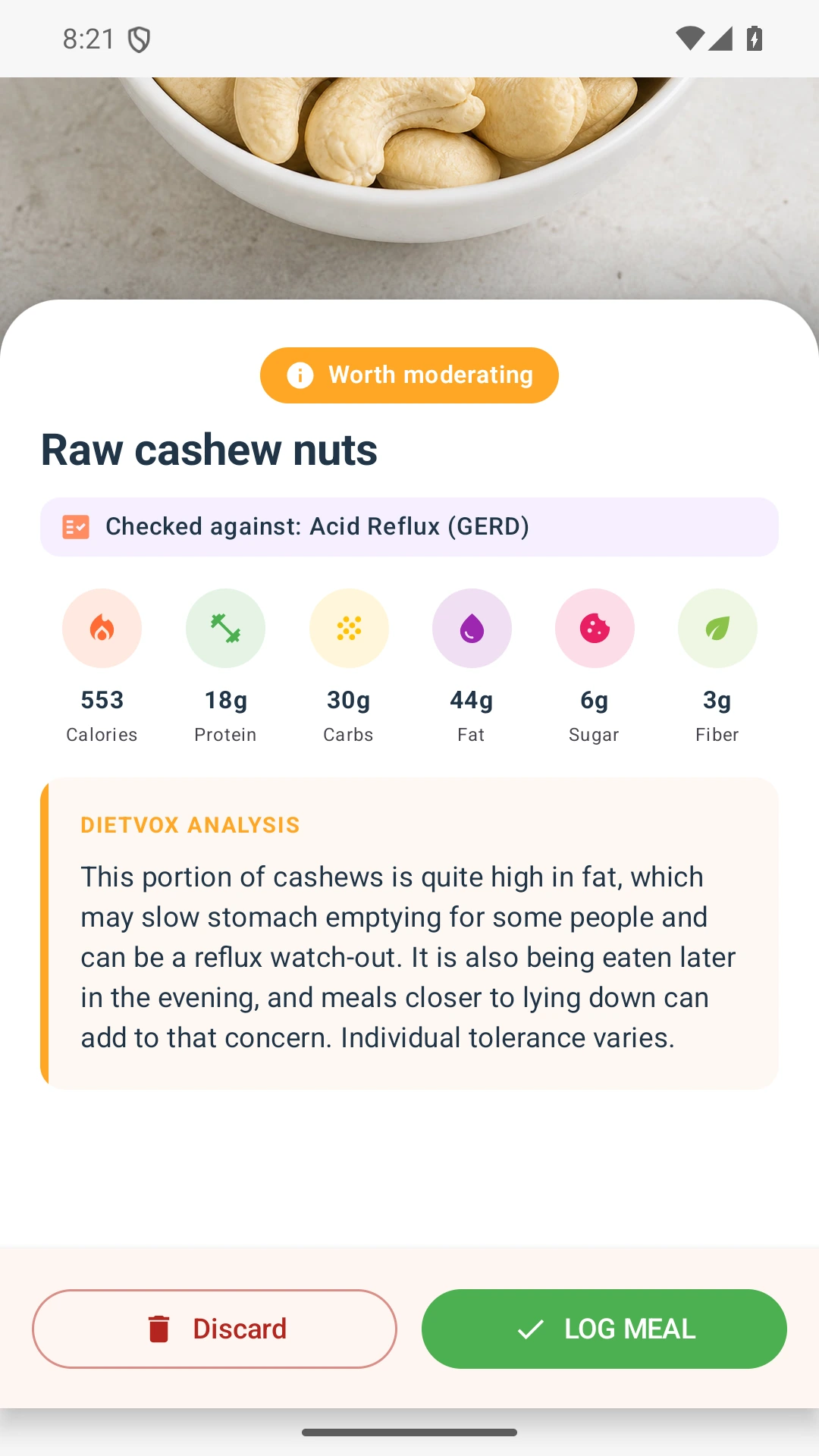
Cashews, while containing 43.9g of fat per 100g, are primarily composed of monounsaturated and polyunsaturated fats USDA FoodData Central (FDC ID 170162). A small, controlled portion of cashews is significantly different from a deep-fried meal. Furthermore, cashews provide protein and fibre, which can help you feel full and satisfied, reducing the likelihood of overeating—a major mechanical trigger for reflux.
Nutritional Profile: A GERD Perspective
Understanding the nutritional composition of cashews is crucial for incorporating them safely into a GERD diet. The data below is per 100g, but a GERD-appropriate serving size is much smaller, typically around 28g (1 ounce or a small handful).
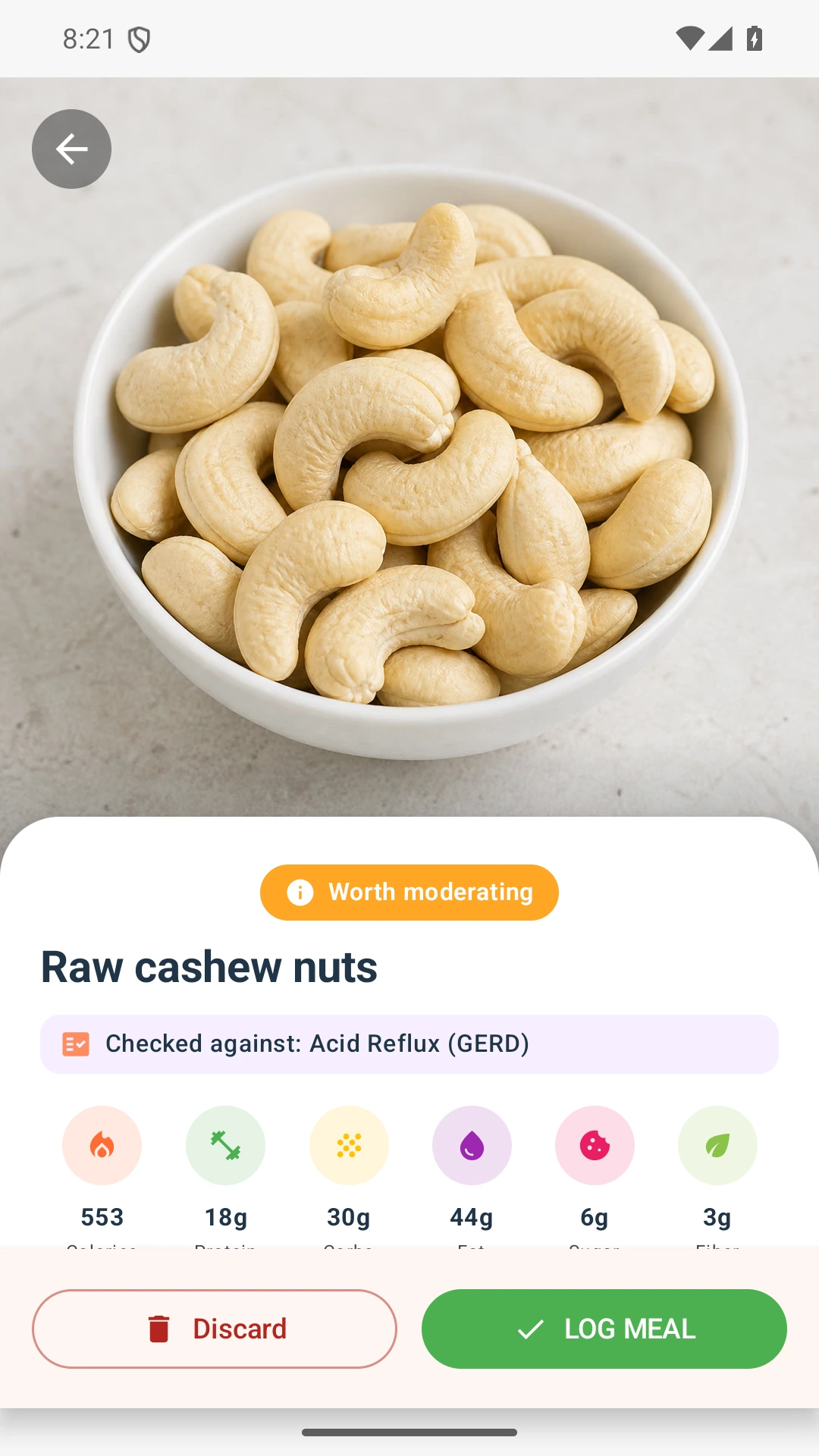
Nutritional Data per 100g USDA FoodData Central (FDC ID 170162): - Calories: 553 kcal - Fat: 43.9 g - Saturated Fat: 7.8 g - Protein: 18.2 g - Carbohydrates: 30.2 g - Fibre: 3.3 g - Magnesium: 292 mg
The Role of Fat Content
The 43.9g of fat per 100g is the primary reason for caution. High-fat meals can delay gastric emptying, meaning food sits in the stomach longer, increasing the opportunity for acid to reflux PubMed. However, in a typical 28g serving, you consume approximately 12.3g of fat. This moderate amount is less likely to cause issues compared to a large, fatty meal. The key is to avoid large quantities at once.
Satiety ROI: How Cashews Can Help Prevent Overeating
Cashews have a HIGH Satiety ROI (Return on Investment). With 18.2g of protein and 3.3g of fibre per 100g, they are effective at promoting fullness. This is a significant benefit for GERD management. Overeating increases pressure inside the stomach (intra-gastric pressure), which can force the LES open and cause reflux NHS. A small serving of cashews as a snack can curb hunger and prevent the consumption of larger, more problematic meals later on.
Micronutrients: The Magnesium Connection
Cashews are an excellent source of magnesium, providing 292 mg per 100g. Magnesium is essential for muscle function throughout the body, including smooth muscle tissue like the LES. While more source review is needed to establish a direct link between dietary magnesium intake and improved LES function, ensuring adequate mineral intake is a cornerstone of overall health, which supports digestive wellness Harvard Health Publishing.
Practical Tips for Eating Cashews with GERD
Successfully including cashews in your GERD diet hinges on preparation and portioning.
- Strict Portion Control: This is the most critical rule. Limit your serving size to about a quarter cup or a small handful (around 28g or 1 ounce). Due to their high calorie density, cashews have a HIGH Tracking Difficulty. Using a digital food scale is the most accurate way to ensure you're not consuming too much.
- Choose Raw and Unsalted: Opt for raw, unsalted cashews. Roasted varieties are often cooked in extra oils, increasing the fat content. Heavily salted nuts can be problematic for some individuals and may contribute to other health issues.
- Timing Matters: Avoid eating cashews, or any food, within 2-3 hours of bedtime. Lying down after eating makes it easier for stomach acid to flow back into the esophagus American College of Gastroenterology acid reflux guidance.
- Pair Wisely: Combine cashews with other GERD-friendly foods. Sprinkle a few chopped cashews on your morning oatmeal, blend them into a smoothie with banana and almond milk, or pair them with a slice of melon for a balanced snack. Avoid pairing them with known triggers like citrus, chocolate, or caffeine.
- Listen to Your Body: Dietary triggers for GERD are highly individual. While cashews are rated GREEN, it's important to monitor your own symptoms. Introduce them in small amounts and observe how you feel.
Addressing Common Misconceptions
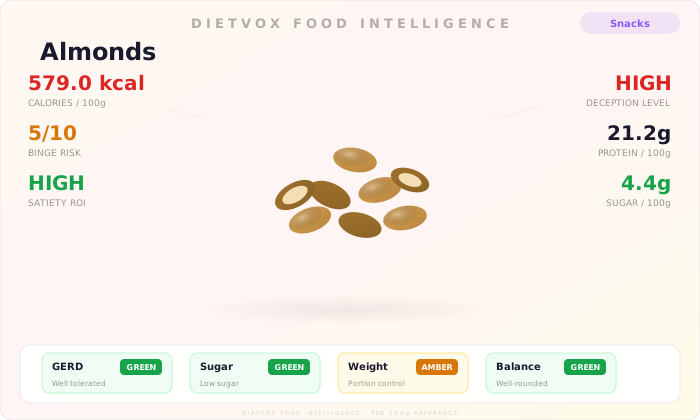
- Myth: All nuts are bad for acid reflux. - Fact: This is an oversimplification. While very fatty nuts in large portions can be a trigger, many people with GERD tolerate nuts like cashews and almonds well in moderation. The key is the dose and the type of nut.
- Myth: Cashews are an 'acidic' food. - Fact: The concept of 'acidic' vs. 'alkaline' foods can be confusing. While cashews have a pH below 7 before digestion, they are not considered a high-acid food in the way that lemons or tomatoes are. They are unlikely to directly contribute to stomach acidity and are generally considered neutral or slightly alkaline-forming by the body.
Disclaimer: This article is for informational purposes only and does not constitute medical advice. Always consult a healthcare provider before making changes to your diet, especially if you have a medical condition.
Scan your foods with the DietVox app to get personalized ratings based on your specific dietary needs and health goals.
Last reviewed: June 2026
How It Works
Why Cashews are Rated GREEN
DietVox rates cashews GREEN for the GERD protocol based on a balance of their nutritional properties and established dietary management principles for acid reflux. The rating is conditional on proper portion control.
- Moderate Fat in Controlled Portions: The primary concern with nuts and GERD is fat content. High-fat intake can reduce LES pressure and slow stomach emptying, both of which promote reflux American College of Gastroenterology. However, cashews' fat content (43.9g per 100g) becomes manageable in a standard 28g (1 oz) serving, which contains about 12g of fat. This amount is unlikely to trigger symptoms in most individuals, especially as it's primarily composed of healthier unsaturated fats.
- Alkaline-Forming Potential: While not a primary medical treatment, some dietary approaches for GERD focus on balancing acid-forming and alkaline-forming foods. Cashews are considered to be alkaline-forming after digestion. This means they do not add to the body's acid load and may help buffer the highly acidic contents of the stomach, potentially soothing the esophagus. They stand in contrast to highly acidic trigger foods like citrus fruits and tomatoes.
- High Satiety to Prevent Overeating: Cashews' combination of 18.2g of protein and 3.3g of fibre per 100g makes them highly satiating PubMed. One of the most effective lifestyle modifications for GERD is avoiding large meals NICE. By providing a high degree of fullness from a small portion, cashews can help manage appetite and prevent the stomach distension that leads to reflux episodes.
- Nutrient-Dense Composition: Cashews provide valuable micronutrients, including magnesium, which supports healthy muscle function. A well-nourished body is better equipped to manage all physiological processes, including digestion. Their nutrient density makes them a healthier snack choice than many processed, low-nutrient foods that can contain hidden fats, sodium, or other potential irritants.
Scan any food. Get an instant RED/AMBER/GREEN rating.
DietVox analyses every food across 4 diet protocols — no guesswork.
Try DietVox Free →Try These Instead
Safer alternatives that won't trigger your symptoms.
Frequently Asked Questions
How many cashews can I eat with acid reflux?
For most people with GERD, a sensible portion size is a small handful, which is about 1 ounce or 28 grams (approximately 16-18 cashews). This serving size keeps the fat content to a moderate level (around 12 grams), minimizing the risk of triggering reflux symptoms.
Are roasted and salted cashews bad for GERD?
It is better to choose raw, unsalted cashews. Roasting processes can add extra oils and fats, and high salt intake can be a trigger for some individuals with acid reflux. If you prefer roasted cashews, look for 'dry-roasted' varieties without added oils or salt.
Can cashew milk or cashew butter trigger acid reflux?
Cashew butter, like the nuts themselves, is generally safe in small portions (e.g., one tablespoon). Be mindful that it is very calorie and fat-dense. Unsweetened cashew milk is often well-tolerated as it's lower in fat and can be a good alternative to dairy milk, which can be a trigger for some. Always check labels for added sugars or fats.
Do cashews help absorb stomach acid?
While there is no direct direct source support that cashews 'absorb' stomach acid, their composition of fibre, protein, and carbohydrates can help. Eating a small amount of food like cashews can act as a buffer, giving the stomach acid something to work on besides the stomach lining and potentially reducing the amount of free-flowing acid that could splash into the esophagus.
Should I avoid cashews if I have severe GERD?
If you have severe or frequent GERD symptoms, it's best to be cautious. While cashews are rated GREEN, GERD triggers are highly individual. You could try introducing a very small amount (5-6 cashews) and monitor your symptoms closely. Consulting with a gastroenterologist or a registered dietitian is recommended for managing severe GERD.