DietVox Rating: GREEN
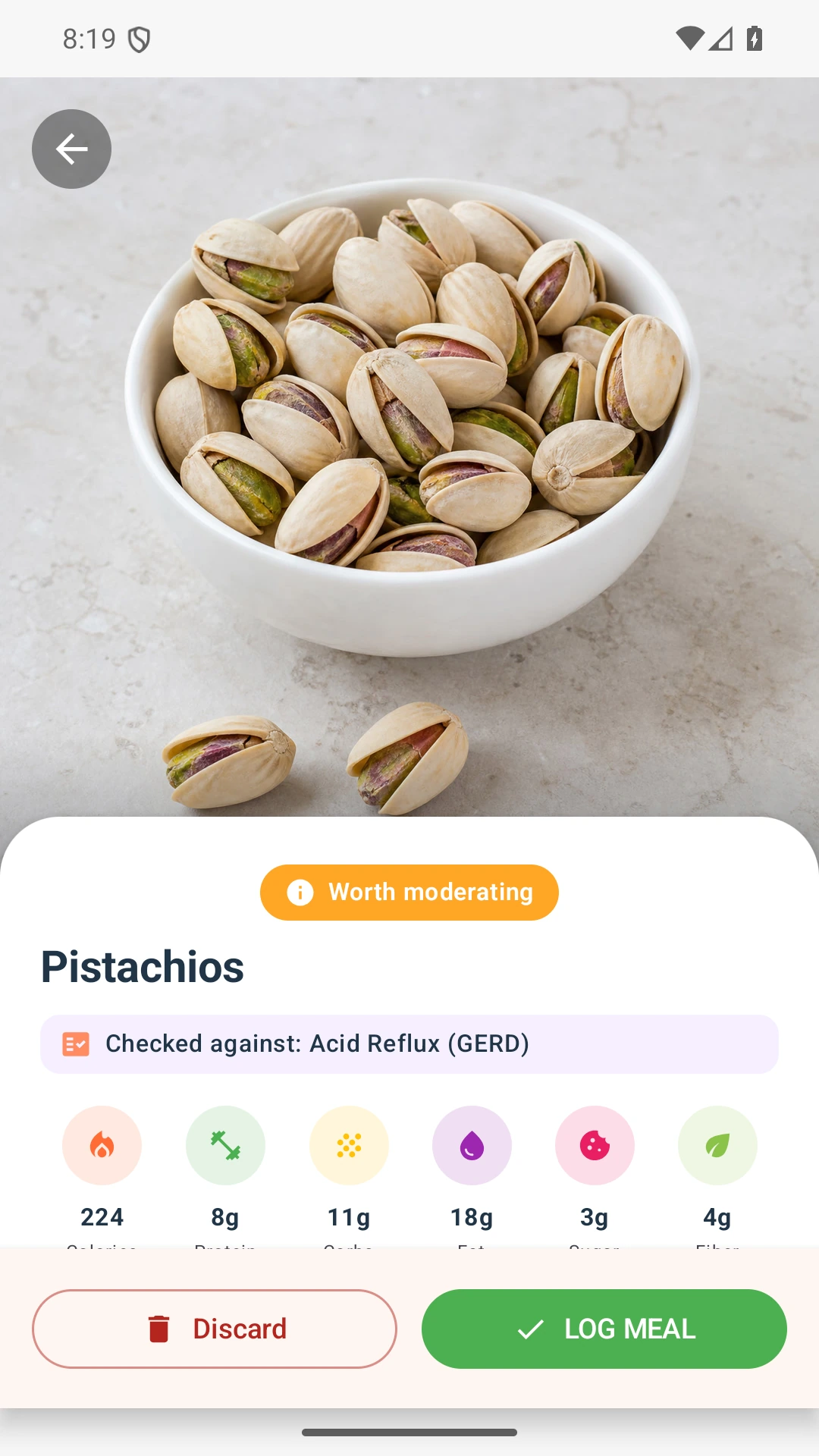
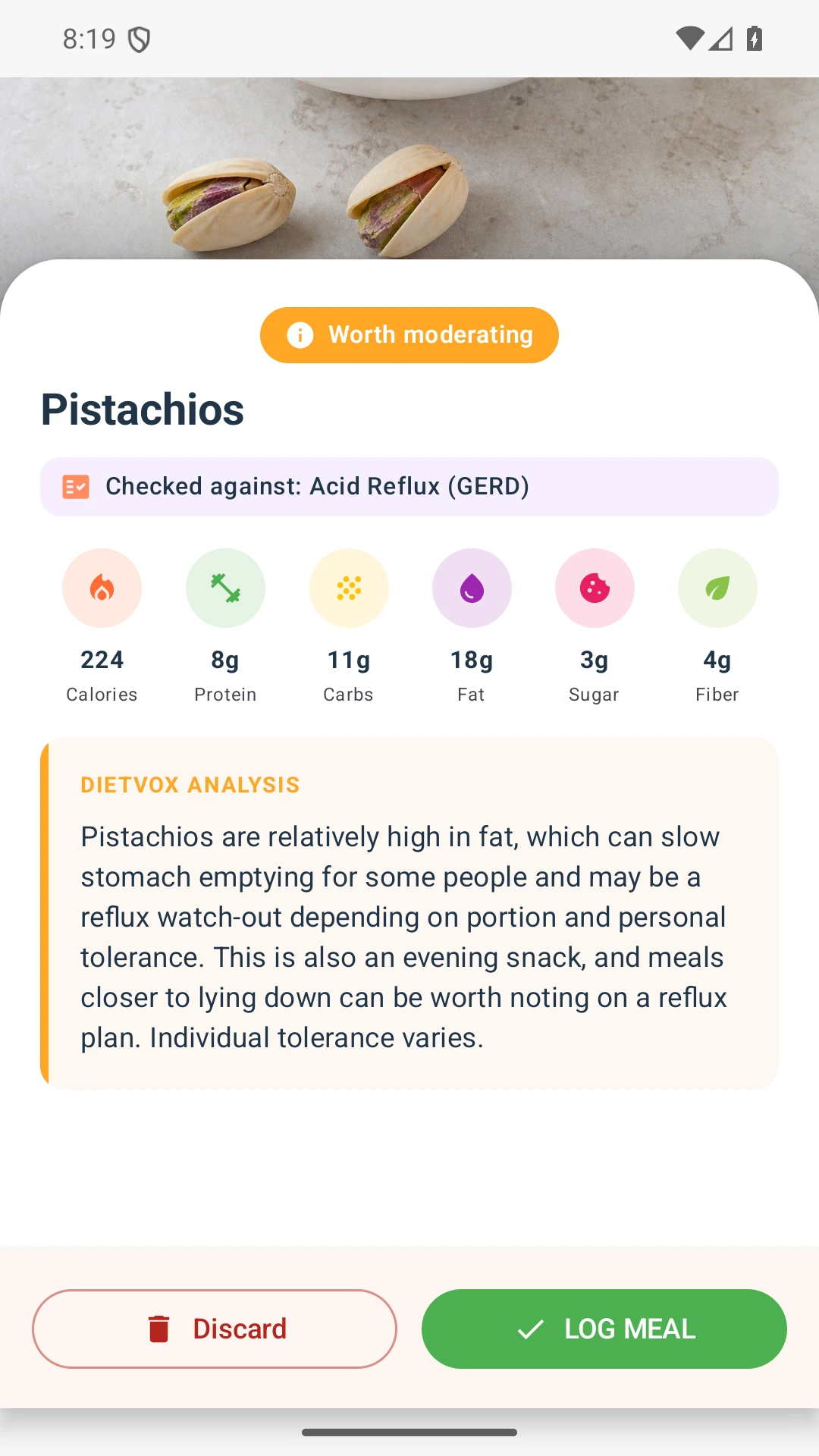
Pistachios are rated GREEN for a GERD (Acid Reflux) Diet, indicating they are generally well-tolerated and unlikely to trigger symptoms when consumed in moderation. For individuals managing pistachios acid reflux concerns, these nuts can be a nutritious and satisfying snack. Despite being high in fat, a known dietary consideration for GERD, the type of fat and the overall nutritional profile of pistachios make them a suitable choice for most people following this protocol.
This rating is based on their low-acid nature, high content of healthy unsaturated fats, and beneficial dietary fibre. However, due to their high calorie density, portion control is a critical factor for successful inclusion in a GERD-friendly diet.
Nutritional Profile of Pistachios: A GERD Perspective
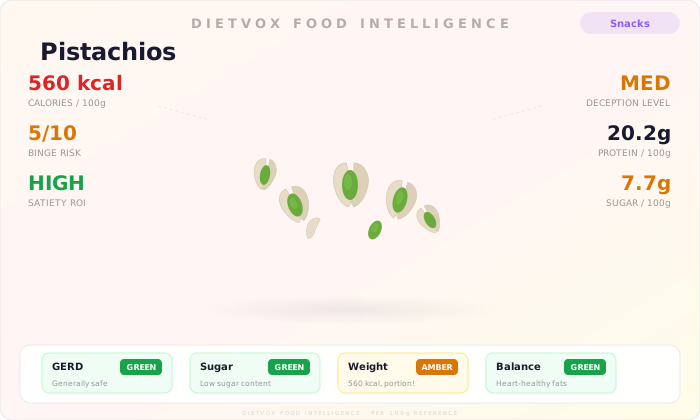
Understanding the nutritional composition of pistachios is key to seeing why they fit into a GERD management plan. The data below, sourced from the USDA FoodData Central (FDC ID 170184), is for a 100g serving of raw pistachios.
| Nutrient | Amount per 100g | |---|---| | Calories | 560 kcal | | Protein | 20.2 g | | Fat (Total) | 45.3 g | | ↳ Saturated Fat | 5.6 g | | Carbohydrates | 27.2 g | | ↳ Dietary Fibre | 10.6 g | | ↳ Sugars | 7.7 g | | Potassium | 1025 mg |
Pistachios' high fat content is primarily composed of monounsaturated and polyunsaturated fats, which are considered beneficial for overall health NHS fat facts. Furthermore, their substantial protein and fibre content contribute to a high satiety value, which can help prevent overeating—a known trigger for acid reflux American College of Gastroenterology acid reflux guidance.
How to Incorporate Pistachios into Your GERD Diet
Successfully including pistachios in your diet requires a mindful approach. Their high calorie and fat density means that moderation is essential.
The Importance of Portion Control
Overeating puts pressure on the lower esophageal sphincter (LES), making reflux more likely. Due to their high energy density (560 kcal/100g), it's easy to consume a large number of calories from pistachios in a small volume.
- Recommended Serving Size: A standard 1-ounce (approximately 28g) serving, which is about 49 pistachio kernels, is a sensible portion. This provides around 159 calories and 12.8g of fat.
- Tracking Difficulty: DietVox classifies pistachios with a MEDIUM tracking difficulty. It's advisable to measure your portion with a food scale rather than estimating by hand to ensure you stay within your caloric and fat limits.
Choosing the Right Kind of Pistachios
Not all pistachio products are created equal. How they are prepared can significantly impact their suitability for a GERD diet.
- Best Choices: Opt for raw or dry-roasted pistachios. These preparations do not add extra fats or potential irritants.
- What to Avoid: Steer clear of oil-roasted, heavily salted, or flavored varieties. Spicy coatings (like chili-lime) and high salt content can be direct triggers for heartburn NHS. Always check the ingredients list for added oils, sugars, or spices.
Smart Pairing and Meal Timing
How and when you eat pistachios also matters.
- Good Pairings: Combine pistachios with other GERD-friendly foods. Sprinkle them on oatmeal, mix them into a non-fat Greek yogurt, or add them to a salad with a non-acidic vinaigrette.
- Meal Timing: Avoid eating large quantities of any food, including pistachios, within three hours of lying down. Eating close to bedtime can allow stomach acid to flow back into the esophagus more easily American College of Gastroenterology acid reflux guidance.
Pistachios and Acid Reflux: Common Questions & Concerns
It's common for individuals with GERD to be cautious about nuts. Here we address some frequent concerns with source-reviewed insights.
- "Aren't all high-fat foods bad for GERD?" This is a common and understandable misconception. health guidance often recommendss limiting high-fat foods because they can delay stomach emptying and relax the LES. However, the type of fat is crucial. The primary concern is with the saturated and trans fats found in fried foods, heavy creams, and processed snacks. The monounsaturated and polyunsaturated fats in pistachios are generally not associated with triggering GERD symptoms when eaten in appropriate portions.
- "Can the texture of pistachios irritate my esophagus?" For some individuals, particularly those with existing esophageal inflammation (esophagitis), the hard texture of nuts might cause discomfort. If you find this to be the case, consider a smoother alternative like natural pistachio butter. Ensure it contains only pistachios and perhaps a small amount of salt, with no added sugars or hydrogenated oils.
- "Do pistachios cause gas or bloating?" Pistachios are an excellent source of dietary fibre (10.6g per 100g). While fibre is beneficial for digestion, a sudden increase in intake can sometimes lead to gas and bloating. This bloating can increase intra-abdominal pressure, potentially worsening reflux symptoms. If you are not used to a high-fibre diet, introduce pistachios gradually to allow your digestive system to adapt.
Disclaimer: This article is for informational purposes only and does not constitute medical advice. Always consult a healthcare provider before making changes to your diet, especially if you have a medical condition.
Scan your foods with the DietVox app to get personalized ratings based on your specific dietary needs and health goals.
Last reviewed: June 2026
How It Works
Why Pistachios are Rated GREEN for GERD
Pistachios earn a GREEN rating due to a combination of factors that make them a low-risk food for individuals managing GERD. The mechanism involves their fat profile, fibre content, and low-acid nature.
1. Predominance of Healthy Unsaturated Fats
While GERD protocols often caution against high-fat foods, this advice primarily targets saturated and trans fats. These types of fats can delay gastric emptying and reduce the pressure of the lower esophageal sphincter (LES), the muscle that prevents stomach acid from flowing back up American College of Gastroenterology acid reflux guidance. Pistachios, however, are a different story. Of their 45.3g of total fat per 100g, only 5.6g are saturated USDA FoodData Central (FDC ID 170184). The majority is heart-healthy monounsaturated and polyunsaturated fats. In moderation, these fats are not typically associated with relaxing the LES and can be part of a balanced, GERD-friendly diet.
2. High in Beneficial Dietary Fibre
Pistachios provide 10.6g of dietary fibre per 100g. A diet rich in fibre is associated with improved digestive health and a potential reduction in GERD symptoms. Fibre aids in maintaining regular bowel movements, which can help reduce abdominal pressure that might otherwise contribute to reflux episodes. According to a source review listed in Gut, higher dietary fibre intake was associated with a lower risk of GERD PubMed. By promoting satiety, fibre also helps prevent overeating, a well-established GERD trigger.
3. Low-Acid and Alkaline-Forming Potential
Pistachios are not an acidic food. Diets for GERD management focus on avoiding acidic triggers like citrus fruits, tomatoes, and vinegar. Pistachios are naturally low in acid and are considered to be alkaline-forming. This means they do not contribute to the acid load in the stomach. They are also rich in minerals like potassium (1025mg per 100g), which can play a role in the body's acid-base balance. Choosing non-acidic snacks like pistachios is a fundamental strategy in a GERD diet.
4. High Satiety ROI (Return on Investment)
With 20.2g of protein and 10.6g of fibre, pistachios offer a high Satiety ROI. This means a small portion can leave you feeling full and satisfied for longer. This is a significant benefit for GERD management, as it helps control appetite and prevent the consumption of large meals that can overwhelm the stomach and lead to reflux.
Scan any food. Get an instant RED/AMBER/GREEN rating.
DietVox analyses every food across 4 diet protocols — no guesswork.
Try DietVox Free →Try These Instead
Safer alternatives that won't trigger your symptoms.
Frequently Asked Questions
What is a safe portion size of pistachios for someone with GERD?
A 1-ounce (28g) serving, which is about 49 kernels, is a generally safe and recommended portion size. This amount provides healthy nutrients without contributing an excessive amount of fat or calories at one time, which helps prevent pressure on the lower esophageal sphincter.
Should I choose raw or roasted pistachios for acid reflux?
Both raw and dry-roasted pistachios are excellent choices for a GERD diet. The key is to select unsalted or lightly salted varieties and to avoid those roasted in oil or covered in spicy or acidic flavorings, which are common reflux triggers.
Can pistachios actively help my GERD symptoms?
While not a direct treatment, pistachios can support a GERD management plan. Their high fibre content aids digestion and promotes satiety, helping to prevent overeating. Their healthy fats and low-acid nature make them a nutritious snack that is unlikely to trigger symptoms, unlike many processed alternatives.
Are there any times I should avoid eating pistachios with GERD?
Yes, it is advisable to avoid eating any food, including pistachios, within 2-3 hours of bedtime. Lying down after eating can make it easier for stomach acid to reflux into the esophagus. It's best to enjoy them as a daytime snack.