DietVox Rating: GREEN
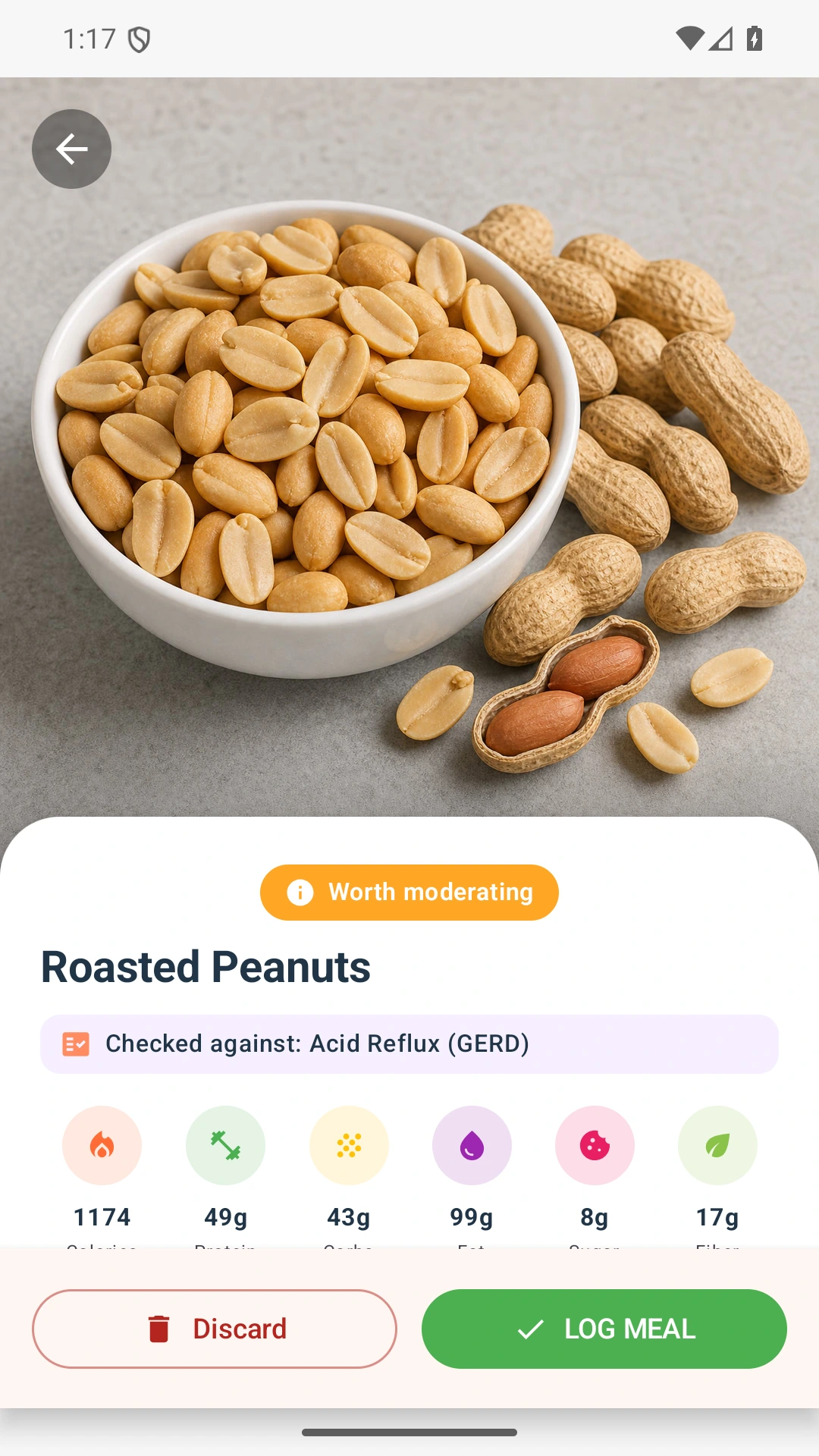
When managing Gastroesophageal Reflux Disease (GERD), navigating high-fat foods can be challenging. The question of peanuts and GERD is a common concern, as nuts are known for their fat content. At DietVox, we rate peanuts as GREEN for a GERD-friendly diet, with the critical caveat that portion control and preparation are paramount. This rating signifies that, for most individuals, plain peanuts in moderation are unlikely to trigger reflux symptoms and can be part of a balanced diet.
This analysis will delve into the nutrition profile behind why peanuts earn a GREEN rating, the importance of fat type, the role of fibre, and practical strategies for incorporating them into your eating plan without causing discomfort.
Nutritional Profile of Peanuts for GERD Management
Understanding the nutritional composition of peanuts is key to understanding their role in a GERD diet. Per 100g, raw peanuts contain USDA FoodData Central (FDC ID 170172):
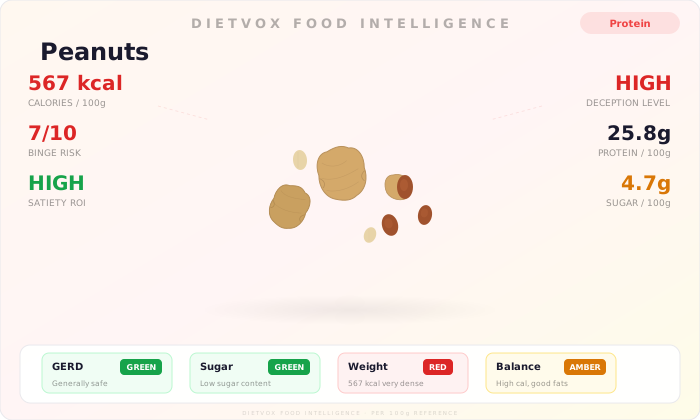
- Calories: 567 kcal
- Fat: 49.2g
- Protein: 25.8g
- Carbohydrates: 16.1g
- Dietary Fibre: 8.5g
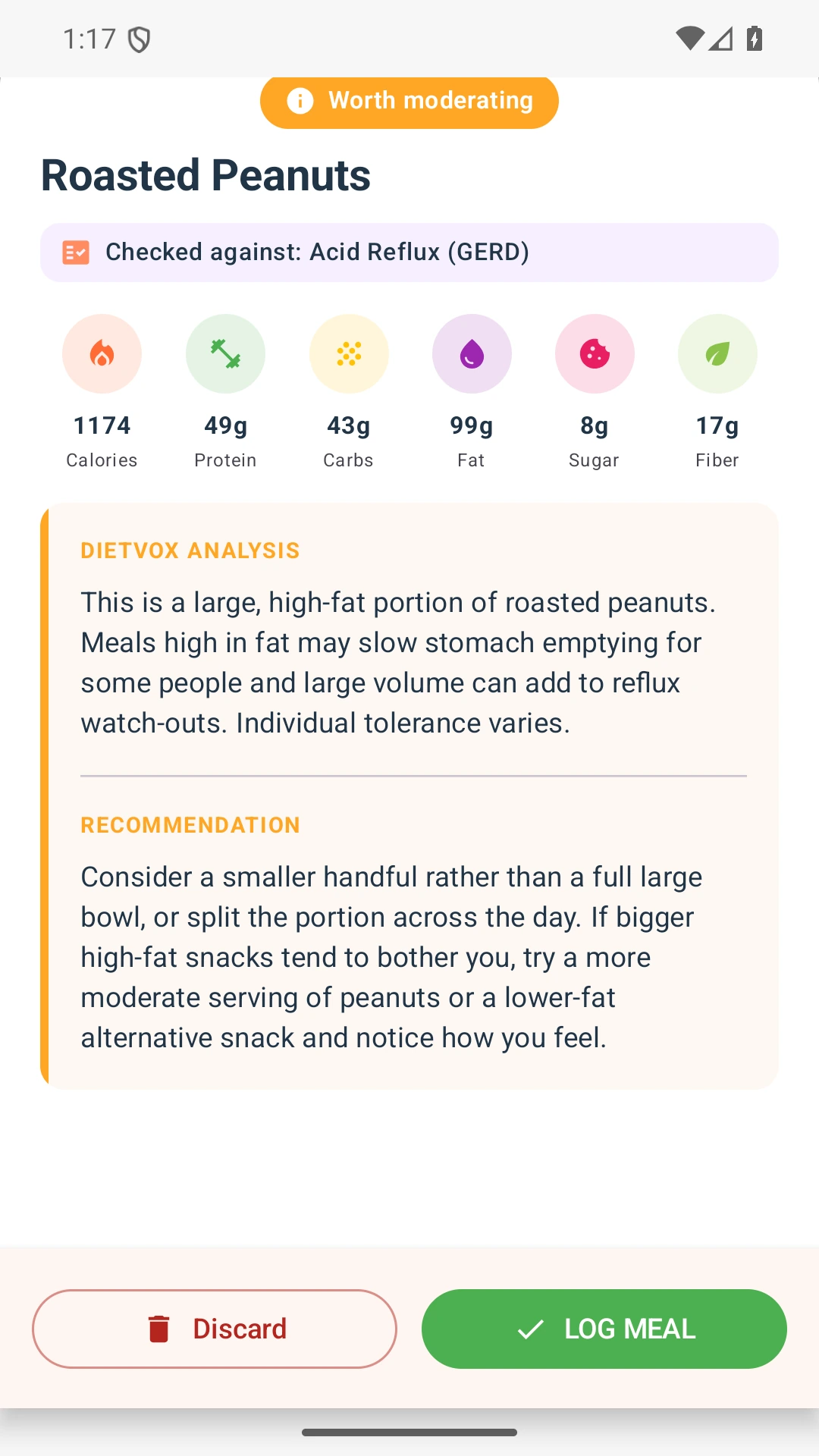
The high fat content is often a red flag for GERD sufferers, as high-fat meals can delay stomach emptying and relax the lower esophageal sphincter (LES), the muscular valve that keeps stomach acid from flowing back into the esophagus American College of Gastroenterology acid reflux guidance. However, the type of fat matters significantly. The 49.2g of fat in peanuts is predominantly composed of monounsaturated and polyunsaturated fats, which are considered heart-healthy and are generally better tolerated than the saturated and trans fats found in fried foods, processed snacks, and fatty cuts of meat.
Furthermore, the substantial protein (25.8g) and dietary fibre (8.5g) contribute to a high satiety value. Feeling full and satisfied can help prevent overeating, which is a major mechanical trigger for acid reflux NHS.
The Critical Role of Portion Size and Preparation
Our GREEN rating is conditional on two factors: how much you eat and how they are prepared.
1. Portion Control is Non-Negotiable
Due to their high calorie and fat density, consuming large quantities of peanuts can overwhelm the digestive system and trigger reflux. A sensible portion size is approximately one ounce (28g), which is equivalent to a small handful or about 1/4 cup. This amount provides beneficial nutrients without overloading the stomach.
2. Preparation Method Matters
How peanuts are processed can turn a GERD-friendly food into a trigger.
- Best Choices: Plain, raw, or dry-roasted peanuts without added salt or sugar. These forms provide all the nutritional benefits without common irritants.
- Choices to Limit or Avoid: - Oil-Roasted: The added oil increases the overall fat load, heightening the risk of symptoms. - Salted: High sodium intake is not a direct GERD trigger, but it can contribute to other health issues and is often found on less healthy, processed snack foods. - Spicy or Flavoured: Seasonings like chili, pepper, and garlic powder are known irritants for the esophageal lining and can directly trigger heartburn. - Honey-Roasted/Candied: The high sugar content can be problematic for some individuals with GERD and adds unnecessary calories.
DietVox Health Forensics: Peanuts and GERD
- Calorie Density: HIGH At 567 kcal per 100g, peanuts are an energy-dense food. For GERD management, this means a small volume can fill you up, but it's also easy to consume too many calories and too much fat in one sitting. Mindful consumption is essential to prevent overloading the stomach.
- Satiety ROI: HIGH The powerful combination of 25.8g of protein and 8.5g of fibre per 100g provides an excellent return on investment for satiety. This feeling of fullness helps regulate appetite and can prevent the large meals that often lead to reflux episodes.
- Tracking Difficulty: HIGH It is exceptionally easy to underestimate a serving of peanuts. The difference between a recommended 1-ounce serving and a 3-ounce serving is visually subtle but nutritionally significant. Using a digital food scale is the most accurate way to ensure you are sticking to a GERD-appropriate portion size.
Practical Tips for Including Peanuts in Your GERD Diet
- Start Small: If you are unsure how you will tolerate peanuts, begin with a very small portion (e.g., one tablespoon) and monitor your symptoms.
- Choose Plain and Unsalted: Always opt for raw or dry-roasted peanuts with no added ingredients.
- Pair Wisely: Combine a small portion of peanuts with other GERD-friendly foods. Sprinkle chopped peanuts on oatmeal, a salad with a non-acidic dressing, or have them alongside a banana.
- Time Your Intake: Avoid eating peanuts, or any food, within 2-3 hours of lying down. This gives your stomach time to empty and reduces the risk of nighttime reflux NHS.
- Listen to Your Body: GERD triggers are highly individual. While peanuts are generally well-tolerated, if you consistently experience symptoms after eating them, they may not be a suitable food for you.
Disclaimer: This article is for informational purposes only and does not constitute medical advice. Always consult a healthcare provider before making changes to your diet, especially if you have a medical condition.
Scan your foods with the DietVox app to get personalized ratings based on your specific dietary needs and health goals.
Last reviewed: June 2026
How It Works
Why Peanuts are Rated GREEN
Peanuts earn a GREEN rating for a GERD diet primarily due to their favourable nutritional profile when consumed correctly. The mechanisms supporting this rating involve their fat composition, fibre content, and alkaline-forming properties.
- Predominantly Unsaturated Fats: While high-fat foods are a known GERD trigger, health guidance often focus on reducing intake of saturated and trans fats American College of Gastroenterology. Peanuts are rich in monounsaturated and polyunsaturated fats. These healthier fats are processed differently by the body and are less likely to cause prolonged relaxation of the lower esophageal sphincter (LES) compared to the fats in fried or heavily processed foods. In moderation, they can be part of a healthy diet without exacerbating reflux.
- High in Dietary Fibre: Peanuts are a good source of dietary fibre, providing 8.5g per 100g USDA FoodData Central (FDC ID 170172). Available source reviews suggests that adequate fibre intake can be protective against GERD. Fibre aids in digestion, promotes regular bowel movements, and may help reduce the frequency of transient LES relaxations, which are a primary cause of reflux events PubMed.
- Alkaline-Forming Effect: While peanuts themselves are slightly acidic, they are considered to be alkaline-forming in the body after digestion. Including more alkaline-forming foods like peanuts, vegetables, and non-citrus fruits can help balance the pH of a meal. This contrasts with highly acidic trigger foods like tomatoes, citrus, and coffee, which can directly irritate the esophagus and worsen heartburn symptoms.
- Source of Lean Protein: The high protein content contributes to satiety, helping to prevent the overconsumption of food that can put physical pressure on the stomach and LES, forcing acid upwards. This makes a small serving of peanuts an effective snack for managing hunger between meals.
Scan any food. Get an instant RED/AMBER/GREEN rating.
DietVox analyses every food across 4 diet protocols — no guesswork.
Try DietVox Free →Try These Instead
Safer alternatives that won't trigger your symptoms.
Frequently Asked Questions
Can I eat peanut butter on a GERD (acid reflux) diet?
Yes, in moderation. DietVox recommends choosing natural, smooth peanut butter with no added sugar or hydrogenated oils. The high fat content still makes portion control essential—limit your serving to 1-2 tablespoons. Chunky varieties may be more difficult to digest for some individuals.
Why do peanuts sometimes cause heartburn for me even though they are rated GREEN?
GERD triggers are highly individual. While peanuts are generally safe, their high fat content can relax the lower esophageal sphincter (LES) in sensitive individuals, causing reflux. The most common reasons for symptoms are excessive portion sizes or consuming peanuts that are oil-roasted, salted, or spiced. Always start with a small, 1-ounce portion of plain peanuts to assess your personal tolerance.
What is a good portion size for peanuts if I have GERD?
A recommended portion size for peanuts on a GERD diet is one ounce (28g), which is roughly a small handful or 1/4 cup. This serving provides protein, healthy fats, and fibre without overloading the stomach, which can help prevent reflux symptoms.
Are raw or roasted peanuts better for acid reflux?
Both raw and dry-roasted peanuts are excellent choices for a GERD diet, as long as they are plain and unsalted. The key is to avoid oil-roasted peanuts, as the additional fat increases the risk of triggering symptoms. Check the ingredients list to ensure no extra oils, sugars, or spices have been added.