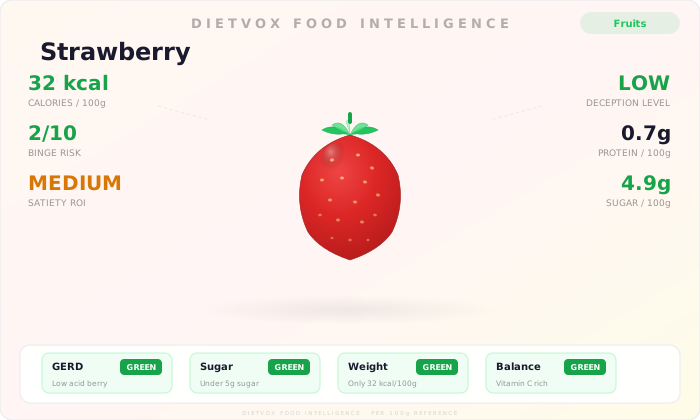
DietVox Rating: GREEN
Verdict: Strawberry is rated GREEN for a Weight Loss Diet, indicating it is an excellent and highly recommended choice for individuals aiming to manage their weight. The connection between strawberry weight loss success is strongly supported by its nutritional profile, particularly its remarkably low calorie count and satisfying natural sweetness.
A GREEN rating on DietVox signifies that a food aligns seamlessly with the core principles of a given dietary protocol. For a weight loss plan, this means the food helps you maintain a calorie deficit without sacrificing volume, flavour, or essential nutrients. Strawberry excels in this role, making it a valuable ally in achieving and maintaining a healthy weight.
Nutritional Profile for Weight Loss
The effectiveness of strawberry in a weight loss diet is rooted in its macronutrient and micronutrient composition. A 100g serving—equivalent to about two-thirds of a cup of sliced berries—provides a clear picture of its benefits.
Nutrition per 100g: - Calories: 32 kcal - Protein: 0.7 g - Fat: 0.3 g - Carbohydrates: 7.7 g - Dietary Fibre: 2.0 g - Sugars: 4.9 g
Source: USDA FoodData Central (FDC ID 167762)
Calorie Density: A Key Advantage
The most significant factor making strawberry a weight-loss superstar is its low calorie density. At just 32 kcal per 100g, you can consume a substantial, visually satisfying portion without making a large dent in your daily calorie budget. Foods with low energy density, which are typically high in water and fibre, help promote fullness and reduce hunger. According to the CDC healthy weight guidance, choosing low-calorie-dense foods is a key strategy for losing weight and keeping it off, as it allows for eating larger portions with fewer calories.
Carbohydrates, Sugar, and Glycemic Index
While the 4.9g of sugar per 100g might seem concerning at first glance, it's crucial to distinguish between naturally occurring sugars in whole fruits and added sugars. The sugar in strawberry comes packaged with water, fibre, and micronutrients, which slow its absorption. The World Health Organization (WHO) advises limiting free sugars, not the intrinsic sugars found in whole fruits and vegetables.
Furthermore, strawberry has a low glycemic index (GI) of around 40. The GI measures how quickly a food raises blood sugar levels. Low-GI foods are digested and absorbed more slowly, leading to a gradual rise in blood sugar and insulin. This helps manage appetite and delay hunger cues, which is highly beneficial for weight control International glycemic index tables review.
The Role of Fibre
With 2.0g of dietary fibre per 100g, strawberry contributes to daily fibre intake. Dietary fibre is essential for a weight loss diet as it promotes satiety (the feeling of fullness), aids in digestive health, and can help regulate blood sugar levels NHS. While its Satiety ROI is rated as low due to modest protein and fibre totals, the combination of fibre and high water content (over 90%) creates volume in the stomach, enhancing feelings of fullness relative to its minimal caloric cost.
direct source support on Strawberry and Weight Management
Beyond its basic nutritional stats, source review points to the benefits of berry consumption for weight management. Strawberries are rich in polyphenols, particularly a class of flavonoids called anthocyanins, which give them their vibrant red colour.
A large-scale observational source review listed in the BMJ followed over 124,000 men and women for up to 24 years. The findings suggested that a higher intake of flavonoid-rich fruits, including strawberries, was associated with less weight gain over time PubMed / NIH. While this does not prove cause and effect, it highlights a strong correlation between consuming these nutrient-dense foods and maintaining a healthier weight.
These plant compounds are thought to exert beneficial metabolic effects, though more source review is needed to fully understand the mechanisms. What is clear is that incorporating strawberry into a balanced diet is a strategy consistent with source-reviewed recommendations for healthy weight management.
Practical Tips for Your Weight Loss Diet
Integrating strawberry into your diet is simple and versatile. Here are some practical tips to maximize its benefits while adhering to your weight loss goals.
Portion Control and Tracking
Thanks to its consistent size and form, strawberry is easy to track. A standard serving is often considered to be one cup of whole berries (about 150g), which contains approximately 48 calories.
- Use a food scale: For maximum accuracy, weigh your portion in grams.
- Use measuring cups: If you don't have a scale, one level US cup of sliced strawberries is a reliable measure.
- Log it: Record your portion in a food tracking app to stay accountable to your daily calorie goals.
Healthy Meal and Snack Ideas
- Breakfast: Slice fresh strawberries over oatmeal, mix into plain Greek yogurt, or blend into a protein smoothie for a low-calorie flavour and nutrient boost.
- Lunch: Add sliced strawberries to a spinach and grilled chicken salad for a touch of sweetness and a vibrant colour contrast.
- Snack: A simple bowl of fresh strawberries is an excellent way to curb a mid-afternoon sugar craving for very few calories.
- Dessert: Instead of ice cream or cake, enjoy a bowl of fresh berries. For a more decadent feel, drizzle with a small amount of melted dark chocolate.
What to Avoid
To ensure strawberry supports your weight loss efforts, avoid preparations that add significant calories and sugar. Be mindful of:
- Strawberry-flavoured products: Yogurts, milks, and cereals often contain high amounts of added sugar and artificial flavours.
- Syrups and Jams: These are concentrated sources of sugar. Opt for whole fruit instead.
- High-Calorie Pairings: Serving strawberries with whipped cream, sugar, or shortcake can quickly turn a healthy snack into a high-calorie dessert.
Addressing Common Misconceptions
"Are strawberries too high in sugar for weight loss?"
This is a common concern, but it's unfounded. The 4.9g of sugar per 100g is naturally occurring and is buffered by fibre and water, leading to a low glycemic response. When eaten in moderation as part of a balanced diet, the sugar in strawberries will not impede weight loss. In fact, using them to satisfy a sweet tooth is a far better strategy than reaching for processed snacks with added sugars FDA added sugars label guidance.
"Can I eat unlimited strawberries and still lose weight?"
No single food can be eaten in unlimited quantities without consequence. Weight loss fundamentally relies on maintaining a consistent calorie deficit, meaning you burn more calories than you consume CDC healthy weight guidance. While strawberry is very low in calories, those calories still count. It's an excellent tool to help you stay within your calorie budget, but it is not a 'free' food.
Safety and Considerations
For the general population, strawberry is safe to consume. The primary consideration is a potential allergy. Strawberry allergy, while not as common as others, can cause reactions in sensitive individuals NHS. If you suspect an allergy, consult a healthcare professional. As with all fresh produce, it is recommended to wash strawberries thoroughly before consumption to remove any potential residues.
Disclaimer: This article is for informational purposes only and does not constitute medical advice. Always consult a healthcare provider before making changes to your diet, especially if you have a medical condition.
Scan your foods with the DietVox app to get personalized ratings based on your specific dietary needs and health goals.
Last reviewed: June 2026
How It Works
Why Strawberry is Rated GREEN
DietVox rates strawberry GREEN for a Weight Loss Diet based on a convergence of source support supporting its role in a calorie-controlled eating plan. The rating is driven by the following key mechanisms:
- Extremely Low Calorie Density: At a mere 32 kcal per 100g, strawberry allows for generous, satisfying portions that fit easily within a daily calorie budget. This is the cornerstone of its suitability for weight loss, enabling volume eating without a high caloric cost USDA FoodData Central (FDC ID 167762).
- High Water and Moderate Fibre Content: Composed of over 90% water and containing 2.0g of fibre per 100g, strawberry helps promote feelings of fullness. This combination of water and fibre adds bulk to meals and snacks, which can help reduce overall calorie intake by enhancing satiety MedlinePlus fiber overview.
- Natural Sweetness for Craving Control: The natural sweetness of strawberry provides a healthy, low-calorie way to satisfy sugar cravings. This can be critical for long-term adherence to a weight loss diet, helping to prevent binges on high-calorie, processed sweets NHS.
- Low Glycemic Index: Strawberry has a low GI, meaning it causes only a slow, gradual rise in blood sugar. This helps to prevent the sharp insulin spikes and subsequent crashes that can trigger hunger and cravings, making it easier to manage appetite throughout the day International glycemic index tables review.
- Rich in Micronutrients: While low in calories, strawberry is a good source of essential nutrients like Vitamin C. Supporting overall health with nutrient-dense foods is crucial during a period of caloric restriction to ensure the body functions optimally.
Scan any food. Get an instant RED/AMBER/GREEN rating.
DietVox analyses every food across 4 diet protocols — no guesswork.
Try DietVox Free →Try These Instead
Safer alternatives that won't trigger your symptoms.
Frequently Asked Questions
How does strawberry compare to other fruits for weight loss?
Strawberry is one of the best fruit choices for weight loss due to its exceptionally low calorie count (32 kcal/100g). It is lower in calories and sugar than fruits like bananas, grapes, or mangoes. While all fruits can be part of a healthy diet, berries like strawberry are particularly well-suited for a calorie-controlled plan.
Can eating strawberries help with belly fat?
No single food can target fat loss in a specific area like the belly. Weight loss occurs throughout the body when you are in a consistent calorie deficit. However, a diet rich in low-calorie, high-fibre, nutrient-dense foods like strawberry can contribute to overall fat loss, which will include a reduction in belly fat. Its low GI may also help regulate hormones like insulin, which can influence fat storage.
Are frozen strawberries as good as fresh for a weight loss diet?
Yes, frozen strawberries are an excellent option for a weight loss diet, provided you choose a product with no added sugar. The flash-freezing process preserves most of the nutrients, including Vitamin C and fibre. They are often more affordable and are perfect for adding to smoothies or oatmeal.
What is a healthy serving size for strawberry on a weight loss plan?
A typical and practical serving size is about 1 cup of whole or sliced strawberries, which weighs around 150-165 grams. This portion contains roughly 48-53 calories, making it a substantial, low-calorie snack or meal addition that fits easily into most weight loss plans.