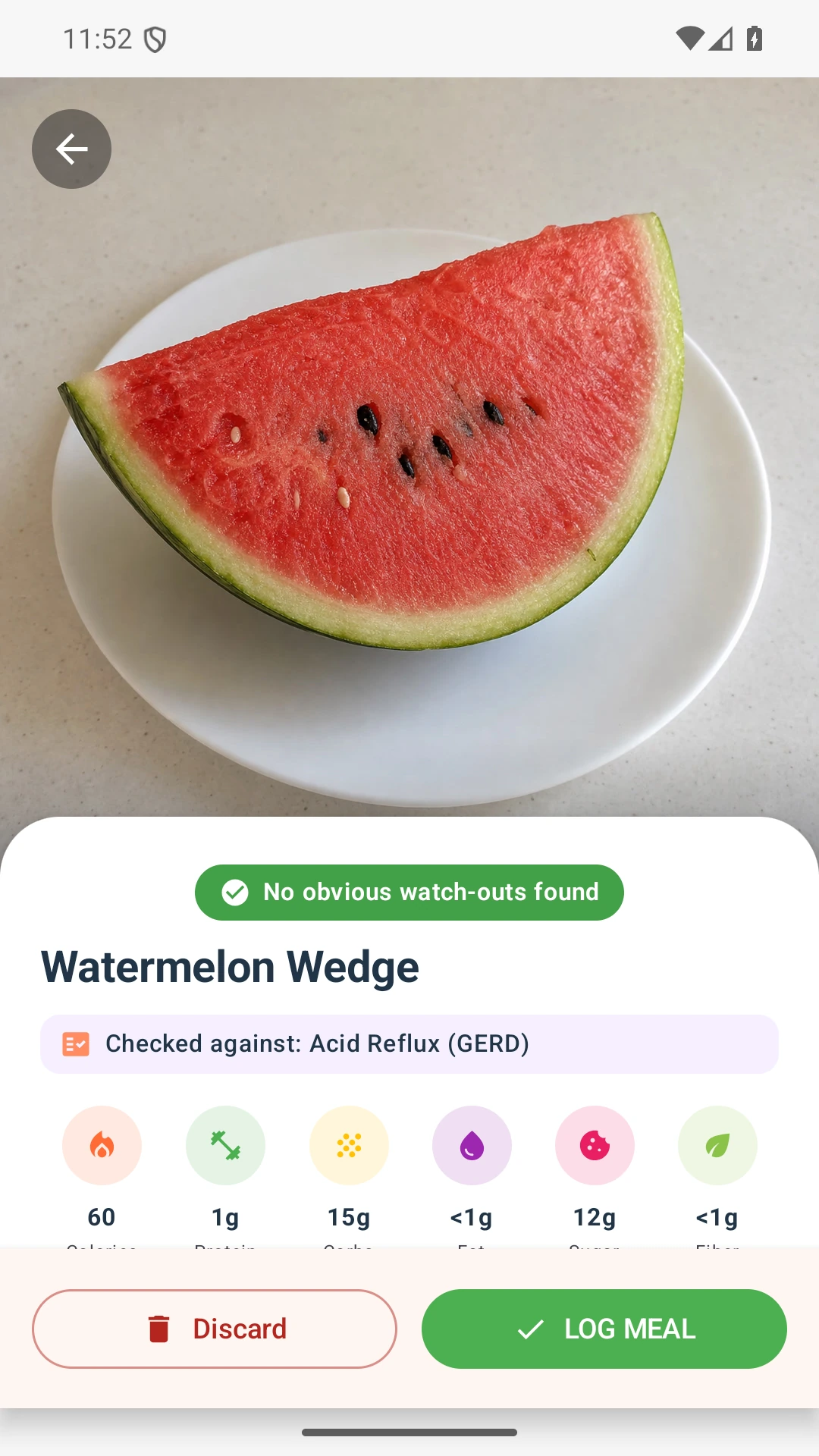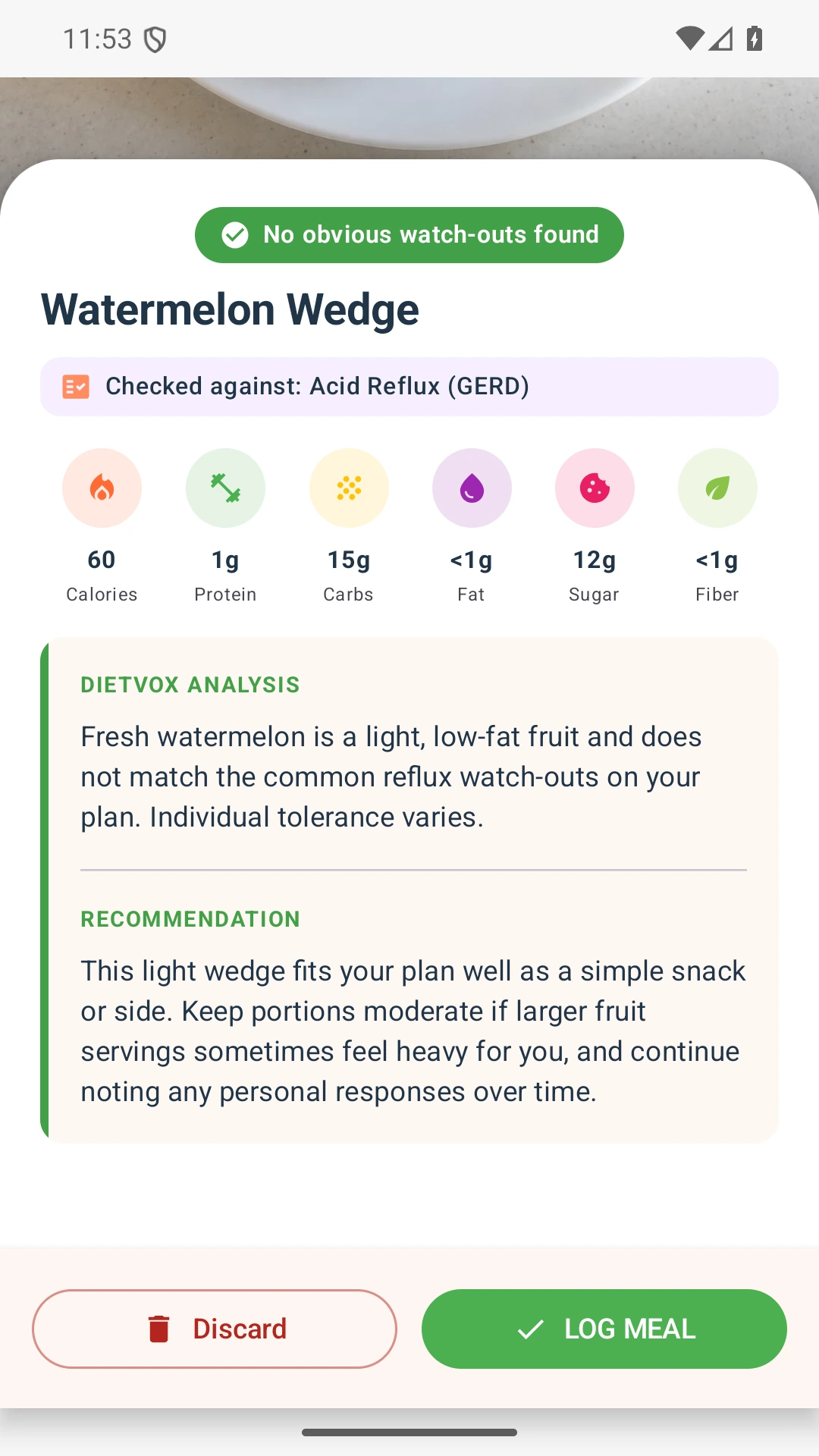
DietVox Rating: GREEN

Verdict: Watermelon is rated GREEN for a Weight Loss Diet. This rating indicates that it is an excellent choice that can be consumed freely, as its nutritional profile aligns strongly with the principles of effective weight management.

Our analysis shows that watermelon is exceptionally low in calories and has a high water content, making it a valuable food for achieving a calorie deficit. If you are looking to include refreshing, hydrating foods to help you watermelon lose weight, this fruit is a primary candidate. This article delves into the direct source support behind our rating, its detailed nutritional properties, and practical ways to incorporate it into your diet.

The source support for Watermelon and Weight Loss

A successful weight loss journey is fundamentally about managing energy balance — consuming fewer calories than your body expends CDC healthy weight guidance. Foods that help you feel full on fewer calories are therefore powerful tools. Watermelon excels in this regard due to its unique physical and nutritional properties.

Low Calorie Density: The Cornerstone of its GREEN Rating

The most significant factor in watermelon's GREEN rating is its extremely low calorie density. Calorie density, or energy density, refers to the number of calories in a given weight of food. Foods with low calorie density provide fewer calories per gram, allowing you to eat larger, more satisfying portions without overconsuming calories CDC healthy weight guidance.

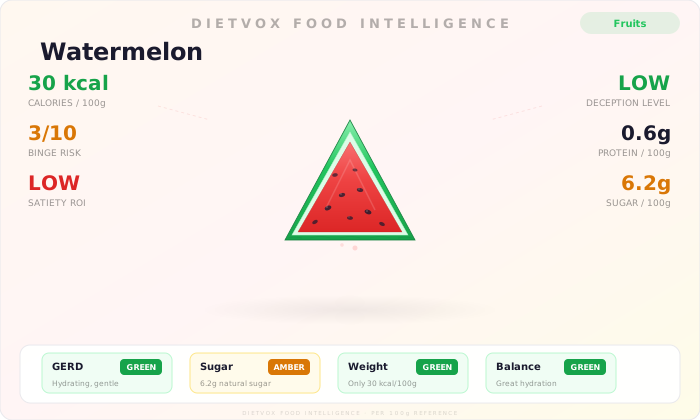
  • Watermelon's Profile: Per 100g, watermelon provides just 30 kcal USDA FoodData Central (FDC ID 167765). This is because it is composed of approximately 92% water, a nutrient that provides volume and weight but no calories.

This principle, often called 'volumetrics', is a cornerstone of sustainable weight loss. Eating a large volume of low-calorie-density foods like watermelon can increase feelings of fullness (satiety) and help reduce overall calorie intake at meals.

The Role of Hydration in Weight Management

Adequate hydration is a frequently overlooked component of weight loss. Water plays a crucial role in metabolism and can help manage appetite. Sometimes, the body's signals for thirst can be mistaken for hunger CDC healthy weight guidance. By consuming water-rich foods like watermelon, you contribute to your daily hydration needs, which can help prevent unnecessary snacking.

Some direct sources suggest that increased hydration may promote weight loss by reducing feeding and inducing lipolysis (the breakdown of fat) PubMed. As one of the most hydrating fruits available, watermelon is an excellent choice for supporting this aspect of your health and weight loss goals.

A Deeper Look at Watermelon's Nutritional Profile

While low calorie density is its main strength, understanding the full macronutrient profile is essential for a balanced diet.

Nutrient Breakdown (per 100g): - Calories: 30 kcal - Protein: 0.6g - Fat: 0.2g - Carbohydrates: 7.6g - Sugars: 6.2g - Dietary Fibre: 0.4g

(Source: USDA FoodData Central (FDC ID 167765))

Carbohydrates, Sugar, and Glycemic Load

A common concern for those on a weight loss diet is sugar content. While watermelon does contain 6.2g of sugar per 100g, it's important to consider the context. This sugar is packaged with a large amount of water and some fibre, which affects how your body processes it.

A more useful measure than sugar content alone is Glycemic Load (GL). Glycemic Load accounts for both the quality (Glycemic Index) and quantity of carbohydrates in a typical serving. Watermelon has a relatively high Glycemic Index (GI) of around 72-80, but its Glycemic Load is very low, at approximately 4-5 for a 120g serving International glycemic index tables review. A low GL indicates that a standard portion of the food will have a minimal effect on blood sugar levels, making it a suitable choice for most weight loss plans.

The Satiety Return: A Point of Caution

DietVox's Health Forensics analysis identifies watermelon as having a LOW Satiety ROI. This means that while it is filling due to its volume, it provides very little protein (0.6g) and dietary fibre (0.4g) per 100g. Protein and fibre are the two nutrients most strongly associated with long-term fullness PubMed.

Because of this, watermelon on its own may not keep you full for very long. This is a crucial detail for effective meal planning on a weight loss diet.

Practical Tips for Your Weight Loss Diet

To maximize the benefits of watermelon while mitigating its low satiety return, consider these practical strategies:

  1. Use as a High-Volume Snack: Instead of reaching for calorie-dense snacks like crisps or biscuits, have a large bowl of cubed watermelon. A 300g serving, which is visually very satisfying, contains only 90 calories.
  1. Pair with Protein and Healthy Fats: To create a more balanced and satiating snack or light meal, combine watermelon with a source of protein or fat. This slows digestion and promotes longer-lasting fullness. * Examples: A watermelon and feta cheese salad with mint, or a bowl of watermelon cubes alongside a small handful of almonds or a serving of Greek yogurt.
  1. Create a Hydrating Pre-Meal 'Appetizer': Eating a portion of watermelon 15-20 minutes before a main meal can help take the edge off your hunger, potentially leading you to eat a smaller portion of the more calorie-dense main course CDC healthy weight guidance.
  1. Make Healthy Frozen Treats: Freeze cubes of watermelon or blend and freeze it in popsicle moulds for a refreshing, low-calorie alternative to ice cream or sugary sorbets.
  1. Choose Whole Fruit Over Juice: Watermelon juice removes the small amount of dietary fibre present and concentrates the sugars. This makes it less filling and more calorie-dense than the whole fruit. For weight loss, always prioritise eating the fruit in its natural form.

Disclaimer: This article is for informational purposes only and does not constitute medical advice. Always consult a healthcare provider before making changes to your diet, especially if you have a medical condition.

Scan your foods with the DietVox app to get personalized ratings based on your specific dietary needs and health goals.

Last reviewed: June 2026

How It Works

Why Watermelon is Rated GREEN

Watermelon's GREEN rating for a Weight Loss Diet is primarily driven by its exceptionally low calorie density. At just 30 kcal per 100g, it allows for large, satisfying portions without a significant caloric impact, which is a key strategy for successful weight management.

Here's the breakdown of the mechanism:

  1. High Water Content (Volumetrics): Composed of 92% water, watermelon adds significant volume and weight to meals and snacks for very few calories USDA FoodData Central (FDC ID 167765). This physical volume helps to stretch the stomach, a key physiological signal for fullness, helping you feel satisfied while maintaining a calorie deficit CDC healthy weight guidance.
  1. Hydration Support: The high water content contributes to daily hydration goals. Proper hydration is essential for optimal metabolism and can help in distinguishing between true hunger and thirst, potentially reducing overall calorie consumption.
  1. Low Glycemic Load: Despite its sugar content, a typical serving of watermelon has a very low Glycemic Load (GL), meaning it has a minimal impact on blood sugar and insulin levels, avoiding the sharp spikes that can sometimes trigger hunger International glycemic index tables review.

While watermelon is low in satiety-promoting nutrients like protein and fibre, its powerful volumetric properties make it an outstanding tool for managing hunger and calories within a structured weight loss plan.

Scan any food. Get an instant RED/AMBER/GREEN rating.

DietVox analyses every food across 4 diet protocols — no guesswork.

Try DietVox Free →

Try These Instead

Safer alternatives that won't trigger your symptoms.

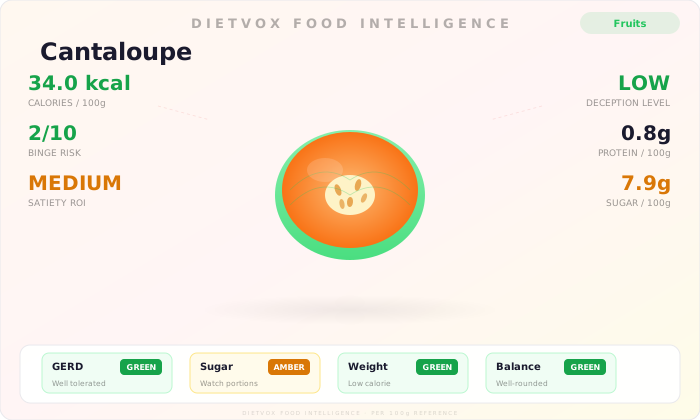
Cantaloupe illustration

Cantaloupe

34 kcal Fruits
GREEN GERD
AMBER Sugar
GREEN Weight
GREEN Balance
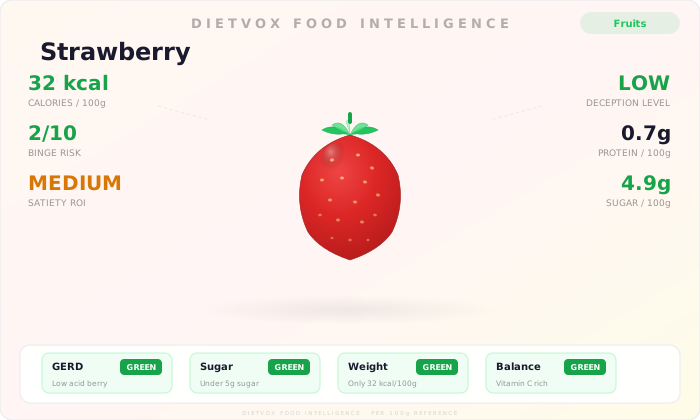
Strawberry illustration

Strawberry

32 kcal Fruits
GREEN GERD
GREEN Sugar
GREEN Weight
GREEN Balance
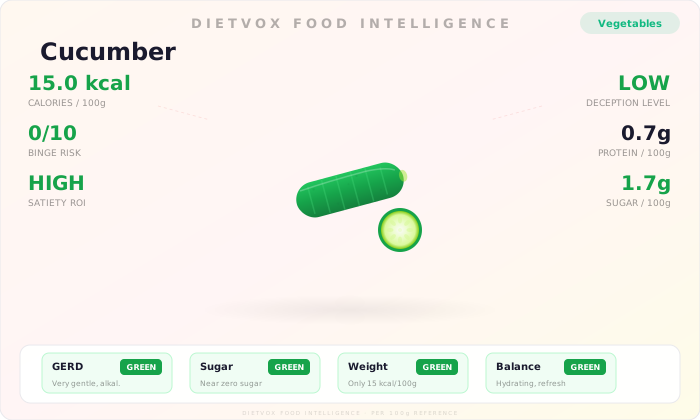
Cucumber illustration

Cucumber

15 kcal Vegetables
GREEN GERD
GREEN Sugar
GREEN Weight
GREEN Balance

Frequently Asked Questions

Does the high Glycemic Index of watermelon make it bad for weight loss?

While watermelon has a high Glycemic Index (GI), its Glycemic Load (GL) is very low. GL is a more practical measure as it considers a typical portion size. A low GL means a serving of watermelon has a small effect on blood sugar, making it perfectly suitable for a weight loss diet. The high water content dilutes the sugars, mitigating their impact International glycemic index tables review.

How much watermelon can I eat per day when trying to lose weight?

There is no strict limit, as the right amount depends on your individual daily calorie target. A generous serving of 1-2 cups (around 150-300g) is a great, low-calorie snack or dessert. The key is to account for its calories, however small, within your overall daily energy intake as recommended by health authorities like the NHS CDC healthy weight guidance.

Can watermelon replace a meal for faster weight loss?

This is not recommended. While watermelon is hydrating and low in calories, it lacks the protein, healthy fats, and sufficient fibre to constitute a balanced meal. A meal based solely on watermelon would not provide sustained energy or fullness, potentially leading to overeating later. It is best used as a component of a meal or as a snack.

Is watermelon juice as good as the whole fruit for weight loss?

No, the whole fruit is a much better choice. Juicing removes most of the dietary fibre and concentrates the sugar and calories. A glass of watermelon juice is less filling and has a greater impact on blood sugar than eating the equivalent amount of whole watermelon. For weight loss, always prioritise whole fruits over fruit juices FDA added sugars label guidance.

Related Reading