DietVox Rating: GREEN
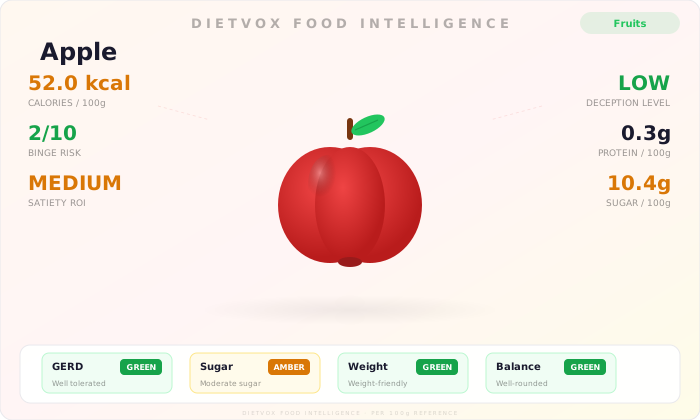
Apple is rated GREEN for a weight loss diet. This rating indicates that it is an excellent choice that can be consumed freely, as it aligns well with the principles of a calorie-controlled eating plan. The source support supporting the connection between apple weight loss benefits is strong, primarily due to its low calorie density, high water content, and beneficial fibre. This article will explore the direct source support behind this rating and provide practical guidance for incorporating apples into your weight management strategy.
Nutritional Profile of Apple for Weight Loss
Understanding the nutritional composition of an apple is key to appreciating its role in a weight loss diet. The data below, sourced from the USDA FoodData Central (FDC ID 1750340), is for 100g of raw apple with skin.
| Nutrient | Amount per 100g | |---|---| | Calories | 52 kcal | | Protein | 0.3 g | | Fat | 0.2 g | | Carbohydrates | 13.8 g | | - Dietary Fibre | 2.4 g | | - Sugars | 10.4 g | | Water | 85.6 g |
The most critical figures for weight loss are the low calorie count (52 kcal) and the presence of dietary fibre (2.4g). While the sugar content might seem concerning at first glance, it is important to distinguish between naturally occurring sugars in whole fruits and 'free sugars' added to foods. The World Health Organization (WHO) advises limiting free sugars, but does not place the same restriction on the intrinsic sugars found in whole fruits and vegetables, which are packaged with fibre, water, and micronutrients that moderate their metabolic impact.
Health Forensics: Understanding the Satiety ROI
DietVox Health Forensics provides a calculated 'Satiety ROI' (Return on Investment) for apple as LOW. This may seem contradictory to its GREEN rating. This metric is a strict calculation based on protein and fibre content per calorie. With only 0.3g of protein and 2.4g of fibre, the apple's score on this specific metric is low.
However, the overall GREEN rating is a holistic assessment. It considers crucial factors that this specific metric does not, including:
- High Water Content: At over 85% water, apples add significant volume to your stomach, which helps you feel full USDA FoodData Central (FDC ID 1750340).
- Low Calorie Density: This is a cornerstone of effective weight management. Foods with low calorie density allow you to eat a larger, more satisfying portion for fewer calories CDC healthy weight guidance.
- The 'Chew Factor': The physical act of chewing a whole, crisp apple takes time and effort. This process can increase satisfaction and signal fullness to the brain more effectively than consuming processed foods or liquids.
Therefore, while the Satiety ROI score is technically low, the real-world impact of eating an apple on hunger and overall calorie intake is highly positive, justifying the GREEN rating for a weight loss diet.
Practical Ways to Include Apple in Your Weight Loss Plan
To maximize the benefits of apples for weight loss, focus on consuming them in their whole, unprocessed form.
- As a Standalone Snack: A whole apple is a portable, convenient, and satisfying snack that can fend off hunger between meals.
- Paired with Protein: To create a more balanced and satiating snack, pair apple slices with a source of protein and healthy fat, such as a tablespoon of peanut butter, a small handful of almonds, or a piece of cheese.
- In Salads: Add chopped apple to salads for a sweet, crunchy texture. This can help you feel more satisfied with a lower-calorie meal.
- With Breakfast: Slice an apple into your morning oatmeal or Greek yogurt. This adds natural sweetness and fibre, helping you stay full until lunch.
- A Note on Processed Forms: Be cautious with apple juice and applesauce. Apple juice is stripped of its fibre, concentrating the sugar and calories, and is not as filling. The CDC healthy eating guidance notes that a 150ml serving of unsweetened fruit juice only counts as one of your 5-a-day once per day due to its free sugar content. Choose unsweetened applesauce, but remember that the whole fruit will always be the superior choice for satiety.
Debunking Myths: Apple and Weight Loss
Several misconceptions surround fruit consumption during weight loss. Let's address them with source support.
Myth: "Apples are too high in sugar for weight loss." This is a common concern. However, the 10.4g of sugar in 100g of apple is naturally occurring and is packaged with 2.4g of fibre. This fibre slows the absorption of sugar into the bloodstream, preventing the sharp spikes and subsequent crashes in blood sugar that can trigger cravings International glycemic index tables review. The overall effect is a moderate and sustained energy release.
Myth: "Eating an apple before a meal has no real effect." Available sources suggest the opposite may be true. A source review listed in the journal Appetite found that participants who ate a whole apple before a meal consumed significantly fewer calories during that meal compared to those who had applesauce, apple juice, or no apple at all PubMed. This highlights the power of the whole fruit's volume and fibre in promoting satiety.
Myth: "Any apple product, like apple cider vinegar, is just as good." While apple cider vinegar has gained popularity, the direct source support for its significant and sustainable weight loss benefits is limited and often debated. The whole apple provides a wealth of nutrients, including fibre, vitamins, and water, that are absent in the vinegar. Relying on the whole food is a more source-reviewed strategy for nutritional health and weight management.
Disclaimer: This article is for informational purposes only and does not constitute medical advice. Always consult a healthcare provider before making changes to your diet, especially if you have a medical condition.
Scan your foods with the DietVox app to get personalized ratings based on your specific dietary needs and health goals.
Last reviewed: June 2026
How It Works
Why Apple is Rated GREEN for a Weight Loss Diet
DietVox assigns apple a GREEN rating for weight loss based on a combination of its nutritional properties and its physiological effects on hunger and satiety. The mechanism is multifactorial, involving low energy density, the role of fibre and water, and the impact of its physical form.
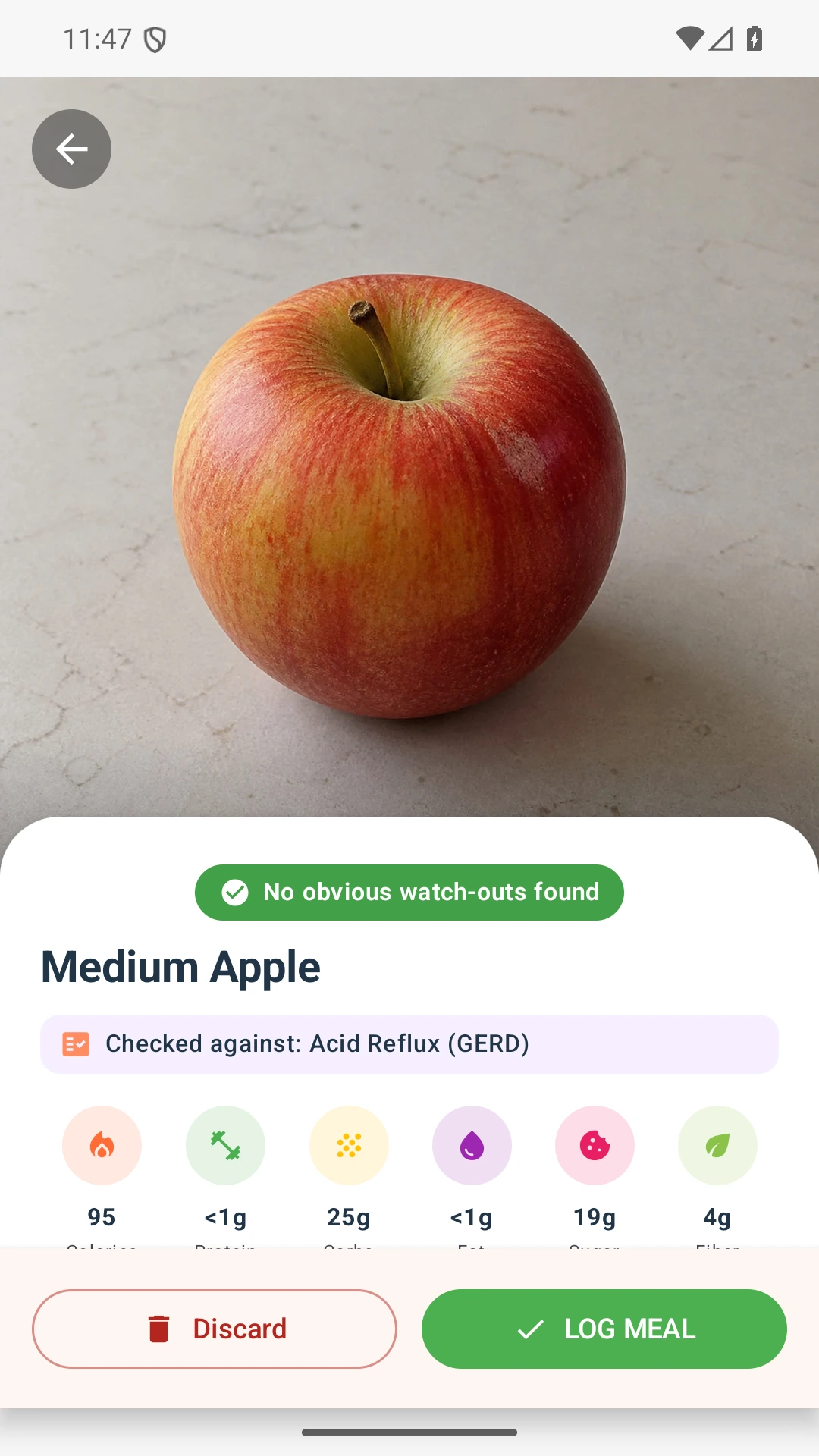
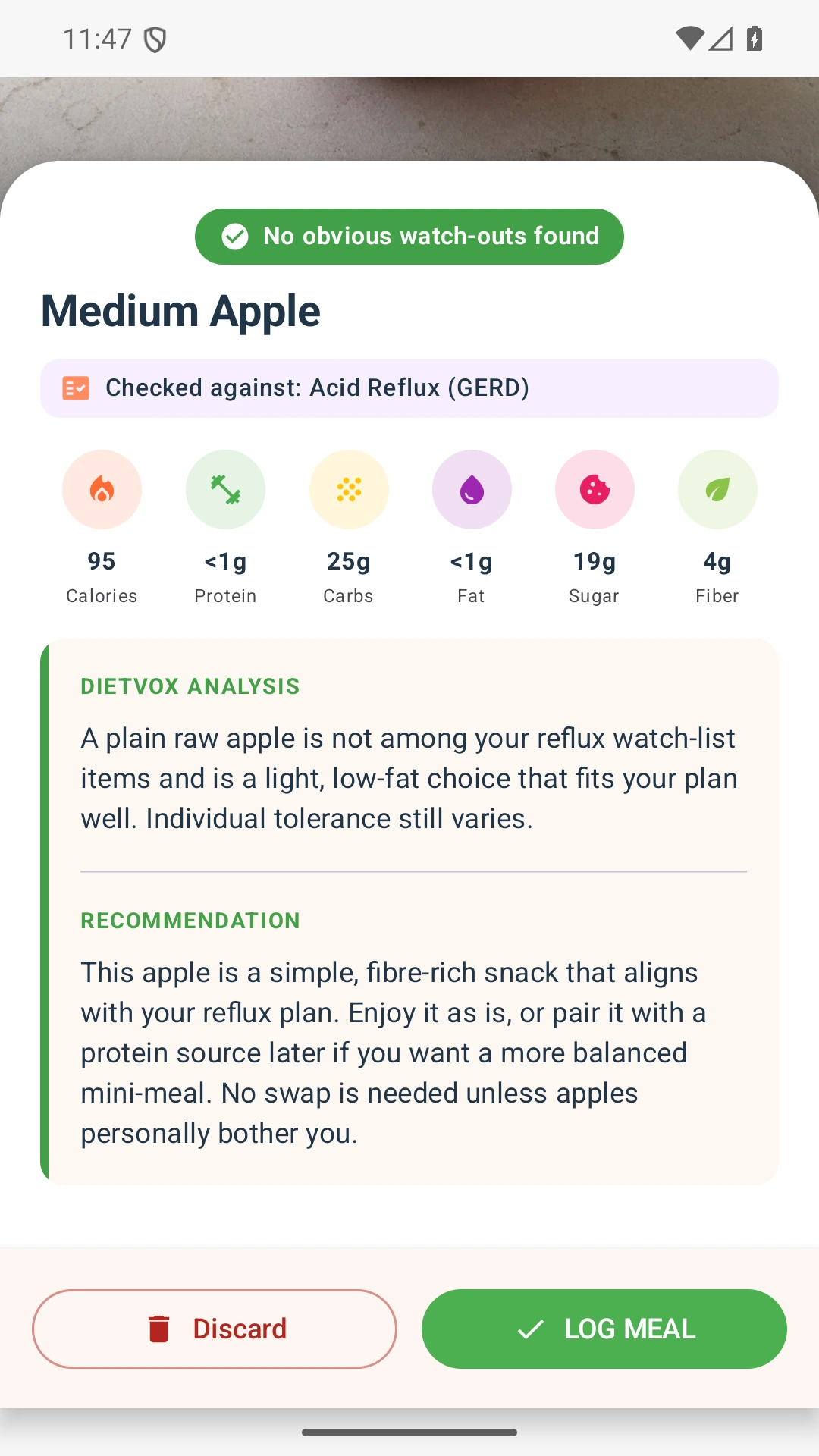
1. Low Calorie Density An apple provides just 52 kcal per 100g. This is considered a low calorie density. The concept, strongly endorsed by clinical bodies like the CDC healthy weight guidance, is simple: you can eat a larger, more filling portion of food for a relatively small number of calories. A medium-sized apple (approx. 180g) contains under 100 calories but is physically substantial, making it a highly efficient food for managing hunger within a calorie budget.
2. The Power of Dietary Fibre Each 100g of apple contains 2.4g of dietary fibre. This fibre, particularly the soluble type known as pectin, forms a gel-like substance in the stomach. This process slows down digestion, which promotes a prolonged feeling of fullness, or satiety NHS. By keeping you feeling full for longer, fibre can help reduce the likelihood of overeating or snacking on higher-calorie foods later on.
3. High Water Content and Volume With a water content of approximately 86% USDA FoodData Central (FDC ID 1750340), apples contribute to hydration and add significant volume to your meal or snack without adding calories. Foods high in water and fibre help fill the stomach, triggering stretch receptors that send signals of fullness to the brain. This volumetric effect is a key reason why eating an apple is more satisfying than consuming the same number of calories from a dry, processed snack.
4. Moderate Glycaemic Impact Despite containing natural sugars, whole apples have a relatively low glycaemic index (GI). The GI measures how quickly a food raises blood sugar levels. The fibre in apples slows down the absorption of sugar, leading to a more gradual rise and fall in blood glucose. This helps prevent the energy crashes and cravings for sugary foods that can sabotage a weight loss diet, a principle well-explained by International glycemic index tables review. This stable energy release supports consistent appetite control throughout the day.
Scan any food. Get an instant RED/AMBER/GREEN rating.
DietVox analyses every food across 4 diet protocols — no guesswork.
Try DietVox Free →Try These Instead
Safer alternatives that won't trigger your symptoms.
Frequently Asked Questions
Is it better to eat the apple with or without the skin for weight loss?
For maximum weight loss benefit, you should eat the apple with its skin. The skin contains a large proportion of the apple's insoluble fibre, which aids digestion and contributes significantly to feelings of fullness. It is also rich in beneficial plant compounds, including antioxidants USDA FoodData Central (FDC ID 169963). Peeling an apple removes a substantial amount of this valuable fibre.
How many apples can I eat a day when trying to lose weight?
There is no strict limit, but a balanced approach is key. Including one to two apples per day is a healthy and reasonable strategy for most weight loss plans. The goal is to incorporate them into a varied diet that stays within your total daily calorie target. As recommended by health authorities like the CDC healthy weight guidance, overall dietary pattern and calorie balance are more important than focusing on a single food.
Does the type of apple (e.g., Granny Smith vs. Red Delicious) matter for weight loss?
While there are minor variations in sugar content and antioxidant levels between apple varieties, these differences are not significant enough to impact weight loss outcomes. All types of apples are low in calories and good sources of fibre and water. The best choice is the variety you enjoy most, as this will make you more likely to choose it over less healthy, higher-calorie snacks.
Is an apple a good replacement for a processed snack like a granola bar?
Yes, an apple is an excellent replacement for most processed snack bars. A medium apple contains fewer than 100 calories, no added sugar, and provides water and volume for satiety. Many granola bars, in contrast, are higher in calories, contain significant amounts of added sugars and fats, and offer less volume, making them less filling for their caloric cost. Choosing the apple is a smart swap for managing hunger and calorie intake.