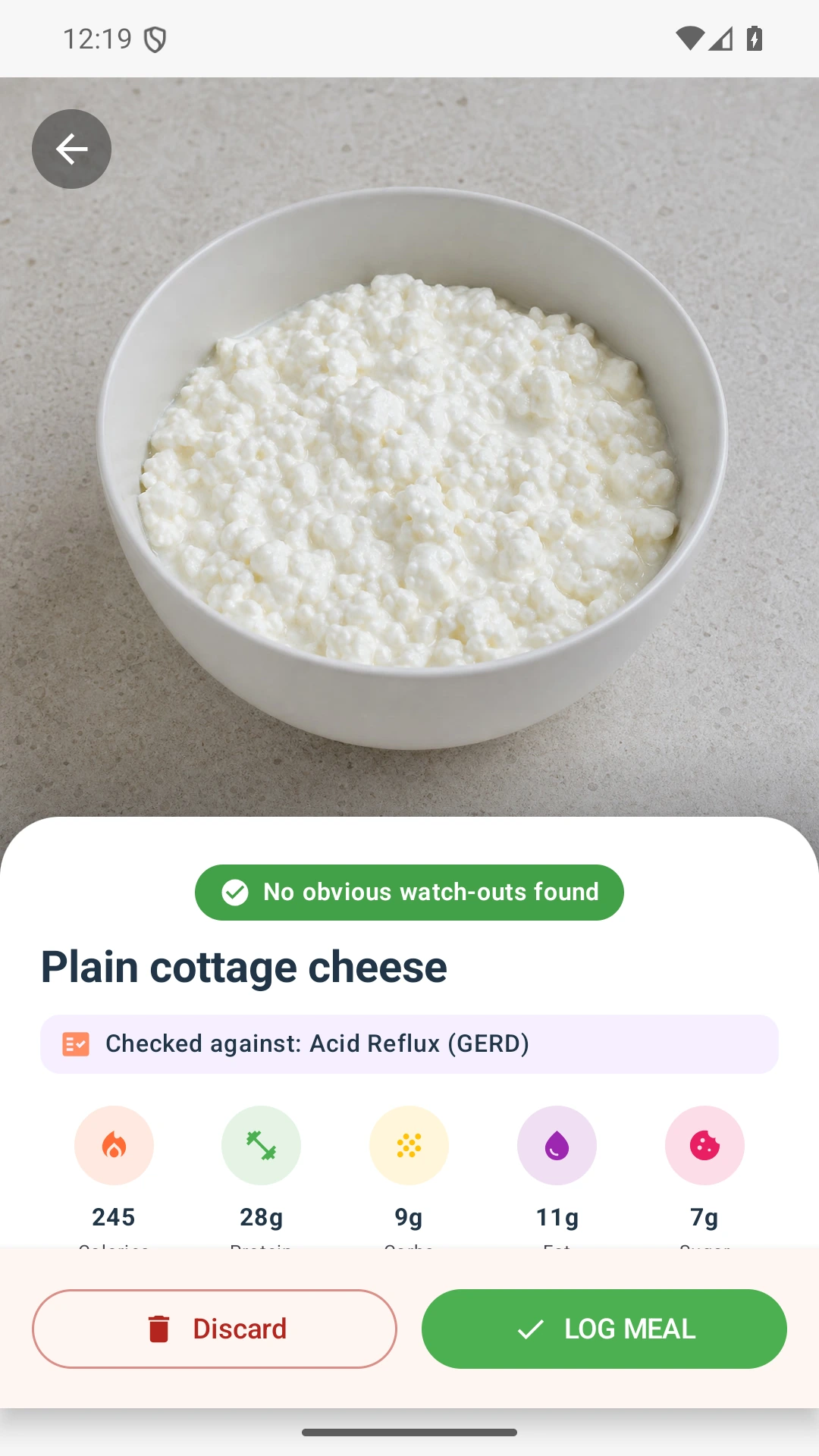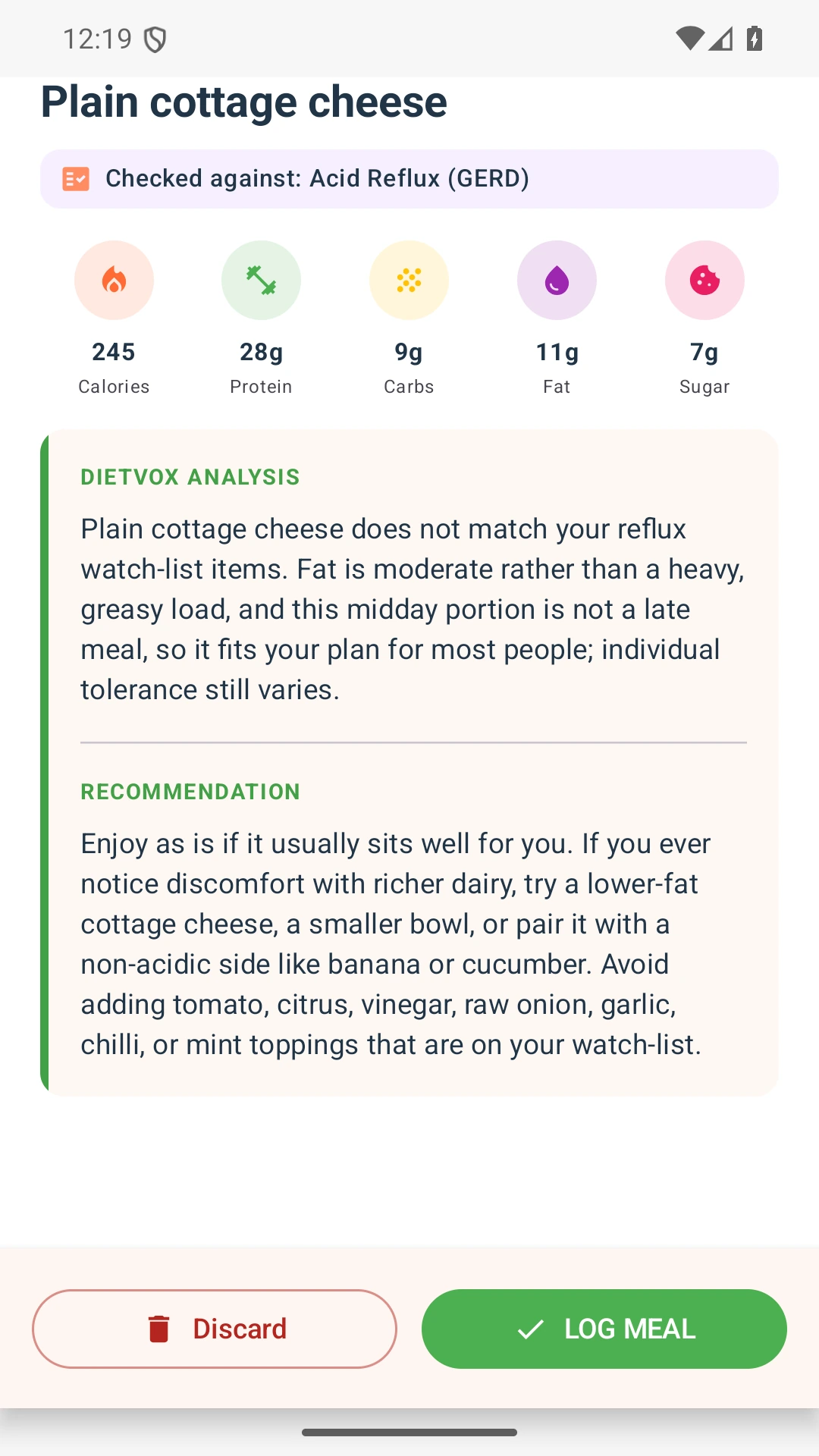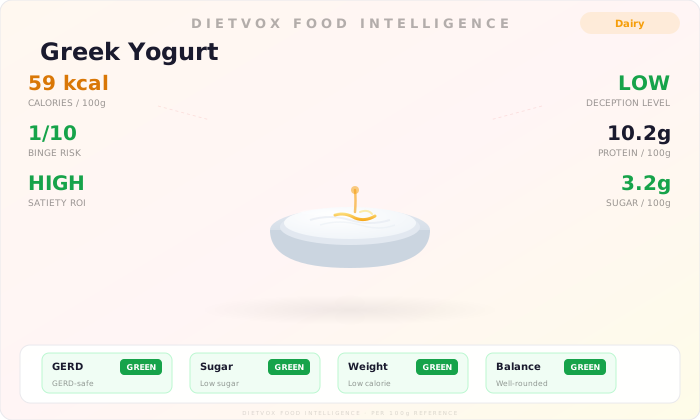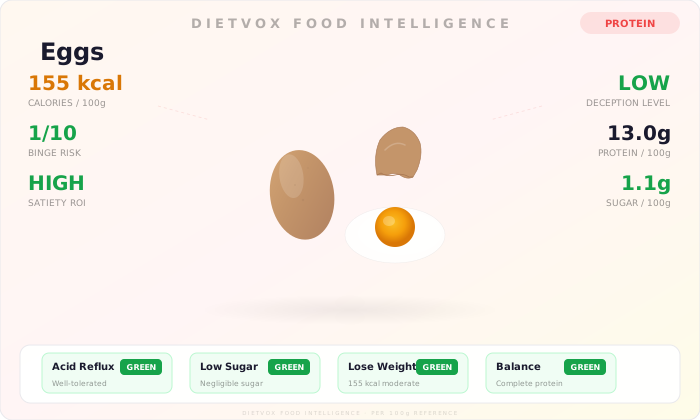
DietVox Rating: GREEN
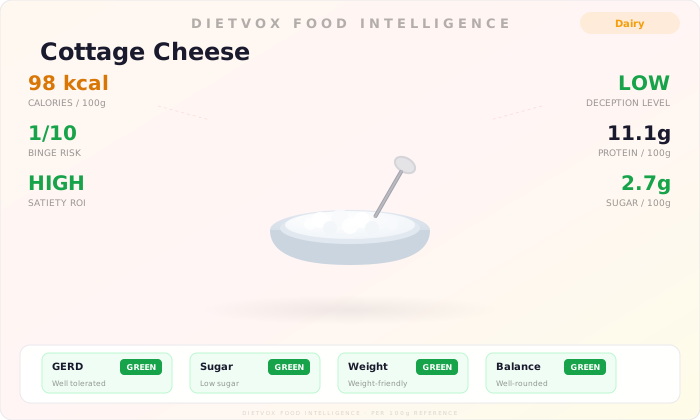
Verdict: DietVox assigns Cottage Cheese a GREEN rating for a weight loss diet. This rating indicates it is an excellent food choice that can actively support weight management goals. The combination of low calorie density and high protein content makes the link between cottage cheese weight loss a strong one, supported by nutrition profile.
This article provides a detailed clinical analysis of cottage cheese's role in a weight loss protocol, examining its nutritional composition, impact on satiety, and practical ways to incorporate it into your daily meals.
The Nutritional Profile for Weight Management
Understanding the nutritional data is the first step in evaluating any food for a weight loss plan. According to the USDA, a 100g serving of 2% milkfat cottage cheese contains USDA FoodData Central (FDC ID 173437):
- Calories: 98 kcal
- Protein: 11.1 g
- Fat: 4.3 g (of which 1.7 g is saturated)
- Carbohydrates: 3.4 g (of which 2.7 g are sugars)
- Dietary Fibre: 0 g
- Sodium: 364 mg
From a weight loss perspective, this profile is highly favourable. The low calorie count of 98 kcal per 100g allows for a generous, satisfying portion without consuming a significant portion of a daily calorie budget. This principle of choosing foods with low calorie density is a cornerstone of effective weight management, as advised by health authorities like the CDC healthy weight guidance.
The standout feature is its high protein content. At 11.1g per 100g, cottage cheese is a protein powerhouse. Protein is critical during weight loss for several reasons: it promotes satiety, helps preserve lean muscle mass, and has a higher thermic effect of food compared to fats and carbohydrates PubMed.
Why This Matters: Satiety, Protein, and Metabolism
The effectiveness of cottage cheese for weight loss is primarily linked to its protein composition, specifically its high concentration of casein.
The Power of Casein Protein for Satiety
Approximately 80% of the protein in cottage cheese is casein, a slow-digesting protein. When consumed, casein forms a gel-like substance in the stomach, which slows down digestion and the absorption of amino acids. This slow, sustained release helps you feel fuller for longer compared to faster-digesting proteins like whey PubMed.
This high Satiety Return on Investment (Satiety ROI) means that for every calorie of cottage cheese consumed, you get a significant feeling of fullness. This can lead to a natural reduction in overall calorie intake throughout the day, which is the fundamental mechanism of weight loss. source reviews have consistently shown that higher protein intakes are associated with greater satiety and better weight management outcomes.
Preserving Muscle Mass
When you are in a calorie deficit to lose weight, your body can break down muscle tissue for energy in addition to fat. Consuming adequate protein helps mitigate this loss of lean body mass CDC healthy weight guidance. Preserving muscle is metabolically important, as muscle tissue burns more calories at rest than fat tissue. The steady supply of amino acids from the casein in cottage cheese provides the building blocks your muscles need, supporting a healthier body composition as you lose weight.
Practical Integration into a Weight Loss Diet
Cottage cheese is versatile and easy to incorporate into a daily eating plan. Its 'Low Tracking Difficulty' means its nutritional information is consistent and simple to log in a food diary or app.
Choosing the Right Variety
- Low-Fat (1% or 2%): This is often the best choice for a calorie-controlled diet. It provides an excellent balance of high protein with minimal fat, maximising the protein-per-calorie ratio.
- Full-Fat (4%+): While higher in calories and saturated fat, full-fat cottage cheese can be more satiating for some individuals. It can still fit into a weight loss plan if portion sizes and total daily calories are managed.
- Non-Fat: This option has the fewest calories but can sometimes contain additives to improve texture. It's a viable choice but may be less satisfying than varieties with some fat.
When selecting a product, always check the label for added sugars, especially in flavoured varieties. Opt for plain cottage cheese and add your own healthy toppings.
Meal and Snack Ideas
- Savoury Breakfast Bowl: Top 1 cup of cottage cheese with sliced tomatoes, cucumber, a sprinkle of black pepper, and fresh chives.
- Protein-Boosted Lunch: Use cottage cheese as a high-protein base for a tuna or chicken salad instead of mayonnaise. Serve with whole-grain crackers or celery sticks.
- Smart Snack: Pair a 1/2 cup of cottage cheese with a handful of berries (like strawberries or blueberries) for a balanced snack rich in protein and antioxidants.
- Creamy Smoothie Addition: Add 1/2 cup of cottage cheese to your fruit smoothie for a creamy texture and a significant protein boost without protein powder.
- Healthy Dip: Blend cottage cheese with herbs like dill and garlic powder to create a healthy, high-protein dip for raw vegetables.
Addressing Common Misconceptions
Myth: "All dairy products cause weight gain."
Fact: This is a common oversimplification. Nutrient-dense dairy products like cottage cheese and Greek yogurt can be highly beneficial for weight loss due to their high protein and calcium content. The key is to choose options low in added sugar and to incorporate them into a balanced, calorie-controlled diet. The FDA added sugars label guidance includes dairy or dairy alternatives as a vital part of a healthy diet.
Myth: "The sodium in cottage cheese is bad for weight loss."
Fact: Cottage cheese does contain a moderate amount of sodium (around 364mg per 100g). While excess sodium does not prevent fat loss, it can cause the body to retain water, leading to temporary weight fluctuations on the scale. This can be discouraging but is not indicative of fat gain. It is important to be mindful of total daily sodium intake, aiming for less than 2,300mg per day as recommended by health authorities CDC sodium guidance. Low-sodium versions of cottage cheese are available and are a great alternative if you are monitoring your sodium intake closely.
Disclaimer: This article is for informational purposes only and does not constitute medical advice. Always consult a healthcare provider before making changes to your diet, especially if you have a medical condition.
Scan your foods with the DietVox app to get personalized ratings based on your specific dietary needs and health goals.
Last reviewed: June 2026
How It Works
Why Cottage Cheese is Rated GREEN
Cottage cheese earns its GREEN rating for a weight loss diet due to three primary, rating factors:
- Low Calorie Density: With only 98 kcal per 100g, cottage cheese allows for substantial, filling portions that align with a calorie-deficit eating plan. This enables greater meal satisfaction without a high caloric cost, a key strategy for sustainable weight loss CDC healthy weight guidance.
- High Satiety ROI: The exceptional protein content (11.1g per 100g), dominated by slow-digesting casein, is the core of its effectiveness. Casein promotes a prolonged feeling of fullness, which helps to reduce overall appetite and subsequent calorie consumption. direct source support shows that high-protein foods are superior for satiety, making cottage cheese a highly efficient tool for hunger management PubMed.
- Metabolic and Muscular Support: The high protein intake supports the preservation of lean muscle mass during weight loss, which is crucial for maintaining a healthy resting metabolic rate. Furthermore, protein has a higher thermic effect of food (TEF), meaning your body expends more energy to digest and metabolise it compared to fats and carbs, providing a small but significant metabolic advantage.
Scan any food. Get an instant RED/AMBER/GREEN rating.
DietVox analyses every food across 4 diet protocols — no guesswork.
Try DietVox Free →Try These Instead
Safer alternatives that won't trigger your symptoms.
Frequently Asked Questions
Should I choose full-fat or low-fat cottage cheese for weight loss?
Both can be effective. Low-fat (1-2%) cottage cheese has fewer calories, making it easier to fit into a strict calorie budget. However, full-fat versions contain more fat which can enhance satiety for some individuals. The best choice depends on your personal preferences and total daily calorie goals. Always prioritize plain, unsweetened varieties.
Is cottage cheese a good late-night snack for weight loss?
Yes, it can be an excellent choice. The slow-digesting casein protein provides a steady supply of amino acids overnight, which can help prevent muscle breakdown and promote satiety. This may help curb cravings for high-calorie, low-nutrient snacks before bed. A small portion (e.g., half a cup) is recommended.
How much cottage cheese can I eat per day when trying to lose weight?
There is no strict limit, but moderation and variety are key. A typical serving of 1/2 to 1 cup (around 115-230g) per day can easily fit into most weight loss plans. It's important to consume a varied diet to ensure you get a wide range of nutrients, so cottage cheese should be one of several protein sources, not the only one.
Does the sodium in cottage cheese hinder weight loss?
The sodium in cottage cheese does not prevent the loss of body fat. However, a high sodium intake can cause your body to retain water, which can lead to a temporary increase on the scale. This is just water weight, not fat gain. To manage this, you can look for low-sodium cottage cheese options and be mindful of your total daily sodium intake from all foods, as recommended by the WHO.