DietVox Rating: GREEN
When it comes to achieving sustainable weight loss, making smart food choices that are both nutritious and satisfying is key. DietVox has thoroughly evaluated green beans for weight loss and assigned them a GREEN rating, indicating they are an excellent choice for individuals following a weight loss diet protocol. Their low calorie density, impressive fibre content, and rich nutrient profile make them a powerful ally in your dietary journey.
This comprehensive guide explores the nutritional benefits of green beans, the mechanisms by which they support weight management, and practical tips for incorporating them into your daily meals. We delve into the source-reviewed reasons behind our GREEN rating, ensuring you have the knowledge to make informed decisions for your health.
The Nutritional Profile of Green Beans for Weight Loss
Understanding the macronutrient and micronutrient composition of foods is fundamental for any weight loss strategy. Green beans are celebrated for their favorable nutritional profile, particularly their low caloric contribution and high nutrient density USDA FoodData Central.
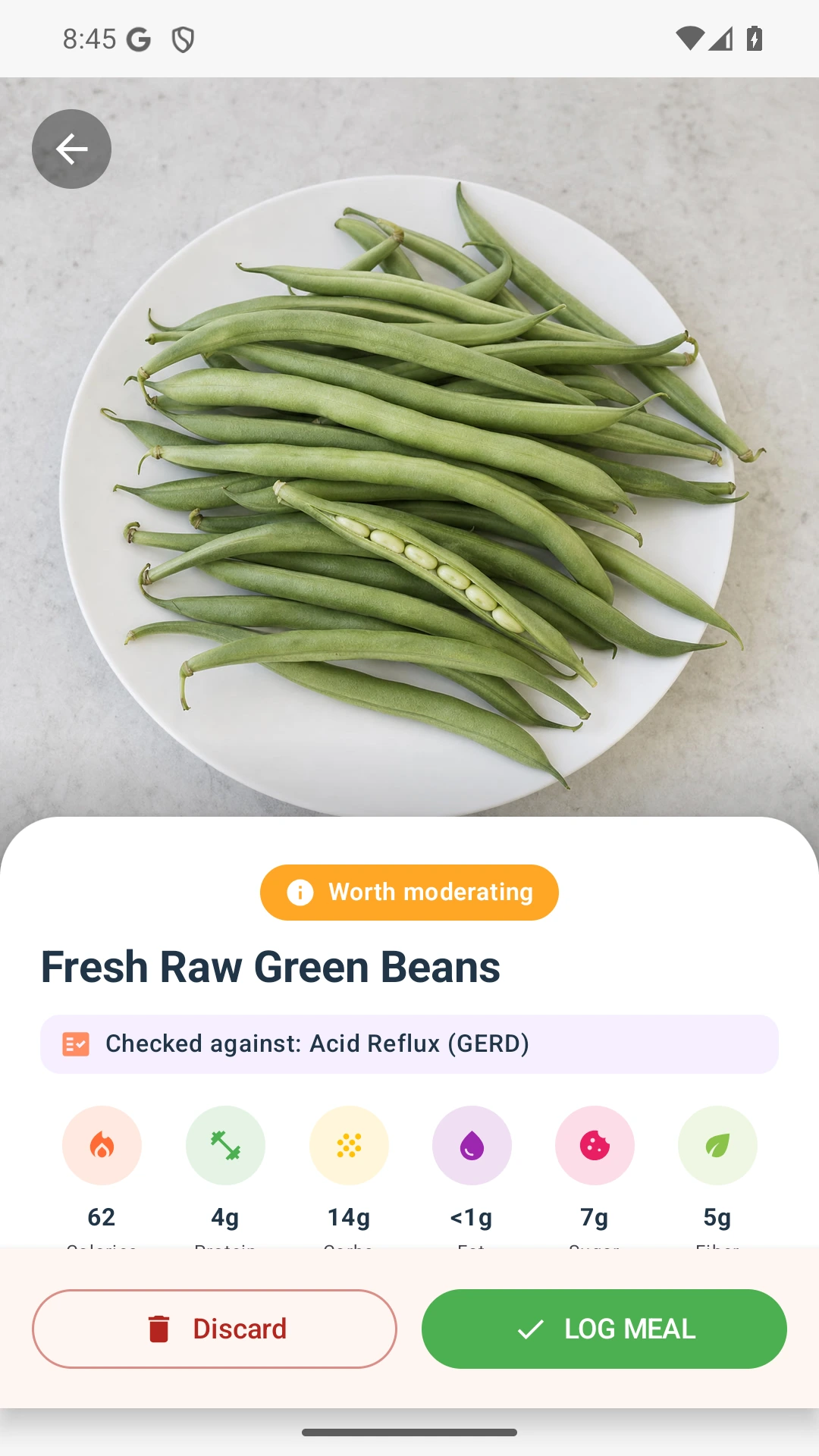
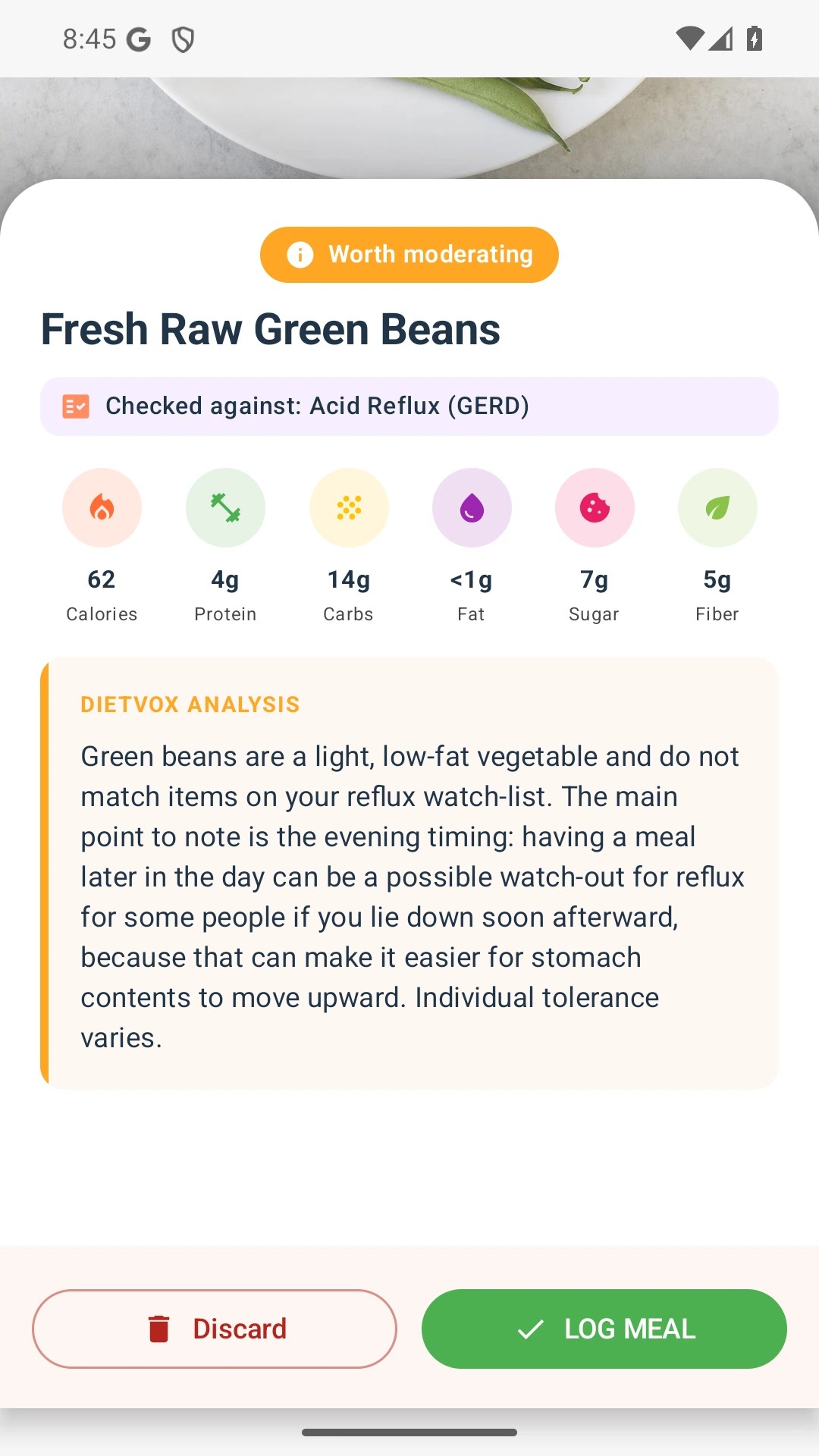
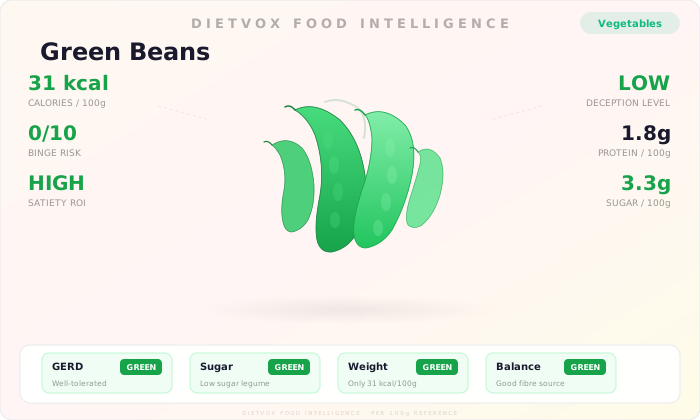
Per 100 grams, green beans provide USDA FoodData Central: * Calories: 31 kcal * Protein: 1.8g * Fat: 0.1g (0g saturated) * Carbohydrates: 7.0g * Dietary Fibre: 3.4g * Sugars: 3.3g
These figures highlight why green beans are considered a powerhouse for weight loss. Their minimal fat content ensures they don't contribute significantly to your daily fat intake, while the carbohydrate count is primarily made up of beneficial dietary fibre rather than simple sugars. The 1.8g of protein, though not exceptionally high, still contributes to overall satiety when consumed as part of a balanced meal Harvard Health Publishing.
Beyond macronutrients, green beans are also a good source of essential vitamins and minerals, including Vitamin K, Vitamin C, Folate, and Manganese USDA FoodData Central. These micronutrients support various bodily functions, contributing to overall health and well-being during a weight loss journey NHS.
The Science Behind Green Beans and Weight Loss
The effectiveness of green beans in a weight loss diet is rooted in several scientific principles:
Low Calorie Density Green beans have a very low calorie density of just 31 kcal per 100g. Foods with low calorie density allow for larger portion sizes without a significant caloric impact, which can be crucial for feeling full and satisfied on a restricted calorie diet CDC healthy eating guidance. This means you can enjoy a generous serving of green beans, adding bulk to your meals, without derailing your calorie goals NHS.
High Fibre Content for Satiety With 3.4g of dietary fibre per 100g, green beans are an excellent source of this vital nutrient. Fibre plays a pivotal role in weight management by promoting satiety. It adds bulk to food, slowing down digestion and nutrient absorption, which helps you feel fuller for longer and reduces the likelihood of overeating or snacking between meals Harvard Health Publishing. Furthermore, dietary fibre supports healthy bowel function and can contribute to a balanced gut microbiome, which is increasingly recognized for its role in metabolic health PubMed / NIH.
Hydration and Volume Green beans have a high water content, which further contributes to their low calorie density and ability to promote fullness. Foods rich in water and fibre help to increase meal volume, sending signals of satiety to the brain without adding excess calories WHO. This combination of water and fibre makes them an ideal choice for managing hunger effectively.
Nutrient Density While focusing on calorie reduction, it's essential to ensure nutrient intake remains adequate. Green beans offer a range of vitamins and minerals that support overall health, including immune function, bone health, and energy metabolism NHS. This nutrient density means you are nourishing your body effectively, even while in a calorie deficit, which is crucial for sustained health and energy levels during weight loss Harvard Health Publishing.
Blood Sugar Management The fibre in green beans can also help regulate blood sugar levels. By slowing the absorption of glucose, fibre prevents rapid spikes and crashes in blood sugar, which can otherwise lead to increased cravings and potential overeating CDC healthy eating guidance. Stable blood sugar contributes to more consistent energy levels and better appetite control.
Common Misconceptions About Green Beans and Weight Loss
Despite their clear benefits, some misconceptions about green beans persist:
Misconception 1: "Green beans are just 'filler' and lack significant nutrition." Reality: While low in calories, green beans are far from nutritionally empty. As detailed above, they are a good source of dietary fibre, vitamins (K, C, Folate), and minerals, all of which are essential for overall health and can support a healthy metabolism during weight loss USDA FoodData Central, NHS. They provide crucial bulk and nutrients without adding excess calories.
Misconception 2: "Frozen green beans are less nutritious than fresh." Reality: This is generally not true. Frozen green beans are typically picked at their peak ripeness and flash-frozen, which locks in their nutritional value. In some cases, frozen vegetables can even retain more nutrients than fresh produce that has been stored for an extended period Harvard Health Publishing. Both fresh and frozen green beans are excellent choices for a weight loss diet.
Practical Tips for Incorporating Green Beans into Your Weight Loss Diet
Maximizing the benefits of green beans for weight loss involves mindful preparation and integration into your meals. Here are some practical tips:
- Steaming or Roasting: These methods preserve nutrients and avoid adding unnecessary fats. A light drizzle of olive oil (accounted for in your calorie budget) and seasonings like garlic, lemon juice, or herbs can enhance flavor without significantly increasing calories NHS.
- Add to Salads: Toss cooked and cooled green beans into your salads for extra crunch, fibre, and volume. They pair well with lean proteins and a light vinaigrette.
- Stir-Fries and Curries: Include green beans in vegetable-heavy stir-fries or curries. Ensure you use minimal oil and focus on lean protein sources and plenty of other non-starchy vegetables.
- Side Dish Staple: Replace higher-calorie sides like mashed potatoes or rice with steamed or roasted green beans. They complement almost any lean protein source, such as chicken, fish, or tofu.
- Snack Option: Lightly blanched green beans can be a crisp, low-calorie snack. Enjoy them plain or with a small portion of a healthy dip like hummus (in moderation).
- Soups and Stews: Green beans add texture and nutrition to soups and stews, increasing their filling power without adding many calories CDC healthy eating guidance.
Always be mindful of any added ingredients like butter, creamy sauces, or excessive oils, as these can quickly increase the calorie count and negate the benefits of green beans for weight loss.
DietVox's Final Take: Green Beans for Weight Loss
DietVox confidently rates green beans as GREEN for a weight loss diet. Their exceptional low calorie density, significant fibre content, and rich array of vitamins and minerals make them an ideal food choice. Green beans help promote satiety, support a healthy digestive system, and provide essential nutrients, all while keeping your calorie intake in check NHS.
By strategically incorporating green beans into your meals, you can enjoy delicious, satisfying food that actively supports your weight loss goals. They are a versatile, accessible, and source support-backed component of any calorie-controlled eating plan. Embrace the power of green beans to enhance your journey towards a healthier weight.
Disclaimer: This article is for informational purposes only and does not constitute medical advice. Always consult a healthcare provider before making changes to your diet, especially if you have a medical condition.
Scan your foods with the DietVox app to get personalized ratings based on your specific dietary needs and health goals.
Last reviewed: June 2026
How It Works
Why Green Beans are Rated GREEN
Green beans receive a GREEN rating for the Weight Loss Diet protocol due to their powerful combination of nutritional attributes that directly support caloric restriction and satiety [DietVox's Lab Report].
- Extremely Low Calorie Density (31 kcal/100g): This is the primary driver of their GREEN rating. A low calorie density means you can consume substantial portions of green beans, adding significant volume and bulk to your meals, without accumulating a high number of calories USDA FoodData Central. This strategy is crucial for weight loss, as it helps to fill you up and reduce hunger, making it easier to maintain a calorie deficit CDC healthy eating guidance.
- Significant Dietary Fibre (3.4g/100g): The ample fibre content in green beans contributes strongly to satiety. Fibre slows down digestion, leading to a prolonged feeling of fullness and reducing the urge to snack between meals Harvard Health Publishing. This satiating effect is invaluable for managing appetite and adhering to a weight loss plan PubMed / NIH.
- High Water Content: Green beans are naturally rich in water, which, combined with fibre, further enhances their ability to create fullness and satisfaction without adding calories. Hydrating foods are key for effective weight management WHO.
- Nutrient-Dense: Despite their low calorie count, green beans deliver essential vitamins and minerals (like Vitamin K, Vitamin C, Folate). This nutrient density ensures that while you are cutting calories, you are still providing your body with vital micronutrients necessary for overall health and metabolic function NHS.
In essence, green beans offer an excellent Return on Investment (ROI) for satiety per calorie, making them an ideal choice for anyone aiming to lose weight effectively and sustainably.
Scan any food. Get an instant RED/AMBER/GREEN rating.
DietVox analyses every food across 4 diet protocols — no guesswork.
Try DietVox Free →Try These Instead
Safer alternatives that won't trigger your symptoms.
Frequently Asked Questions
What makes green beans a good choice for a weight loss diet?
Green beans are an excellent choice for weight loss primarily due to their very low calorie density (31 kcal/100g) and high fibre content (3.4g/100g). This combination allows you to eat larger, more satisfying portions without consuming excessive calories, promoting fullness and helping to maintain a calorie deficit NHS, Harvard Health Publishing.
How can I prepare green beans for weight loss without adding too many calories?
To keep green beans low in calories, opt for preparation methods like steaming, roasting, or stir-frying with minimal oil. Season them with calorie-free options such as herbs, spices, garlic, lemon juice, or vinegar. Avoid high-fat sauces, butter, or excessive oils, which can quickly increase the calorie count CDC healthy eating guidance.
Are frozen green beans as nutritious as fresh for weight loss?
Yes, frozen green beans are generally as nutritious as fresh ones. They are typically flash-frozen shortly after harvest, which helps to preserve their vitamin, mineral, and fibre content. Both fresh and frozen green beans are highly recommended for a weight loss diet Harvard Health Publishing.
Can green beans help with satiety during a weight loss diet?
Absolutely. The high fibre content (3.4g/100g) and significant water content of green beans contribute substantially to satiety. Fibre slows digestion and adds bulk, making you feel fuller for longer, which can reduce cravings and prevent overeating, crucial for successful weight management PubMed / NIH.
Do green beans have any specific vitamins or minerals beneficial for overall health during weight loss?
Yes, green beans are a good source of several important micronutrients. They provide Vitamin K (essential for blood clotting and bone health), Vitamin C (an antioxidant supporting immune function), Folate (important for cell growth and function), and Manganese (involved in metabolism and antioxidant defense). These nutrients support overall health and well-being while you are focusing on weight loss USDA FoodData Central, NHS.