DietVox Rating: GREEN
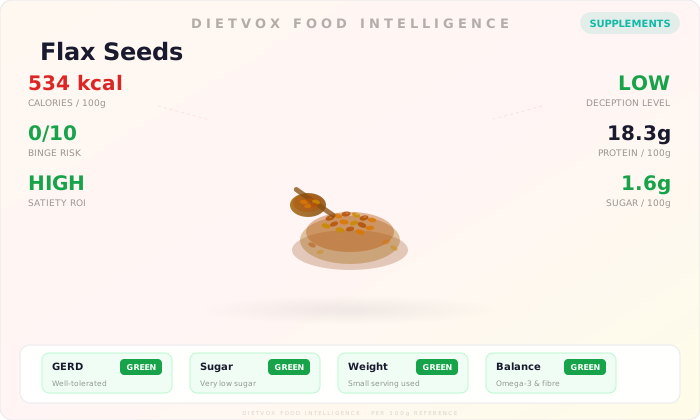
Flax Seeds are rated GREEN for a weight loss diet, indicating they are a beneficial food to include when consumed in appropriate portions. At first glance, the high calorie count of 534 kcal per 100g may seem counterintuitive for weight management. However, the power of flax seeds for weight loss lies not in their energy density, but in their exceptional nutritional profile that promotes satiety and metabolic health, making it easier to adhere to a calorie-controlled diet.
A typical serving is just one to two tablespoons (7-14g), which contributes a modest 37-74 calories. For this small caloric cost, you receive a significant dose of fibre, protein, and healthy fats that can help keep you feeling full and satisfied for hours.
Nutritional Deep Dive for Weight Loss
Understanding the macronutrient composition of flax seeds is key to leveraging them effectively in a weight loss plan. The nutritional data, sourced from the USDA FoodData Central, reveals why these tiny seeds are so powerful.
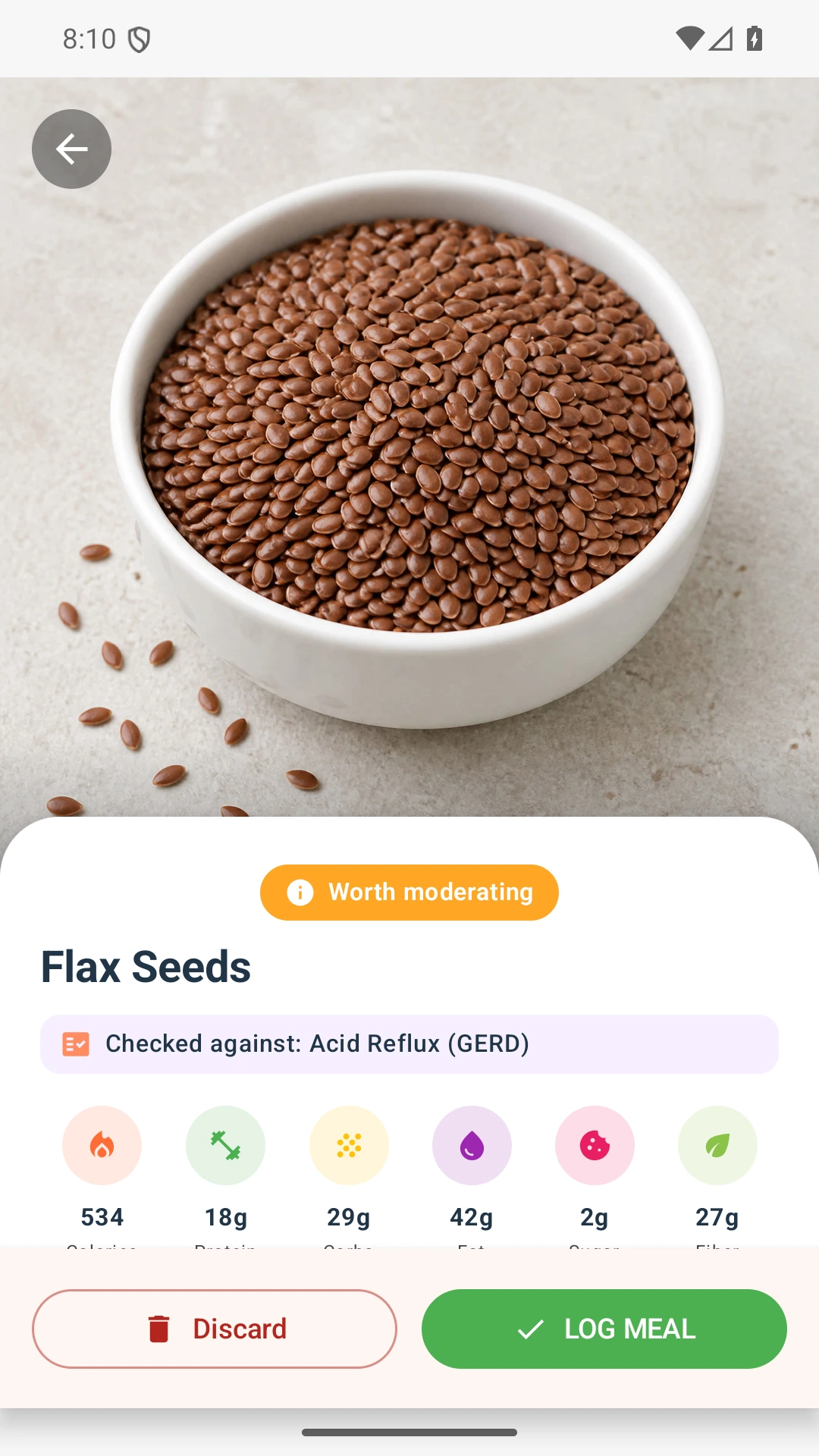
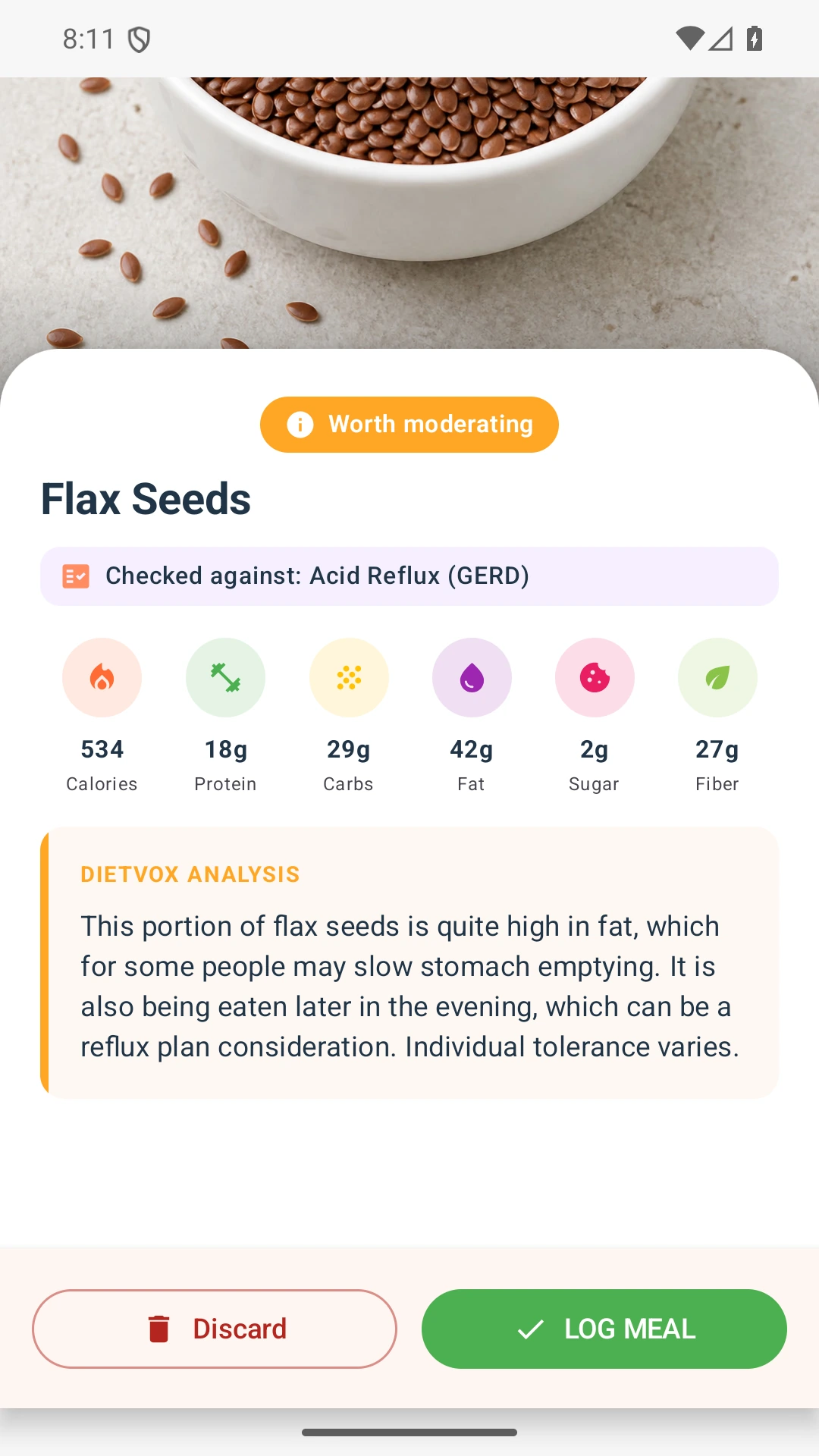
Per 100g, ground flax seeds provide: - Calories: 534 kcal - Fat: 42.2g - Carbohydrates: 28.9g - Fibre: 27.3g - Sugars: 1.6g - Protein: 18.3g
The most critical number here for weight management is the dietary fibre. At 27.3g per 100g, the vast majority of the carbohydrates in flax seeds are fibre. This fibre does not contribute significantly to your usable calorie intake but plays a crucial role in digestion and satiety. According to the NHS, high-fibre foods help you feel fuller for longer, which can be a significant advantage when reducing overall calorie consumption.
Why This Matters on Flax Seeds and Weight Management
source review supports the inclusion of flax seeds in a weight management strategy. A comprehensive systematic review and meta-analysis listed in Obesity Reviews and available on PubMed analyzed 45 randomized controlled trials. The researchers found that whole flaxseed supplementation for 12 weeks or more resulted in a significant reduction in body weight, body mass index (BMI), and waist circumference.
The cited review suggests that the lignans and fibre in flax seeds are likely responsible for these effects. Lignans are antioxidant compounds that may influence metabolism, while the soluble fibre forms a gel-like substance in the gut, slowing stomach emptying and prolonging the feeling of fullness.
Practical Strategies for Using Flax Seeds in Your Diet
To effectively incorporate flax seeds into your weight loss diet, portion control and preparation are essential.
1. Prioritize Ground Flax Seeds Your body absorbs the nutrients from ground flax seeds far more effectively than from whole seeds. Whole flax seeds can pass through your digestive system intact, meaning you miss out on the valuable omega-3s, fibre, and lignans. You can buy pre-ground flaxseed (often called flax meal) or grind them yourself in a coffee grinder. The MedlinePlus omega-3 fats overview confirms that ground flaxseed is more easily digested and allows for better nutrient absorption.
2. Master the Serving Size A standard serving size is one to two tablespoons per day. Use measuring spoons to ensure you are tracking accurately. This small amount is enough to provide significant benefits without adding excessive calories. * 1 tablespoon (7g) of ground flaxseed: ~37 calories, 2g fibre, 1.3g protein * 2 tablespoons (14g) of ground flaxseed: ~74 calories, 4g fibre, 2.6g protein
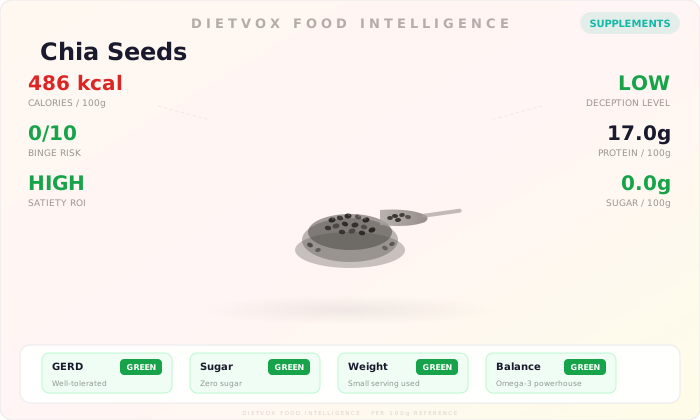
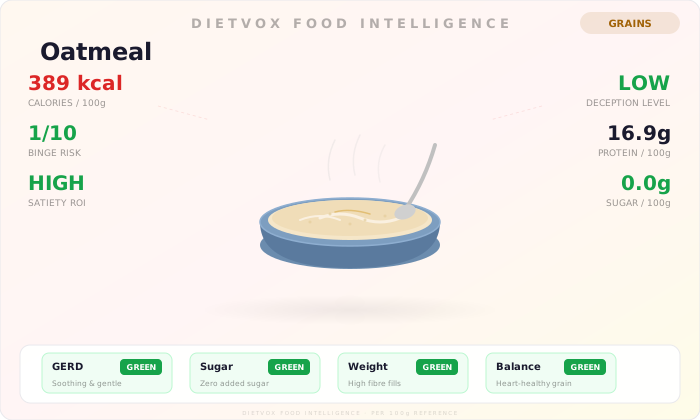
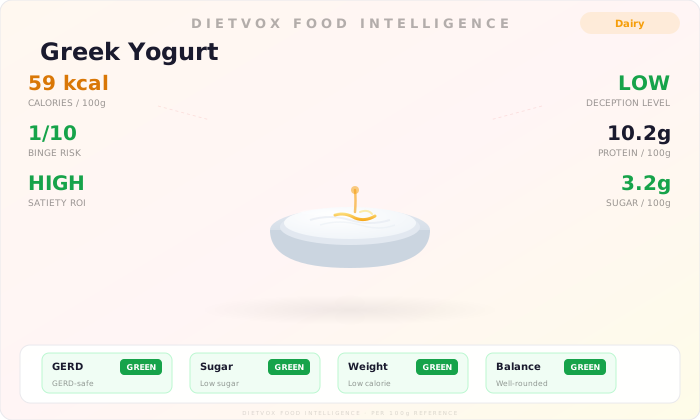
3. Simple Ways to Add Flax Seeds to Your Meals - Morning Oatmeal or Yogurt: Stir a tablespoon into your morning bowl of oatmeal or Greek yogurt to boost fibre and protein, keeping you full until lunch. - Smoothies: Add a tablespoon to your weight loss smoothie. It adds a nutty flavour and a thicker consistency, enhancing satiety. - Baking: Use ground flaxseed as a partial flour substitute in healthy muffins or as an egg replacer (1 tbsp ground flaxseed mixed with 3 tbsp water equals one egg). - Salad Topping: Sprinkle over salads for a slight crunch and a nutrient boost.
Addressing Common Concerns
Misconception: "The high fat content will make me gain weight."
While flax seeds are high in fat, the type of fat is predominantly beneficial. They are one of the richest plant-based sources of alpha-linolenic acid (ALA), an omega-3 fatty acid. As highlighted by Harvard Health Publishing, these healthy fats are crucial for cellular function and have anti-inflammatory properties. When consumed as part of a balanced, calorie-controlled diet, these nutrient-dense fats support overall health and contribute to satiety, which can prevent overeating of less healthy, high-calorie foods.
The DietVox Verdict
Flax seeds earn their GREEN rating for a weight loss diet due to their exceptional Satiety ROI (Return on Investment). The combination of high fibre, adequate protein, and healthy omega-3 fats makes them a powerful tool for managing hunger and supporting a healthy metabolism. While their calorie density requires mindful portioning, a daily serving of one to two tablespoons can significantly enhance a weight loss plan by promoting fullness and providing essential nutrients. By focusing on small, consistent servings of ground flax seeds, you can effectively leverage their benefits to help you reach your weight management goals.
Disclaimer: This article is for informational purposes only and does not constitute medical advice. Always consult a healthcare provider before making changes to your diet, especially if you have a medical condition.
Scan your foods with the DietVox app to get personalized ratings based on your specific dietary needs and health goals.
Last reviewed: June 2026
How It Works
Why Flax Seeds are Rated GREEN
DietVox rates Flax Seeds as GREEN for a weight loss diet based on their high Satiety ROI, meaning they provide a significant feeling of fullness per calorie. This is driven by three key nutritional factors:
- Exceptional Fibre Content: With 27.3g of dietary fibre per 100g, flax seeds are a fibre powerhouse. The soluble fibre absorbs water in the digestive tract, forming a gel that slows digestion and nutrient absorption. This process helps stabilize blood sugar levels and prolongs the feeling of fullness, reducing the likelihood of overeating later in the day NHS.
- Valuable Plant-Based Protein: Flax seeds contain 18.3g of protein per 100g. Protein is widely recognized as the most satiating macronutrient. Including a protein source like flax seeds in meals can help preserve lean muscle mass during weight loss and increase the thermic effect of food, both of which are beneficial for a healthy metabolism MedlinePlus dietary protein overview.
- Healthy Omega-3 Fats: The high fat content (42.2g/100g) is primarily composed of polyunsaturated fats, including alpha-linolenic acid (ALA), a plant-based omega-3. These healthy fats contribute to satiety and possess anti-inflammatory properties that support overall metabolic health.
Despite being calorie-dense (534 kcal/100g), a typical 1-2 tablespoon serving is low in calories (37-74 kcal) but rich in these satiating components, making flax seeds an effective and efficient tool for appetite control within a calorie-managed diet.
Scan any food. Get an instant RED/AMBER/GREEN rating.
DietVox analyses every food across 4 diet protocols — no guesswork.
Try DietVox Free →Try These Instead
Safer alternatives that won't trigger your symptoms.
Frequently Asked Questions
How much flax seed should I eat per day for weight loss?
A typical recommendation for reaping the benefits of flax seeds without adding excessive calories is 1 to 2 tablespoons (7-14 grams) of ground flaxseed per day. This amount provides a good dose of fibre and omega-3s to aid in satiety, and is supported by amounts used in direct source reviews.
Is it better to eat whole or ground flax seeds for weight loss?
Ground flax seeds are significantly better for weight loss and overall health. The human body cannot effectively break down the hard outer shell of whole flax seeds, meaning they often pass through the digestive system undigested. Grinding the seeds unlocks their fibre, protein, and omega-3 fatty acids, which are the key components that aid in satiety and weight management, as reported by clinical sources like the MedlinePlus omega-3 fats overview.
Can flax seeds boost my metabolism?
While some sources suggest the components in flax seeds, like lignans and fibre, can support a healthy metabolism, they are not a 'magic' metabolism booster. Their primary benefit for weight loss comes from their ability to increase feelings of fullness (satiety), which helps you reduce overall calorie intake. A meta-analysis on PubMed showed a modest but significant effect on weight reduction, likely due to this satiety effect rather than a dramatic metabolic shift.
Will the fat in flax seeds hinder my weight loss goals?
No, when consumed in moderation, the fat in flax seeds is unlikely to hinder weight loss. The fat is predominantly heart-healthy polyunsaturated fat, including ALA omega-3s. These fats contribute to satiety, helping you feel full and potentially reducing your intake of other, less nutritious foods. The key is strict portion control; stick to 1-2 tablespoons daily to get the benefits without overconsuming calories.