DietVox Rating: GREEN
Chia Seeds are rated GREEN for a Weight Loss Diet. This means they are an excellent choice and can be regularly included in a calorie-controlled eating plan. The key to understanding how to use chia seeds to lose weight lies not in their per-100g calorie count, but in their powerful effect on satiety within a small, low-calorie serving.
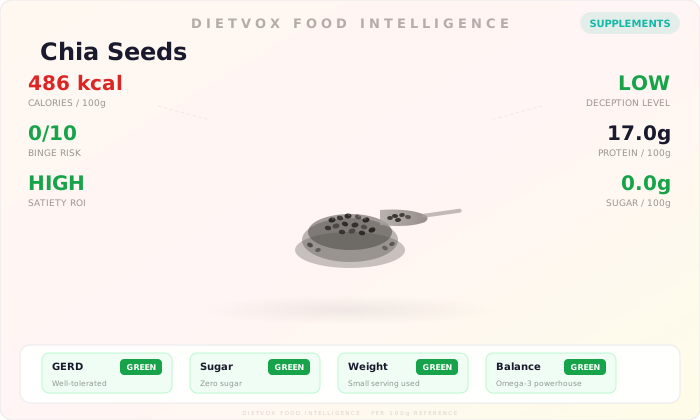
While their high energy density (486 kcal per 100g) requires mindfulness, their exceptional fibre and protein content, combined with their ability to absorb liquid and expand, makes them a strategic tool for managing hunger and supporting a sustainable calorie deficit.
Why This Matters: Chia Seeds and Weight Management
The effectiveness of chia seeds in a weight loss context is primarily linked to their nutritional composition, particularly their high fibre content. Per 100g, chia seeds contain an impressive 34.4g of dietary fibre USDA FoodData Central (FDC ID 170554). A significant portion of this is soluble fibre, which has profound effects on satiety.
When mixed with liquid, the soluble fibre in chia seeds forms a viscous, gel-like substance. This gel has several benefits for weight management:
- Increases Volume: The gel expands in the stomach, physically taking up space and contributing to a feeling of fullness MedlinePlus fiber overview.
- Slows Digestion: It slows the rate at which food leaves the stomach (gastric emptying), prolonging satiety and helping to stabilise blood sugar levels.
- Promotes Satiety Hormones: A high-fibre diet can influence the release of gut hormones that signal fullness to the brain.
source review supports the inclusion of chia seeds in a weight management plan. A randomized controlled trial listed in Nutrition, Metabolism and Cardiovascular Diseases studied overweight and obese patients with type 2 diabetes on a calorie-restricted diet. The group that supplemented their diet with chia seeds achieved significantly greater weight loss over six months compared to the control group consuming an oat bran supplement PubMed. This suggests that when part of a holistic, calorie-controlled approach, chia seeds can provide a tangible advantage.
Nutrition Forensics: A Deep Dive into Chia Seeds
To effectively use chia seeds for weight loss, it's crucial to understand the difference between their bulk nutrition and a typical serving size.
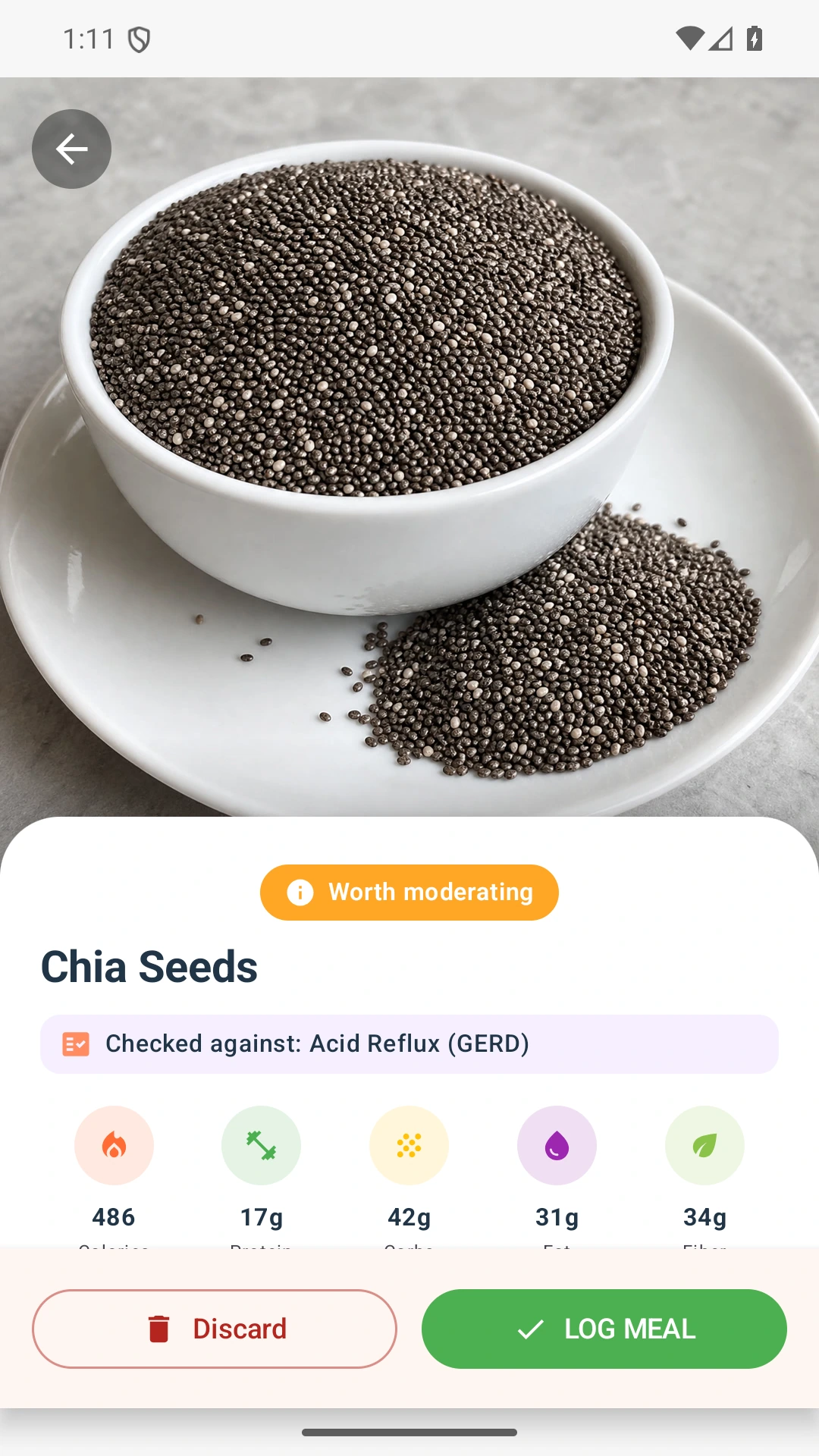
Per 100g (Dry): - Calories: 486 kcal - Fat: 31.0g - Protein: 17.0g - Carbohydrates: 42.0g - Fibre: 34.4g
This profile reveals a high calorie density, which can be misleading. A standard serving is much smaller.
Per 1 Tablespoon (~12g): - Calories: ~58 kcal - Fat: ~3.7g - Protein: ~2.0g - Carbohydrates: ~5.0g - Fibre: ~4.1g
For just under 60 calories, you get over 4 grams of hunger-fighting fibre. This is an exceptional Satiety Return on Investment (Satiety ROI). The goal of a successful weight loss diet is to maximise fullness while minimising calorie intake, a principle endorsed by health authorities like the CDC healthy weight guidance. Chia seeds excel in this regard.
Beyond macros, chia seeds are also a source of important micronutrients, including Calcium (631mg/100g) and Iron (7.7mg/100g) USDA FoodData Central (FDC ID 170554). They are also one of the best plant-based sources of alpha-linolenic acid (ALA), an omega-3 fatty acid that supports cardiovascular health.
Practical Guide: Integrating Chia Seeds into Your Weight Loss Diet
Mindful integration is key to leveraging the benefits of chia seeds without overconsuming calories. Their Tracking Difficulty is LOW because they are easy to measure with standard kitchen spoons.
Portion Control is Essential
A typical daily serving for weight management purposes is 1-2 tablespoons (12-24g). This provides a substantial satiety boost for a modest 58-116 calories. Always measure them dry before adding liquids.
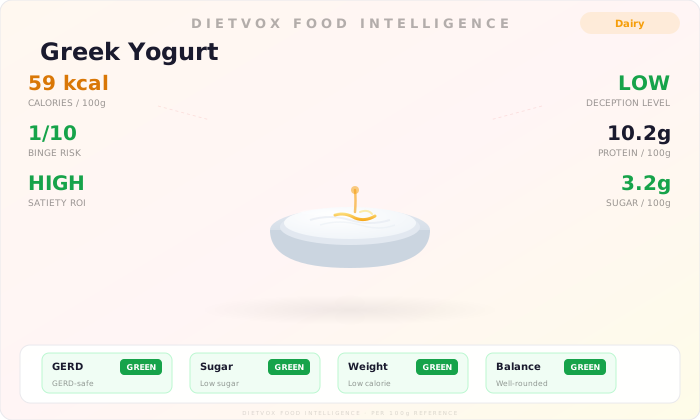
Preparation and Usage Ideas - Chia Pudding: This is the most popular method. Mix 2 tablespoons of chia seeds with 1/2 cup of unsweetened almond milk or water. Let it sit for at least 20 minutes, or overnight in the fridge, until a thick pudding forms. Top with a few berries for flavour. - Smoothie Booster: Add a tablespoon to your protein smoothie to increase its thickness and fibre content, keeping you fuller for longer. - Yogurt and Oatmeal Topper: Sprinkle a tablespoon over Greek yogurt or a bowl of oatmeal for added texture and nutrients. - Hydration is Crucial: Because chia seeds absorb so much water, it's vital to ensure you are well-hydrated. Consuming them pre-soaked or with plenty of fluid is also a safety measure. In rare cases, consuming a large amount of dry chia seeds followed by liquid can pose a risk of esophageal obstruction American College of Gastroenterology chia seed safety article.
The DietVox Verdict
Chia seeds earn their GREEN rating for a weight loss diet due to their exceptional ability to promote satiety for a very low caloric cost per serving. Their high fibre and protein content, combined with their hydrophilic properties, makes them a powerful tool for managing hunger. While their energy density requires portion control, their ease of tracking and versatility make them a simple and effective addition to a structured, source-reviewed weight loss plan. They are not a magic solution, but a strategic ingredient to help you maintain a calorie deficit comfortably and sustainably.
Disclaimer: This article is for informational purposes only and does not constitute medical advice. Always consult a healthcare provider before making changes to your diet, especially if you have a medical condition.
Scan your foods with the DietVox app to get personalized ratings based on your specific dietary needs and health goals.
Last reviewed: June 2026
How It Works
Why Chia Seeds are Rated GREEN
DietVox rates Chia Seeds as GREEN for a Weight Loss Diet based on a clinical assessment of their impact on the key pillars of successful weight management: satiety, calorie control, and nutrient density.
- Exceptional Satiety ROI: The primary reason for the GREEN rating is their outstanding Satiety Return on Investment. For a small caloric price (a ~73 kcal serving), you get a significant dose of both soluble fibre (forms a filling gel) and protein. This dual-action satiety mechanism is highly effective at reducing hunger and preventing overeating, which is fundamental to maintaining a calorie deficit as recommended by global health bodies like the World Health Organization (WHO).
- Low Calorie Impact Per Serving: While the per-100g calorie count of 486 kcal is high, this is a misleading metric for practical use. A typical 15g serving contains only 73 calories. This allows for easy integration into a calorie-controlled meal plan without displacing a significant portion of your daily energy budget.
- High Nutrient Density: During a weight loss phase, it's crucial to get adequate nutrition from fewer calories. Chia seeds are nutrient-dense, providing essential minerals like calcium and iron, as well as healthy omega-3 fats. This ensures that while you are cutting calories, you are still nourishing your body, a key principle of healthy dieting CDC healthy weight guidance.
- Low Tracking Difficulty: For any weight loss plan that involves calorie tracking, accuracy is paramount. Chia seeds are a dry, uniform product that is simple to measure accurately with standard spoons, making it easy to log their caloric and macronutrient contribution without guesswork.
Scan any food. Get an instant RED/AMBER/GREEN rating.
DietVox analyses every food across 4 diet protocols — no guesswork.
Try DietVox Free →Try These Instead
Safer alternatives that won't trigger your symptoms.
Frequently Asked Questions
How much chia seed should I eat per day for weight loss?
A typical and effective serving size for supporting weight loss is 1 to 2 tablespoons (about 12-24 grams) per day. This provides a significant satiety boost from fibre and protein for a modest 58-116 calories, helping you manage hunger without exceeding your daily calorie goals.
Do I need to soak chia seeds before eating them for weight loss?
Soaking chia seeds is highly recommended. When soaked, they form a gel that enhances feelings of fullness and makes them easier to digest. It's also a safety precaution; consuming dry chia seeds without enough liquid can pose a rare choking hazard as they expand rapidly when hydrated American College of Gastroenterology chia seed safety article.
Can chia seeds replace a meal for weight loss?
While a chia seed pudding can be part of a light meal or a substantial snack, they do not provide the full spectrum of macro and micronutrients needed to replace a complete meal on their own. For weight loss, they are best used to enhance the satiety of existing meals (like oatmeal or smoothies) or as a planned, high-fibre snack to bridge the gap between meals.
Are there any side effects of eating too many chia seeds when trying to lose weight?
Yes, due to their very high fibre content (34.4g per 100g), consuming excessive amounts of chia seeds can lead to digestive discomfort such as bloating, gas, or constipation, especially if your fluid intake is inadequate. Sticking to the recommended 1-2 tablespoons per day helps avoid these issues.