DietVox Rating: GREEN

Oatmeal is rated GREEN for a Weight Loss Diet, signifying it is a highly recommended food that actively supports weight management goals. The source support strongly suggests that incorporating oatmeal to lose weight is an effective strategy, primarily due to its exceptional ability to promote fullness and its favourable nutritional profile when prepared correctly. A GREEN rating from DietVox indicates that a food aligns with the core principles of a given protocol, which for weight loss, includes managing calorie intake, controlling appetite, and providing sustained energy.

While the nutritional data for dry oats may seem calorie-dense, the key to oatmeal's effectiveness lies in its transformation during cooking. When cooked with water, oats absorb a significant amount of liquid, increasing in volume and drastically reducing their calorie density per gram. This makes oatmeal one of the most satisfying and nutrient-dense breakfast options available for those in a calorie deficit.

Nutritional Profile for Weight Loss

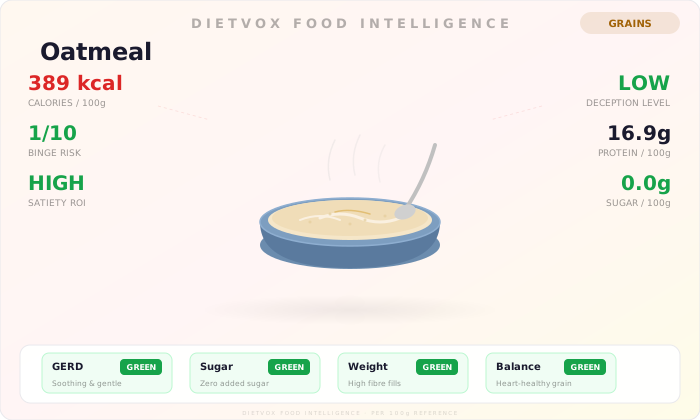
The nutritional composition of oatmeal is uniquely suited for a weight loss journey. The data provided is for 100g of dry, uncooked rolled oats USDA FoodData Central (FDC ID 170282).

  • Calories: 389 kcal
  • Protein: 16.9 g
  • Fat: 6.9 g
  • Carbohydrates: 66.3 g
  • Dietary Fibre: 10.6 g

Calorie Density: The Dry vs. Cooked Distinction

At first glance, 389 kcal per 100g places dry oatmeal in the medium calorie density category. However, this is misleading for practical application. A standard 40g serving of dry oats, which yields a substantial bowl of porridge, contains approximately 156 kcal. When cooked with 200-250ml of water, this 40g portion expands to a volume of around 250g. This means the calorie density of the final cooked meal is only about 62 kcal per 100g. This high-volume, low-calorie-density characteristic is a cornerstone of successful weight management, as it allows for filling meals that help maintain a calorie deficit without causing hunger CDC healthy weight guidance.

The Power of Beta-Glucan Fibre

The most significant component of oatmeal for weight loss is its high content of soluble fibre, particularly a type called beta-glucan. This fibre is responsible for many of oatmeal's health benefits. The European Food Safety Authority (EFSA) has reported that oat beta-glucan contributes to the maintenance of normal blood cholesterol levels and can help reduce the post-meal rise in blood glucose PubMed oat beta-glucan cholesterol review. For weight loss, its most important function is promoting satiety. Beta-glucan dissolves in water to form a thick, gel-like substance in the gut. This gel slows down the emptying of the stomach and the absorption of carbohydrates, leading to a prolonged feeling of fullness PubMed. This powerful effect on satiety is why DietVox assigns Oatmeal a HIGH Satiety ROI (Return on Investment).

Why This Matters: Oatmeal's Role in Weight Management

source review consistently supports the inclusion of oatmeal in weight loss diets.

Satiety and Appetite Control

Multiple source reviews have demonstrated that oatmeal increases satiety more effectively than other common breakfast cereals. A review listed in the Nutrition Reviews journal found that the viscosity of beta-glucan is directly linked to increased feelings of fullness and reduced subsequent energy intake PubMed. By starting the day with a meal that keeps you full for longer, you are less likely to snack on high-calorie foods before your next meal, making it easier to adhere to your daily calorie target.

Blood Sugar Regulation

Maintaining stable blood sugar levels is critical for managing hunger and cravings. Foods with a low glycaemic index (GI), like rolled or steel-cut oats, release glucose into the bloodstream slowly and steadily. This prevents the sharp spikes and subsequent crashes in blood sugar that can trigger intense hunger and a desire for sugary foods International glycemic index tables review. This stable energy release supports consistent energy levels throughout the morning, further aiding appetite control.

Common Misconceptions About Oatmeal

Misconception: "Oatmeal is too high in carbs to lose weight." This is a misunderstanding of carbohydrate quality. The carbohydrates in oatmeal are primarily complex carbohydrates, which are digested slowly. Paired with high fibre and protein, they provide sustained energy. Health authorities like the World Health Organization (WHO) recommend that the majority of dietary carbohydrates come from whole grains, like oats, as part of a healthy diet pattern for weight maintenance WHO.

Misconception: "Instant oatmeal packets are a healthy choice." While convenient, many flavoured instant oatmeal packets contain significant amounts of added sugar, artificial flavours, and sodium, which can negate the health benefits. These additions can increase the calorie count and the glycaemic index of the meal. For a weight loss diet, it is always better to choose plain, unadulterated rolled or steel-cut oats and add your own healthy toppings.

Practical Tips for Your Weight Loss Diet

To maximise the benefits of oatmeal for weight loss, preparation is key.

  • Choose Wisely: Opt for steel-cut or rolled oats over highly processed instant varieties. They have a lower GI and contain more fibre.
  • Portion Control: Use a measuring cup. A typical serving is 40-50g of dry oats. This is easy to track and ensures you are not over-consuming calories. This ease of measurement is why DietVox gives Oatmeal a LOW Tracking Difficulty score.
  • Cook with Water or Low-Fat Milk: Cooking with water is the lowest-calorie option. Low-fat or skim milk can add creaminess along with extra protein and calcium for a modest increase in calories.
  • Boost Protein and Fibre: To enhance satiety even further, stir in a scoop of protein powder, a tablespoon of chia seeds, or ground flaxseed. This will keep you full well into the afternoon.
  • Smart Toppings: Avoid loading your bowl with sugar, honey, or maple syrup. Instead, use fresh berries for natural sweetness and fibre, a sprinkle of cinnamon for flavour, or a small portion (5-10g) of nuts or seeds for healthy fats and crunch.

Disclaimer: This article is for informational purposes only and does not constitute medical advice. Always consult a healthcare provider before making changes to your diet, especially if you have a medical condition.

Scan your foods with the DietVox app to get personalized ratings based on your specific dietary needs and health goals.

Last reviewed: June 2026

How It Works

Why Oatmeal is Rated GREEN for Weight Loss

Oatmeal earns its GREEN rating for a Weight Loss Diet due to a powerful combination of four key factors that directly support calorie management and appetite control.

  1. High Satiety ROI: The primary mechanism is oatmeal's exceptional ability to promote fullness. This is driven by its high content of beta-glucan, a soluble fibre that forms a viscous gel in the stomach. This gel slows digestion, prolonging the feeling of satiety and reducing the desire to eat again soon after a meal PubMed. This means you get a high degree of appetite suppression for a relatively low number of calories.
  1. Low Caloric Density (When Cooked): While dry oats have a moderate calorie density, they absorb a large volume of liquid during cooking. This transformation results in a high-volume, low-calorie meal. A small 40g portion of dry oats (156 kcal) can produce a large, satisfying 250g bowl of porridge, making it an efficient way to fill your stomach while staying within a calorie deficit USDA FoodData Central (FDC ID 170282).
  1. Excellent for Appetite Regulation: The complex carbohydrates in oatmeal are digested slowly, leading to a gradual release of energy and stable blood sugar levels. This prevents the energy spikes and crashes associated with high-sugar foods, which often trigger cravings and overeating. This metabolic stability is crucial for consistent appetite control throughout the day International glycemic index tables review.
  1. Easy to Track and Control: For a weight loss plan to be successful, accurate calorie tracking is essential. Dry oats are uniform and simple to measure, making portion and calorie control straightforward and reliable. This low tracking difficulty is a significant practical advantage, as recommended by health guidance for weight management NICE.

Scan any food. Get an instant RED/AMBER/GREEN rating.

DietVox analyses every food across 4 diet protocols — no guesswork.

Try DietVox Free →

Try These Instead

Safer alternatives that won't trigger your symptoms.

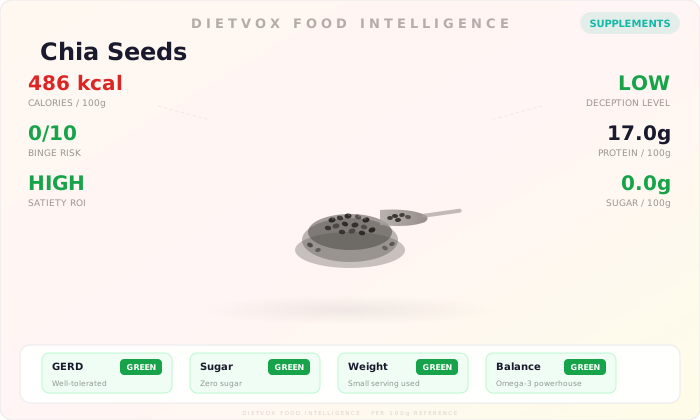
Chia Seeds illustration

Chia Seeds

486 kcal Supplements
GREEN GERD
GREEN Sugar
GREEN Weight
GREEN Balance
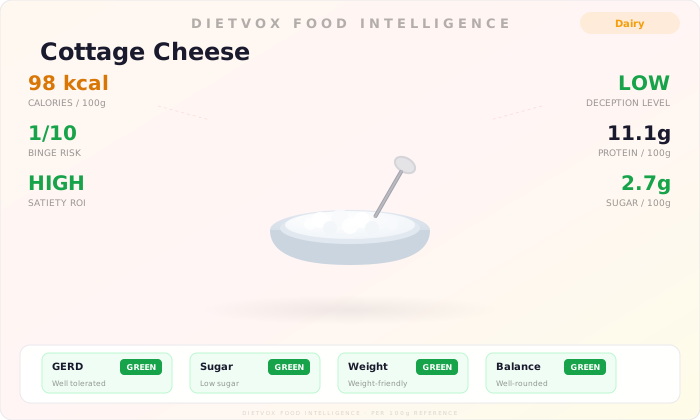
Cottage Cheese illustration

Cottage Cheese

98 kcal Dairy
GREEN GERD
GREEN Sugar
GREEN Weight
GREEN Balance
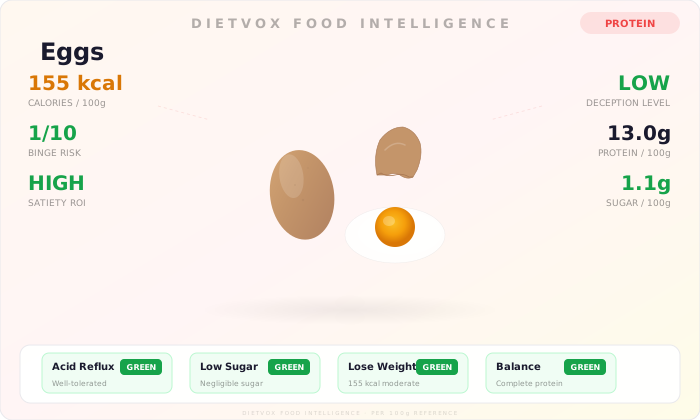
Eggs illustration

Eggs

155 kcal Protein
GREEN GERD
GREEN Sugar
GREEN Weight
GREEN Balance
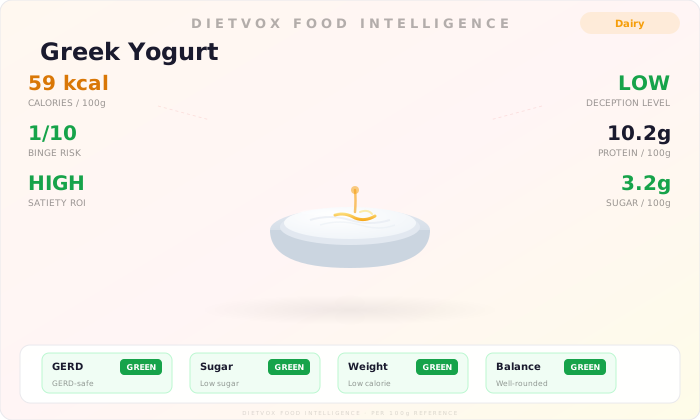
Greek Yogurt illustration

Greek Yogurt

59 kcal Dairy
GREEN GERD
GREEN Sugar
GREEN Weight
GREEN Balance

Frequently Asked Questions

What is the best type of oatmeal for weight loss?

For weight loss, steel-cut and rolled oats are the best choices. They are minimally processed and have a lower glycaemic index than quick-cooking or instant oats, meaning they provide more sustained energy and better appetite control. Avoid pre-packaged, flavoured instant oatmeal, which often contains high levels of added sugar.

How can I make my oatmeal more filling without adding too many calories?

To increase satiety, focus on adding protein and fibre. Stir in a tablespoon of chia seeds or ground flaxseed (about 50-60 calories), or a scoop of unsweetened protein powder. Topping with a handful of high-fibre berries like raspberries or blueberries adds volume and nutrients for minimal calories. These additions enhance the filling effect of oatmeal's beta-glucan fibre.

Will eating oatmeal every day guarantee weight loss?

No single food can guarantee weight loss. While oatmeal is an excellent tool for a weight loss diet, overall success depends on maintaining a consistent calorie deficit. Eating oatmeal daily can help you achieve this by controlling breakfast calories and reducing hunger throughout the day, but it must be part of a balanced diet and healthy lifestyle, as recommended by health bodies like the NHS.

Are there any downsides to eating oatmeal for weight loss?

The primary downside is not the oatmeal itself, but how it's prepared. Loading oatmeal with high-calorie toppings like brown sugar, maple syrup, heavy cream, or large amounts of nuts and dried fruit can quickly turn a low-calorie meal into a high-calorie one, hindering weight loss. Portion control remains essential.

Related Reading