DietVox Rating: GREEN
Verdict: Unsweetened almond milk is rated GREEN for a weight loss diet. Its exceptionally low calorie count makes it a strategic tool for reducing overall energy intake without sacrificing volume in drinks and meals. The successful use of almond milk for weight loss hinges on choosing unsweetened varieties and understanding its role as a low-calorie liquid base, rather than a primary source of nutrition like protein or fibre.
This analysis delves into the nutrition profile behind almond milk's GREEN rating, providing source-reviewed insights and practical strategies for incorporating it into your weight management plan.
The Nutritional Profile of Almond Milk for Weight Loss
The primary reason almond milk is so effective for a weight loss diet is its macronutrient profile. A typical serving of unsweetened almond milk contains minimal calories, carbohydrates, and fats, making it an easy fit within a calorie-controlled eating plan.
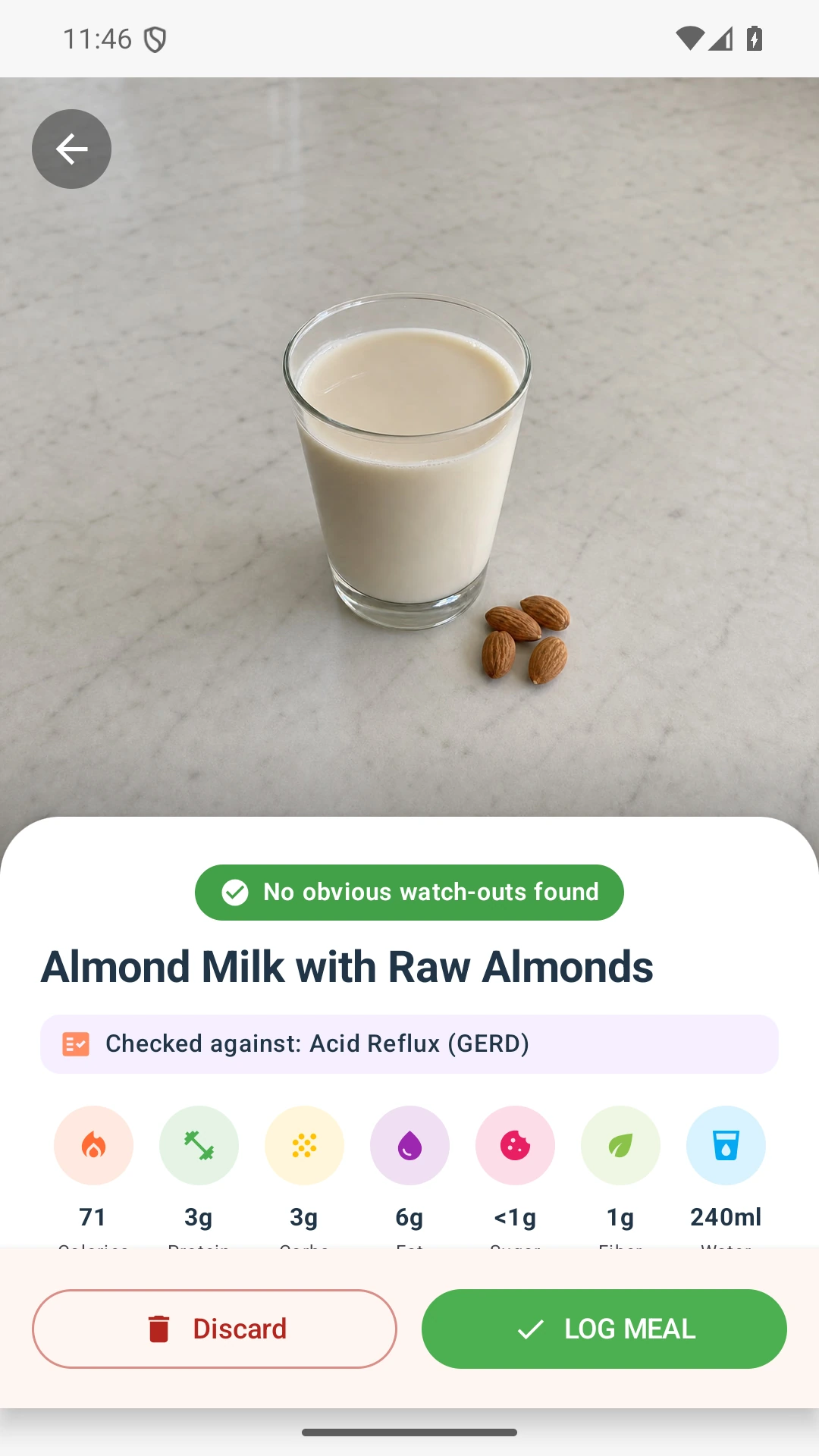
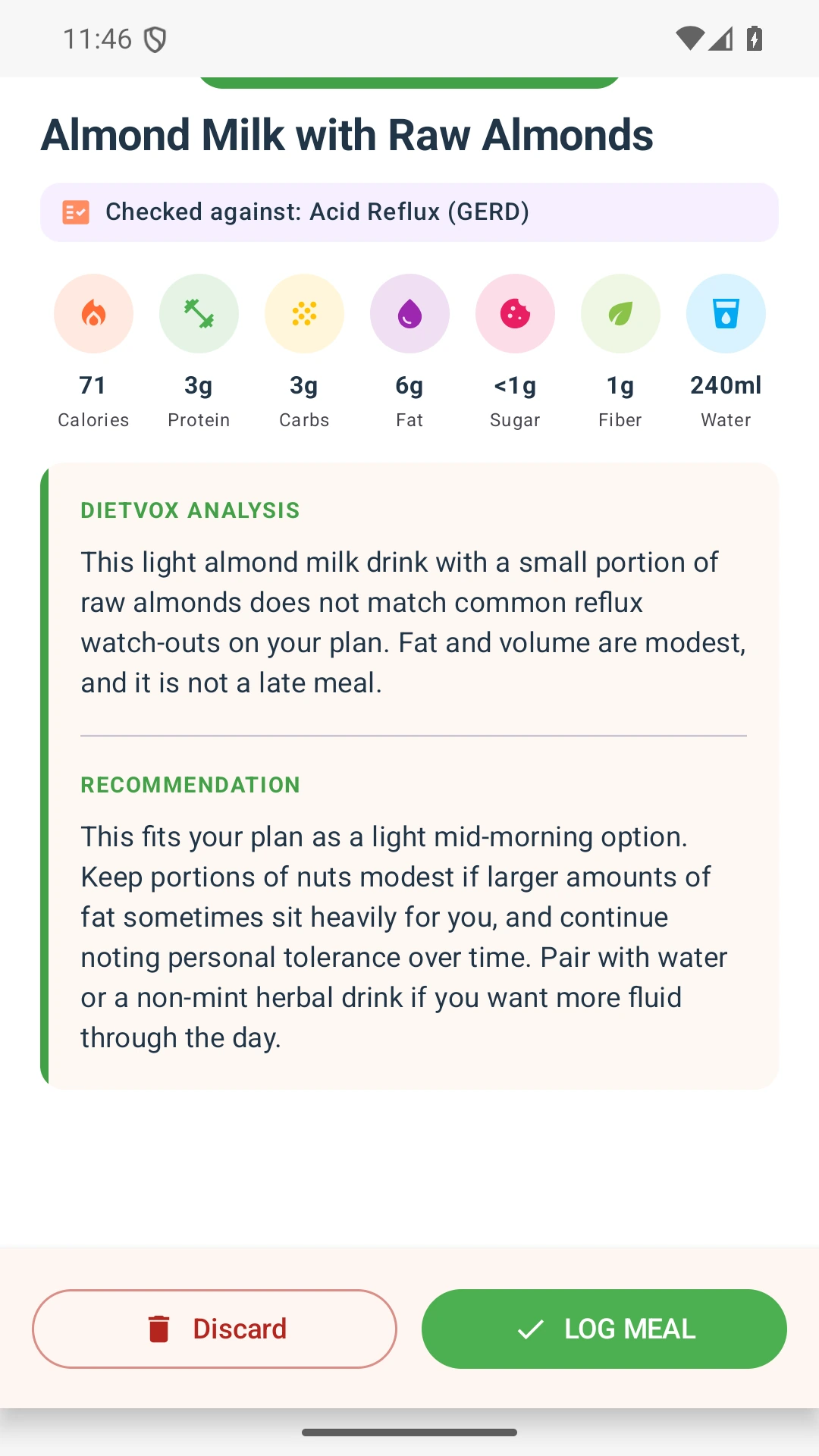
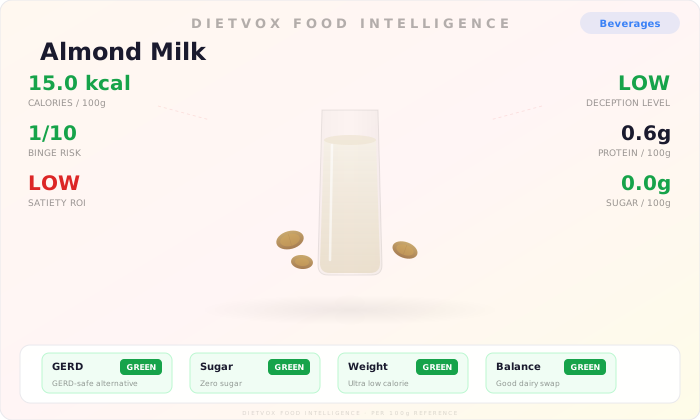
Here is the nutritional breakdown per 100ml of unsweetened almond milk, based on data from the USDA FoodData Central (FDC ID 199963):
- Calories: 15 kcal
- Protein: 0.6 g
- Fat: 1.1 g
- Carbohydrates: 0.3 g
- Sugars: 0.0 g
To put this into perspective, let's compare it to dairy milk. Whole cow's milk contains approximately 61 kcal and 4.7g of sugar (lactose) per 100ml, while even skimmed milk has around 35 kcal. Swapping from whole milk to unsweetened almond milk in a daily 250ml latte could save over 115 calories per day, contributing to a significant calorie deficit over a week. This principle of creating a calorie deficit is the foundation of weight loss, as outlined by health authorities like the CDC healthy weight guidance.
Many commercial almond milks are also fortified with vitamins and minerals, most commonly calcium and Vitamin D. This is an important consideration, as replacing dairy milk means losing a primary source of dietary calcium. Choosing a fortified version helps to mitigate this nutritional gap.
Health Forensics: A Deeper Dive into Almond Milk's Impact
Our Health Forensics model evaluates foods on three key metrics relevant to a weight loss diet. Almond milk presents a distinct profile that is important to understand.
Calorie Density: LOW With only 15 kcal per 100g, almond milk has an extremely low calorie density. Foods with low calorie density allow you to consume larger, more satisfying portions for fewer calories. This concept is a cornerstone of sustainable weight management, as it helps manage hunger without exceeding daily calorie targets CDC healthy weight guidance. You can use a generous amount of almond milk as a base for smoothies, soups, or overnight oats, adding volume and creaminess for a negligible caloric cost.
Satiety ROI: LOW Satiety Return on Investment (ROI) measures how full a food makes you feel relative to its calories. Almond milk scores poorly here. Its low protein (0.6g) and dietary fibre (0.2g) content provide minimal satiety signals to the brain. Protein is widely recognized as the most satiating macronutrient, and its inclusion in meals is crucial for appetite control PubMed.
This means that while almond milk is excellent for reducing calories, it won't keep you full on its own. It should be viewed as a 'carrier' liquid for more satiating ingredients like protein powder, chia seeds, oats, or fruit.
Tracking Difficulty: LOW For a weight loss diet that involves calorie counting, accuracy is key. Almond milk is very easy to track. As a standardised liquid, its nutritional information is consistent and simple to measure by volume (ml or fluid ounces). This predictability removes guesswork and helps ensure your daily calorie log is accurate, supporting consistent progress towards your weight loss goals.
Practical Strategies: Integrating Almond milk into Your Diet
Incorporating almond milk effectively is about making smart swaps. Here are some practical strategies:
- Always Choose Unsweetened: This is the most critical rule. Sweetened or flavoured varieties can contain 5-15 grams of added sugar per serving, which adds empty calories and can undermine weight loss efforts. The World Health Organization (WHO) recommends limiting free sugar intake.
- Upgrade Your Smoothies: Use unsweetened almond milk as the base for your morning smoothie. Combine it with a scoop of protein powder, a tablespoon of flax seeds, and a handful of spinach. This creates a low-calorie, high-satiety meal that supports muscle maintenance during weight loss.
- Low-Calorie Coffee & Tea: Swap out dairy milk, half-and-half, or sugary creamers in your daily coffee or tea. This simple change can save hundreds of calories each week without you feeling deprived.
- Reinvent Your Breakfast: Pour almond milk over high-fibre cereal or use it to make overnight oats. The liquid adds moisture and a creamy texture for very few calories, allowing the oats and any added fruit or seeds to provide the substance and satiety.
- In the Kitchen: Use it as a substitute for milk in creamy soups, sauces, or mashed potatoes to lower the overall calorie count of the dish.
Addressing Common Misconceptions
- "Almond milk is a good source of protein." This is false. With less than 1g of protein per 100ml, it is a very poor source. If you rely on milk for protein, soy milk is a better plant-based alternative, though it is higher in calories. Always check the label and supplement your diet with other protein-rich foods like lean meats, eggs, or legumes.
- "All plant milks are equally good for weight loss." This is not true. While many plant milks are good options, their calorie counts vary significantly. Unsweetened almond milk is typically the lowest-calorie option. Oat milk, for example, is often much higher in calories and carbohydrates, making it less ideal for a strict weight loss protocol.
- "'Organic' or 'homemade' is always the best choice." While these options avoid additives, they often lack fortification. For individuals reducing dairy intake, fortified almond milk provides essential calcium and vitamin D, which are crucial for bone health MedlinePlus vitamins overview.
The Bottom Line:
DietVox rates unsweetened almond milk GREEN for a weight loss diet because it is a powerful tool for calorie reduction. Its extremely low calorie and sugar content allows for easy integration into a calorie-controlled diet. However, its low satiety value means it must be paired with protein and fibre-rich foods to create balanced, filling meals. By making this strategic, low-calorie swap, you can significantly support your weight management goals.
Disclaimer: This article is for informational purposes only and does not constitute medical advice. Always consult a healthcare provider before making changes to your diet, especially if you have a medical condition.
Scan your foods with the DietVox app to get personalized ratings based on your specific dietary needs and health goals.
Last reviewed: June 2026
How It Works
Why Almond Milk is Rated GREEN for Weight Loss
Almond milk earns its GREEN rating for a weight loss diet based on four key rating factors. Its primary strength lies in its ability to facilitate a calorie deficit, which is the fundamental requirement for weight loss.
- Extremely Low Calorie Density: At just 15 kcal per 100ml, unsweetened almond milk is one of the lowest-calorie milk alternatives available. This allows you to replace higher-calorie options like whole milk (≈61 kcal) or even skim milk (≈35 kcal) to achieve substantial calorie savings in daily items like coffee, cereal, and smoothies. This aligns with weight management guidance from clinical bodies like the CDC healthy weight guidance.
- Negligible Sugar Content: Unsweetened varieties contain virtually no sugar (0.0g per 100ml). Reducing intake of sugary beverages is a core recommendation for weight control, as liquid calories from sugar do not promote the same feeling of fullness as solid food, leading to excess energy consumption WHO.
- High Versatility as a Calorie-Saving Swap: Almond milk's neutral flavour and liquid consistency make it an easy 1:1 substitute for milk in countless recipes. This versatility enables a consistent, cumulative reduction in daily calorie intake across various meals and drinks, supporting a sustainable long-term weight loss strategy.
- Low Tracking Difficulty: Its predictable and consistent nutritional profile makes it simple to measure and log accurately in a food diary or app. This supports the adherence and precision required for a successful calorie-controlled diet.
Scan any food. Get an instant RED/AMBER/GREEN rating.
DietVox analyses every food across 4 diet protocols — no guesswork.
Try DietVox Free →Try These Instead
Safer alternatives that won't trigger your symptoms.
Frequently Asked Questions
How does almond milk compare to oat milk for weight loss?
Unsweetened almond milk is generally superior to oat milk for weight loss due to its lower calorie and carbohydrate content. Almond milk contains around 15 kcal per 100ml, whereas oat milk typically contains 45-60 kcal for the same amount. For a strict calorie-controlled diet, almond milk is the more strategic choice.
Will drinking almond milk make me feel full?
No, almond milk itself is not very filling. It has a 'Low Satiety ROI' because it contains very little protein (under 1g per 100ml) and dietary fibre. To create a filling meal or snack, you should combine almond milk with high-satiety foods like protein powder, oats, chia seeds, or Greek yogurt.
Is it better to choose fortified almond milk for a weight loss diet?
Yes, choosing fortified almond milk is highly recommended. When you replace dairy milk, you lose a significant source of calcium and vitamin D. A fortified almond milk will have these nutrients added back in, helping you meet your micronutrient needs for bone health without adding extra calories, which is important during a weight loss phase.
Can I use almond milk in cooking when trying to lose weight?
Absolutely. Unsweetened almond milk is an excellent low-calorie substitute for dairy milk or cream in many recipes. You can use it to make creamy soups, lighter pasta sauces, or lower-calorie mashed potatoes. It's a simple way to reduce the overall calorie density of your meals.