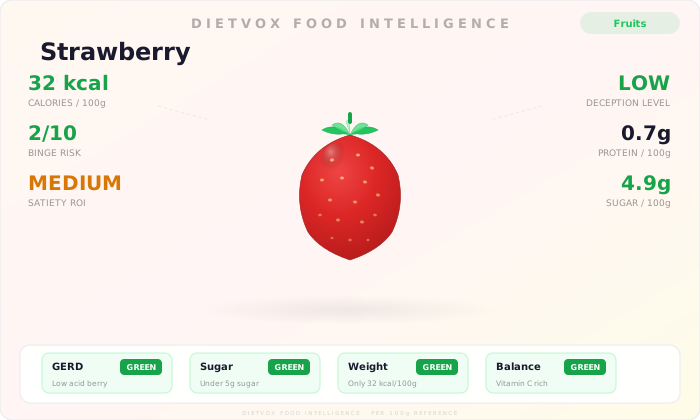
DietVox Rating: GREEN
For individuals navigating the complexities of a GERD (Acid Reflux) diet, the question of which fruits are safe is a common concern. When considering is strawberry good for gerd, the answer is generally positive, with important caveats. DietVox assigns Strawberry a GREEN rating, indicating it is typically well-tolerated and can be included in a GERD-friendly diet for most people when consumed in moderation. This rating is based on its overall nutritional profile, which contains several characteristics beneficial for managing acid reflux symptoms.
While fruits are often viewed with caution due to their acidity, strawberries possess a unique combination of high water content, beneficial fibre, and low fat that often outweighs the potential concern of their mild acidity. However, as with any food in a GERD management plan, individual tolerance is paramount American College of Gastroenterology acid reflux guidance. This article will delve into the direct source support behind our GREEN rating, explore the specific nutritional components of strawberry relevant to GERD, and provide practical advice for incorporating it into your diet safely.
Nutritional Profile of Strawberry for GERD Management
Understanding the nutritional composition of strawberry is key to appreciating its GREEN rating for the GERD (Acid Reflux) Diet. The data below, sourced from the USDA FoodData Central (FDC ID 167762), highlights the factors that make it a suitable choice.
Nutritional Information for Strawberry (per 100g):
- Calories: 32 kcal
- Fat: 0.3g
- Carbohydrates: 7.7g
- Dietary Fibre: 2.0g
- Sugars: 4.9g
- Protein: 0.7g
- Water: 90.95g
- Vitamin C: 58.8mg
This profile is highly favourable for GERD management. The extremely low fat content is critical, as high-fat foods are known to relax the lower esophageal sphincter (LES) and delay stomach emptying, both of which can trigger reflux NHS. The low calorie count also supports weight management, a primary lifestyle recommendation for reducing GERD symptoms, as excess weight can increase pressure on the abdomen.
Practical Tips for Including Strawberry in a GERD Diet
Successfully incorporating strawberry into your GERD diet involves mindful preparation and consumption. Trigger foods are highly personal, so it's essential to monitor your own body's response American College of Gastroenterology.
- Start with Small Portions: If you are new to eating strawberries on a GERD diet, begin with a small serving, such as half a cup (around 75g). This allows you to assess your personal tolerance without overwhelming your system.
- Pair Wisely: Combine strawberries with known GERD-friendly foods. Mix them into oatmeal, which is high in fibre and can absorb stomach acid, or blend them in a smoothie with a banana and low-fat almond milk. Avoid pairing them with high-fat triggers like heavy cream or full-fat yogurt.
- Choose Fresh or Frozen: Opt for fresh or unsweetened frozen strawberries. Canned strawberries, jams, and syrups often contain high amounts of added sugar and preservatives, which can potentially worsen GERD symptoms for some individuals.
- Timing is Key: Avoid eating strawberries, or any food, within 2-3 hours of lying down. Eating close to bedtime can make it easier for stomach acid to flow back into the esophagus American College of Gastroenterology acid reflux guidance.
Common Misconceptions About Strawberry and Acid Reflux
Misconception: "All acidic fruits must be avoided with GERD."
This is a common oversimplification. While highly acidic fruits like oranges, lemons, and grapefruit are well-known triggers, the effect of a food is not determined by its pH alone. Moderately acidic foods like strawberries are often tolerated because their other components—like water and fibre—create a balancing effect. The overall dietary pattern is more significant than single foods Harvard Health Publishing.
Misconception: "Eating strawberries will directly cause heartburn due to their acid.
While possible for highly sensitive individuals, this is not a universal outcome. The high water content in strawberries (nearly 91%) helps dilute stomach acid. Furthermore, the dietary fibre aids in digestion and promotes gastric motility, helping to move food out of the stomach efficiently. For many, these benefits counteract the food's natural acidity.
Health Forensics: A DietVox Analysis
- Calorie Density: LOW At just 32 kcal per 100g, strawberry has a very low calorie density. This is beneficial for a GERD diet, as maintaining a healthy weight is a crucial strategy for managing symptoms. Low-density foods allow for greater volume and satisfaction without a high caloric cost.
- Satiety ROI: LOW With only 0.7g of protein and 2.0g of fibre, strawberry provides a low return on investment for satiety. It is unlikely to keep you feeling full for an extended period on its own. This underscores the importance of pairing it with other foods that are higher in fibre or protein, such as oatmeal or low-fat Greek yogurt, to create a more balanced and satiating meal or snack.
- Tracking Difficulty: LOW Strawberries are easy to portion and track. Their consistent size and form make it simple to estimate quantities, whether by volume (cups) or weight (grams), facilitating accurate logging for those monitoring their dietary intake closely.
Disclaimer: This article is for informational purposes only and does not constitute medical advice. Always consult a healthcare provider before making changes to your diet, especially if you have a medical condition.
Scan your foods with the DietVox app to get personalized ratings based on your specific dietary needs and health goals.
Last reviewed: June 2026
How It Works
Why Strawberry is Rated GREEN for GERD (Acid Reflux) Diet
Our GREEN rating for strawberry is based on a careful analysis of its biochemical properties and how they interact with the pathophysiology of GERD. While its mild acidity is a valid consideration, three key factors make it a safe choice for most people managing acid reflux.
1. High Water and Fibre Content
Strawberries are composed of nearly 91% water USDA FoodData Central (FDC ID 167762). This high water content helps to dilute stomach acid, potentially lessening its irritant effect on the esophagus. Additionally, strawberry provides 2.0g of dietary fibre per 100g. Dietary fibre is widely recommended for GERD management. It promotes healthy digestion and regular bowel movements, which can prevent constipation and the associated increase in intra-abdominal pressure that can exacerbate reflux. A diet rich in fibre has been associated with a reduction in GERD symptoms PubMed.
2. Extremely Low Fat Content
High-fat meals are one of the most consistently identified triggers for GERD. Fat delays gastric emptying, meaning food sits in the stomach for longer, and it can also decrease the pressure of the lower esophageal sphincter (LES), the muscular valve that keeps acid in the stomach American College of Gastroenterology acid reflux guidance. Strawberry contains only 0.3g of fat per 100g, making it an excellent low-fat choice that does not contribute to these common reflux mechanisms.
3. Rich in Anti-inflammatory Compounds
Chronic acid exposure can lead to inflammation of the esophagus (esophagitis). Strawberries are rich in antioxidants and anti-inflammatory compounds, such as Vitamin C and anthocyanins. While these compounds do not directly prevent acid reflux, they may help mitigate the inflammatory damage caused by chronic reflux. Available sources suggest that dietary antioxidants can play a protective role in the health of the esophageal lining PubMed. This contributes to the overall health-promoting profile of the fruit within a long-term GERD management plan.
Scan any food. Get an instant RED/AMBER/GREEN rating.
DietVox analyses every food across 4 diet protocols — no guesswork.
Try DietVox Free →Try These Instead
Safer alternatives that won't trigger your symptoms.
Frequently Asked Questions
Are frozen strawberries as good as fresh for a GERD diet?
Yes, unsweetened frozen strawberries are an excellent choice for a GERD diet. They retain a nearly identical nutritional profile to fresh strawberries, including the beneficial fibre and water content. Ensure you choose brands with no added sugars, syrups, or preservatives, as these additives can potentially trigger reflux symptoms.
Can I drink strawberry juice if I have GERD?
It is generally recommended to eat the whole fruit rather than drinking juice. Juicing removes most of the dietary fibre, which is a key component that aids digestion and helps buffer stomach acid. Strawberry juice is also a more concentrated source of sugar and acid, which may increase the likelihood of triggering symptoms compared to the whole fruit.
What is a safe portion size for strawberries with GERD?
Individual tolerance to foods is the guiding principle in a GERD diet. There is no universal safe portion, but a sensible starting point is a half-cup to one-cup serving (approximately 75g-150g). Pay close attention to how your body responds and adjust your portion size accordingly. Pairing strawberries with other GERD-friendly foods can also improve tolerance.
Do strawberry seeds irritate acid reflux?
For the vast majority of people with GERD, the tiny seeds on the outside of strawberries do not cause any irritation or worsen reflux symptoms. The primary triggers for GERD are related to factors like fat content, acidity, and spiciness. While seeds can be an issue for separate conditions like diverticulitis, they are not considered a typical trigger for acid reflux.