DietVox Rating: GREEN
Potato is rated GREEN for a low sugar diet. This rating indicates that its naturally occurring sugar content is very low and it can be included in a diet focused on minimising sugar intake. However, its starchy carbohydrate profile requires careful consideration regarding portion size and preparation methods to manage overall blood glucose impact. Many people ask, is potato low carb? While not strictly a low-carbohydrate food, its extremely low sugar content makes it a suitable choice for a low sugar protocol.
Understanding Potato's Nutritional Profile for a Low Sugar Diet
A low sugar diet primarily focuses on limiting 'free sugars'—sugars added to foods and drinks, and sugars naturally present in honey, syrups, and fruit juices WHO. The sugar in whole vegetables like potato does not fall into this category.
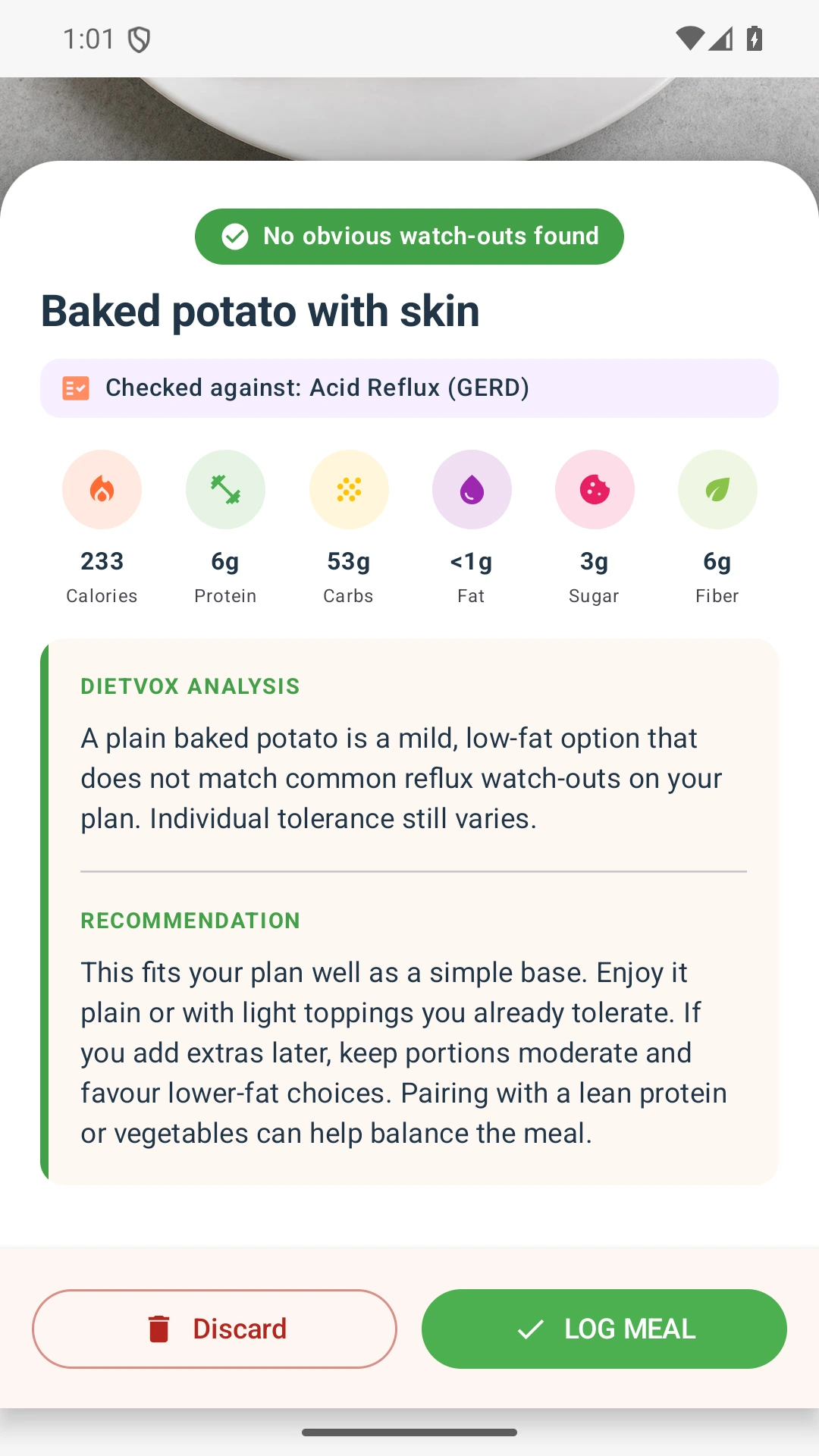
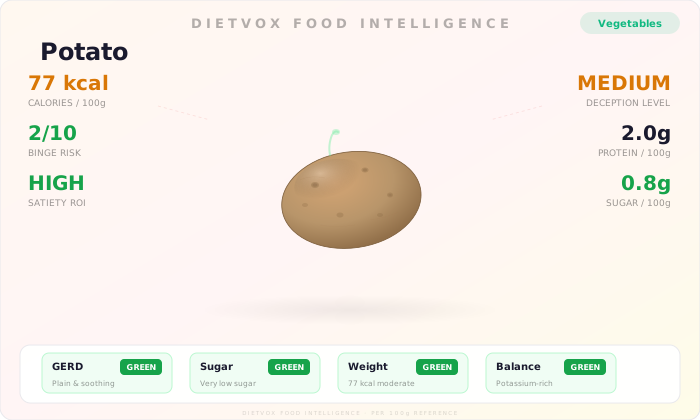
Per 100g, a raw potato provides USDA FoodData Central (FDC ID 170030): - Sugars: 0.8g - Total Carbohydrates: 17.5g - Dietary Fibre: 2.2g - Calories: 77 kcal
This data highlights the core reason for its GREEN rating: the sugar content is less than 1g per 100g serving. The bulk of its carbohydrates (around 15g) comes from starch. Starch is a complex carbohydrate that the body breaks down into glucose for energy. While this process does raise blood sugar, it is different from the rapid spike caused by consuming free sugars NHS.
The Glycemic Index: Why Cooking Method Matters
While low in sugar, the starch in potato can have a significant impact on blood glucose levels, a concept measured by the Glycemic Index (GI). The GI ranks foods on a scale from 0 to 100 based on how quickly they raise blood sugar levels after eating International glycemic index tables review.
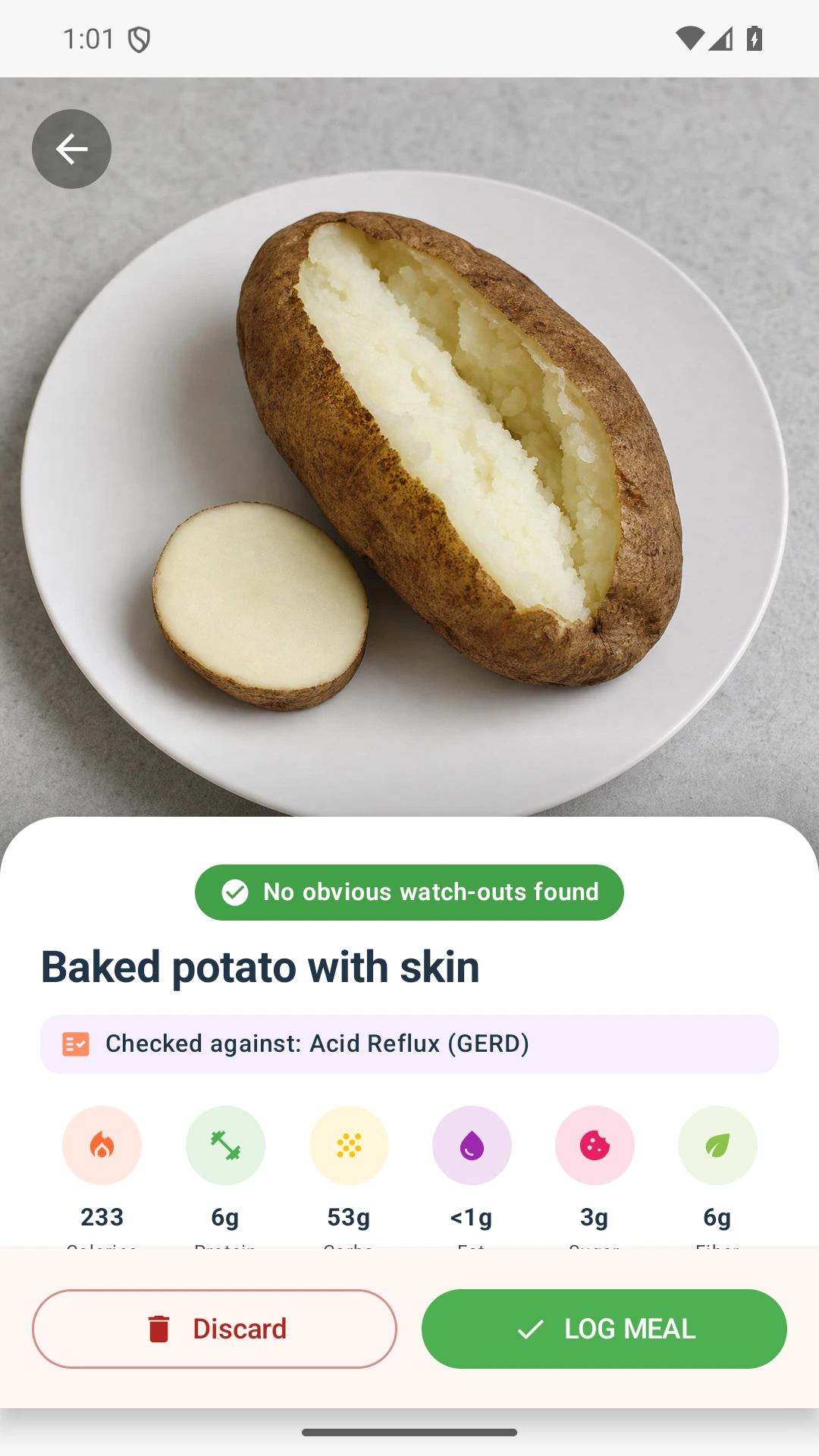
Potatoes are a classic example of how preparation can drastically alter a food's GI: - Boiled Potatoes: Tend to have a moderate GI (around 50-70). - Baked Potatoes: Often have a high GI (85 or higher). - Fried Potatoes (Fries/Chips): Also have a high GI and significantly higher fat and calorie content.
One effective strategy to lower the glycemic impact is to cook and then cool potatoes before eating. This process increases the formation of resistant starch. Resistant starch is not digested in the small intestine and acts similarly to dietary fibre, leading to a more gradual blood sugar response. A systematic review listed in PubMed confirms that consuming cooled, cooked potatoes can lead to a lower postprandial glucose response compared to eating them hot PubMed.
Practical Tips for Including Potato in Your Low Sugar Diet
To incorporate potato into a low sugar diet effectively, focus on preparation and pairing.
- Choose Your Cooking Method Wisely: Prioritise boiling or steaming over baking or frying. Let them cool completely after cooking to maximise resistant starch. You can enjoy them cold in a salad or gently reheated.
- Practice Portion Control: Given its carbohydrate content, portion size is key. The Medium Tracking Difficulty rating from our Health Forensics team means it's easy to misjudge portion sizes. Using a food scale is the most accurate way to track your intake. A 150g serving of boiled potato (about the size of a computer mouse) is a reasonable portion.
- Balance Your Plate: Never eat potato in isolation. Pair it with sources of protein (like chicken or beans), healthy fats (like avocado or olive oil), and plenty of non-starchy vegetables (like broccoli or spinach). This combination helps slow down the digestion of carbohydrates and further blunts the rise in blood sugar American Diabetes Association food and nutrition guidance.
- Keep the Skin On: The skin is a significant source of dietary fibre. The fibre helps improve satiety and slows glucose absorption. Ensure you scrub the potato well before cooking.
Debunking Common Myths About Potato
Myth: Potatoes are 'empty calories'. Fact: This is incorrect. Beyond carbohydrates, potato is a nutrient-dense food. A single medium potato can provide a significant portion of your daily needs for Vitamin C and is an excellent source of potassium, a mineral crucial for blood pressure regulation and nerve function USDA FoodData Central (FDC ID 170030). The NHS lists potatoes as a key source of fibre, B vitamins, and potassium NHS.
Myth: You must avoid all starchy foods on a low sugar diet. Fact: A low sugar diet is not necessarily a no-carb or no-starch diet. The goal is to eliminate or reduce free and added sugars. Complex carbohydrates from whole foods like potato, when consumed in appropriate portions and prepared correctly, provide sustained energy and essential nutrients. They are a recommended part of a healthy, balanced diet by global health authorities WHO.
Health Forensics: A Deeper Analysis
- Calorie Density: LOW (77 kcal/100g) The low calorie density of potato means you can eat a visually satisfying portion without a heavy caloric penalty. This is particularly true for boiled or steamed potatoes. This can help with overall calorie management, a common secondary goal of many low sugar plans.
- Satiety ROI: MEDIUM Potatoes famously score very high on the Satiety Index, a measure of how full a food makes you feel PubMed. The combination of water content, 2.0g of protein, and 2.2g of fibre per 100g contributes to a moderate feeling of fullness. This can help prevent overeating and snacking on less healthy, high-sugar options later.
- Tracking Difficulty: MEDIUM The nutritional profile of potato changes dramatically based on how it's prepared. A 100g serving of boiled potato is 77 calories, but that same potato turned into french fries can be over 300 calories, and potato crisps over 500. This variability requires mindful tracking, especially if you are not preparing the food yourself.
Disclaimer: This article is for informational purposes only and does not constitute medical advice. Always consult a healthcare provider before making changes to your diet, especially if you have a medical condition.
Scan your foods with the DietVox app to get personalized ratings based on your specific dietary needs and health goals.
Last reviewed: June 2026
How It Works
Why Potato is Rated GREEN
DietVox rates Potato as GREEN for a low sugar diet based on its fundamental nutritional composition. The primary reasons for this rating are:
- Extremely Low Sugar Content: Per 100g, potato contains only 0.8g of sugar. A low sugar diet's main objective is to limit 'free sugars' as defined by the World Health Organization (WHO), and the intrinsic sugar in a whole vegetable like a potato does not qualify as a free sugar and is present in minimal quantities.
- Carbohydrates are from Starch, Not Sugar: The majority of its 17.5g of carbohydrates are complex starches. While the body converts starch to glucose, this is a different metabolic pathway from the direct and rapid absorption of free sugars. This distinction is critical for a low sugar protocol.
- Manageable Glycemic Impact: While the starch in potatoes can impact blood sugar, this is highly manageable through practical strategies. Choosing boiling over baking, cooling the potato to increase resistant starch, and controlling portion sizes are effective methods to mitigate its glycemic effect, allowing it to fit safely within a low sugar eating plan.
Scan any food. Get an instant RED/AMBER/GREEN rating.
DietVox analyses every food across 4 diet protocols — no guesswork.
Try DietVox Free →Try These Instead
Safer alternatives that won't trigger your symptoms.
Frequently Asked Questions
Does the cooking method for potato affect its suitability for a low sugar diet?
Yes, absolutely. While the sugar content remains low, the cooking method changes the potato's Glycemic Index (GI), which affects how quickly it raises blood sugar. Boiling and then cooling potatoes is the best method, as it increases resistant starch and lowers the GI. Baking and frying result in a much higher GI and should be limited.
Is the sugar in a potato considered a 'free sugar'?
No. According to the World Health Organization (WHO), 'free sugars' are those added to foods by the manufacturer, cook, or consumer, plus sugars naturally present in honey, syrups, and fruit juices. The 0.8g of sugar per 100g in a potato is intrinsic to its cellular structure and is not considered a free sugar. Therefore, it is not a primary target for reduction in a low sugar diet.
What's the difference between the carbohydrate in a potato and the sugar in a soda?
The carbohydrate in a potato is primarily starch, a complex carbohydrate. Your body must break it down into glucose, a process that takes time. The sugar in soda is typically a 'free sugar' like sucrose or high-fructose corn syrup, which are simple carbohydrates. They require little to no digestion and are absorbed very rapidly, causing a sharp spike in blood sugar. This is why whole food carbohydrate sources are preferred over processed, sugary items.
Can I eat potato skin on a low sugar diet?
Yes, eating the skin is highly recommended. The skin of a potato is rich in dietary fibre, vitamins, and minerals. The fibre is particularly beneficial for a low sugar diet as it helps to slow the absorption of glucose into the bloodstream, leading to a more stable blood sugar response. Just be sure to scrub the skin thoroughly before cooking.