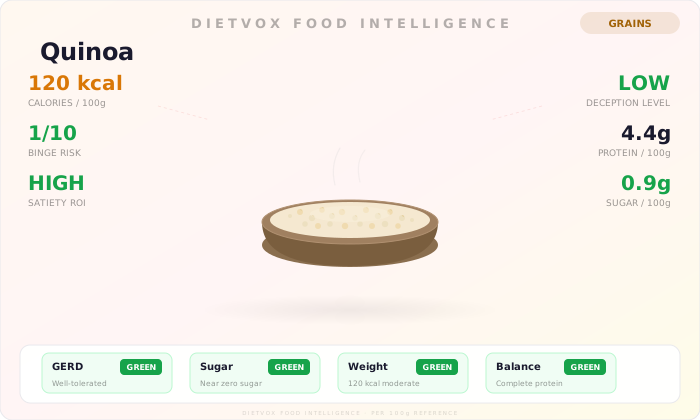
DietVox Rating: AMBER

DietVox rates Quinoa as AMBER for a Weight Loss Diet. This rating signifies that quinoa can be a beneficial component of a calorie-controlled eating plan, but requires mindful portioning. For those investigating how to use quinoa to lose weight, it is not a food to be eaten without limits, but rather a strategic choice for a carbohydrate source due to its favourable nutritional profile.

The core principle of a successful weight loss diet is maintaining a consistent calorie deficit, where you expend more energy than you consume CDC healthy weight guidance. At 120 calories per 100g cooked portion, quinoa is moderately energy-dense. Its value lies in the quality of those calories, offering a blend of protein, fibre, and complex carbohydrates that can support your weight management goals when consumed correctly.

Nutritional Analysis for Weight Management

Understanding the macronutrient composition of quinoa is essential to see why it earns its AMBER rating for a weight loss diet. The data, referenced from the USDA FoodData Central (FDC ID 168878), provides a clear picture of what a 100g serving of cooked quinoa offers.

  • Calories: 120 kcal. This moderate calorie count allows for a satisfying portion without excessively impacting a daily calorie budget. It's comparable to other whole grains like brown rice but offers superior nutrient density.
  • Protein: 4.4g. Protein is a critical macronutrient for weight loss. It promotes satiety, helping you feel fuller for longer, which can reduce overall calorie intake MedlinePlus dietary protein overview. Furthermore, adequate protein intake helps preserve lean muscle mass during weight loss. Quinoa is notable for being a 'complete protein', containing all nine essential amino acids.
  • Dietary Fibre: 2.8g. Fibre is another key player in satiety. It adds bulk to meals and slows down digestion, which helps stabilise blood sugar levels and prevent the energy crashes that can lead to cravings MedlinePlus fiber overview. The 2.8g of fibre in quinoa contributes effectively to daily intake goals.
  • Carbohydrates: 21.3g. Quinoa is primarily a carbohydrate source. However, these are complex carbohydrates, which are broken down more slowly by the body than simple sugars. This slow release of energy is reflected in quinoa's low Glycaemic Index (GI), which is estimated to be around 53 PubMed. Low-GI foods are preferable in a weight loss diet as they help manage appetite and prevent sharp insulin spikes.

Quinoa in a Calorie-Controlled Diet

The AMBER rating for quinoa is fundamentally a caution about quantity. While its nutritional profile is excellent, its status as a grain means calories can accumulate quickly with large servings.

Portion Control is Paramount A standard serving of cooked quinoa is typically around one cup (approx. 185g), which contains about 222 calories. While this is a reasonable amount for a meal's carbohydrate component, restaurant portions or mindless serving at home can easily double this, turning a supportive food into a caloric burden. Using measuring cups or a food scale is a highly effective strategy to ensure quinoa supports, rather than hinders, your weight loss diet.

Comparison with Other Grains When compared to other common grains, quinoa's advantages for weight loss become clearer: - White Rice (cooked, 100g): ~130 kcal, 2.7g protein, 0.3g fibre. - Brown Rice (cooked, 100g): ~123 kcal, 2.7g protein, 1.6g fibre. - Quinoa (cooked, 100g): ~120 kcal, 4.4g protein, 2.8g fibre.

Quinoa provides slightly fewer calories than white rice, with significantly more protein and fibre. This superior satiety-per-calorie makes it a more efficient choice for managing hunger on a weight loss diet.

Addressing Common Misconceptions

Myth: "Quinoa is a low-calorie food you can eat without restriction." Fact: This is incorrect. While often labelled a 'superfood', no food is free of calories. At 120 kcal per 100g, quinoa is not a low-calorie food in the same way as non-starchy vegetables like spinach or broccoli (which are typically under 30 kcal per 100g). It is an energy source and must be accounted for within a daily calorie target.

Myth: "Because quinoa is a complete protein, it can replace meat or beans." Fact: While the quality of quinoa's protein is excellent, the quantity is modest. A 100g serving of quinoa provides 4.4g of protein. In contrast, 100g of cooked chicken breast contains around 31g of protein, and 100g of cooked lentils contains about 9g. Quinoa should be seen as a protein-rich grain that contributes to your daily total, not as a primary protein source to build a meal around.

Practical Tips for a Weight Loss Diet

  1. Measure Your Portions: The most critical step. Use a food scale for accuracy or a standard measuring cup. A serving of ½ to 1 cup (cooked) is a good starting point for a main meal.
  2. Rinse Thoroughly: Quinoa is coated in natural compounds called saponins, which can give it a bitter or soapy taste. Rinsing it under cold water for 30-60 seconds before cooking removes this coating and improves flavour.
  3. Bulk Up with Vegetables: To create a larger, more filling, and nutrient-dense meal, mix a measured portion of quinoa with a generous amount of low-calorie vegetables. A quinoa salad with mixed greens, cucumber, bell peppers, and tomatoes is an excellent weight-loss-friendly meal.
  4. Mind the Add-ins: The way you prepare quinoa matters. High-calorie additions like oil-based dressings, cheese, or nuts can quickly increase the calorie count. Opt for flavourings like lemon juice, fresh herbs, spices, or a light vinaigrette.

Disclaimer: This article is for informational purposes only and does not constitute medical advice. Always consult a healthcare provider before making changes to your diet, especially if you have a medical condition.

Scan your foods with the DietVox app to get personalized ratings based on your specific dietary needs and health goals.

Last reviewed: June 2026

How It Works

Why Quinoa is Rated AMBER

Quinoa's AMBER rating for a Weight Loss Diet is determined by a clinical analysis of its impact on the key drivers of weight management: calorie balance, satiety, and ease of tracking. Its profile is beneficial but requires careful management, preventing it from achieving a GREEN rating.

Calorie Density: LOW

Per 100g, cooked quinoa contains 120 kcal. This gives it a low caloric density, meaning it provides fewer calories relative to its weight. Foods with low calorie density are a cornerstone of effective weight management, as they allow for satisfying portion sizes without contributing an excessive number of calories to your daily total. This principle is widely supported by health authorities like the World Health Organization (WHO) as a strategy to prevent weight gain.

Satiety ROI: MEDIUM

Satiety Return on Investment (ROI) measures how full you feel relative to the calories consumed. Quinoa provides a moderate return. Its 4.4g of protein and 2.8g of dietary fibre per 100g work together to promote feelings of fullness and slow down digestion. direct source support confirms that both protein and fibre are key to appetite regulation NHS fat facts. However, the satiety signal is not as powerful as that from higher-protein, higher-fibre foods like legumes or lean meats, placing quinoa in the MEDIUM category.

Tracking Difficulty: LOW

For a weight loss plan to be effective, accurate tracking of calorie intake is crucial. Quinoa scores well here. In its cooked form, it is uniform and easy to measure by weight (grams) or volume (cups). This consistency makes it simple to log accurately in a food diary or app. It's important to note the significant caloric difference between dry (approx. 368 kcal/100g) and cooked (120 kcal/100g) forms; always track the state in which you measure it.

Scan any food. Get an instant RED/AMBER/GREEN rating.

DietVox analyses every food across 4 diet protocols — no guesswork.

Try DietVox Free →

Try These Instead

Safer alternatives that won't trigger your symptoms.

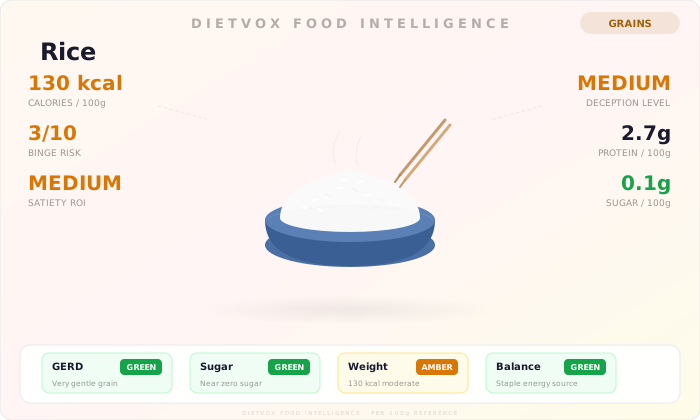
Rice illustration

Rice

130 kcal Grains
GREEN GERD
GREEN Sugar
AMBER Weight
AMBER Balance
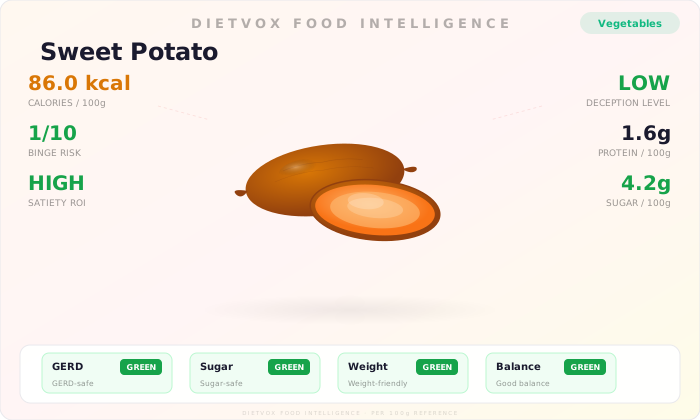
Sweet Potato illustration

Sweet Potato

86 kcal Vegetables
GREEN GERD
GREEN Sugar
AMBER Weight
GREEN Balance
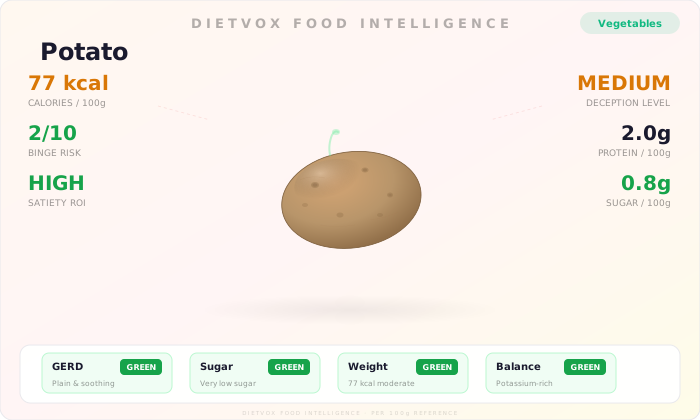
Potato illustration

Potato

77 kcal Vegetables
GREEN GERD
GREEN Sugar
AMBER Weight
GREEN Balance
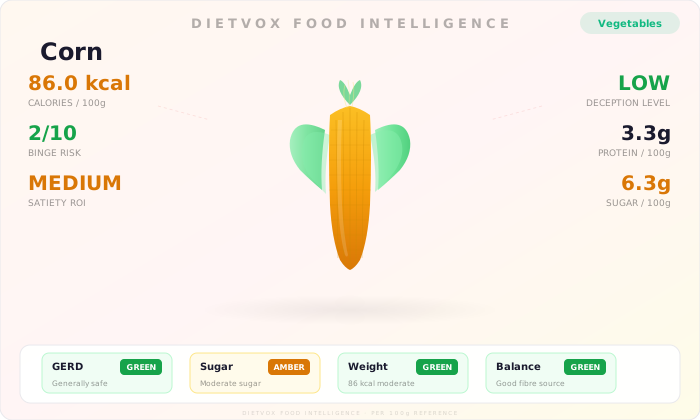
Corn illustration

Corn

86 kcal Vegetables
GREEN GERD
GREEN Sugar
AMBER Weight
GREEN Balance

Frequently Asked Questions

How much quinoa should I eat per day to lose weight?

There is no single amount of quinoa to eat for weight loss, as it depends on your individual daily calorie target. A typical serving size of ½ to 1 cup (cooked), equivalent to 90-185g, fits well into most weight loss plans as the carbohydrate portion of a meal. The key is to incorporate this measured amount into a balanced diet rich in vegetables and lean protein, ensuring your total calorie intake is below your expenditure, as recommended by the CDC healthy weight guidance.

Is quinoa better than brown rice for weight loss?

Quinoa often has a slight edge over brown rice for weight loss. While their calorie counts are similar (quinoa at 120 kcal, brown rice at 123 kcal per 100g), quinoa provides significantly more protein (4.4g vs 2.7g) and dietary fibre (2.8g vs 1.6g) per serving. This superior protein and fibre content can lead to greater satiety, which is a key benefit when managing hunger on a calorie-controlled diet. USDA FoodData Central.

Will eating quinoa at night cause weight gain?

Eating quinoa, or any food, at night does not inherently cause weight gain. Weight gain is the result of consuming more total calories than you burn over time, regardless of when those calories are eaten. According to the CDC healthy weight guidance, the primary issue with late-night eating is often mindless snacking or overconsumption. A measured, appropriate portion of quinoa as part of a balanced dinner is perfectly acceptable in a weight loss diet.

What is the calorie difference between cooked and uncooked quinoa?

The calorie difference is significant and crucial for accurate tracking. Uncooked quinoa is very energy-dense, containing approximately 368 kcal per 100g. When cooked, it absorbs about two to three times its volume in water, which increases its weight and 'dilutes' the calories. As a result, 100g of cooked quinoa contains only 120 kcal. Always be sure to track whether you are measuring the quinoa in its dry or cooked state to maintain accuracy in your calorie counting.

Related Reading