DietVox Rating: AMBER
Potato is rated AMBER for a Weight Loss Diet, signifying that it can be a beneficial component of your plan, but with critical caveats regarding preparation and portion size. The connection between potato weight loss success is not straightforward; while often vilified, the humble potato, when prepared correctly, possesses unique properties that can aid in appetite control. However, the wrong cooking method can quickly transform it from a helpful, low-calorie food into a significant barrier to your weight loss goals.
An AMBER rating indicates that you should proceed with awareness. For potato, this means prioritising boiling, steaming, or baking without added fats, and being mindful of the quantity you consume within your daily calorie budget. Fried or processed potato products fall far outside this recommendation.
Potato and Weight Loss: Why This Matters
The AMBER rating is based on a careful analysis of the potato's nutritional properties, particularly its calorie density and its remarkable effect on satiety.
Calorie Density and Portion Control
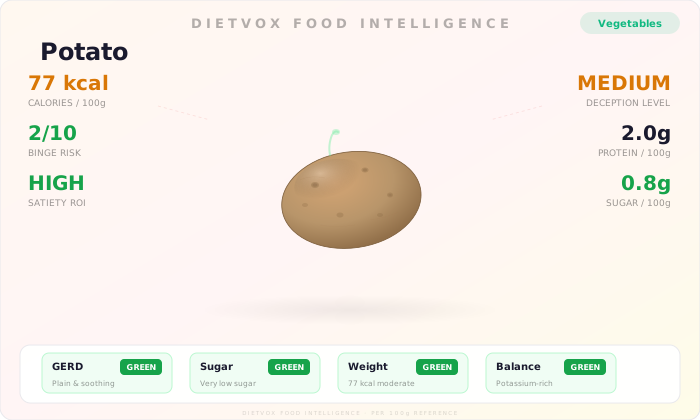
One of the most important principles in a weight loss diet is managing calorie intake without feeling constantly hungry. Foods with low calorie density—meaning they have few calories for their weight—are key. Boiled potato is an excellent example, providing just 77 kcal per 100g USDA FoodData Central (FDC ID 170026). This allows you to eat a satisfyingly large portion for a relatively small caloric cost. Compare this to 100g of French fries, which can contain over 312 kcal, or potato crisps at a staggering 536 kcal USDA FoodData Central (FDC ID 170940). Choosing low-energy-density foods is a strategy recommended by health authorities like the CDC healthy weight guidance for sustainable weight management.
The Satiety Factor: A Powerful Tool
Perhaps the most compelling source support for including potato in a weight loss plan is its effect on fullness, or satiety. A landmark source review listed in the European Journal of Clinical Nutrition developed a "Satiety Index" for common foods. Of all the foods tested, boiled potatoes were found to be the most filling, scoring more than three times higher on the satiety scale than white bread PubMed.
This high satiety is likely due to a combination of its water content, fibre, and the presence of proteinase inhibitor 2 (PI2), a compound thought to enhance the release of cholecystokinin (CCK), a hormone that signals fullness. By promoting a strong sense of satiety, potato can help you eat fewer calories overall, making it easier to maintain the calorie deficit required for weight loss.
The Crucial Role of Cooking Method
The way a potato is prepared is the single most important factor determining its place in a weight loss diet. This is the primary reason for its AMBER, not GREEN, rating.
- Best for Weight Loss: Boiling, steaming, and baking (without oil) are the ideal methods. They keep the calorie count low and preserve the potato's beneficial properties.
- Worst for Weight Loss: Frying (as in chips or French fries) and roasting with large amounts of oil dramatically increase the calorie and fat content. Similarly, mashing with butter, cream, or cheese adds significant calories.
Additionally, cooking and then cooling a potato increases its resistant starch content. Resistant starch is not fully digested in the small intestine, so it provides fewer calories and acts like a prebiotic fibre, feeding beneficial gut bacteria. This can support metabolic health, which is beneficial during a weight loss journey PubMed.
Nutritional Profile for a Weight Loss Diet
Beyond its calorie and satiety profile, potato offers valuable nutrients that support overall health while dieting.
Per 100g, boiled potato provides USDA FoodData Central (FDC ID 170026):
- Carbohydrates: 17.5g. These provide the body with essential energy.
- Dietary Fibre: 2.2g. The skin is a particularly rich source of fibre. Dietary fibre is crucial for weight management as it promotes satiety and supports digestive regularity MedlinePlus fiber overview.
- Protein: 2.0g. While not a high-protein food, it contributes to the overall daily intake.
- Potassium: 421mg. This is a significant amount, representing about 12% of the daily recommended intake. Potassium is a vital electrolyte that helps regulate fluid balance and blood pressure NHS.
Addressing Common Myths about Potato and Weight Loss
Myth: "Potatoes are just empty carbs that make you fat."
Fact: This is a common misconception. As shown above, potato is a source of several important micronutrients, including potassium and vitamin C. The association with weight gain stems from popular preparation methods like frying and adding high-fat toppings, not from the potato itself. A healthy diet, as defined by the World Health Organization (WHO), includes starchy staples like potato as a source of energy.
Myth: "You must avoid all carbs to lose weight."
Fact: While low-carbohydrate diets can be effective for some, they are not the only path to weight loss. A balanced approach that includes nutrient-dense, high-satiety carbohydrates can be more sustainable and enjoyable long-term. The key is to choose whole-food sources of carbohydrates and control portion sizes within a calorie-controlled eating plan.
Practical Tips for Including Potato in Your Weight Loss Diet
To leverage the benefits of potato for weight loss, follow these practical guidelines:
- Prioritise Preparation: Always choose boiled, steamed, or baked potatoes. If baking, prick the skin and bake until tender without adding any oil. An air fryer can also produce a crispy texture with minimal fat.
- Keep the Skin On: The skin is a concentrated source of dietary fibre and nutrients. Scrub the potato well before cooking and eat the skin to maximise its health benefits.
- Practice Portion Control: While filling, potatoes are still a source of calories and carbohydrates. A typical portion for a meal might be one medium-sized potato (around 150-200g). Using a kitchen scale can help with accuracy, aligning with the food's 'Medium' tracking difficulty.
- Cool It Down: To boost resistant starch, allow your cooked potatoes to cool completely before eating. This makes them a great base for a healthy potato salad made with a vinegar-based dressing, herbs, and non-starchy vegetables instead of mayonnaise.
- Build Balanced Meals: Pair your potato with a source of lean protein (like grilled chicken, fish, or beans) and a large serving of non-starchy vegetables (like broccoli, leafy greens, or bell peppers). This creates a highly satiating, nutrient-dense meal that helps manage blood sugar levels and keeps you full for hours.
Disclaimer: This article is for informational purposes only and does not constitute medical advice. Always consult a healthcare provider before making changes to your diet, especially if you have a medical condition.
Scan your foods with the DietVox app to get personalized ratings based on your specific dietary needs and health goals.
Last reviewed: June 2026
How It Works
Why Potato is Rated AMBER
Potato earns an AMBER rating for a Weight Loss Diet due to a conflict between its highly beneficial properties and the significant potential for misuse. The rating balances these key factors:
- Exceptional Satiety at Low Calorie Density: When boiled or steamed, potato is one of the most filling foods you can eat per calorie, providing just 77 kcal per 100g. source review has shown that it ranks highest on the satiety index, which is a powerful advantage for controlling hunger and reducing overall calorie intake PubMed.
- Preparation Method is Non-Negotiable: The AMBER rating serves as a caution. The benefits of potato are completely negated by common preparation methods. Frying, roasting with excess oil, or adding high-fat ingredients like butter and cream drastically increases the calorie density, turning a weight-loss-friendly food into a major obstacle.
- Carbohydrate Content Requires Mindfulness: As a starchy vegetable, potato is a significant source of carbohydrates. While essential for energy, portion sizes must be managed within a calorie-controlled diet to ensure a consistent energy deficit for weight loss. Its moderate Glycemic Index means it can impact blood sugar, which is another reason for mindful consumption rather than unrestricted eating.
Scan any food. Get an instant RED/AMBER/GREEN rating.
DietVox analyses every food across 4 diet protocols — no guesswork.
Try DietVox Free →Try These Instead
Safer alternatives that won't trigger your symptoms.
Frequently Asked Questions
How does the cooking method for potato affect its suitability for weight loss?
The cooking method is the most critical factor. Boiling, steaming, or baking without oil keeps a potato low in calories (around 77 kcal/100g) and preserves its high satiety value, making it excellent for weight loss. Frying or adding high-fat ingredients like butter and cream can increase the calorie count by 4-7 times, making it detrimental to a weight loss plan.
Is a baked potato a good choice for a weight loss diet?
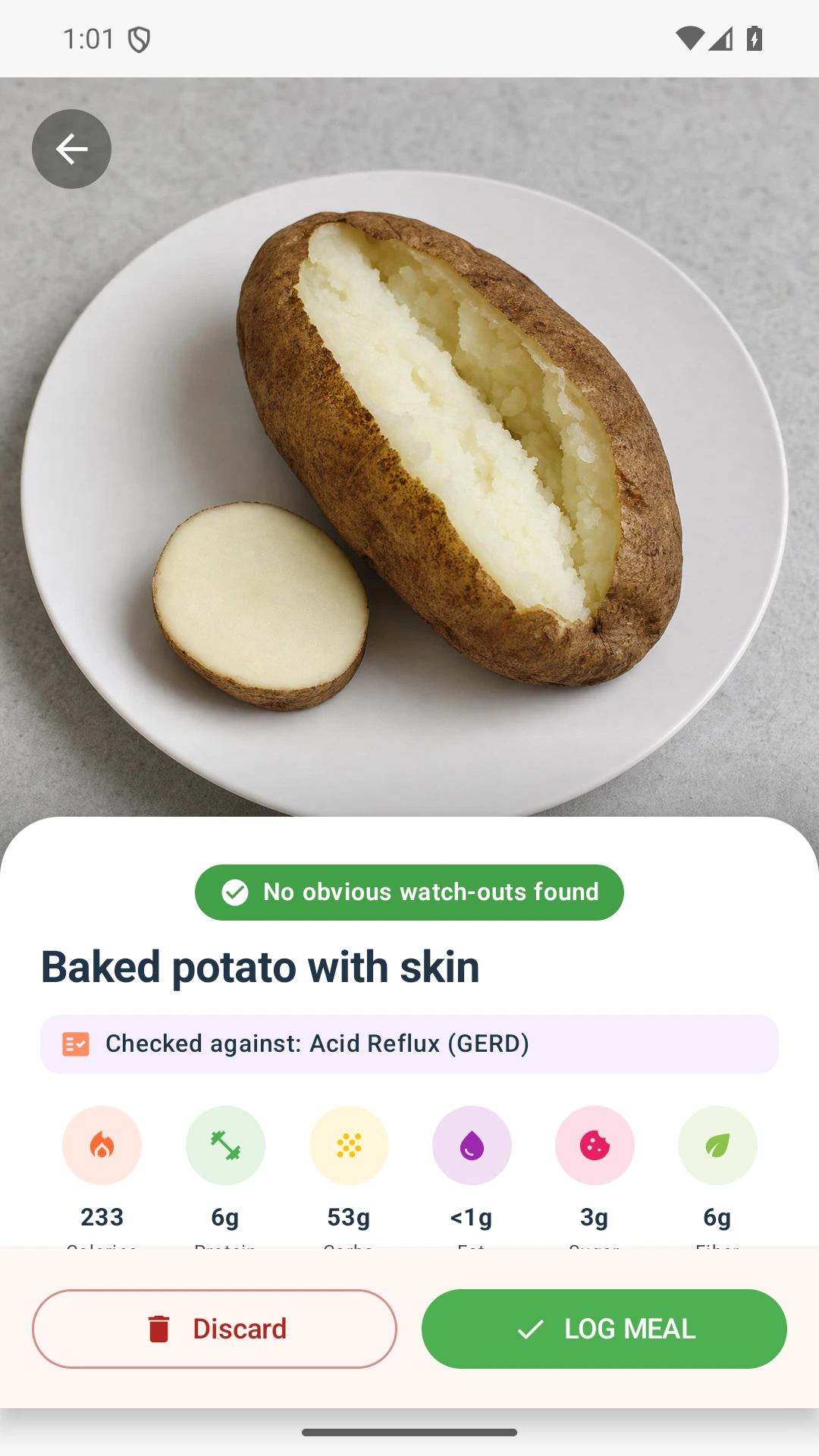
Yes, a plain baked potato can be a very good choice. It retains the low calorie density and high satiety of a boiled potato. The key is what you put on it. Avoid high-calorie toppings like butter, sour cream, and excessive cheese. Instead, top it with Greek yoghurt, salsa, chives, or a serving of beans for a nutritious, filling meal.
Why is potato so filling compared to other foods?
direct source reviews show boiled potato is exceptionally filling, a quality known as high satiety. This is attributed to its high water content, volume, and the presence of fibre and a unique compound called Proteinase Inhibitor 2 (PI2). This combination helps to slow digestion and send strong fullness signals to the brain, helping to reduce overall calorie consumption.
Should I eat the potato skin when trying to lose weight?
Absolutely. The skin of a potato is a concentrated source of dietary fibre and nutrients like potassium. Fibre is particularly important for weight loss as it increases feelings of fullness and supports good digestive health. Be sure to scrub the potato thoroughly before cooking and enjoy the skin-on benefits.