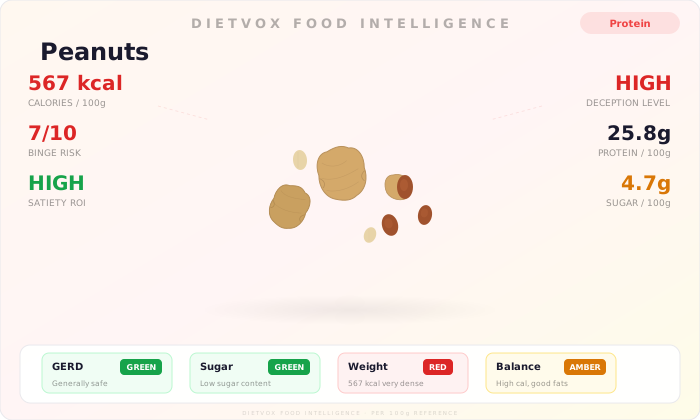
DietVox Rating: AMBER

Peanuts are rated AMBER for a Weight Loss Diet. This rating signifies that while peanuts offer significant nutritional benefits that can support weight management, their high calorie density necessitates careful portion control. The conversation around peanuts weight loss is often contradictory; they are high in fat and calories, yet available sources suggest they do not contribute to weight gain when consumed mindfully. This DietVox analysis breaks down the science to explain why peanuts earn a cautionary, yet positive, AMBER rating.

An AMBER rating is a call for awareness, not avoidance. It indicates that the food can be a valuable part of your diet, but its properties—in this case, high energy density—require you to be diligent with tracking and portioning to stay within your daily caloric goals.

Peanuts and Weight Loss: A Nutritional Analysis

To understand the role of peanuts in a weight loss plan, we must first examine their nutritional composition. According to the USDA FoodData Central, 100g of raw peanuts contain:

  • Calories: 567 kcal
  • Protein: 25.8 g
  • Fat: 49.2 g
  • Carbohydrates: 16.1 g
  • Dietary Fibre: 8.5 g

Source: USDA FoodData Central

This profile reveals a food that is rich in protein, a critical macronutrient for weight management. Protein contributes to the preservation of lean muscle mass during calorie restriction and has a higher thermic effect of food compared to fats and carbohydrates, meaning your body uses more energy to digest it Source: Harvard Health Publishing.

The fat content, while high, is predominantly composed of monounsaturated and polyunsaturated fats. These are considered heart-healthy fats that play essential roles in the body. However, at 9 kcal per gram, fat is the primary driver of the high calorie count in peanuts, making portion awareness paramount Source: NHS.

Debunking Myths: Peanuts in a Weight Loss Context

Misconceptions about peanuts can derail an otherwise healthy eating plan. Let's address the most common myths with direct source support.

Myth: "Peanuts are 'fattening' and must be completely avoided on a diet."

This is the most pervasive myth. While a large, uncontrolled portion of peanuts can certainly contribute to a calorie surplus, the source support points in the opposite direction for moderate consumption. Systematic reviews of direct trials have consistently shown that including peanuts and other nuts in the diet does not lead to expected weight gain. In many cases, they are associated with better weight management. This effect is largely attributed to their powerful impact on satiety, which can lead to a compensatory reduction in the intake of other, less nutritious foods Source: PubMed.

Myth: "All peanut products offer the same benefits."

This is a critical distinction. The health benefits discussed here apply primarily to raw, dry-roasted, or natural peanuts without added ingredients. Many commercial peanut products are designed for hyper-palatability, not health.

  • Salted Peanuts: Can contribute to excessive sodium intake, which is linked to high blood pressure.
  • Honey-Roasted/Candied Peanuts: Contain significant amounts of added sugars, which add empty calories and can undermine weight loss efforts, as advised against by global health bodies Source: WHO.
  • Processed Peanut Butters: Often contain added sugars, hydrogenated oils (trans fats), and palm oil. Always check the label and opt for brands containing only peanuts and perhaps a small amount of salt.

Practical Strategies: Integrating Peanuts into Your Diet

To leverage the benefits of peanuts without compromising your weight loss goals, apply these practical strategies.

Master Portion Control

The single most important rule is to control your portion size. A typical recommended serving is around 28-30 grams (approximately 1 ounce), which is about a small, cupped handful. This serving provides roughly 160-170 calories. Due to the high 'Tracking Difficulty' of peanuts, it is highly advisable to use a digital food scale for accuracy rather than estimating by hand. This removes the guesswork and ensures you are not inadvertently consuming hundreds of extra calories.

Make Smart Substitutions

The direct source support for peanuts and weight management is strongest when they are used to replace other foods, not simply added on top of your existing diet. Swap out a bag of crisps, a chocolate bar, or a sugary cereal bar for a measured portion of peanuts. This swap increases your intake of protein, fibre, and healthy fats while reducing your intake of refined carbohydrates, unhealthy fats, and added sugars.

Choose the Right Type

As mentioned, the form of peanuts matters. Stick to these options for the best results:

  • Raw peanuts
  • Dry-roasted, unsalted peanuts
  • Natural peanut butter (check the label for 100% peanuts)

Time Your Snack for Maximum Impact

Consuming peanuts as a mid-morning or mid-afternoon snack can be particularly effective. Their high satiety value can help bridge the gap between meals, preventing the intense hunger that often leads to poor food choices or overeating at your next meal CDC healthy weight guidance.


Disclaimer: This article is for informational purposes only and does not constitute medical advice. Always consult a healthcare provider before making changes to your diet, especially if you have a medical condition.

Scan your foods with the DietVox app to get personalized ratings based on your specific dietary needs and health goals.

Last reviewed: June 2026

How It Works

Why Peanuts are Rated AMBER

DietVox's AMBER rating for peanuts on a Weight Loss Diet is based on a careful analysis of their conflicting properties. They present both a significant opportunity and a potential risk, a duality captured by the AMBER classification.

The Calorie Conundrum: High Energy Density

The primary reason for caution is the high calorie density of peanuts. At 567 kcal per 100g, they pack a substantial amount of energy into a small volume Source: USDA FoodData Central. For anyone managing a calorie deficit for weight loss, consuming energy-dense foods without strict portion control can easily lead to exceeding daily targets. This high density is what prevents peanuts from earning a GREEN rating and makes mindful consumption essential.

The Satiety Solution: High Protein and Fibre

Counterbalancing the calorie density is the exceptional Satiety Return on Investment (Satiety ROI). Peanuts deliver 25.8g of protein and 8.5g of dietary fibre per 100g. This powerful combination is highly effective at promoting feelings of fullness and satisfaction.

  • Protein is widely recognized as the most satiating macronutrient. It reduces levels of the hunger hormone ghrelin and boosts satiety signals Source: PubMed.
  • Fibre adds bulk to food and slows down digestion, which helps to stabilise blood sugar levels and prolong feelings of fullness Source: NHS.

This high satiety means that the calories in peanuts are more 'effective' at curbing hunger than an equivalent number of calories from a low-protein, low-fibre snack.

The Clinical Verdict: No source support of Weight Gain

Crucially, the AMBER rating is supported by robust direct source support. Systematic reviews and meta-analyses of randomized controlled trials (RCTs)—the gold standard in source review—have investigated the impact of nut consumption on body weight. The consensus from these source reviews is that, when substituted for other foods, peanut and nut consumption does not lead to weight gain and may even support weight loss efforts. This is likely due to a combination of their strong satiating effect, incomplete energy absorption, and an increase in resting energy expenditure PubMed search for Cochrane systematic reviews.

The Tracking Trap: High Deception Level

Finally, the 'Health Forensics' analysis identifies a High Tracking Difficulty. Peanuts are small, easy to eat, and palatable, making it incredibly easy to consume far more than intended. A 'handful' is not a standard unit of measurement and can vary by 50-100% from person to person. This high deception level makes them a risk for mindless eating. Therefore, the AMBER rating serves as a reminder that accurate tracking, preferably with a digital scale, is non-negotiable for incorporating peanuts successfully into a weight loss diet.

Scan any food. Get an instant RED/AMBER/GREEN rating.

DietVox analyses every food across 4 diet protocols — no guesswork.

Try DietVox Free →

Try These Instead

Safer alternatives that won't trigger your symptoms.

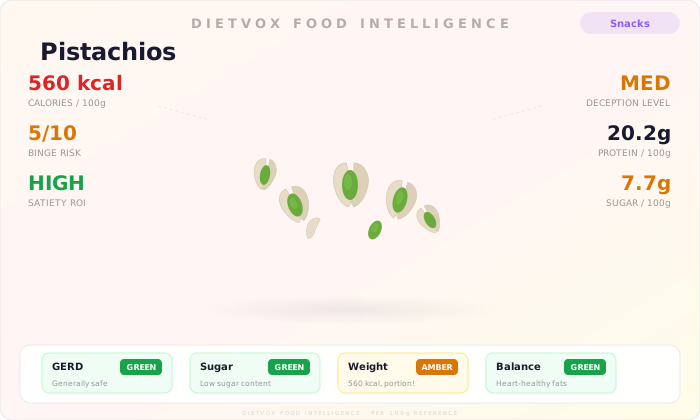
Pistachios illustration

Pistachios

560 kcal Snacks
GREEN GERD
GREEN Sugar
AMBER Weight
GREEN Balance
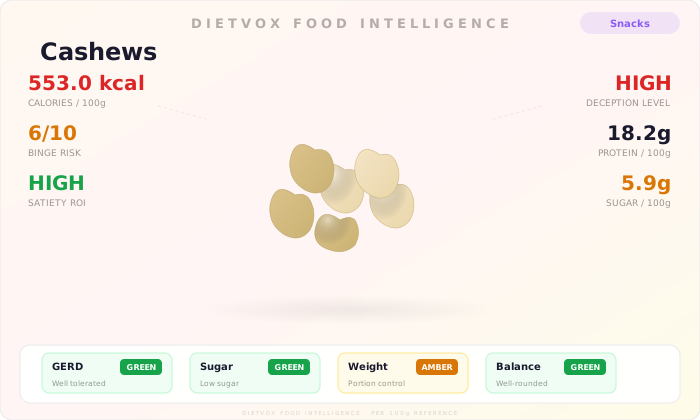
Cashews illustration

Cashews

553 kcal Snacks
GREEN GERD
GREEN Sugar
AMBER Weight
GREEN Balance
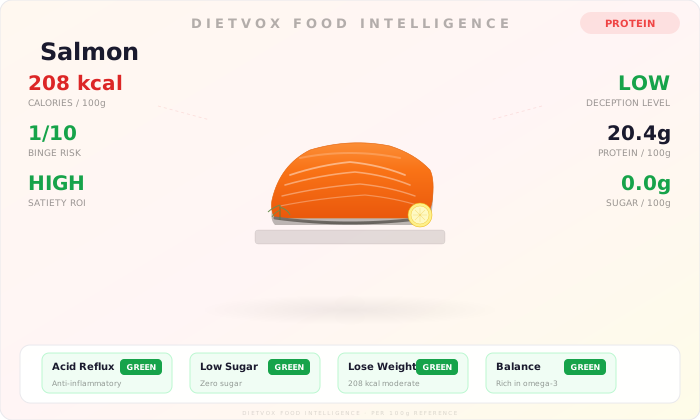
Salmon illustration

Salmon

208 kcal Protein
GREEN GERD
GREEN Sugar
AMBER Weight
GREEN Balance

Frequently Asked Questions

What is a good portion size for peanuts when trying to lose weight?

A sensible portion size for peanuts on a weight loss diet is approximately 28-30 grams (1 ounce), which contains about 160-170 calories. Due to their high calorie density, it is strongly recommended to use a digital food scale for accuracy rather than estimating a 'handful'.

Are roasted and salted peanuts as good for weight loss as raw peanuts?

Dry-roasted peanuts have a similar nutritional profile to raw peanuts. However, oil-roasted peanuts contain extra fat and calories. Salted peanuts contribute to higher sodium intake, which is not ideal for overall health. For weight loss, choose raw or dry-roasted, unsalted peanuts to avoid hidden calories and sodium.

Will eating peanut butter make me gain weight?

Natural peanut butter, which contains only peanuts, can be part of a weight loss diet for the same reasons as whole peanuts—it's high in protein and fibre, which aids satiety. However, it's also very calorie-dense. Portion control (e.g., 1-2 tablespoons) is crucial. Avoid brands with added sugars, hydrogenated oils, or palm oil, as these add empty calories and unhealthy fats.

How do peanuts help with hunger on a diet?

Peanuts are effective at managing hunger due to their high content of protein (25.8g/100g) and dietary fibre (8.5g/100g). Protein is the most satiating macronutrient, and fibre slows digestion, both of which lead to a prolonged feeling of fullness. This can help you eat less overall and makes it easier to adhere to a calorie-controlled diet.

Related Reading