DietVox Rating: AMBER
When considering cashews for weight loss, DietVox rates these popular nuts as AMBER. This rating signifies that while cashews are a calorie-dense food requiring mindful consumption, they can still be a valuable part of a balanced weight loss diet when consumed in appropriate portions. Despite their high caloric content, sources suggest that nut consumption, including cashews, does not necessarily lead to weight gain and can even support weight management efforts due to their unique nutritional profile PubMed.
Our AMBER rating for cashews for weight loss reflects a balanced perspective: acknowledging their energy density while highlighting their significant contributions to satiety through protein and fibre. This article will delve into the nutrition profile behind cashews, explain why they receive an AMBER rating, and provide practical, practical strategies for incorporating them into your weight loss journey.
The Nutritional Profile of Cashews for Weight Loss
Understanding the macronutrient breakdown of cashews is crucial for anyone on a Weight Loss Diet. While often perceived as 'fattening,' a closer look reveals a complex nutritional package that, when managed correctly, can support your health and weight goals.
Calorie Density: The Primary Consideration
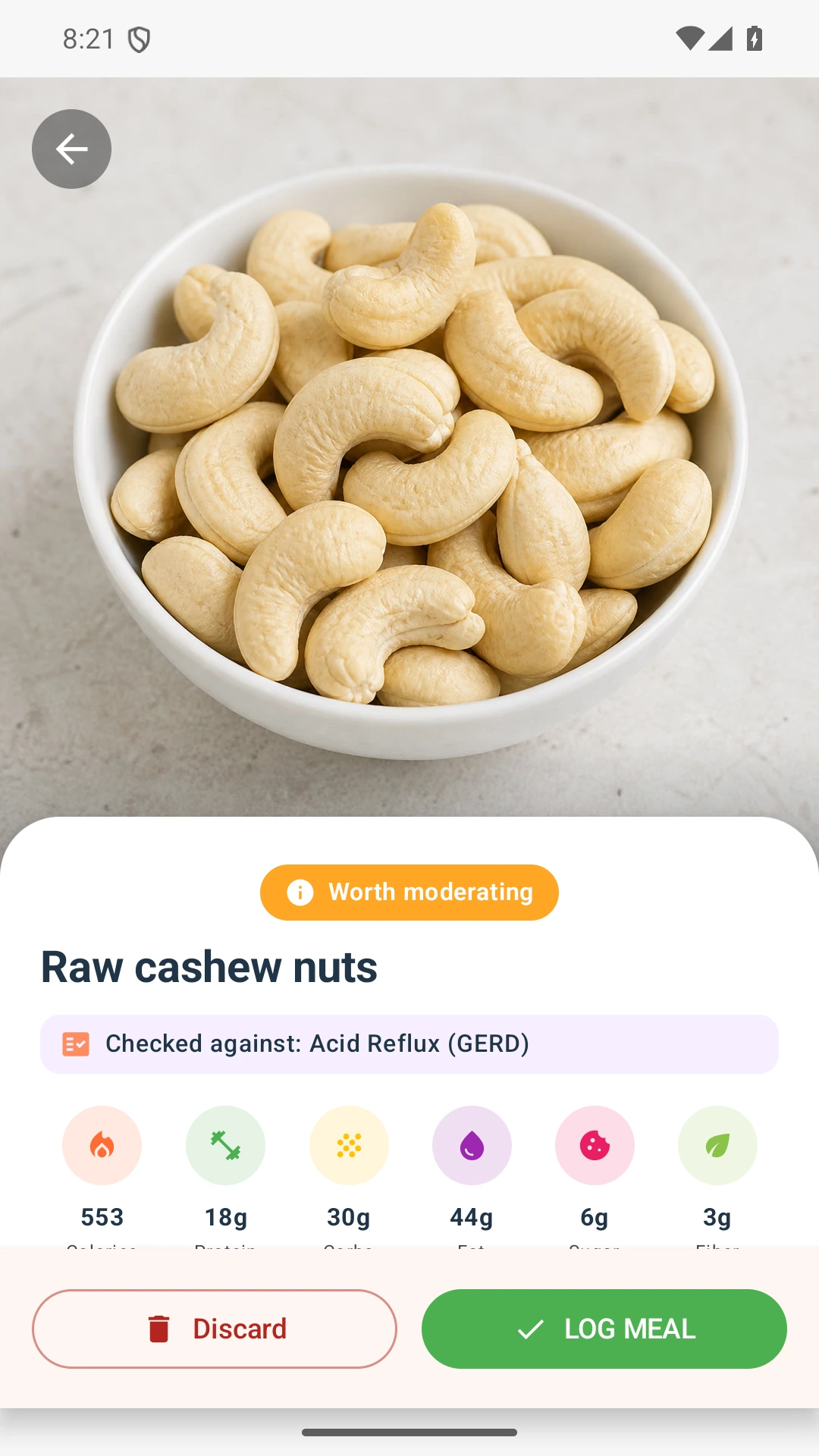
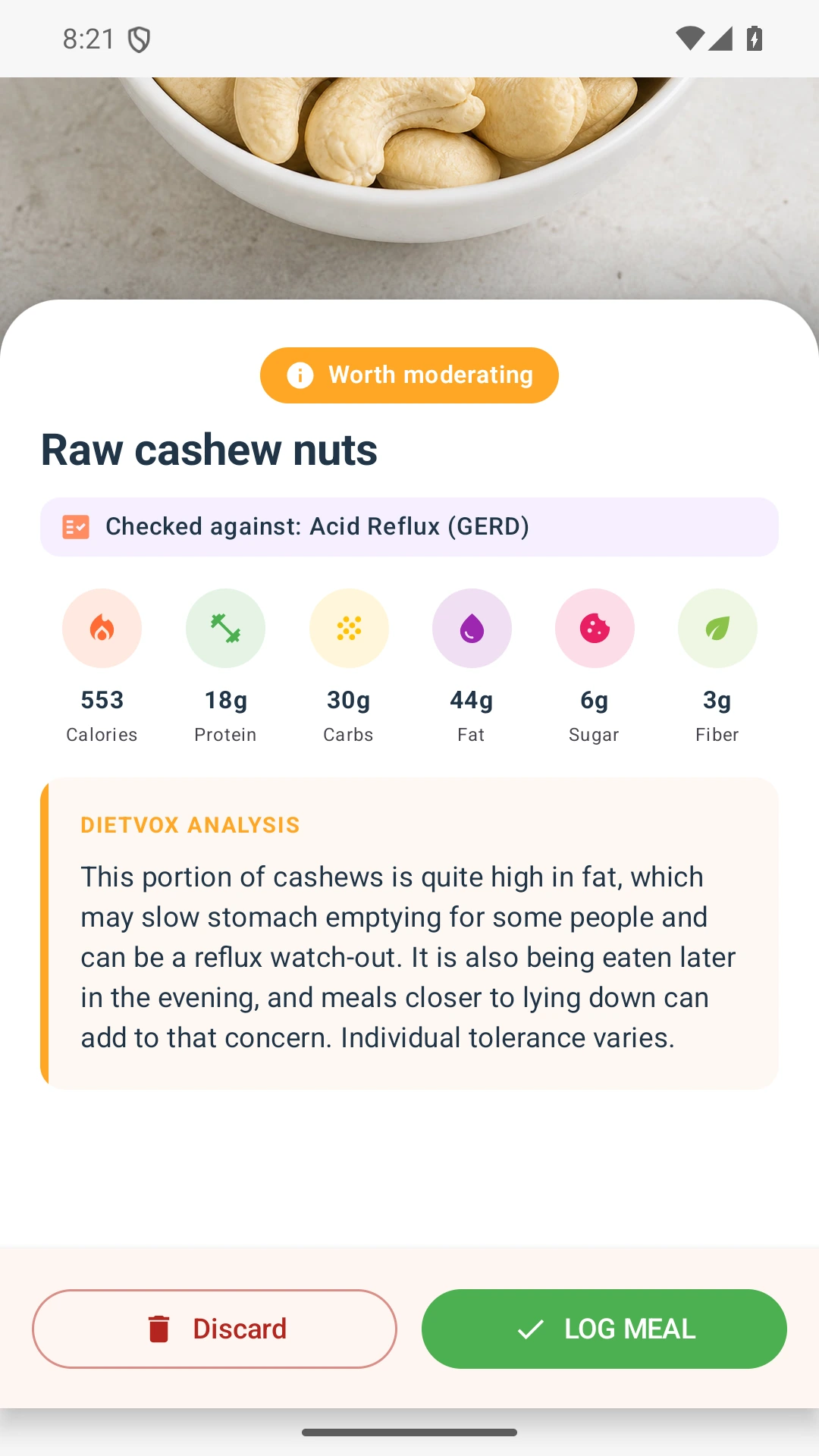
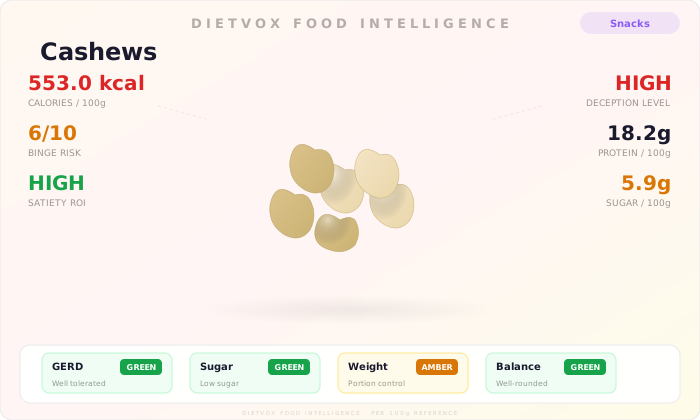
Cashews are undeniably calorie-dense. Per 100g, they contain 553 kcal USDA FoodData Central. This high energy content is primarily driven by their fat and carbohydrate composition. For individuals managing caloric intake for weight loss, this figure immediately flags the importance of portion control. A small handful can quickly add up, making accurate tracking challenging without a digital scale, which contributes to their 'HIGH' Tracking Difficulty rating in our Health Forensics.
Protein and Fibre: Allies for Satiety
One of the strongest arguments for including cashews in a Weight Loss Diet is their impressive protein and fibre content. Per 100g, cashews deliver 18.2g of protein and 3.3g of dietary fibre USDA FoodData Central.
- Protein: Protein is well-known for its role in satiety, helping you feel fuller for longer and reducing overall calorie intake Harvard Health Publishing. It also plays a vital role in preserving lean muscle mass during weight loss CDC healthy weight guidance.
- Fibre: Dietary fibre adds bulk to your diet, aids digestion, and contributes to a sustained feeling of fullness, further supporting appetite control MedlinePlus fiber overview. The combination of protein and fibre gives cashews a 'HIGH' Satiety ROI (Return on Investment), meaning they offer excellent fullness per calorie when consumed appropriately.
Fat Content: Quality Over Quantity
Cashews contain 43.9g of fat per 100g, with 7.8g being saturated fat USDA FoodData Central. While this is a significant amount, it's important to consider the type of fats present. Cashews are rich in monounsaturated and polyunsaturated fats, which are considered 'healthy fats' that can contribute to heart health and overall well-being when consumed in moderation Harvard Health Publishing. These fats are energy-dense, which is why portion control remains critical for weight loss.
Carbohydrates and Sugars
With 30.2g of carbohydrates and 5.9g of sugars per 100g USDA FoodData Central, cashews offer a moderate carbohydrate load. The presence of fibre helps to slow the absorption of these carbohydrates, contributing to more stable blood sugar levels compared to refined carbohydrate sources American Diabetes Association food and nutrition guidance. This can be beneficial for preventing energy crashes and subsequent cravings, which are common pitfalls in a Weight Loss Diet.
Why Cashews are Rated AMBER for Weight Loss
Our AMBER rating for cashews stems from a comprehensive evaluation of their nutritional impact on weight management. The core mechanism is a balancing act between their high calorie density and their potent satiety-inducing properties.
Cashews provide 553 kcal/100g, placing them firmly in the 'HIGH' Calorie Density category. However, this fact alone does not dictate their role in weight loss. A growing body of source-reviewed literature, including systematic reviews and meta-analyses, indicates that regular nut consumption, contrary to popular belief, does not lead to weight gain and may even be associated with a lower risk of obesity PubMed.
The key lies in their unique matrix of protein (18.2g) and fibre (3.3g), which promotes significant satiety. When you eat cashews, their protein and fibre content help you feel full and satisfied, which can prevent overeating or snacking on less nutritious, higher-calorie foods later MedlinePlus weight control. A typical 30g portion of cashews delivers approximately 166 kcal – a satisfying snack that can effectively displace less healthy alternatives like processed crisps or sugary biscuits. This makes them a strategic choice for managing hunger and cravings within a calorie-controlled framework.
In essence, while the high caloric value of cashews demands careful portioning, their ability to deliver substantial nutrients and promote fullness makes them a valuable tool in a Weight Loss Diet. The AMBER rating signifies that with awareness and strategy, cashews can positively contribute to your weight loss goals.
Practical Strategies for Including Cashews in a Weight Loss Diet
Making cashews work for your weight loss goals means adopting smart consumption habits. Here’s how to integrate them effectively:
Portion Control is Paramount
Given their high calorie density, strict portion control is the most critical strategy. A standard serving size for cashews for weight loss is typically around 30g (approximately 15-20 whole cashews). This delivers about 166 kcal, a reasonable amount for a snack or a component of a meal. Using a digital food scale is highly recommended for accurate measurement, as eyeballing portions can lead to significant calorie overestimation CDC healthy weight guidance.
Mindful Snacking
Instead of mindlessly eating from a large bag, pre-portion your cashews into small containers or bags. This helps you stick to your desired calorie intake. Combine cashews with lower-calorie, high-volume foods like fresh fruit (e.g., apples, berries) or raw vegetables (e.g., carrot sticks, celery) to enhance satiety without significantly increasing calories CDC healthy weight guidance.
Opt for plain, unsalted, and unroasted cashews whenever possible. Many commercial varieties come with added oils, salt, or sugar, which can increase calorie and sodium content, detracting from your weight loss efforts Harvard Health Publishing.
Incorporating into Meals
Cashews can add flavour, texture, and nutritional boost to various meals without adding excessive calories if used sparingly:
- Salads: A small sprinkle (10-15g) of chopped cashews can add crunch and healthy fats to a salad, making it more satisfying.
- Yogurt or Oatmeal: A few crushed cashews can enhance the protein and fibre content of your breakfast, promoting morning satiety.
- Stir-fries: Add a small amount towards the end of cooking for texture, ensuring you account for the calories in your overall meal plan.
- Cashew Butter: If using cashew butter, measure carefully. A tablespoon can contain around 90-100 kcal, so use it as a spread in moderation USDA FoodData Central.
The Role of Satiety in Preventing Overeating
By choosing cashews as a snack, you leverage their high satiety factor. The protein and fibre content can help stave off hunger pangs between meals, reducing the likelihood of reaching for ultra-processed snacks that offer little nutritional value but contribute significantly to your daily calorie count CDC healthy weight guidance. This strategic displacement of less nutritious foods is a key benefit of including cashews in your Weight Loss Diet.
Common Misconceptions About Cashews and Weight Loss
Several myths persist regarding nuts and weight management. Addressing these can help you make informed dietary choices.
Misconception 1: "All nuts cause weight gain due to their high fat content."
Reality: While cashews (and other nuts) are high in fat and calories, numerous source reviews have shown that regular nut consumption is not associated with weight gain and may even aid in weight loss or maintenance PubMed search for Cochrane review DOI. The fats in cashews are largely healthy monounsaturated and polyunsaturated fats. Furthermore, the fibre and protein content, along with the physical structure of nuts, means that not all calories are fully absorbed, and they contribute significantly to satiety, helping regulate overall food intake MedlinePlus weight control.
Misconception 2: "Cashews are too high in carbs/sugar for a weight loss diet."
Reality: Cashews contain 30.2g of carbohydrates per 100g, with 5.9g as sugars USDA FoodData Central. Compared to many processed snacks, this is a moderate amount, and the presence of fibre helps to mitigate rapid blood sugar spikes. For a Weight Loss Diet, the focus should be on overall dietary quality and calorie balance rather than strictly avoiding foods based on a single macronutrient, especially when that food offers substantial nutritional benefits.
Summary: Making Cashews Work for Your Weight Loss Goals
In summary, cashews are rated AMBER for a Weight Loss Diet by DietVox. This rating reflects their dual nature: a calorie-dense food that demands careful portion control, yet a nutrient-rich powerhouse that can significantly contribute to satiety and overall dietary quality. Their protein, fibre, and healthy fats can help manage hunger, reduce cravings, and support your weight loss journey when consumed mindfully. By focusing on appropriate portion sizes, choosing plain varieties, and integrating them strategically into your meals and snacks, cashews can be a valuable and satisfying addition to your weight loss plan.
Remember, sustained weight loss is about creating a balanced, calorie-controlled diet that you can adhere to long-term. Cashews, with their unique benefits, can certainly play a role in making that journey more enjoyable and effective.
Disclaimer: This article is for informational purposes only and does not constitute medical advice. Always consult a healthcare provider before making changes to your diet, especially if you have a medical condition.
Scan your foods with the DietVox app to get personalized ratings based on your specific dietary needs and health goals.
Last reviewed: June 2026
How It Works
Why Cashews are Rated AMBER
Cashews receive an AMBER rating for a Weight Loss Diet primarily due to their high calorie density, providing 553 kcal per 100g. This means that without strict portion control, they can easily contribute to an excess calorie intake, hindering weight loss efforts. However, this is balanced by their significant benefits:
- High Satiety ROI: Cashews are rich in protein (18.2g/100g) and dietary fibre (3.3g/100g) USDA FoodData Central. Both macronutrients are well-established for their ability to promote fullness and reduce appetite, leading to a higher 'fullness per calorie' ratio Harvard Health Publishing. This satiety can help prevent overeating and snacking on less nutritious foods.
- source-reviewed Weight Management: Despite their caloric density, systematic reviews indicate that regular consumption of nuts, including cashews, does not lead to weight gain and may even be associated with a lower body mass index (BMI) PubMed. This suggests that the body may not absorb all the calories from nuts, and their satiating effects lead to compensatory reductions in calorie intake from other foods.
- Nutrient Density: Cashews provide essential micronutrients like Iron (6.7mg/100g) and Potassium (660mg/100g) USDA FoodData Central, which support overall health during a calorie-restricted diet.
Therefore, while cashews are a very calorie-dense food, their ability to promote satiety and the existing direct source support against their direct contribution to weight gain means they are not discouraged entirely. The AMBER rating highlights the need for careful portion control to harness their benefits without derailing weight loss progress. A 30g portion delivers approximately 166 kcal, offering a satisfying and nutrient-rich snack that can displace less healthy options.
Scan any food. Get an instant RED/AMBER/GREEN rating.
DietVox analyses every food across 4 diet protocols — no guesswork.
Try DietVox Free →Try These Instead
Safer alternatives that won't trigger your symptoms.
Frequently Asked Questions
Are roasted or raw cashews better for weight loss?
For weight loss, plain, raw cashews are generally preferred. Roasted cashews are often prepared with added oils and salt, which can increase their calorie and sodium content without adding significant nutritional benefits. Opting for raw, unsalted cashews helps you manage your calorie and sodium intake more effectively Harvard Health Publishing.
How much is a healthy portion of cashews for weight loss?
A healthy portion of cashews for someone on a weight loss diet is typically around 30 grams, which is approximately 15-20 whole cashews. This portion delivers about 166 kcal and provides a good balance of protein and fibre for satiety without excessive calories. Using a digital food scale for accuracy is highly recommended CDC healthy weight guidance.
Can cashews help with satiety to prevent overeating?
Yes, cashews can significantly contribute to satiety, helping to prevent overeating. Their high content of protein (18.2g/100g) and dietary fibre (3.3g/100g) helps you feel fuller for longer. This sustained feeling of fullness can reduce the likelihood of snacking on less nutritious foods between meals MedlinePlus fiber overview.
What are some healthy ways to eat cashews on a weight loss diet?
To incorporate cashews healthily into a weight loss diet, focus on portion control and mindful consumption. Sprinkle a small, measured amount (e.g., 10-15g) on salads, oatmeal, or yogurt. You can also pair them with high-volume, low-calorie foods like fresh fruit or vegetables for a satisfying snack. Always choose plain, unsalted varieties to avoid unnecessary added calories and sodium Harvard Health Publishing.