DietVox Rating: AMBER

Bread is rated AMBER for a weight loss diet. This means it can be included in moderation with careful portion control, but it is not a food to be eaten freely. The conversation around bread weight loss is often polarising, but a balanced, source-reviewed approach shows that bread does not need to be eliminated to achieve your goals. The key lies in choosing the right type, managing portion sizes, and being mindful of what you pair it with.

An AMBER rating signifies a food that has both positive and negative attributes for the protocol. For bread, the moderate calorie density is a factor to watch, but the fibre content in wholegrain varieties offers significant benefits for satiety, which is a crucial ally in weight management.

Why This Matters: Bread and Weight Management

Scientific consensus supports a balanced approach to weight loss that focuses on overall calorie intake rather than the exclusion of specific food groups CDC healthy weight guidance. Starchy carbohydrates like bread are an important source of energy. The decision to include bread in a weight loss plan should be based on its nutritional profile and its effect on fullness.

Calorie Density and Portion Control

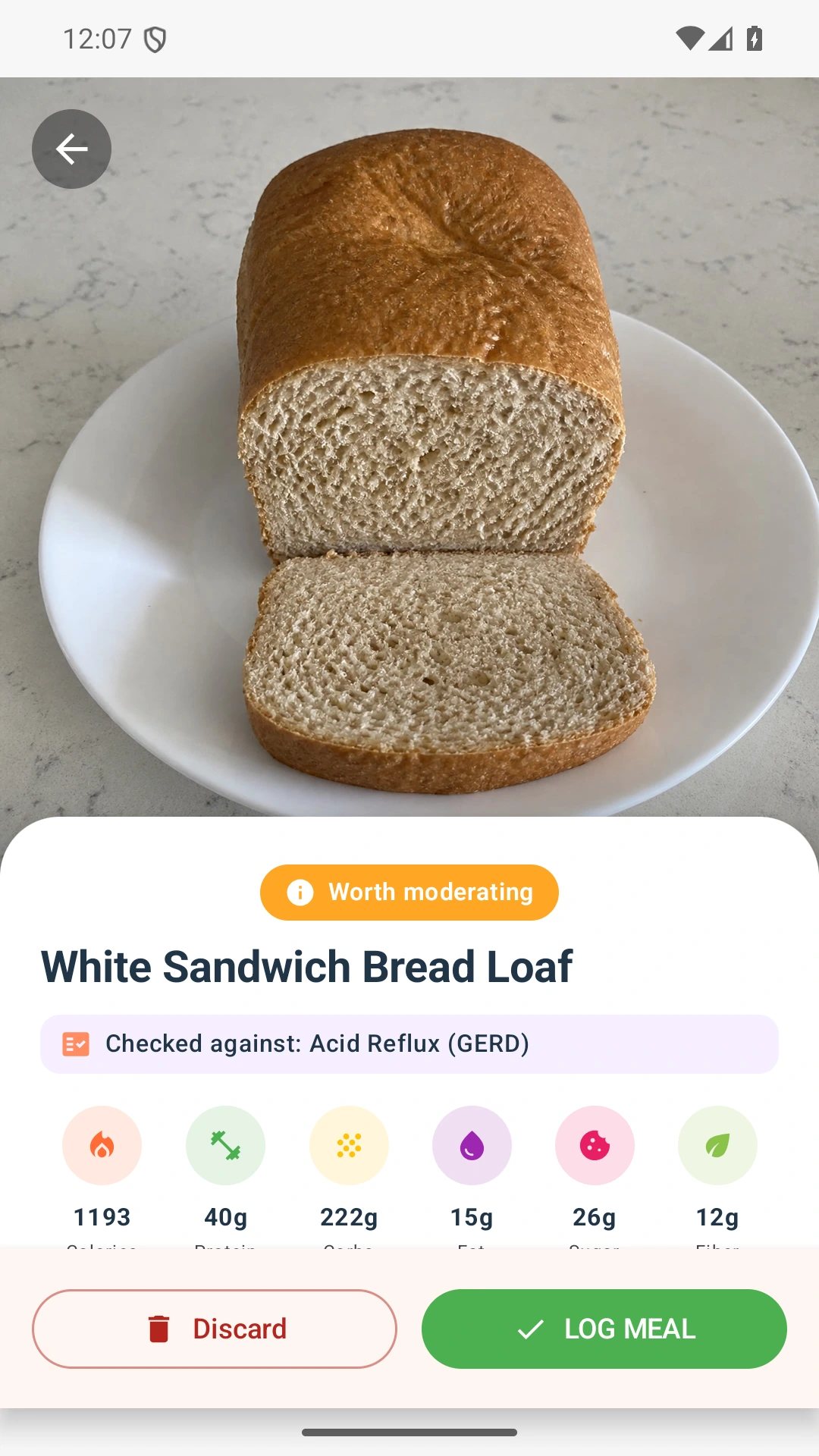
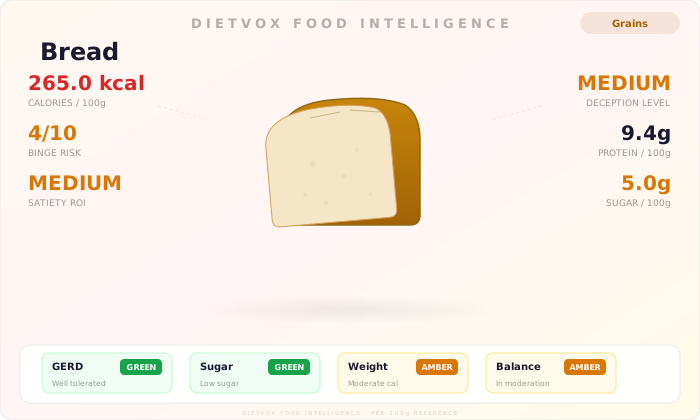
Standard white bread contains approximately 265 calories per 100g, while wholemeal bread is slightly lower at around 247 calories per 100g USDA FoodData Central (FDC ID 172688). DietVox classifies this as a MEDIUM calorie density. While not as high as foods like oils or nuts, these calories can accumulate quickly if portions are not managed.

A typical weight loss plan requires a calorie deficit, meaning you consume fewer calories than your body expends CDC healthy weight guidance. Two medium slices of wholemeal bread (approx. 60-70g) contribute around 150-175 calories, which can fit into most calorie-controlled diets. However, consuming multiple sandwiches or large portions can easily push your daily intake over its target.

The Role of Fibre and Satiety

The most significant advantage of including bread—specifically wholegrain varieties—in a weight loss diet is its fibre content. Wholemeal bread provides about 7g of fibre per 100g, compared to just 2.7g in white bread. Dietary fibre is a critical component for weight management for several reasons:

  1. Increased Satiety: Fibre-rich foods take longer to digest and add bulk to your meal, helping you feel fuller for longer. A systematic review listed in The Journal of Nutrition found that increased fibre intake is associated with a decrease in body weight PubMed. This feeling of fullness, or satiety, can help reduce overall calorie consumption by preventing overeating and snacking between meals.
  2. Blood Sugar Regulation: The fibre in whole grains helps to slow the absorption of sugar into the bloodstream, preventing the sharp spikes and subsequent crashes in blood glucose that can lead to cravings for high-sugar foods MedlinePlus fiber overview.

This high Satiety ROI (Return on Investment) is why wholegrain bread earns its AMBER rating; the calories it contains deliver a substantial feeling of fullness.

Wholegrain vs. Refined White Bread

For a weight loss diet, the choice between wholegrain and white bread is clear. Wholegrain bread is made using the entire grain kernel—the bran, germ, and endosperm. This preserves its natural fibre, vitamins, and minerals. In contrast, refined white bread is made only from the endosperm, stripping away most of the fibre and micronutrients MedlinePlus dietary guidelines overview.

| Feature | Wholemeal Bread (per 100g) | White Bread (per 100g) | Source | | :--- | :--- | :--- | :--- | | Calories | ~247 kcal | ~265 kcal | USDA | | Fibre | ~7.0 g | ~2.7 g | USDA | | Protein | ~13.0 g | ~9.4 g | USDA |

Choosing wholegrain bread provides more nutritional value per calorie, making it a more efficient choice for a calorie-controlled diet.

Practical Tips for Including Bread in a Weight Loss Diet

An AMBER rating requires a strategic approach. Here’s how to incorporate bread into your diet without derailing your progress.

Choose the Right Bread Always opt for bread labelled "100% whole grain" or "wholemeal." Be wary of brown-coloured bread that may simply be white bread with added colouring. Check the ingredients list; the first ingredient should be whole wheat or wholemeal flour.

Master Portion Sizes Stick to the recommended serving of one or two slices. Due to the MEDIUM Tracking Difficulty, it's easy to underestimate portion sizes. A single slice from a commercial loaf can range from 25g to over 45g. For maximum accuracy, especially in the early stages of your diet, consider using a food scale to understand what a true serving looks like.

Smart Toppings and Pairings Bread is often a carrier for high-calorie additions. What you put on your bread is as important as the bread itself.

  • Avoid: Butter, full-fat cheese, sugary jams, and processed meats.
  • Choose: A thin layer of avocado, hummus, natural peanut butter (in moderation), lean protein like turkey or chicken breast, and plenty of salad vegetables like lettuce, tomato, and cucumber. An open-faced sandwich is a great way to enjoy the flavour while cutting the carbohydrate and calorie load in half.

Common Misconceptions About Bread and Weight Loss

Myth: You must cut out all bread to lose weight. Fact: This is untrue. Successful, sustainable weight loss is about creating a consistent calorie deficit over time. Eliminating entire food groups can lead to a restrictive mindset, nutrient deficiencies, and a higher likelihood of abandoning the diet WHO. Including portion-controlled wholegrain bread can make a diet more enjoyable and sustainable.

Myth: Gluten-free bread is better for weight loss. Fact: Unless you have coeliac disease or a diagnosed gluten sensitivity, there is no weight loss benefit to choosing gluten-free bread. In fact, many gluten-free products are made with refined starches and may be lower in fibre and higher in calories and sugar than their whole-wheat counterparts MedlinePlus celiac disease overview.

DietVox Health Forensics: Bread Analysis

  • Calorie Density: MEDIUM (2.65 kcal/g) Bread's calorie density means a 100g serving contains a moderate number of calories. This is higher than fruits and vegetables (low density) but lower than fats and oils (high density). This reinforces the need for portion awareness within a weight loss framework.
  • Satiety ROI: HIGH When choosing wholegrain varieties, the combination of protein (9-13g per 100g) and dietary fibre provides excellent fullness per calorie. This helps control hunger and can lead to a lower overall calorie intake throughout the day, a key mechanism for successful weight management.
  • Tracking Difficulty: MEDIUM Visually estimating the weight of bread slices can be inaccurate, with potential deviations of 15-25%. The density and size of slices vary significantly between brands and types (e.g., a dense sourdough vs. a light sandwich loaf). Using a food scale is recommended for precise tracking.

Disclaimer: This article is for informational purposes only and does not constitute medical advice. Always consult a healthcare provider before making changes to your diet, especially if you have a medical condition.

Scan your foods with the DietVox app to get personalized ratings based on your specific dietary needs and health goals.

Last reviewed: June 2026

How It Works

Why Bread is Rated AMBER for Weight Loss

Bread receives an AMBER rating because it presents a trade-off for those on a weight loss diet. Its moderate calorie density (247-265 kcal/100g) means that calories can add up quickly, requiring strict portion control to maintain a calorie deficit.

However, when wholegrain varieties are chosen, bread provides a high level of satiety due to its significant protein and fibre content. This feeling of fullness can help prevent overeating and support overall dietary adherence. The key to successfully including bread in a weight loss plan is to leverage the satiety benefits of wholegrain options while diligently managing portion sizes to control the calorie contribution.

Scan any food. Get an instant RED/AMBER/GREEN rating.

DietVox analyses every food across 4 diet protocols — no guesswork.

Try DietVox Free →

Try These Instead

Safer alternatives that won't trigger your symptoms.

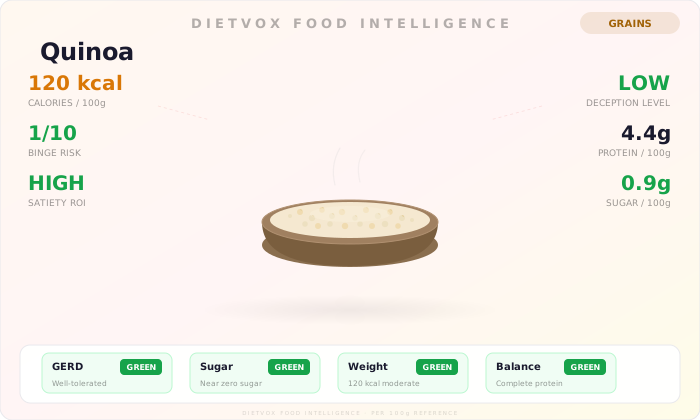
Quinoa illustration

Quinoa

120 kcal Grains
GREEN GERD
GREEN Sugar
AMBER Weight
GREEN Balance
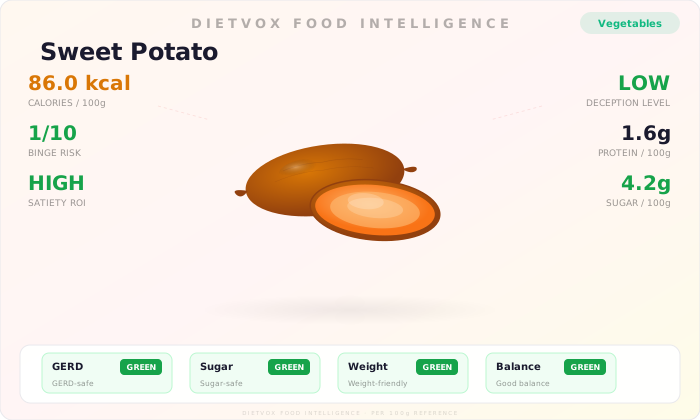
Sweet Potato illustration

Sweet Potato

86 kcal Vegetables
GREEN GERD
GREEN Sugar
AMBER Weight
GREEN Balance
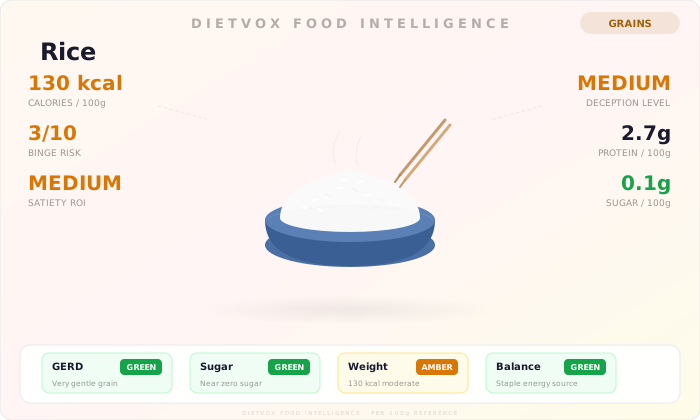
Rice illustration

Rice

130 kcal Grains
GREEN GERD
GREEN Sugar
AMBER Weight
AMBER Balance

Frequently Asked Questions

Which specific type of bread is best for a weight loss diet?

The best choice for a weight loss diet is 100% wholemeal or 100% whole-grain bread. These varieties retain the entire grain kernel, providing more dietary fibre, protein, and micronutrients compared to white bread. The higher fibre content is crucial for promoting satiety and helping you feel full, which aids in overall calorie control MedlinePlus dietary guidelines overview.

How does the fibre in bread actually help with weight loss?

Dietary fibre in bread, particularly soluble fibre, helps with weight loss by slowing down digestion. This does two things: it helps regulate blood sugar levels to prevent energy crashes and cravings, and it increases the feeling of fullness (satiety). Feeling full for longer can help you eat less throughout the day, making it easier to maintain a calorie deficit required for weight loss NHS.

Does toasting bread reduce its calories?

No, toasting bread does not significantly reduce its calorie content. The toasting process, known as the Maillard reaction, primarily removes water from the bread and creates browning and flavour. While the weight of the slice decreases due to water loss, the calories from carbohydrates, protein, and fat remain virtually unchanged. Any minor change is negligible in the context of a diet USDA FoodData Central.

What are some healthy, low-calorie toppings for bread on a weight loss diet?

Instead of high-calorie spreads like butter or jam, opt for nutrient-dense toppings. Good choices include a thin smear of avocado for healthy fats, a layer of hummus for protein and fibre, lean proteins like sliced turkey or chicken, or mashed hard-boiled egg. Loading your bread with vegetables like spinach, tomatoes, cucumbers, and peppers is also an excellent way to add volume and nutrients for very few calories.

Related Reading