Bread scan
AMBER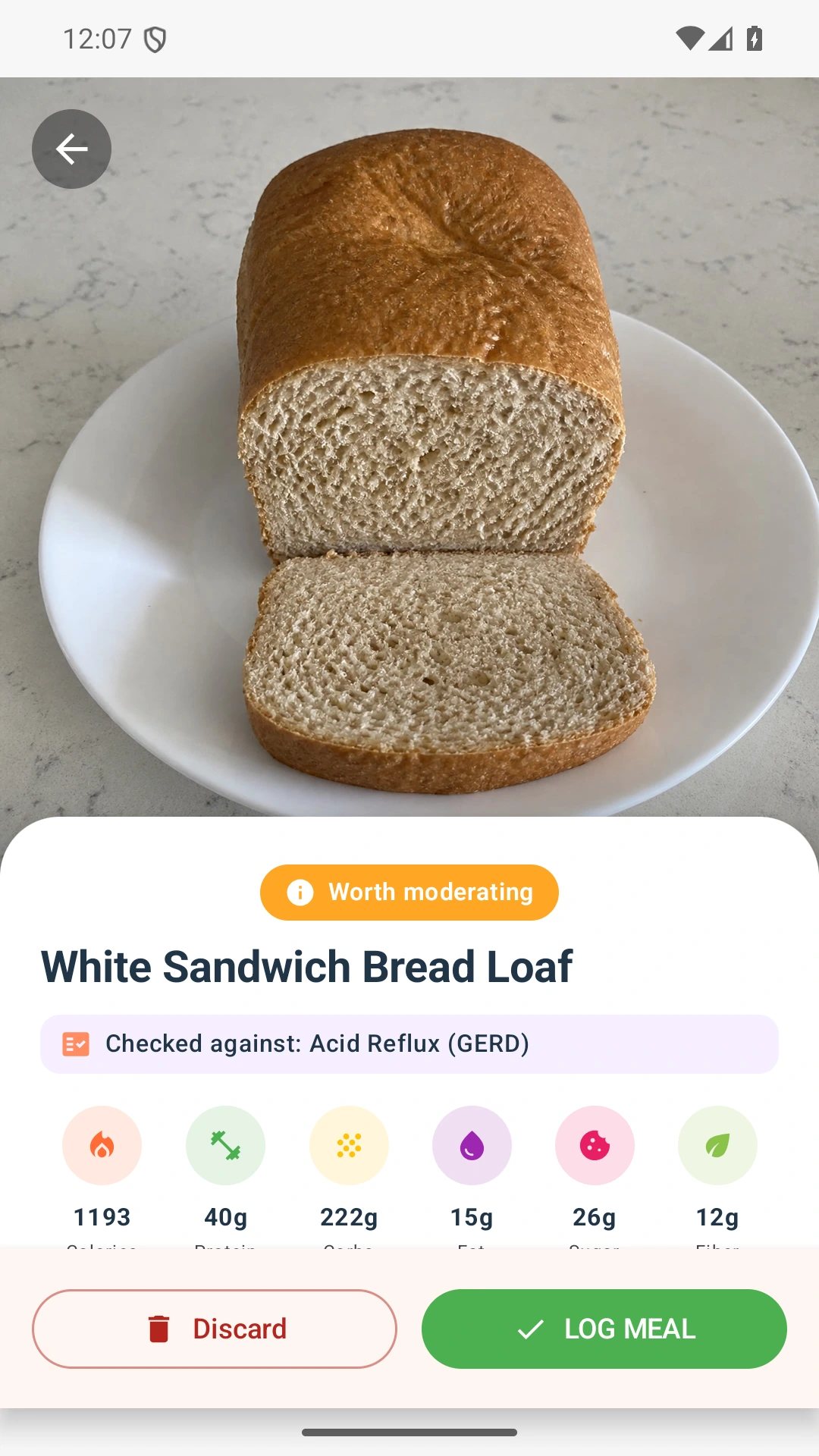
This photograph-specific example may differ from the general food rating elsewhere on this page.
View full analysis and scan recording
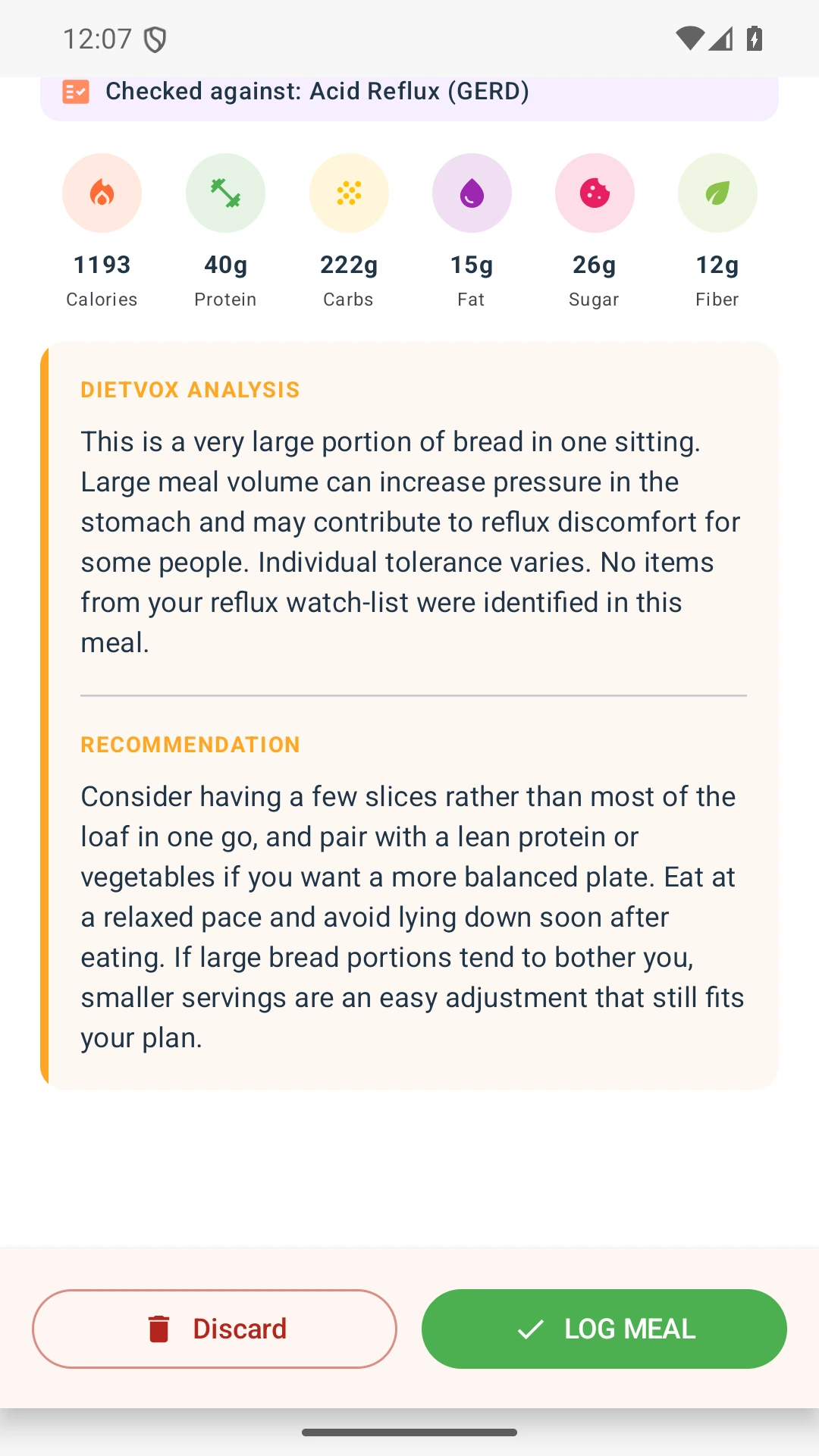
Scan recording
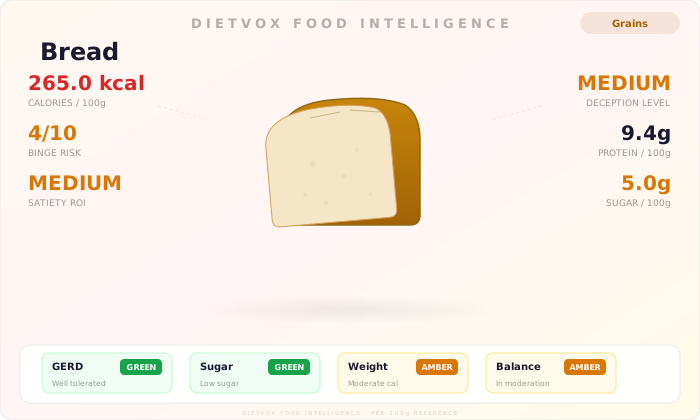
Bread
DietVox overview: Compare Bread across the Acid Reflux, Low Sugar, Weight Loss and Balanced Eating profiles. The ratings describe the plain prepared Bread serving described on this page; a different brand, recipe, portion or preparation may receive a different result.
First-party app output
This photograph-specific example may differ from the general food rating elsewhere on this page.
Scan recording
How to read this page: the four ratings compare the food form described here across DietVox protocols. They are preparation-specific product outputs, not diagnoses or predictions of an individual outcome.
Sources checked 28 July 2026 by DietVox Editorial. This page has not been medically reviewed. Nutrition values use the imported reference profile; match branded and prepared foods to their exact label or data record.
Scan your food to eat smarter with DietVox

 Scan to download
Bread is GREEN in the DietVox Acid Reflux profile for the plain prepared Bread serving described on this page. Personal symptom triggers and the complete preparation can differ.
View the full Acid Reflux Diet Card →Bread is GREEN in the DietVox Low Sugar profile for the plain prepared Bread serving described on this page. Added sugar, total sugar, serving size and the exact label can differ.
View the full Low Sugar Diet Card →DietVox reference classification for Bread; compare the matching serving basis, exact product and complete preparation.
DietVox comparison score for Bread; it does not predict an individual's appetite response.
DietVox comparison score for Bread; labels, recipes and portioning methods can change tracking accuracy.
The displayed reference profile lists 265 kcal and 49 g carbohydrate per 100 g. These are imported reference-profile values, not an exact verified USDA record for every product or preparation.
For the DietVox Weight Loss profile, Bread is rated AMBER. Bread is AMBER in the DietVox Weight Loss profile for the plain prepared Bread serving described on this page. The portion and the wider eating pattern determine how the food fits an individual plan. Its 265 kcal per 100 g reference value can help compare portions, but no single food determines weight loss. These are imported reference-profile values, not an exact verified USDA record for every product or preparation.
Scan your food to eat smarter with DietVox
Scan to download