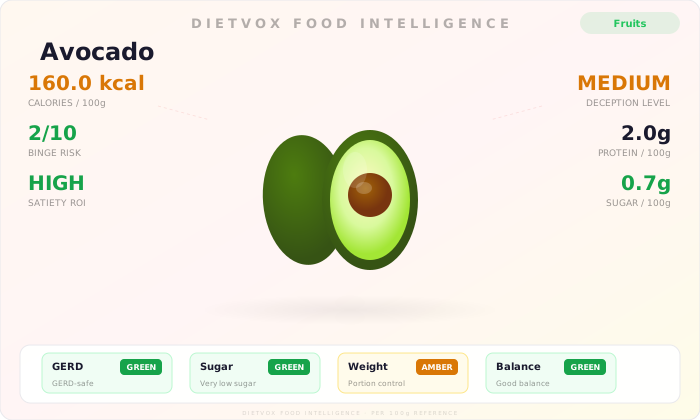
DietVox Rating: AMBER

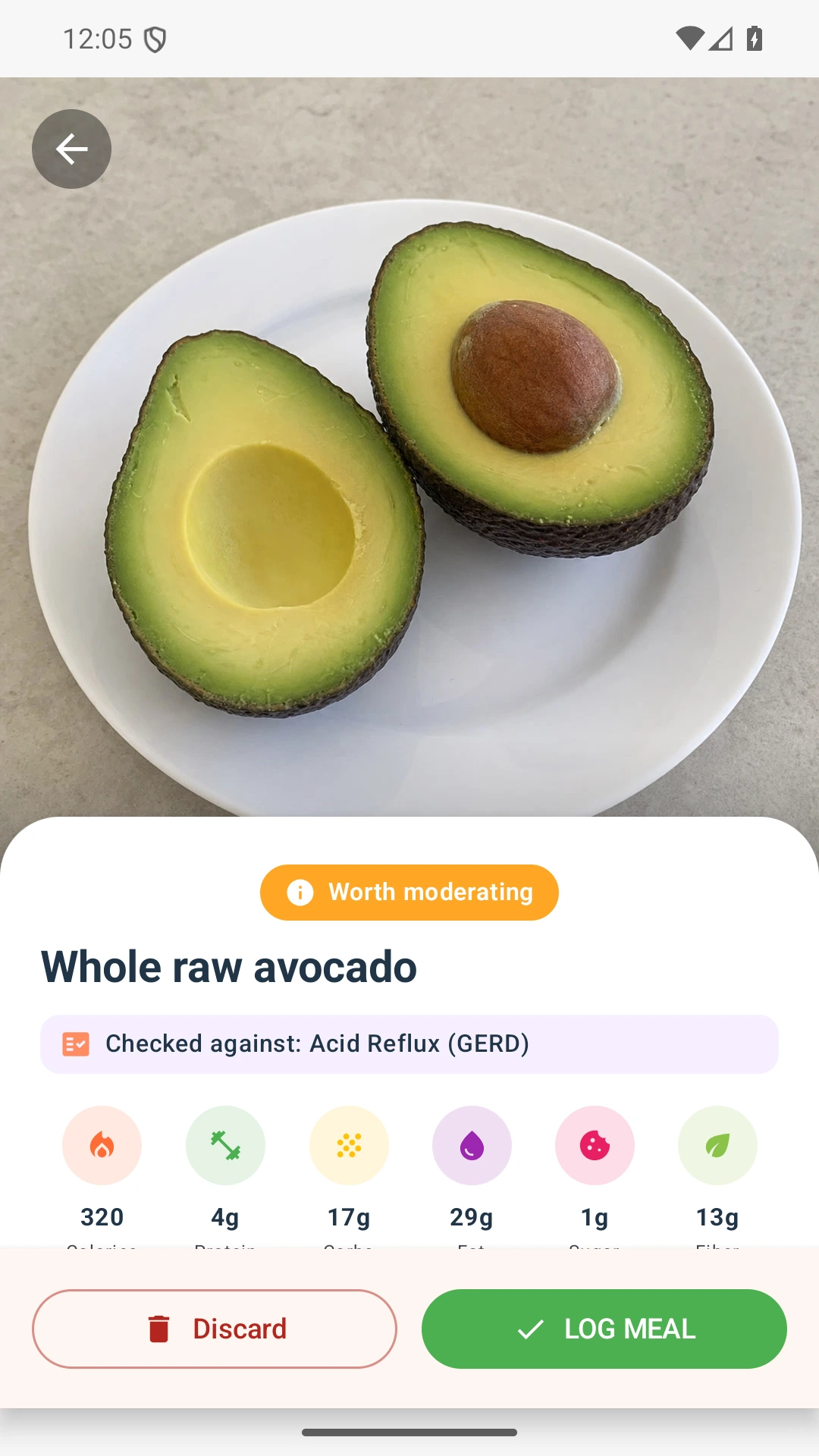
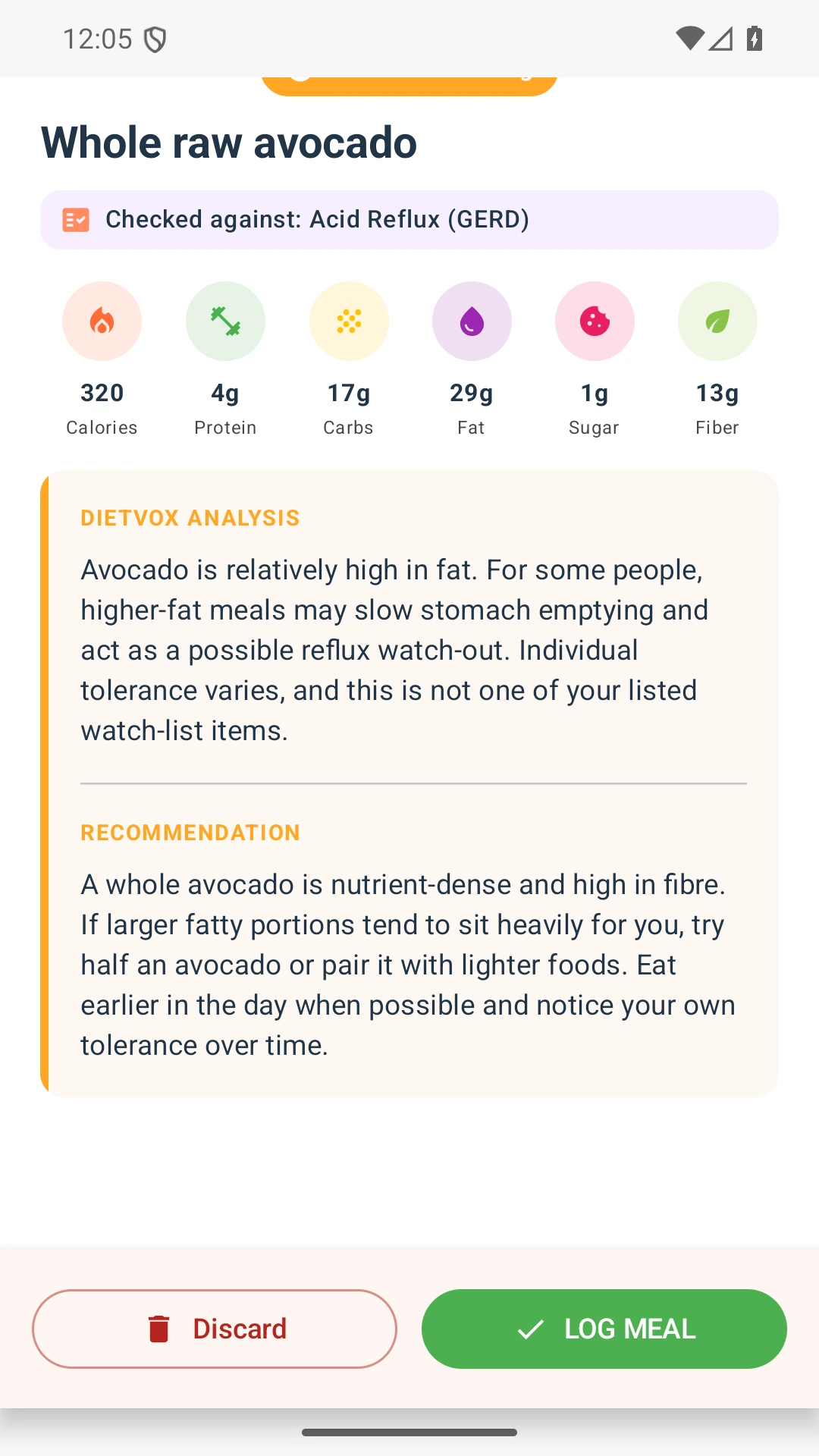
Avocado is rated AMBER for a weight loss diet, indicating it can be a beneficial component when consumed with mindful portion control. The question of whether you can use avocado to lose weight is common, given its reputation as a high-fat, calorie-dense food. However, available sources suggest its unique nutritional composition can support weight management goals. An AMBER rating signifies that while it's not a low-calorie food to eat without restriction (like a GREEN-rated food), its properties offer significant advantages that, when managed correctly, can aid a weight loss journey.

A Closer Look at Avocado's Nutrition

Understanding why avocado earns its AMBER rating begins with its nutritional profile. Per 100 grams (about two-thirds of a medium avocado), it contains:

  • Calories: 160 kcal
  • Fat: 14.7g
  • Carbohydrates: 8.5g
  • Dietary Fibre: 6.7g
  • Protein: 2.0g
  • Sugars: 0.7g

Source: USDA FoodData Central (FDC ID 171705)

The standout figures here are the high fat and moderate calorie content. However, the type of fat and the high fibre content are what make avocado a powerful ally for weight loss.

The Power of Healthy Fats and Fibre

Nearly 70% of the fat in avocado is monounsaturated fat, primarily in the form of oleic acid. This is the same type of heart-healthy fat found in olive oil. Diets rich in monounsaturated fats are associated with improved cardiovascular health markers NHS fat facts. For weight loss, these fats play a crucial role in promoting satiety, helping you feel full and satisfied after a meal.

Furthermore, avocado is an excellent source of dietary fibre. With 6.7g per 100g, it significantly contributes to the daily recommended intake. Fibre slows down digestion, which helps regulate blood sugar levels and, most importantly, prolongs the feeling of fullness MedlinePlus fiber overview. This dual-action of healthy fats and fibre is the primary reason avocado has a HIGH Satiety ROI (Return on Investment) in our Health Forensics analysis.

Avocado and Weight Loss: What Does the source review Say?

Several direct source reviews have explored the link between avocado consumption and weight management. The findings consistently challenge the outdated idea that all high-fat foods should be avoided for weight loss.

  • Increased Satiety and Reduced Calorie Intake: A key source review listed in Nutrition Journal found that overweight adults who added half a fresh Hass avocado to their lunch reported a significant increase in meal satisfaction and a reduced desire to eat for hours afterward PubMed. This effect on satiety can naturally lead to a lower overall calorie intake throughout the day, which is the fundamental principle of weight loss.
  • Improved Diet Quality and Lower BMI: Large-scale observational source reviews have linked regular avocado consumption with better overall diet quality, higher intake of essential nutrients, and lower body weight and body mass index (BMI) PubMed. While this doesn't prove causation, it suggests that people who eat avocados tend to have healthier dietary patterns that support weight management.

How to Eat Avocado on a Weight Loss Diet

Because avocado is calorie-dense, strategy is key. The goal is to leverage its satiety benefits without overconsuming calories. Our AMBER rating is a call for mindful consumption, not avoidance.

1. Master Portion Control This is the most critical rule. A standard serving size for weight management is typically one-quarter to one-half of a medium avocado.

  • Tracking Tip: A whole medium avocado weighs around 150-200g. We recommend a serving of half a medium avocado (approx. 68g), which provides about 109 kcal. Using a food scale is the most accurate way to track your intake, especially when you are establishing your new eating habits.

2. Make Smart Swaps Use avocado to replace less nutrient-dense, higher-calorie fats and spreads.

  • Instead of butter or mayonnaise on toast or in sandwiches, use mashed avocado.
  • Instead of creamy, dairy-based salad dressings, use a few slices of avocado to add richness and healthy fats to your salad.
  • Instead of sour cream on chili or tacos, use a dollop of mashed avocado.

3. Pair it Wisely Combine avocado with high-protein and high-fibre foods to create exceptionally satisfying meals.

  • Breakfast: Add a quarter of an avocado to a two-egg omelette with spinach.
  • Lunch: Top a large green salad with grilled chicken or chickpeas and half an avocado.
  • Snack: Enjoy a few slices of avocado with a sprinkle of sea salt and chili flakes.

DietVox Health Forensics: Avocado for Weight Loss

Our detailed analysis provides a clear picture of how avocado performs under a weight loss protocol:

  • Calorie Density: MEDIUM (160 kcal/100g): This is the primary reason for caution. Compared to non-starchy vegetables (20-30 kcal/100g), avocado is significantly more energy-dense. However, it's far less dense than nuts or oils (600-900 kcal/100g). This moderate density means portion size is paramount.
  • Satiety ROI: HIGH: This is avocado's superpower. For the 109 calories in a half-avocado serving, you get a powerful combination of 4.6g of fibre and nearly 10g of satisfying fat. This makes it highly effective at curbing hunger, justifying its caloric cost.
  • Tracking Difficulty: MEDIUM: Avocados are not uniform in size, making visual portion estimation prone to error. A 'small' avocado can vary in weight by 25% or more. For those closely tracking calories for weight loss, weighing your portion is recommended for accuracy.

Disclaimer: This article is for informational purposes only and does not constitute medical advice. Always consult a healthcare provider before making changes to your diet, especially if you have a medical condition.

Scan your foods with the DietVox app to get personalized ratings based on your specific dietary needs and health goals.

Last reviewed: June 2026

How It Works

Why Avocado is Rated AMBER for a Weight Loss Diet

Avocado's AMBER rating reflects a critical balance between its significant benefits for weight management and its notable calorie density. It is a powerful tool, but one that requires mindful application.

  1. High Calorie and Fat Content: The primary factor preventing a GREEN rating is its energy density. At 160 kcal and nearly 15g of fat per 100g, consuming avocado without regard to portion size can easily contribute to a calorie surplus, hindering weight loss efforts USDA FoodData Central (FDC ID 171705). This makes it unsuitable for unrestricted consumption within a calorie-controlled diet.
  1. Exceptional Satiety Power: The reason avocado avoids a RED rating and is highly recommended in moderation is its potent effect on satiety. The unique combination of 6.7g of dietary fibre and a high content of monounsaturated fats works to slow digestion and promote a long-lasting feeling of fullness. source review confirms that including avocado in a meal can reduce the desire to eat for several hours afterward, which is a key mechanism for controlling overall calorie intake PubMed.
  1. Nutrient Density and Diet Quality: Beyond macros, avocado is rich in micronutrients like potassium, vitamin K, vitamin E, and folate. Including nutrient-dense foods is vital during weight loss to ensure the body receives essential vitamins and minerals even on a reduced calorie budget. As the World Health Organization (WHO) advises, a healthy diet is about more than just calories; it's about the quality of those calories. Avocado enhances the nutritional quality of a weight loss plan.

In summary, the AMBER rating acknowledges that avocado is not a low-calorie 'diet' food, but its proven ability to enhance satiety and improve overall diet quality makes it a valuable asset for weight loss when portions are managed correctly.

Scan any food. Get an instant RED/AMBER/GREEN rating.

DietVox analyses every food across 4 diet protocols — no guesswork.

Try DietVox Free →

Try These Instead

Safer alternatives that won't trigger your symptoms.

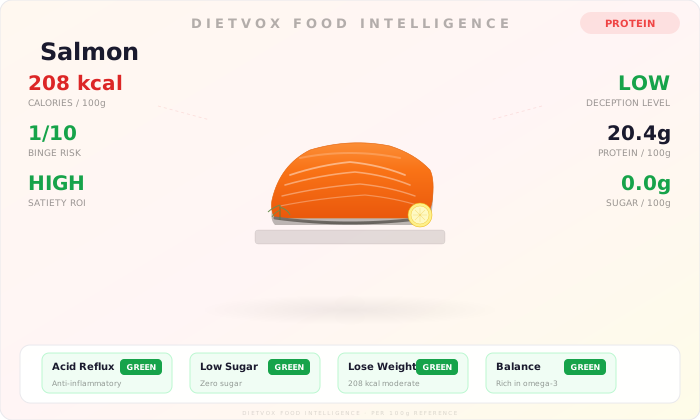
Salmon illustration

Salmon

208 kcal Protein
GREEN GERD
GREEN Sugar
AMBER Weight
GREEN Balance
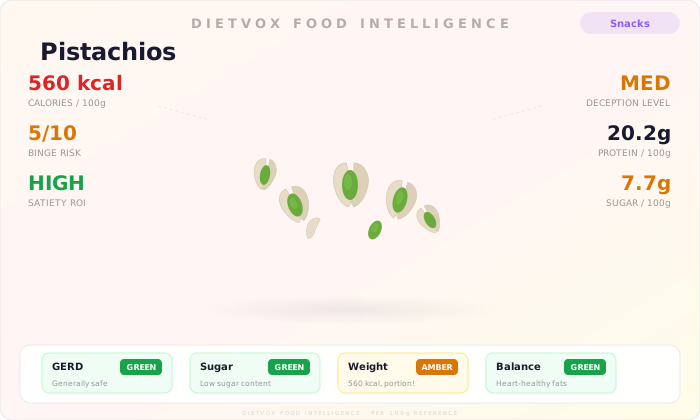
Pistachios illustration

Pistachios

560 kcal Snacks
GREEN GERD
GREEN Sugar
AMBER Weight
GREEN Balance
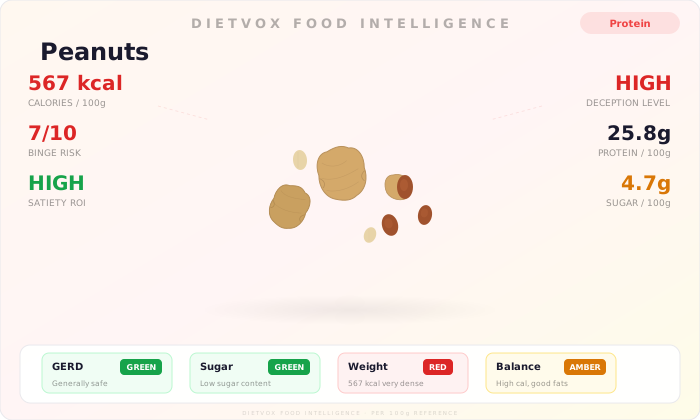
Peanuts illustration

Peanuts

567 kcal Protein
GREEN GERD
GREEN Sugar
AMBER Weight
AMBER Balance

Frequently Asked Questions

How much avocado can I eat per day to lose weight?

For most weight loss plans, a serving of one-quarter to one-half of a medium avocado per day is a reasonable amount. This portion (around 35-70g) provides 55-110 calories and allows you to benefit from its fibre and healthy fats without significantly impacting your daily calorie budget. It's best to use avocado as a replacement for other fats, not as an addition to your meal.

Is avocado fat 'good fat' for weight loss?

Yes, the majority of fat in avocado is monounsaturated oleic acid, which is considered a 'good' or healthy fat. Unlike saturated and trans fats, monounsaturated fats can support heart health NHS. For weight loss, these fats are beneficial because they are very satiating, helping to control appetite and keep you feeling full for longer.

Does eating avocado burn belly fat?

No single food can target and burn fat from a specific area of the body like the belly. Weight loss occurs when you consistently consume fewer calories than you burn. However, by replacing foods high in saturated fat or refined carbohydrates with nutrient-dense, satiating foods like avocado, you can create a healthier overall dietary pattern that supports sustainable fat loss throughout the body.

Is guacamole healthy for weight loss?

Homemade guacamole can be very healthy for weight loss, as its primary ingredient is avocado. A simple guacamole with mashed avocado, lime juice, onion, and cilantro is an excellent choice. The key is what you eat it with. Avoid high-calorie, fried tortilla chips and instead pair it with raw vegetables like bell pepper strips, carrots, or cucumber slices for a high-fibre, low-calorie snack.

Related Reading