DietVox Rating: GREEN

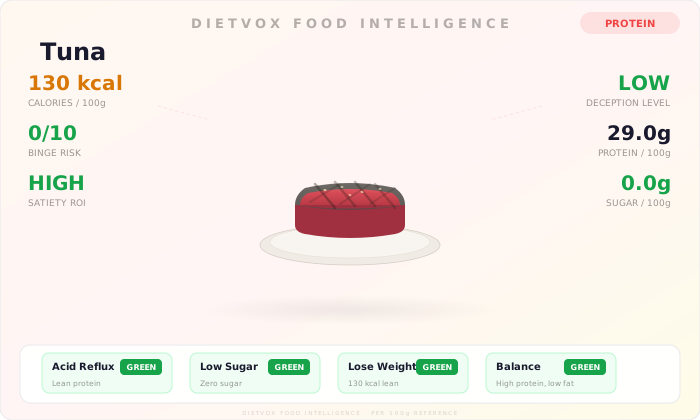
Tuna is rated GREEN for a GERD (Acid Reflux) diet. This rating indicates that it is a safe, well-tolerated food unlikely to trigger symptoms when prepared correctly. For individuals managing acid reflux, a common question is, is tuna good for GERD? The source support strongly suggests yes, provided it is consumed in its leanest form and without common trigger ingredients.

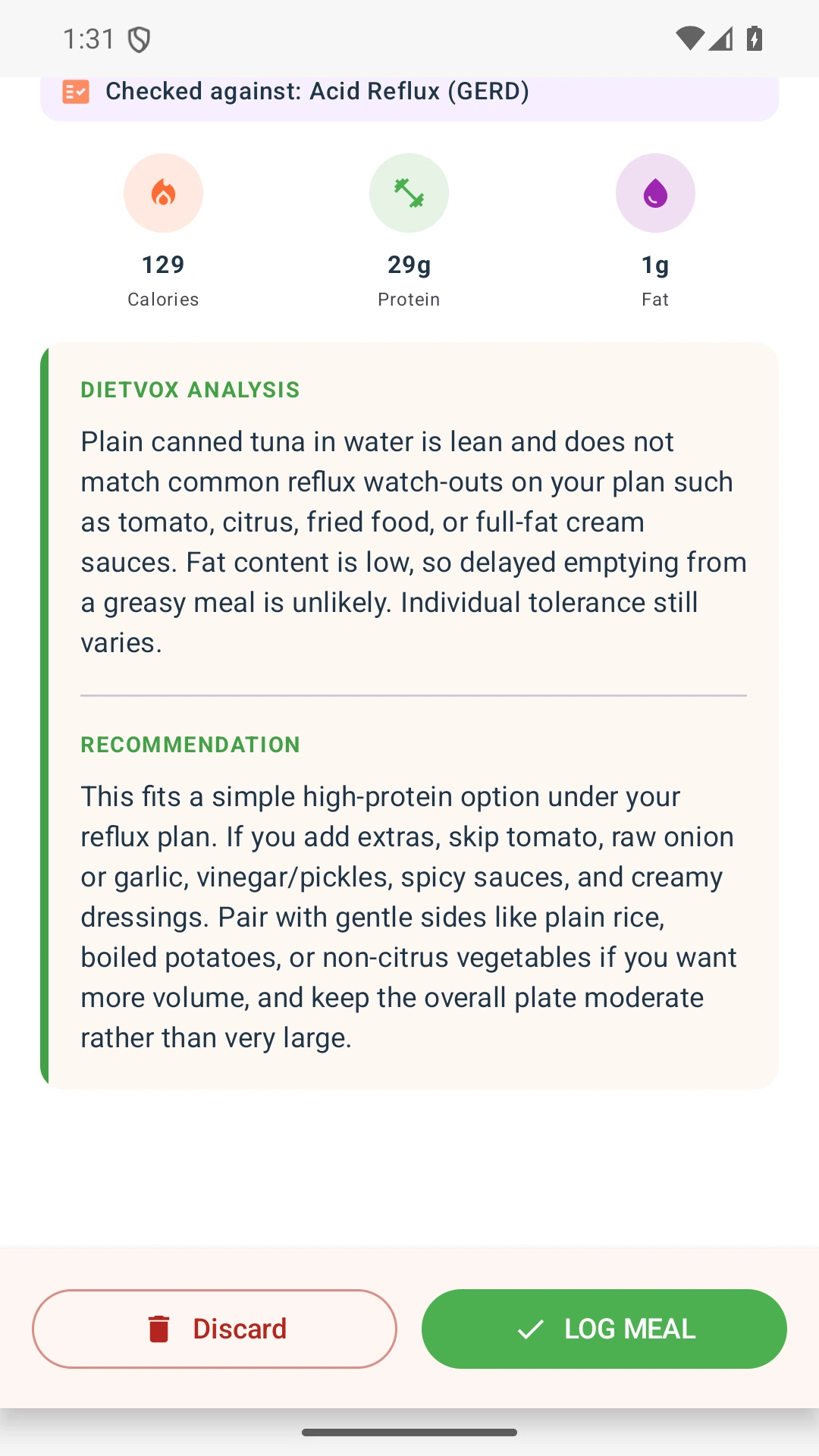
A GREEN rating from DietVox means the food has a low-risk profile based on clinical dietary guidelines. For tuna, this is due to its low-fat, high-protein nature and lack of inherent acidity. This article provides a detailed analysis of why tuna is a suitable choice for a GERD diet, how to prepare it safely, and what to avoid.

Nutritional Profile: A GERD-Friendly Macronutrient Breakdown

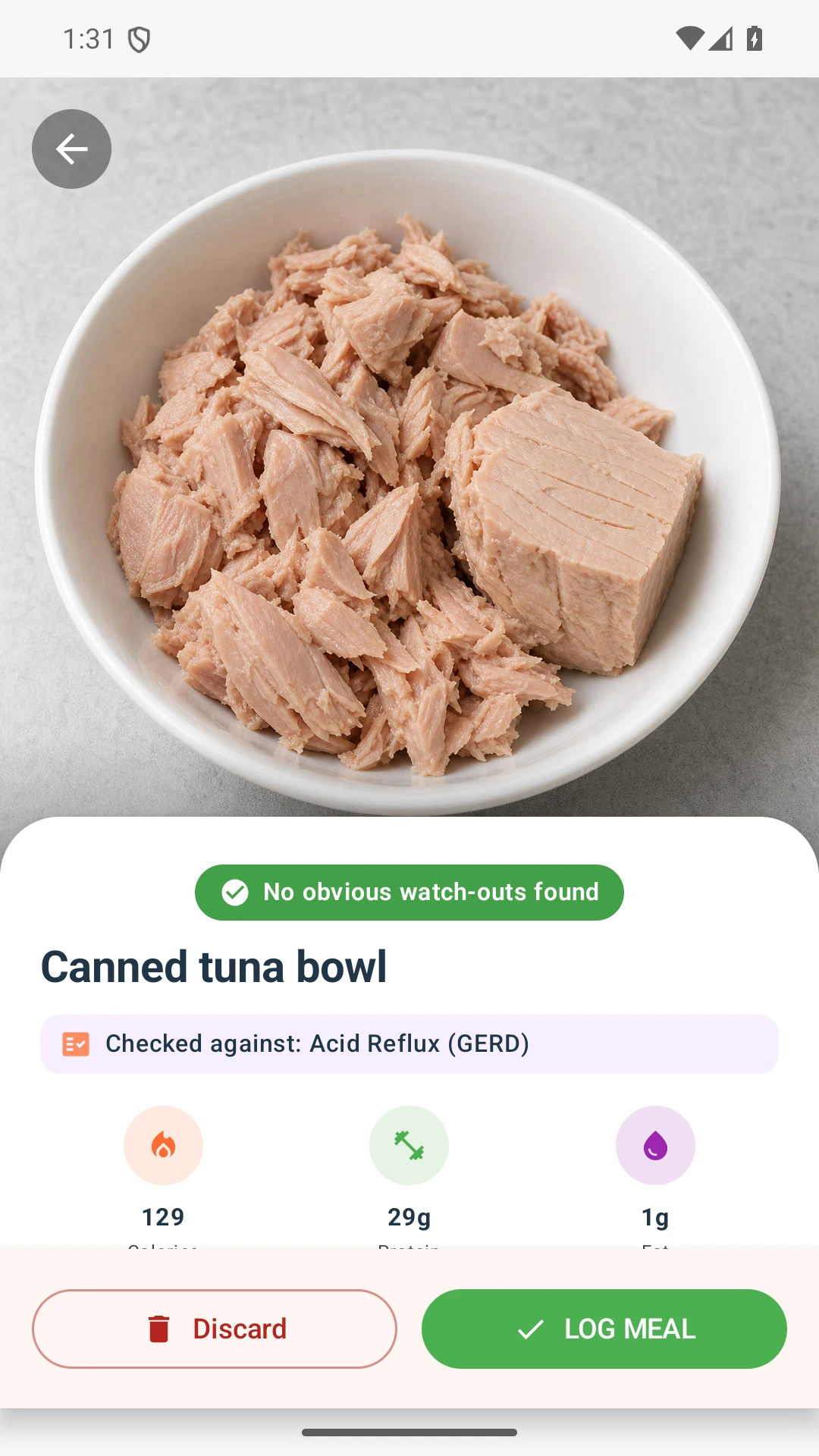
The nutritional composition of tuna is central to its GREEN rating. Per 100g, fresh cooked tuna contains approximately 130 calories, 29.0g of protein, and only 1.0g of fat USDA FoodData Central (FDC ID 175158). This macronutrient ratio is ideal for a GERD management plan.

  • Low Fat Content: High-fat foods are a primary trigger for GERD. They can relax the lower esophageal sphincter (LES), the muscle that prevents stomach acid from flowing back into the esophagus, and they also delay stomach emptying, increasing the opportunity for reflux to occur American College of Gastroenterology acid reflux guidance. With just 1.0g of fat per 100g, tuna is an exceptionally lean protein that avoids this mechanism.
  • High Protein for Satiety: The 29.0g of protein promotes satiety, helping you feel full and satisfied without needing large portions that can put pressure on the stomach. Dietary guidelines for GERD often recommend including lean protein sources in every meal NHS.
  • Zero Carbohydrates or Sugar: Plain tuna contains no carbohydrates or sugar, which helps in maintaining stable blood sugar levels and avoids potential irritation that can sometimes be associated with highly processed, sugary foods.

Tuna and GERD: The Clinical Perspective

Clinical guidance for managing GERD consistently points towards a diet rich in lean proteins and low in fat and acid. Tuna fits these recommendations perfectly.

Dietary modifications are a cornerstone of GERD management. The American College of Gastroenterology (ACG) guidelines, while focusing on individualized approaches, recognize that avoiding dietary triggers is a key strategy for symptom control ACG. Foods like tuna, which are inherently low in fat and non-acidic, are not on the list of common triggers such as citrus, tomatoes, chocolate, or fried foods.

Furthermore, while not a direct treatment for GERD, the omega-3 fatty acids found in tuna (EPA and DHA) have anti-inflammatory properties. Chronic acid exposure can lead to inflammation of the esophagus (esophagitis). A diet that includes anti-inflammatory components can support overall digestive and esophageal health Harvard Health Publishing.

Preparation is Key: How to Eat Tuna on a GERD Diet

The GREEN rating for tuna is highly dependent on its preparation. The wrong choices can easily turn this safe food into a significant trigger.

The Best Methods To keep tuna GERD-friendly, use cooking methods that do not add fat:

  • Baking or Roasting: Season with non-acidic herbs like dill, parsley, or basil and bake until cooked through.
  • Grilling: A simple grilled tuna steak is an excellent option. Avoid heavy marinades, especially those with citrus, vinegar, or tomato.
  • Poaching: Gently cooking tuna in water or a low-sodium broth keeps it moist and lean.

Canned Tuna: Water vs. Oil This is a critical distinction for anyone with GERD.

  • Tuna Canned in Water: This is the recommended choice. It preserves the lean protein profile of the fish. A 100g serving of tuna canned in water has around 116 calories and less than 1g of fat.
  • Tuna Canned in Oil: This should be avoided. The added oil can increase the fat content to over 20g per 100g, placing it firmly in the high-fat category that can trigger reflux symptoms.

What to Avoid When preparing or ordering tuna, steer clear of these common additions:

  • High-Fat Sauces: Mayonnaise-based tuna salad, creamy sauces, and butter-based preparations add significant fat.
  • Acidic Ingredients: Lemon juice, lime juice, vinegar, and tomato-based sauces (like in a Tuna Nicoise salad) can cause direct irritation to the esophagus.
  • Spicy Seasonings: Onions, garlic (for some individuals), chili powder, and cayenne pepper are common reflux triggers.
  • Frying: Fried tuna or tuna patties are high in fat and should be avoided.

Practical Tips for a GERD-Friendly Tuna Meal

Incorporating tuna into your GERD diet can be simple and delicious.

  • GERD-Friendly Tuna Salad: Mash a can of tuna in water with a tablespoon of plain, non-fat Greek yogurt or a quarter of a mashed avocado instead of mayonnaise. Add finely chopped celery and carrots for crunch. Season with a pinch of salt and fresh dill.
  • Tuna-Stuffed Bell Peppers: Mix tuna (canned in water) with cooked quinoa and finely chopped, well-tolerated vegetables like zucchini. Stuff the mixture into a bell pepper and bake until tender.
  • Simple Tuna Steak Dinner: Grill a fresh tuna steak seasoned with herbs. Serve with a side of roasted sweet potatoes and steamed green beans, both of which are excellent, low-acid choices for a GERD diet.

Disclaimer: This article is for informational purposes only and does not constitute medical advice. Always consult a healthcare provider before making changes to your diet, especially if you have a medical condition.

Scan your foods with the DietVox app to get personalized ratings based on your specific dietary needs and health goals.

Last reviewed: June 2026

How It Works

Why Tuna is Rated GREEN

Tuna's GREEN rating for the GERD (Acid Reflux) protocol is based on three core biochemical and physiological factors:

  1. Extremely Low Fat Content: The primary mechanism by which tuna is GERD-friendly is its lean profile. With only 1.0g of fat per 100g, it does not trigger the two main fat-related causes of reflux. High-fat meals are clinically shown to reduce the resting pressure of the lower esophageal sphincter (LES), making it easier for acid to splash back up American College of Gastroenterology acid reflux guidance. Fat also delays gastric emptying, meaning food sits in the stomach longer, increasing the window for a reflux event. Tuna's leanness bypasses both of these triggers.
  1. High-Quality, Easily Digestible Protein: Tuna provides a high concentration of protein (29.0g per 100g) without the accompanying fat found in red meats or processed foods. This protein is essential for satiety and tissue health but is easy for the stomach to break down, promoting efficient digestion and reducing time in the stomach.
  1. Absence of Inherent Irritants: Plain tuna is naturally non-acidic and free from common chemical irritants that can aggravate an already sensitive esophagus. It does not contain capsaicin (found in spicy foods), acidic compounds (like citric acid in fruits or acetic acid in vinegar), or caffeine, all of which are identified as potential GERD triggers NHS. This neutral profile makes it a safe base for meals, as long as no trigger ingredients are added during preparation.

Scan any food. Get an instant RED/AMBER/GREEN rating.

DietVox analyses every food across 4 diet protocols — no guesswork.

Try DietVox Free →

Try These Instead

Safer alternatives that won't trigger your symptoms.

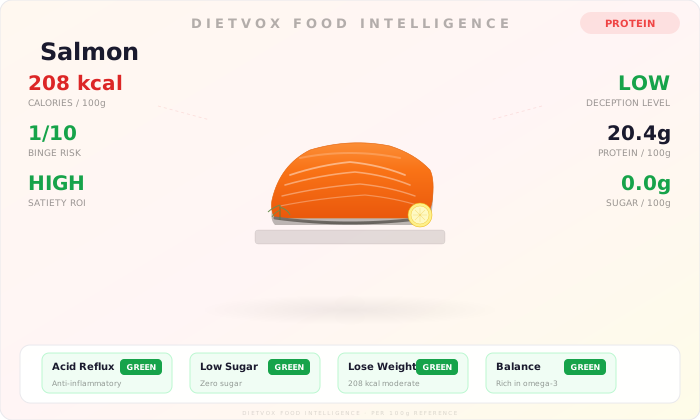
Salmon illustration

Salmon

208 kcal Protein
GREEN GERD
GREEN Sugar
AMBER Weight
GREEN Balance
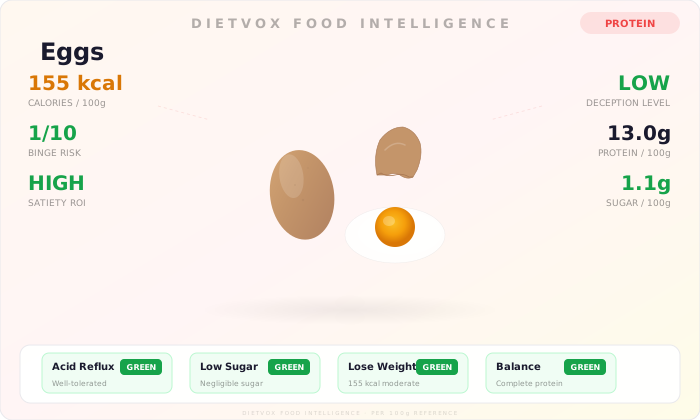
Eggs illustration

Eggs

155 kcal Protein
GREEN GERD
GREEN Sugar
GREEN Weight
GREEN Balance
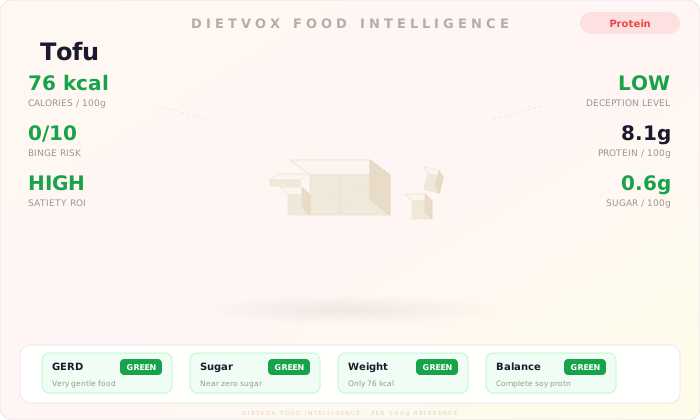
Tofu illustration

Tofu

76 kcal Protein
GREEN GERD
GREEN Sugar
GREEN Weight
GREEN Balance
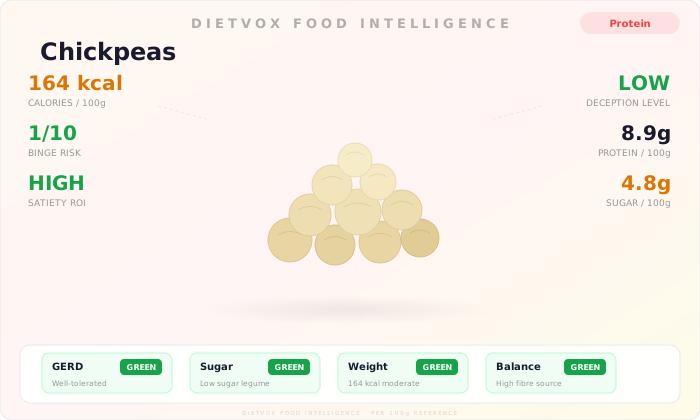
Chickpeas illustration

Chickpeas

164 kcal Protein
GREEN GERD
GREEN Sugar
GREEN Weight
GREEN Balance

Frequently Asked Questions

Is canned tuna in oil bad for acid reflux?

Yes, tuna canned in oil is not recommended for a GERD diet. The added oil significantly increases the fat content, which is a well-established trigger for acid reflux symptoms by relaxing the lower esophageal sphincter. Always choose tuna canned in water or brine to keep it low-fat.

What can I mix with tuna instead of mayonnaise for a GERD-friendly salad?

To avoid the high fat content of mayonnaise, you can mix canned tuna with plain non-fat Greek yogurt, which provides a similar creamy texture with added protein. Mashed avocado is another excellent, healthy-fat option. For flavor, use non-acidic herbs like dill, parsley, or basil instead of common triggers like onions or garlic.

Can I use lemon juice on my tuna if I have GERD?

It is best to avoid lemon juice on tuna if you have GERD. Lemon is a citrus fruit and is highly acidic, which can directly irritate the lining of the esophagus and trigger heartburn symptoms. Season your tuna with non-acidic herbs and spices instead.

How much tuna can I eat with GERD?

A standard portion of tuna, around 100-150g (3-5 ounces), is generally well-tolerated as part of a balanced, GERD-friendly meal. The most important factors are ensuring it is prepared without added fat or acid and listening to your own body's tolerance. It is also advisable to limit consumption of certain types of tuna (like albacore) due to mercury content, as per general health guidelines from sources like the NHS.

Related Reading