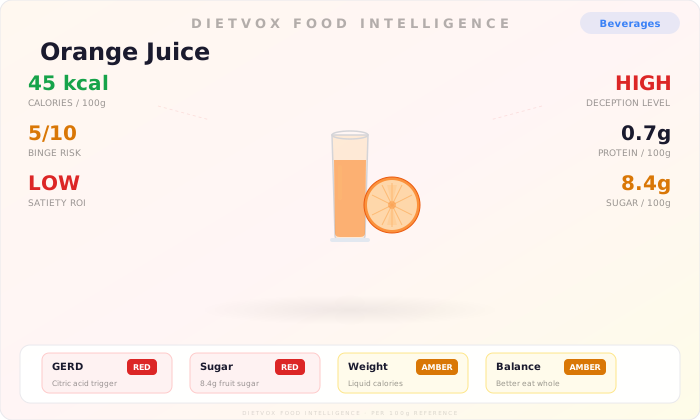
DietVox Rating: RED

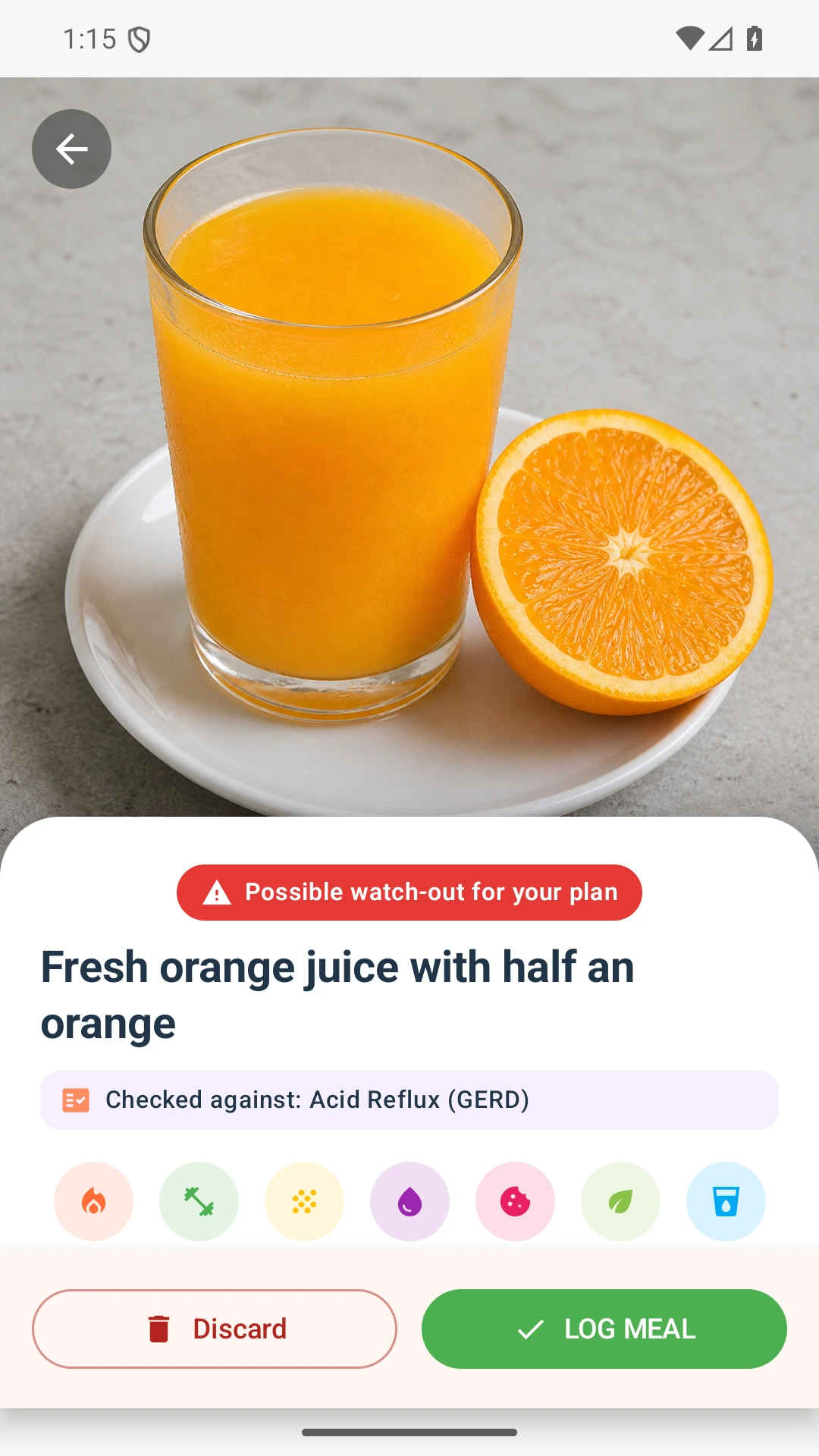
Verdict: Orange Juice is rated RED for a GERD (Acid Reflux) Diet, signifying it is a significant trigger food that should be avoided. For individuals managing acid reflux, the common question, is orange juice bad for gerd, has a clear, source-reviewed answer. Due to its high acidity and concentration of citric acid, orange juice is one of the most frequently cited dietary triggers for heartburn and other GERD symptoms American College of Gastroenterology acid reflux guidance. This rating is based on health guidance and scientific understanding of how certain foods impact oesophageal health.

Nutritional Profile in the Context of GERD

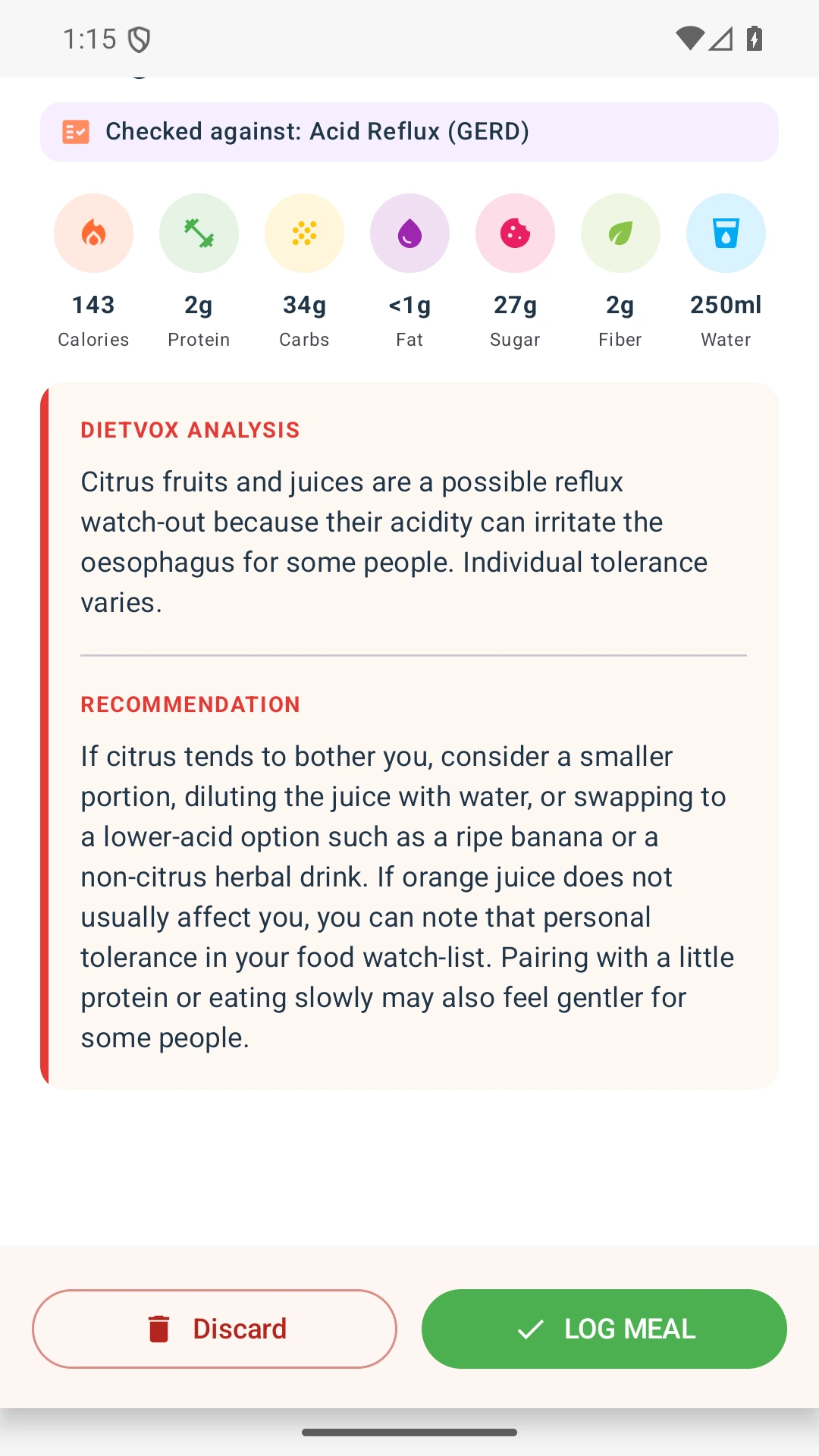
While orange juice is often associated with health benefits like high Vitamin C content, its nutritional profile presents several challenges for those on a GERD diet. Per 100ml, orange juice contains:

  • Calories: 45.0 kcal
  • Carbohydrates: 10.4g
  • Sugars: 8.4g
  • Protein: 0.7g
  • Fat: 0.2g
  • Fibre: 0.2g

This data is based on standard nutritional information from the USDA FoodData Central. The primary concerns for GERD management are not the calories, but the combination of high acidity, high sugar, and negligible fibre. The low fibre content means the sugar is absorbed rapidly, and there's no buffering capacity to mitigate the acid load. Furthermore, the lack of protein and fibre gives it a very low satiety value, meaning it doesn't contribute to feelings of fullness, which can be counterproductive in a structured dietary plan.

The Science: Why Acidity Matters in GERD

Gastroesophageal Reflux Disease (GERD) is a condition where stomach acid frequently flows back into the tube connecting your mouth and stomach (oesophagus). This backwash (acid reflux) can irritate the lining of your oesophagus NHS.

The pH scale measures acidity, with lower numbers being more acidic. Pure water has a neutral pH of 7. Orange juice typically has a pH ranging from 3.3 to 4.2, making it highly acidic PubMed. Consuming highly acidic foods and beverages like orange juice can cause two primary problems for individuals with GERD:

  1. Direct Irritation: The acid in the juice can directly irritate the already inflamed and sensitive lining of the oesophagus, causing the characteristic burning sensation known as heartburn.
  2. Symptom Triggering: For many, acidic foods are a direct trigger that initiates a reflux event, leading to a cascade of symptoms beyond just heartburn, such as regurgitation, chest pain, or coughing.

Whole Oranges vs. Orange Juice: A Critical Distinction

A common point of confusion is whether whole oranges are as problematic as orange juice. While whole oranges are also acidic, they are generally better tolerated. This is because the whole fruit contains dietary fibre.

Fibre slows down digestion and the absorption of sugar. More importantly, the fibrous structure of the fruit acts as a physical buffer and means you consume the acid in a less concentrated, solid form. Juicing an orange removes nearly all of this protective fibre, concentrating the sugar and citric acid into a liquid that is consumed quickly. A single glass of orange juice can contain the acid and sugar of 3-4 oranges, delivered to your stomach in a rapid, concentrated dose that is far more likely to trigger reflux symptoms CDC healthy eating guidance.

Health Forensics: A Deeper Analysis for GERD

  • Calorie Density: LOW Orange juice has a low calorie density (45 kcal/100ml). While this is generally positive for weight management, this benefit is completely overshadowed by its high potential to trigger painful GERD symptoms. For a GERD diet, avoiding triggers is a higher priority than calorie content alone.
  • Satiety ROI: LOW With minimal protein (0.7g) and fibre (0.2g), orange juice offers a poor return on investment for satiety. It does little to make you feel full. This can be problematic as it may lead to consuming larger meals or additional snacks later, increasing stomach volume and pressure on the lower oesophageal sphincter (LES), potentially worsening reflux.
  • Tracking Difficulty: HIGH The portion size of a "glass" of juice is highly variable. Without precise measurement using a digital scale, it is easy to underestimate the amount of sugar and acid consumed. This high deception level makes it a difficult food to manage for anyone trying to pinpoint dietary triggers through careful tracking.

Practical Advice for Your GERD Diet

Given the available guidance, the primary recommendation is to eliminate orange juice from your diet if you have GERD.

  • Listen to Your Body: While health guidance list orange juice as a common trigger, GERD triggers can be highly individual. The American College of Gastroenterology (ACG) notes that wholesale elimination of trigger foods is not always necessary for everyone, but citrus is a primary candidate for an elimination trial ACG GERD health guidance.
  • Keep a Food Diary: Track your food intake and symptoms to confirm if orange juice is a personal trigger for you. Note the time of consumption and the onset and severity of any symptoms.
  • Focus on Alternatives: Instead of citrus juices, opt for beverages that are less acidic. Water is always the best choice. Low-acid fruit smoothies (using banana, melon, or papaya) or herbal teas like chamomile can be soothing alternatives.

Disclaimer: This article is for informational purposes only and does not constitute medical advice. Always consult a healthcare provider before making changes to your diet, especially if you have a medical condition.

Scan your foods with the DietVox app to get personalized ratings based on your specific dietary needs and health goals.

Last reviewed: June 2026

How It Works

Why Orange Juice is Rated RED for GERD

Orange Juice is classified as a RED-rated food for a GERD (Acid Reflux) Diet due to a combination of potent physiological mechanisms that can initiate or worsen reflux symptoms. The source review points to three primary factors:

  1. High Acidity and Direct Oesophageal Irritation: The core issue is its low pH, typically between 3.3 and 4.2. When reflux occurs, this highly acidic liquid comes into direct contact with the sensitive mucosal lining of the oesophagus. In individuals with GERD, this lining is often already inflamed (oesophagitis). The acid from the juice acts as a direct irritant, causing a painful burning sensation (heartburn) and potentially contributing to further inflammation American College of Gastroenterology acid reflux guidance.
  1. Concentrated Citric Acid Load: The process of juicing removes the fruit's natural fibre, which otherwise helps to buffer the acid and slow its release into the digestive system. A single glass of orange juice delivers a highly concentrated dose of citric acid, far greater than what would be consumed by eating a single orange. This concentrated acid bolus can overwhelm the stomach's normal environment and is more likely to cause symptoms upon reflux.
  1. Potential Relaxation of the Lower Oesophageal Sphincter (LES): While the source support is debated, some source reviews and clinical observations suggest that acidic foods may contribute to the temporary relaxation of the lower oesophageal sphincter (LES). The LES is the muscular valve that separates the oesophagus from the stomach. If it relaxes inappropriately, it allows stomach contents, including the acidic orange juice, to splash back up into the oesophagus, triggering a reflux event PubMed. For this reason, major health bodies consistently recommend that individuals with GERD avoid citrus juices NHS.

Scan any food. Get an instant RED/AMBER/GREEN rating.

DietVox analyses every food across 4 diet protocols — no guesswork.

Try DietVox Free →

Try These Instead

Safer alternatives that won't trigger your symptoms.

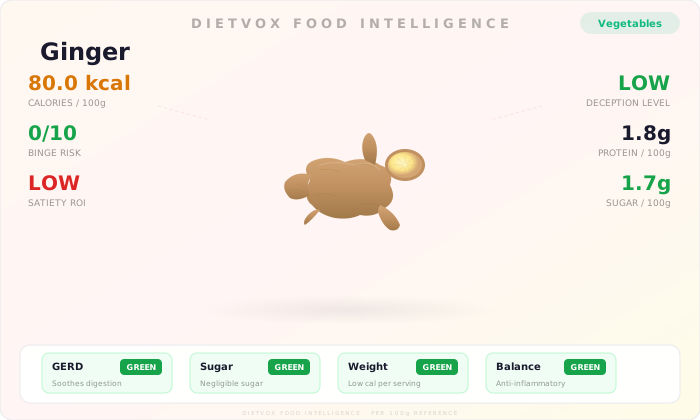
Ginger illustration

Ginger

80 kcal Vegetables
GREEN GERD
GREEN Sugar
GREEN Weight
GREEN Balance
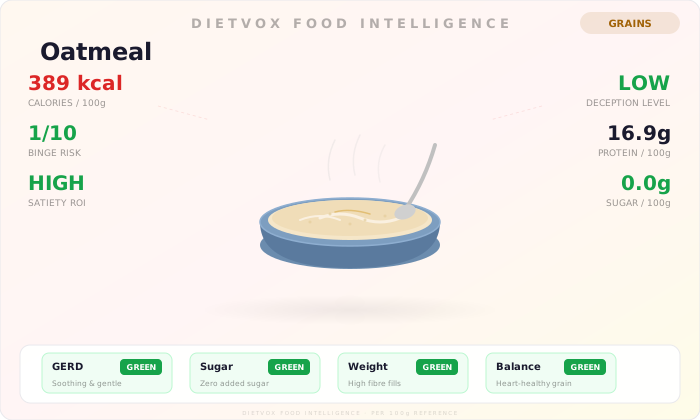
Oatmeal illustration

Oatmeal

389 kcal Grains
GREEN GERD
GREEN Sugar
GREEN Weight
GREEN Balance
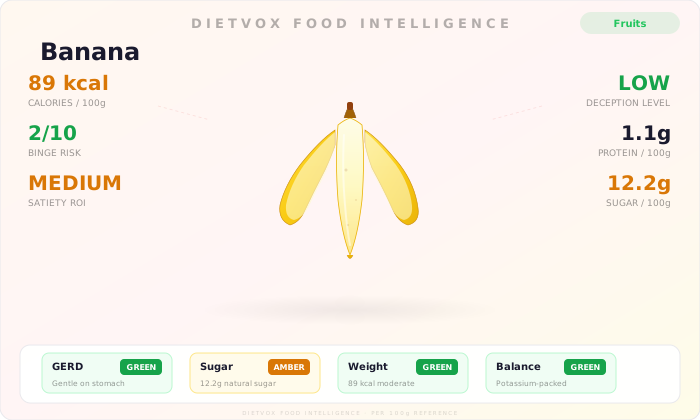
Banana illustration

Banana

89 kcal Fruits
GREEN GERD
AMBER Sugar
AMBER Weight
GREEN Balance

Frequently Asked Questions

Is 'low-acid' orange juice safe for GERD?

While 'low-acid' orange juice has some of its natural citric acid removed, it is still an acidic beverage and likely to be a trigger for many individuals with GERD. The term 'low-acid' is relative; the final product's pH is still well below neutral and may be sufficient to irritate a sensitive oesophagus. It is best to avoid it or test it in a very small quantity with extreme caution.

What is the difference between drinking orange juice and eating a whole orange for acid reflux?

A whole orange contains dietary fibre, which is removed during juicing. This fibre helps buffer the fruit's natural acids and slows down digestion. Juicing concentrates the acid and sugar of several oranges into a single serving, creating a potent, fast-acting trigger. For this reason, a whole orange is often better tolerated than orange juice by people with GERD.

Can I mix orange juice with water to make it less acidic for my GERD?

Diluting orange juice with water will reduce the concentration of acid per mouthful, but it does not neutralize the acid. You are still consuming the same total amount of acid, just in a larger volume of liquid. This may still be enough to trigger symptoms and is not a recommended strategy for making it 'safe' for a GERD diet.

What are some GERD-friendly juices or drinks I can have instead of orange juice?

Excellent GERD-friendly alternatives include juices from low-acid fruits like melon (cantaloupe, watermelon), pear, or papaya. You can also make smoothies with banana, spinach, and almond milk. Herbal teas such as chamomile or ginger tea (in moderation) can be soothing. The safest and best choice is always water.

Related Reading