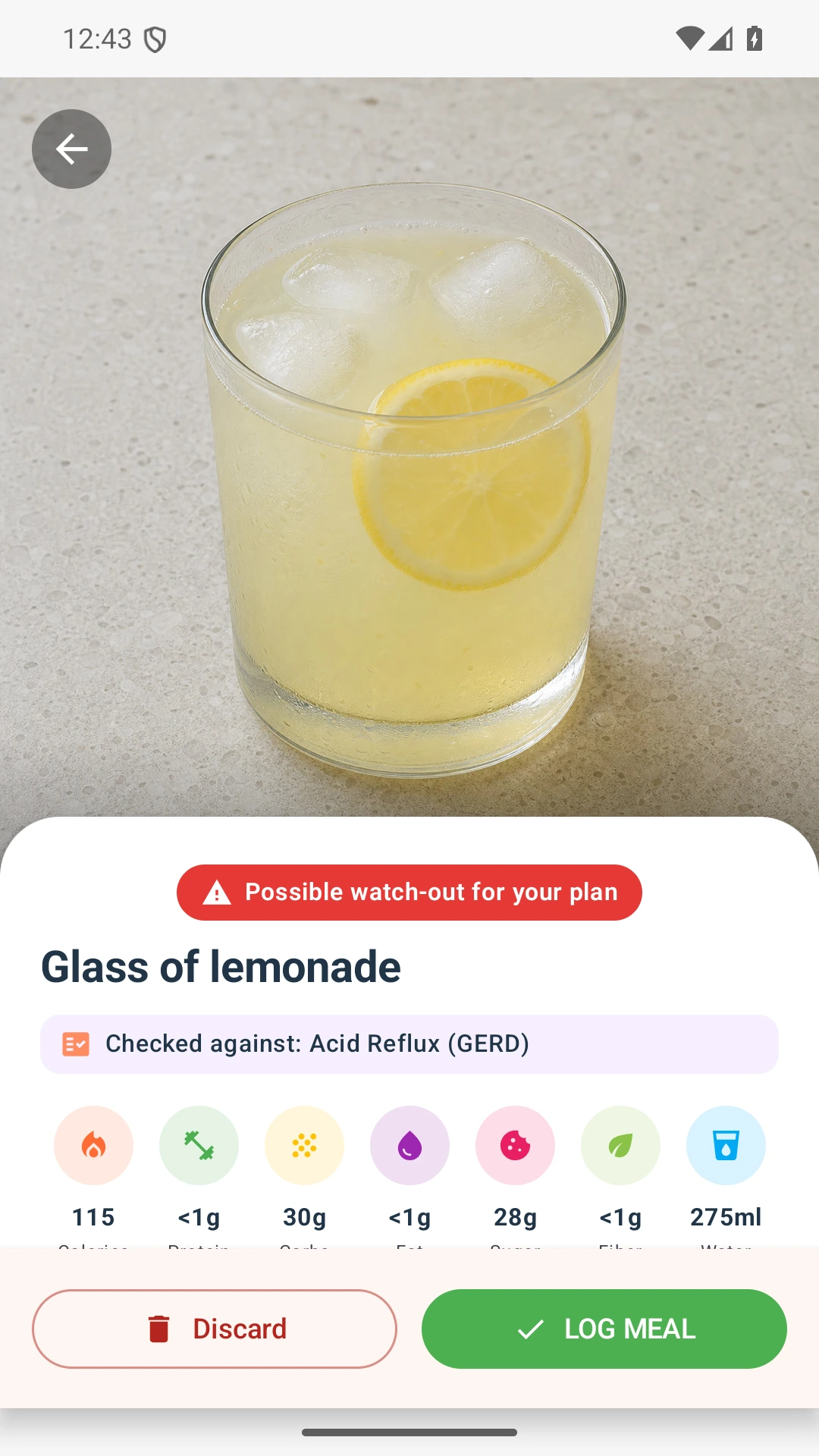
DietVox Rating: RED
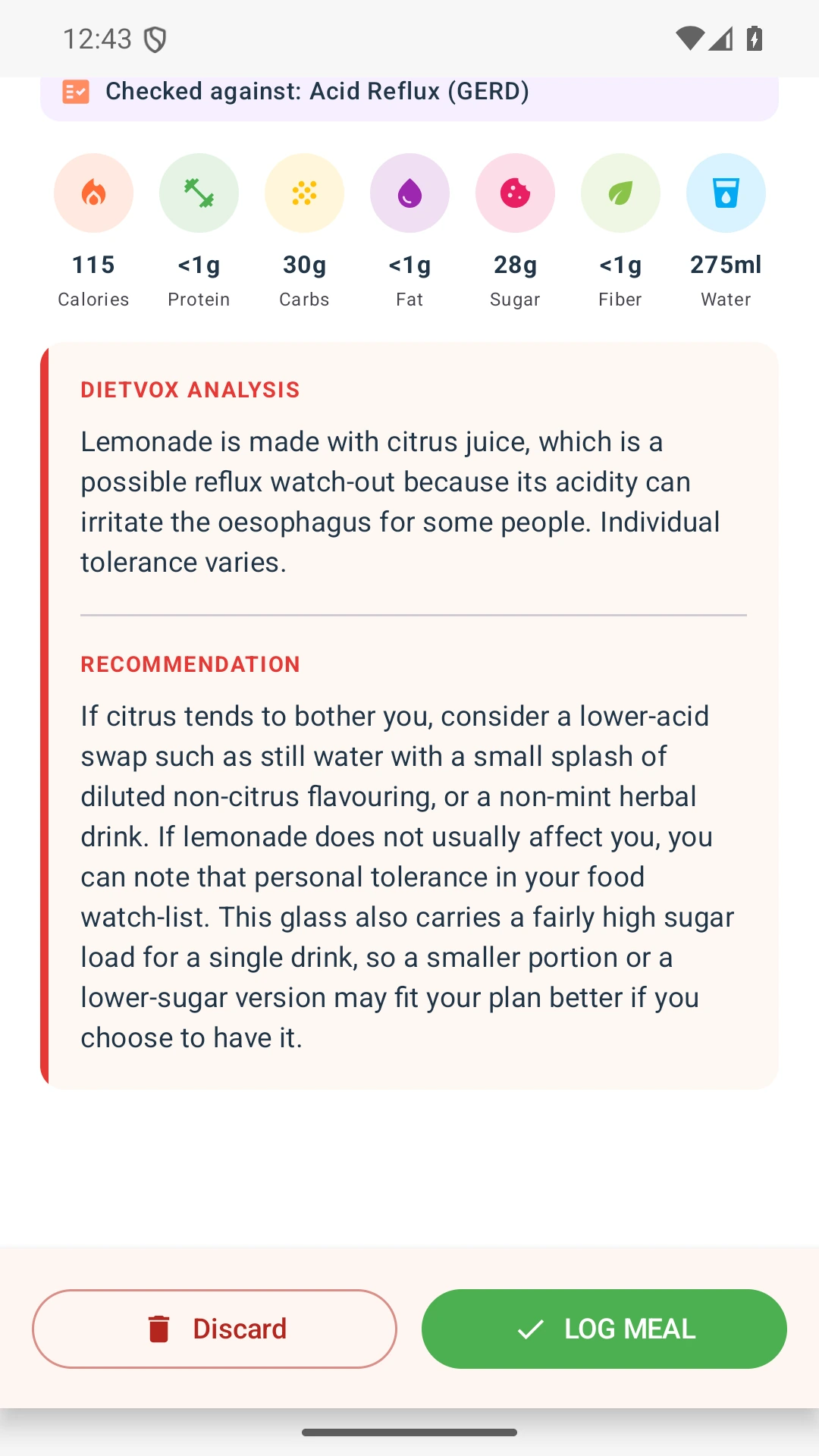
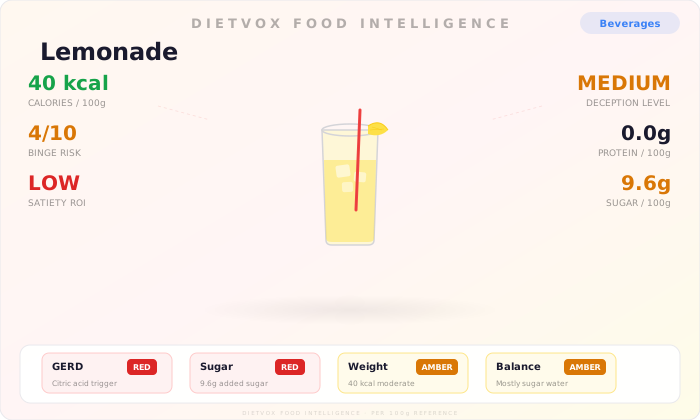
For individuals managing Gastroesophageal Reflux Disease (GERD), a common and important question is is lemonade bad for gerd. Based on extensive direct source support, DietVox assigns Lemonade a RED rating. This indicates that it is a common trigger food that is highly likely to worsen symptoms of acid reflux, such as heartburn, regurgitation, and chest discomfort. The rating is based on two primary factors: the high acidity of lemons and the significant sugar content typical of most lemonade preparations.
The Nutritional Profile of Lemonade
To understand its impact on a GERD diet, it's essential to first look at the nutritional composition of typical lemonade. Per 100ml (about 3.4 fl oz), lemonade contains:
- Calories: 40 kcal
- Protein: 0.0g
- Fat: 0.0g
- Carbohydrates: 10.0g
- Sugars: 9.6g
- Fibre: 0.0g
(Source: USDA FoodData Central)
From a GERD perspective, this profile raises immediate concerns. The complete lack of protein and fibre means lemonade offers very low satiety, providing calories primarily from sugar without contributing to fullness. More importantly, the high sugar content and the inherent acidity of its main ingredient, lemon juice, are key drivers of its RED rating for an acid reflux diet.
Lemonade's Direct Impact on GERD Symptoms
Lemonade can provoke or worsen GERD symptoms through several well-understood mechanisms. health guidance from leading health institutions consistently advise patients with GERD to avoid or limit acidic foods and beverages American College of Gastroenterology acid reflux guidance.
1. High Acidity and Esophageal Irritation
Lemons are one of the most acidic fruits, with a pH level typically between 2 and 3. When you drink lemonade, this highly acidic liquid comes into direct contact with the lining of your esophagus. In individuals with GERD, the esophageal lining is often already inflamed and sensitised due to repeated exposure to stomach acid. The citric acid in lemonade can act as a direct irritant, causing a burning sensation (heartburn) and further inflammation American College of Gastroenterology. This is not an allergic reaction but a direct chemical irritation, similar to putting lemon juice on a cut.
2. Relaxation of the Lower Esophageal Sphincter (LES)
The Lower Esophageal Sphincter (LES) is a ring of muscle at the bottom of the esophagus that acts as a valve, preventing stomach contents from flowing back up. In many people with GERD, this valve is weakened or relaxes inappropriately. Certain foods and drinks, including highly acidic ones like citrus juices, are thought to contribute to this transient relaxation of the LES. When the LES relaxes, it creates an opening for stomach acid and food to reflux into the esophagus, triggering symptoms.
3. The Problem with Added Sugar
Beyond the acidity of lemons, the high sugar content of most commercial and homemade lemonades is another significant concern for a GERD diet. Available sources suggest a link between high intake of sugary beverages and an increased risk of reflux symptoms. A large-scale population source review listed in PubMed found that high consumption of sugar and sweetened beverages was associated with a higher prevalence of GERD symptoms PubMed.
High sugar intake can contribute to GERD in a few ways:
- Delayed Gastric Emptying: Sugary drinks can slow down the rate at which the stomach empties its contents, increasing pressure within the stomach and making reflux more likely.
- Weight Gain: Sugary drinks are a source of 'empty calories', contributing to weight gain and obesity. Excess body weight, particularly around the abdomen, increases pressure on the stomach, which can force the LES open and push acid into the esophagus. The NHS identifies being overweight as a primary cause of GERD.
Debunking the 'Alkalizing' Myth
A common misconception is that lemon juice, despite being acidic, has an 'alkalizing' effect on the body after it is metabolised. While it's true that the minerals left over after digestion can have an alkaline effect on urine pH, this has no bearing on GERD. The critical issue for acid reflux is the food's acidity as it is consumed and its immediate effect on the esophagus and stomach. As explained by PubMed review of dietary acid load and alkaline water, the body tightly regulates its own pH, and the 'alkaline diet' theory is not supported by strong direct source support. For GERD management, the initial acidity of lemonade is the factor that matters, and it is unequivocally a trigger.
Practical Alternatives for a GERD-Friendly Diet
Avoiding lemonade doesn't mean you are limited to plain water. There are many refreshing, flavourful, and GERD-friendly beverage options:
- Infused Water: Add slices of low-acid fruits and vegetables like cucumber, melon (cantaloupe, honeydew), or watermelon to a pitcher of cold water.
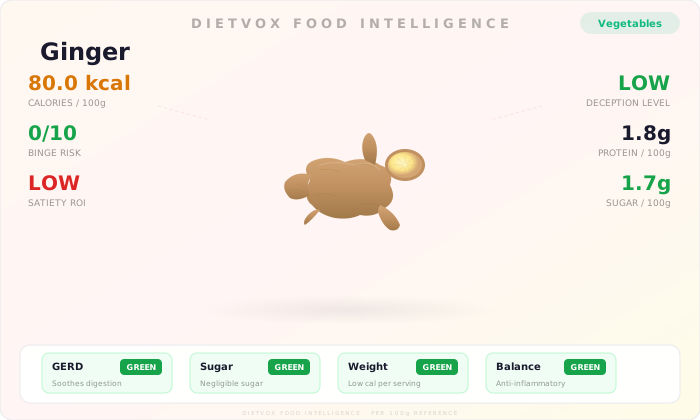
- Herbal Teas (Non-Mint): Teas such as chamomile, ginger, and rooibos are generally well-tolerated and can be soothing. It's best to avoid peppermint and spearmint teas, as mint can relax the LES and worsen reflux.
- Low-Acid Juices: If you enjoy juice, opt for those made from low-acid fruits. Diluted pear, peach, or melon juice can be good choices in moderation.
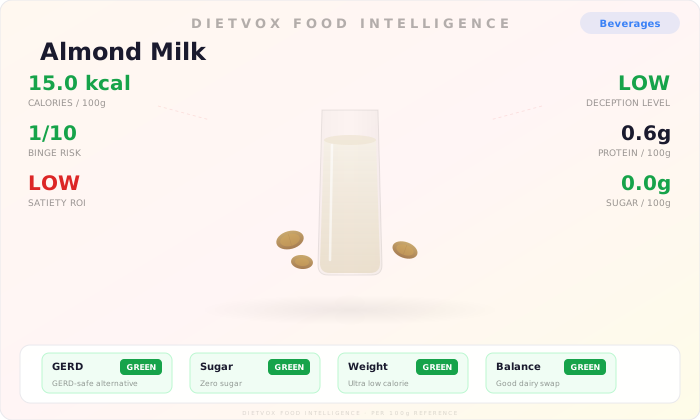
- Plant-Based Milks: Unsweetened almond or soy milk can be a soothing, low-acid option.
Ultimately, managing a GERD diet involves identifying and avoiding personal triggers. For the vast majority of individuals with acid reflux, lemonade's combination of high acidity and sugar makes it a beverage to remove from the diet for better symptom control.
Disclaimer: This article is for informational purposes only and does not constitute medical advice. Always consult a healthcare provider before making changes to your diet, especially if you have a medical condition.
Scan your foods with the DietVox app to get personalized ratings based on your specific dietary needs and health goals.
Last reviewed: June 2026
How It Works
Why Lemonade is Rated RED for GERD
Lemonade is assigned a RED rating for the GERD (Acid Reflux) Diet due to its potent combination of two well-established reflux triggers: high acidity and high sugar content.
- High Citric Acid Content: Lemons are naturally very acidic, with a pH typically between 2 and 3. This strong acid acts as a direct irritant to the sensitive mucosal lining of the esophagus, which is often already inflamed in individuals with GERD. This irritation is the primary cause of the immediate burning sensation known as heartburn after consuming acidic foods American College of Gastroenterology acid reflux guidance.
- Direct Irritation of the Esophagus: The very low pH of lemonade (pH 2-3) is a direct chemical irritant to the sensitive lining of the esophagus. In a healthy individual, the esophagus has limited protection against acid, and in someone with GERD whose esophageal lining is already inflamed, this direct contact can cause significant pain and the sensation of heartburn American College of Gastroenterology acid reflux guidance. Additionally, the high sugar content may contribute to delayed stomach emptying, which can increase the risk of reflux.
- High Added Sugar: Standard lemonade is high in added sugar (around 9.6g per 100ml). Diets high in sugar, especially from sweetened beverages, are associated with an increased prevalence of GERD symptoms. Sugar can delay stomach emptying, increasing intragastric pressure, and contribute to weight gain, a major risk factor for chronic acid reflux NHS.
Scan any food. Get an instant RED/AMBER/GREEN rating.
DietVox analyses every food across 4 diet protocols — no guesswork.
Try DietVox Free →Try These Instead
Safer alternatives that won't trigger your symptoms.
Frequently Asked Questions
What about lemon water? Is it also bad for GERD?
Yes, even diluted lemon in water is acidic and can trigger GERD symptoms. While it contains less sugar than lemonade, the primary trigger—citric acid—is still present and can directly irritate the esophagus. For a GERD diet, it is best to avoid lemon water.
Can I make a GERD-friendly lemonade with a sugar substitute?
Using a sugar substitute only addresses the high sugar content. It does not change the high acidity of the lemon juice, which is the main trigger for most people's GERD symptoms. Therefore, even sugar-free lemonade is rated RED and is not recommended on an acid reflux diet.
Are there any safe, refreshing drinks for an acid reflux diet?
Absolutely. Great options include plain water, water infused with low-acid ingredients like cucumber or melon, herbal teas such as chamomile or ginger (avoid peppermint), and low-acid fruit juices like pear or melon juice in moderation.
How soon after drinking lemonade might I experience GERD symptoms?
The onset of symptoms can vary. The direct irritation from the acid can be felt almost immediately as heartburn. Symptoms related to LES relaxation or increased stomach pressure might take 30 minutes to a few hours to develop after consumption.