DietVox Rating: GREEN
For individuals following a Low Sugar Diet, a primary concern is identifying foods that support their goals without hidden sugars. A frequent question arises for dairy products: is cream cheese low carb and suitable for a sugar-conscious lifestyle? According to our analysis, plain, full-fat Cream Cheese is rated GREEN for a Low Sugar Diet. This rating signifies that it is an excellent choice that aligns well with the core principles of this protocol.
The key distinction lies in the type of sugar present. The minimal sugar content in cream cheese is naturally occurring lactose, not the "free sugars" that health authorities recommend limiting. However, this GREEN rating comes with a critical caveat: it applies strictly to plain cream cheese. The food it is paired with, and the choice between full-fat and flavored varieties, can significantly alter its suitability.
This article provides a comprehensive, source-reviewed breakdown of why Cream Cheese earns its GREEN rating, how to incorporate it effectively into your low-sugar eating plan, and what to watch out for on nutrition labels.
Nutritional Profile for a Low Sugar Diet
The nutritional composition of cream cheese is fundamental to its GREEN rating. Its profile is characterized by high fat, moderate protein, and very low carbohydrates, making it a satiating option that has a minimal impact on blood glucose levels.
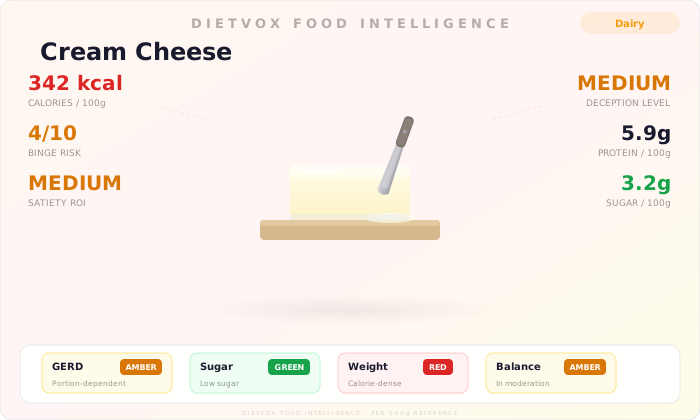
Here is a detailed breakdown of plain, full-fat cream cheese per 100g, based on data from the USDA FoodData Central (FDC ID 171025):
| Nutrient | Value per 100g | Relevance to Low Sugar Diet | |:---|:---|:---| | Calories | 342 kcal | Calorie-dense; portion control is important. | | Fat | 34.2 g | High fat content promotes satiety, helping to manage cravings. | | Saturated Fat | 19.3 g | Should be monitored within daily recommended limits NHS. | | Carbohydrates | 4.1 g | Very low carbohydrate content helps maintain stable blood sugar. | | Sugars | 3.2 g | This is naturally occurring lactose, not a "free sugar" WHO sugars intake guideline. | | Protein | 5.9 g | Contributes to fullness and sustained energy. | | Sodium | 321 mg | A moderate amount to be aware of within daily sodium goals. |
Due to its low carbohydrate and high fat content, plain cream cheese has a very low glycemic index. Foods with a low GI are digested and absorbed more slowly, leading to a more gradual rise in blood sugar levels, a key goal for many following a low-sugar or metabolically-focused diet International glycemic index tables review.
Integrating Cream Cheese into Your Low Sugar Plan
A GREEN rating doesn't mean a food can be consumed without limit. The high calorie and saturated fat content of cream cheese make mindful consumption essential. Here are practical strategies for including it in your diet.
1. Prioritise Plain, Full-Fat Varieties When shopping for cream cheese, the choice between full-fat, low-fat, and flavored versions is critical. Low-fat or 'light' versions often have a higher sugar content. To compensate for the reduced fat, manufacturers may add sugars, starches, or other carbohydrates to improve flavour and texture. Always compare the nutrition labels. For a Low Sugar Diet, the plain, full-fat version is almost always the superior choice as its fat content aids satiety and it contains no added sugars.
2. Practice Mindful Portioning Cream cheese is energy-dense. A 100g portion contains 342 calories. A more typical serving size is around 30g (about two tablespoons), which provides approximately 103 calories, 10g of fat, and just 1.2g of carbohydrates. Using a food scale can help ensure accuracy, especially when you are first establishing portion sizes.
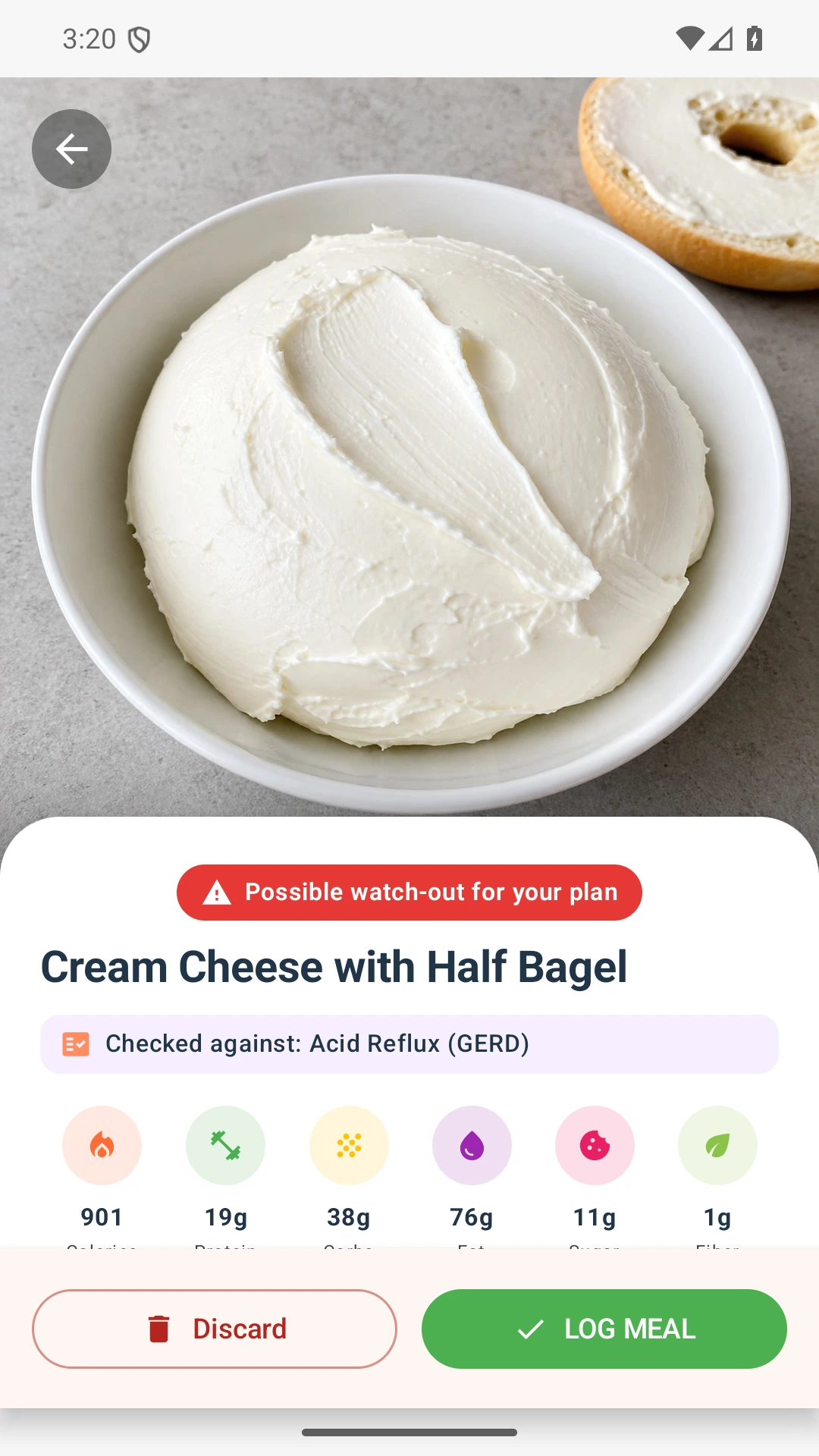
3. The Power of Pairings The most significant factor in keeping cream cheese a low-sugar-friendly food is what you eat it with. The traditional pairing of a bagel is high in refined carbohydrates and would undermine the goals of a low-sugar diet.
Excellent Low-Sugar Pairings: - With Vegetables: Spread on celery sticks, cucumber slices, or bell pepper strips. - As a Dip: Mix with herbs like chives or dill to create a dip for radishes, broccoli, or cauliflower florets. - On Low-Carb 'Bread': Use on high-fibre, low-carb crackers or a slice of keto-friendly bread. - In Savory Dishes: Melt it into a sauce for chicken or zucchini noodles to add creaminess without carbs or sugar.
Pairings to Avoid: - Bagels, toast, and high-carb crackers. - Sweet jams, jellies, or honey. - Sweetened or flavored cream cheeses (e.g., strawberry, pineapple).
DietVox Health Forensics: Cream Cheese
- Calorie Density: MEDIUM At 342 kcal per 100g, cream cheese is moderately dense in calories. While this provides substantial energy, it also means small portions can contribute significantly to daily intake. A standard 30g serving is manageable, but it's easy to over-serve if not measured.
- Satiety ROI: MEDIUM The high fat content (34.2g) and moderate protein (5.9g) provide strong satiety signals, helping you feel full for longer. However, the complete lack of dietary fibre (0g) means it doesn't provide the same long-term digestive fullness as fibre-rich foods. Pairing it with high-fibre vegetables can significantly improve its Satiety ROI.
- Tracking Difficulty: MEDIUM Visually estimating a serving of a spread like cream cheese can be challenging, with potential deviations of 15-25%. For those closely tracking their macronutrient or calorie intake, using a food scale is recommended for accuracy.
Disclaimer: This article is for informational purposes only and does not constitute medical advice. Always consult a healthcare provider before making changes to your diet, especially if you have a medical condition.
Scan your foods with the DietVox app to get personalized ratings based on your specific dietary needs and health goals.
Last reviewed: June 2026
How It Works
Why Cream Cheese is Rated GREEN
Cream Cheese is rated GREEN for a Low Sugar Diet primarily because its sugar content is minimal and of a type that is not the main target of reduction in this protocol.
1. Sugar is Intrinsic Lactose, Not Free Sugar: The 3.2g of sugar per 100g found in plain cream cheese is lactose, the natural sugar present in milk and dairy products. Global health bodies, including the World Health Organization (WHO), distinguish between such 'intrinsic' sugars and 'free sugars' WHO sugars intake guideline. Free sugars include those added to foods by manufacturers (like sucrose or high-fructose corn syrup), as well as sugars naturally present in honey, syrups, and fruit juices. Low-sugar diets focus on limiting the consumption of free sugars, which are linked to adverse health outcomes. The lactose in cream cheese does not fall into this category.
2. Very Low Total Carbohydrate Content: With only 4.1g of total carbohydrates per 100g, cream cheese has a negligible impact on blood sugar levels. This makes it highly compatible not only with a low-sugar diet but also with low-carbohydrate diets. The minimal carbohydrate load avoids the sharp glucose and insulin spikes associated with high-sugar or high-carb foods.
3. High Fat Content Buffers Glycemic Response: The substantial fat content (34.2g per 100g) slows down gastric emptying—the rate at which food leaves the stomach. This process further blunts any potential blood sugar response from the small amount of carbohydrates present, promoting stable energy levels after consumption PubMed
In summary, the combination of having only non-free, intrinsic sugars, a very low total carbohydrate count, and a high-fat composition makes plain cream cheese an excellent fit for a Low Sugar Diet.
Scan any food. Get an instant RED/AMBER/GREEN rating.
DietVox analyses every food across 4 diet protocols — no guesswork.
Try DietVox Free →Try These Instead
Safer alternatives that won't trigger your symptoms.
Frequently Asked Questions
Is low-fat cream cheese better for a low sugar diet?
Not necessarily. Many low-fat or 'light' cream cheese products add sugars, starches, or other fillers to compensate for the flavor and texture lost when fat is removed. This can result in a higher carbohydrate and sugar content than the full-fat version. For a low sugar diet, full-fat plain cream cheese is often the better choice. Always check the nutrition label.
Does the lactose in cream cheese count towards my daily sugar limit?
For most low-sugar diets, the primary goal is to limit 'free sugars'—sugars added to foods. The lactose in cream cheese is a naturally occurring milk sugar and is not considered a free sugar by health organizations like the WHO. Therefore, it typically does not count against a daily limit for *added* or *free* sugars.
What are some good low-sugar ways to eat cream cheese?
Excellent low-sugar pairings include spreading it on celery sticks, bell pepper slices, or cucumber rounds. You can also mix it with herbs to create a dip for vegetables, use it on a high-fibre low-carb cracker, or incorporate it into savory sauces to add creaminess to chicken or fish dishes without adding sugar.
Can I eat flavored cream cheese on a low sugar diet?
It is best to be very cautious with flavored cream cheeses. Varieties like strawberry, honey-pecan, or brown sugar cinnamon almost always contain significant amounts of added free sugars, which would work against a low-sugar diet. Stick to plain cream cheese, or create your own flavored version by mixing in savory ingredients like chives, garlic powder, or spices.