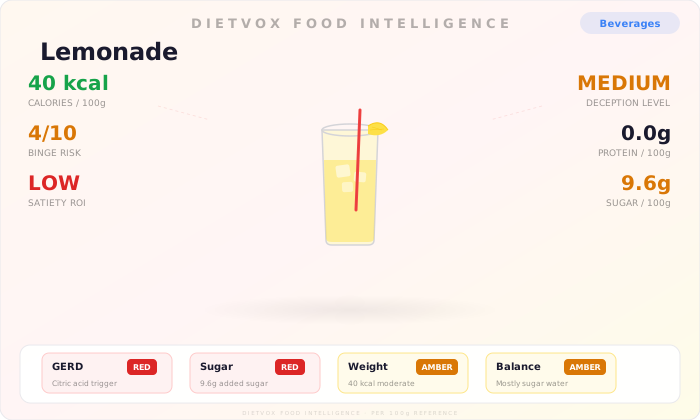
DietVox Rating: AMBER

When navigating a weight loss diet, every food and drink choice plays a role in achieving your goals. For lemonade weight loss considerations, DietVox has assigned an AMBER rating. This means that while lemonade is not strictly off-limits, it requires careful consideration and moderation to align with your dietary objectives. Our AMBER rating signifies that lemonade offers limited benefits for satiety and can contribute to calorie intake without providing essential nutrients that support long-term weight management. Understanding its nutritional profile and how it impacts your body is key to making informed decisions.

Understanding the AMBER Rating for Weight Loss

An AMBER rating indicates that a food or drink, like lemonade, should be consumed with caution and in controlled portions within a weight loss diet. It is not a 'red light' warning to avoid entirely, but rather a 'yellow light' urging you to proceed with awareness. For weight loss, the primary goal is often to create a calorie deficit, meaning you consume fewer calories than you expend CDC healthy weight guidance. Foods and drinks that contribute calories without promoting fullness can make this deficit harder to achieve and sustain.

Lemonade, particularly commercially prepared varieties, often contains significant amounts of added sugars, which are a source of 'empty calories' – calories that provide energy but little to no nutritional value in terms of vitamins, minerals, protein, or fibre Harvard Health Publishing. While its calorie density per 100ml might seem low, typical serving sizes mean these calories can add up quickly, potentially undermining your weight loss efforts.

Nutritional Breakdown of Lemonade (Per 100ml)

Understanding the specific nutritional composition of lemonade is crucial for anyone on a weight loss diet. According to USDA FoodData Central, 100ml of lemonade provides the following USDA FoodData Central:

  • Calories: 40.0 kcal
  • Protein: 0.0g
  • Fat: 0.0g
  • Carbohydrates: 10.0g
  • Sugars: 9.6g

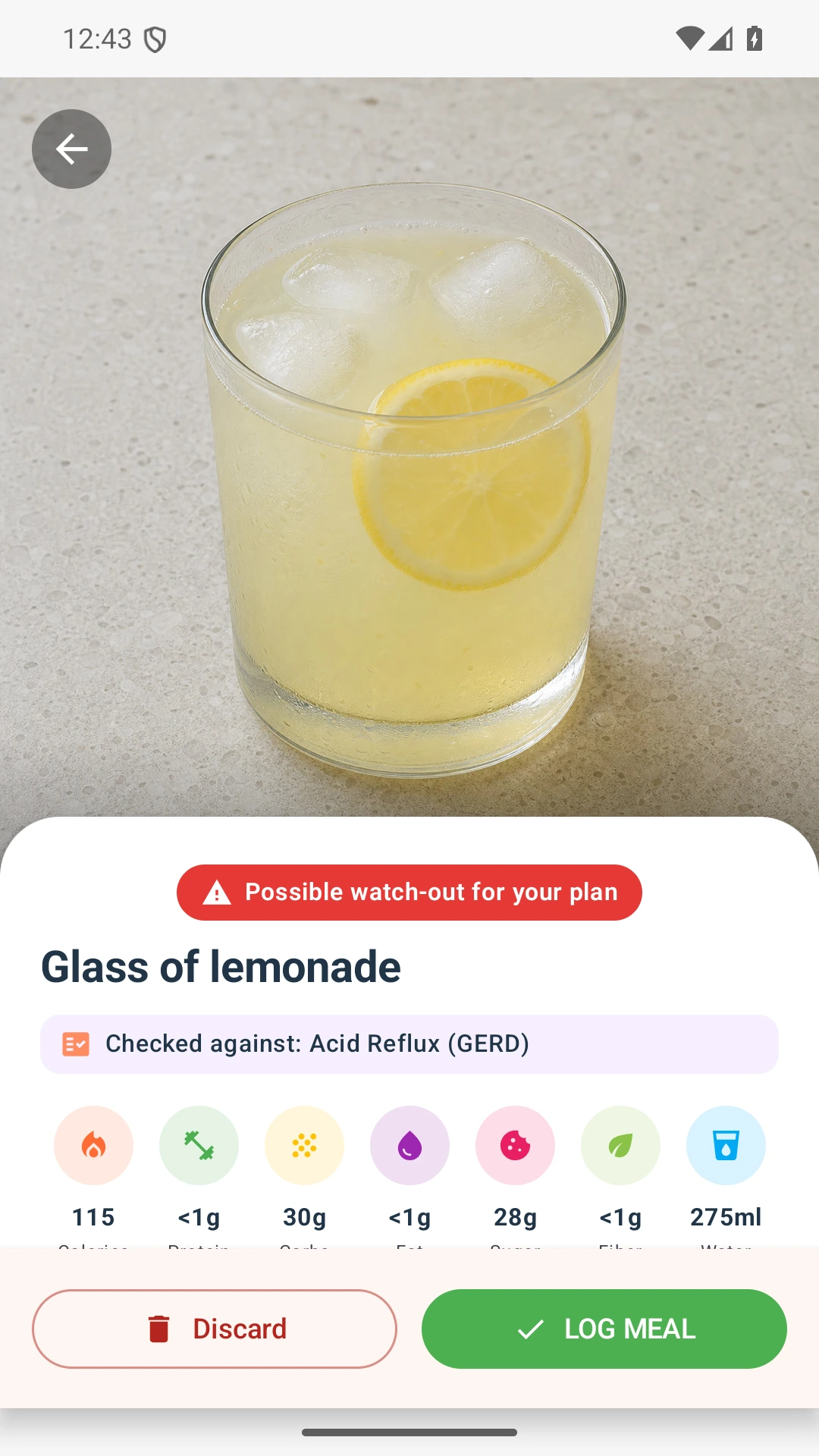
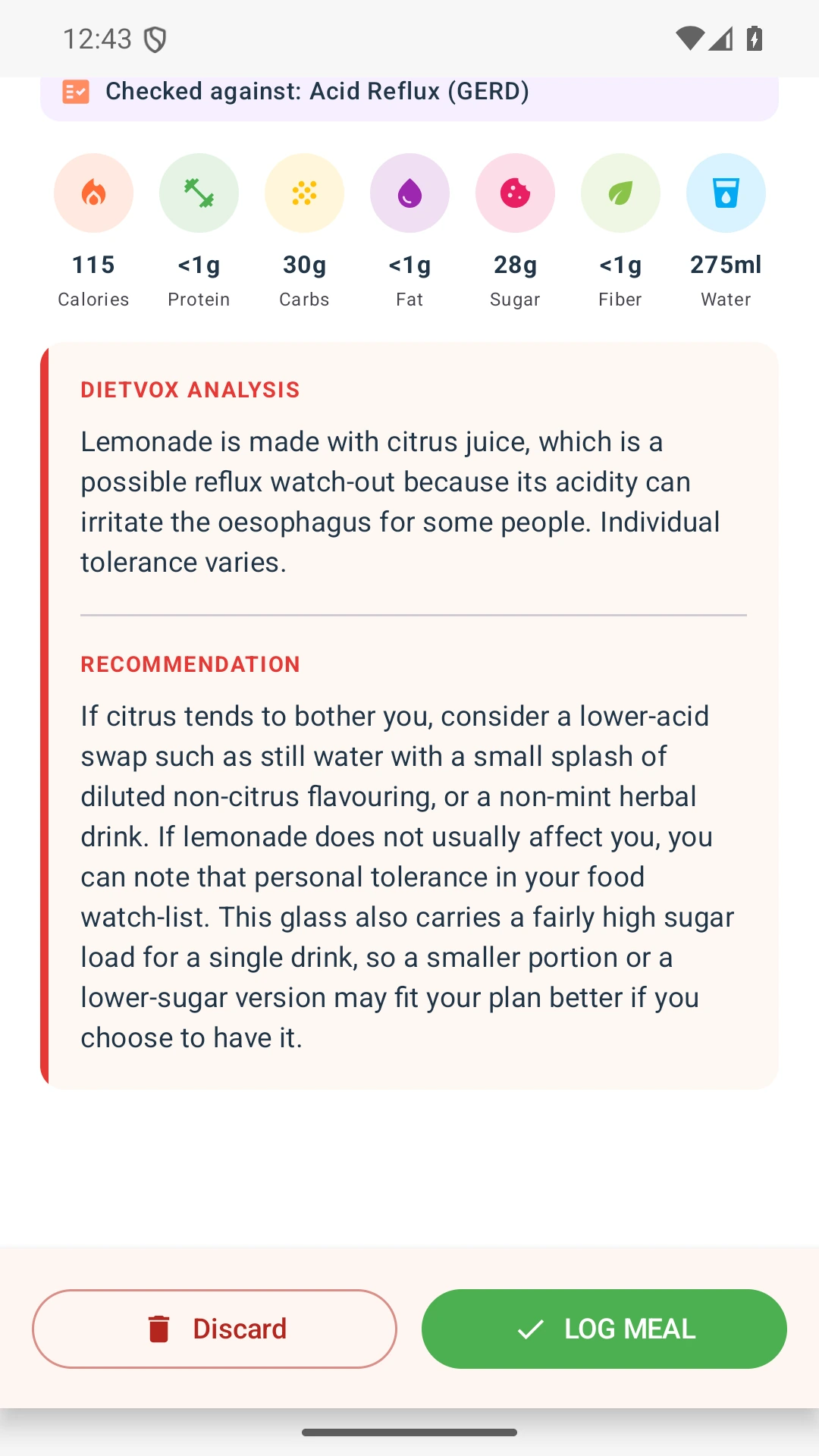
While 40 kcal per 100ml might appear low, a standard glass of lemonade (250-350ml) can easily deliver 100-140 calories. These calories primarily come from sugars, which contribute to the drink's moderate glycaemic impact. The absence of protein and fat means lemonade offers no satiety, making it easy to consume a significant number of calories without feeling full. This is a critical factor for weight loss, where feeling satisfied on fewer calories is paramount.

The Role of Calorie Density and Satiety for Weight Loss

DietVox's Health Forensics analysis reveals key insights into how lemonade impacts weight loss:

  • Calorie Density: LOW (40 kcal/100g) Lemonade is indeed low in calorie density, meaning there are relatively few calories per gram. However, this metric can be misleading for sugary beverages. While it allows for seemingly 'generous portions' by volume, the high sugar content means these calories are quickly absorbed, contributing to energy intake without the physiological signals of fullness that solid foods provide PubMed. For weight loss, the goal is often to choose foods that are low in calorie density but high in satiating components like protein and fibre.
  • Satiety ROI: LOW This is where lemonade significantly falls short for weight management. With 0g of protein and 0g of fibre per 100ml, lemonade offers virtually no satiety PubMed search for Cochrane review DOI. Protein and fibre are crucial for promoting feelings of fullness and reducing overall calorie intake CDC healthy weight guidance. Consuming liquid calories that don't satisfy hunger can lead to compensatory eating later, making it harder to maintain a calorie deficit.
  • Tracking Difficulty: MEDIUM Estimating portion sizes of beverages like lemonade can be moderately difficult. Visual estimation may deviate by 15-25%, leading to underestimation of calorie intake. For precise weight loss tracking, measuring portions accurately is advised.

Common Misconceptions About Lemonade and Weight Loss

Several myths surround lemonade that can hinder weight loss efforts:

Misconception 1: Lemonade is a "Healthy Detox" Drink Some believe that lemonade, especially with added ingredients like cayenne pepper or maple syrup, can detoxify the body or kickstart metabolism for weight loss. direct source support does not support these claims NCCIH detoxes and cleanses overview. The human body has its own highly efficient detoxification systems (liver, kidneys), and consuming sugary lemonade is unlikely to enhance these processes or directly lead to fat loss.

Misconception 2: "Natural" Sugars are Better for Weight Loss Even if made with fresh lemons and cane sugar, the sugars in lemonade are still considered free sugars. The World Health Organization (WHO) recommends reducing intake of free sugars to less than 10% of total energy intake, and ideally to less than 5%, to prevent noncommunicable diseases and manage weight WHO. From a calorie and blood sugar perspective, added sugars in lemonade, regardless of their source, contribute to energy intake without providing satiety.

Misconception 3: Diet Lemonade is a Free Pass Sugar-free or 'diet' lemonades often use artificial sweeteners. While these may reduce calorie content, their long-term impact on weight management and metabolism is still an area of ongoing source review PubMed. Furthermore, they still don't offer the satiety benefits of protein or fibre, meaning they may not contribute to feeling full or reducing overall calorie intake effectively.

Practical Tips for Incorporating Lemonade into a Weight Loss Diet

If you enjoy lemonade and wish to include it in your weight loss journey, here are some practical tips:

  1. Prioritize Water with Lemon Slices: The best alternative for hydration and a refreshing taste is plain water infused with fresh lemon slices. This provides flavour without any added calories or sugar FDA added sugars label guidance.
  1. Opt for Small Portions: If you choose to have lemonade, limit your serving size to a small glass (e.g., 150ml) and consider it an occasional treat rather than a regular beverage. Factor these calories into your daily allowance.
  1. Make Your Own Unsweetened/Lightly Sweetened Version: Prepare homemade lemonade using minimal or no added sugar. You can use natural sweeteners like stevia or erythritol in moderation, or simply enjoy the tartness of lemon with water. This gives you control over the sugar content Harvard Health Publishing.
  1. Avoid Liquid Calories Before Meals: Consuming sugary drinks before meals can increase overall calorie intake without reducing hunger, potentially leading to overeating PubMed.
  1. Don't Rely on Lemonade for Hydration: While it contains water, the sugar content can counteract the benefits of pure hydration. Always prioritize plain water throughout the day for optimal health and weight management FDA added sugars label guidance.

Conclusion

For those on a Weight Loss Diet, lemonade receives an AMBER rating from DietVox. Its high sugar content and lack of protein and fibre mean it contributes calories without promoting satiety, making it a less-than-ideal choice for regular consumption. While occasional, small portions can fit into a well-managed diet, prioritizing water with lemon or unsweetened alternatives is a more effective strategy for successful weight loss. Understanding the 'why' behind this rating empowers you to make smarter, more sustainable choices for your health goals.


Disclaimer: This article is for informational purposes only and does not constitute medical advice. Always consult a healthcare provider before making changes to your diet, especially if you have a medical condition.

Scan your foods with the DietVox app to get personalized ratings based on your specific dietary needs and health goals.

Last reviewed: June 2026

How It Works

Why Lemonade is Rated AMBER

Lemonade receives an AMBER rating for a Weight Loss Diet primarily due to its high sugar content and negligible satiety impact. While its calorie density per 100ml is relatively low (40 kcal), the typical serving size and the nature of liquid calories mean it can quickly contribute a significant number of calories without making you feel full PubMed.

Here's a breakdown of the mechanisms:

  1. Calorie Contribution from Sugar: Lemonade delivers 40 kcal per 100ml, almost entirely from its 9.6g of sugar USDA FoodData Central. A standard glass (250-350ml) will provide 100-140 calories. These are 'empty calories' that add to your daily intake without offering substantial nutritional benefits or curbing hunger. For weight loss, maintaining a calorie deficit is crucial, and sugary drinks make this harder by adding easily consumable calories that don't displace other food intake CDC healthy weight guidance.
  1. Zero Satiety (Low Protein, Low Fibre): The most significant factor is lemonade's complete lack of protein (0g) and dietary fibre (0g) USDA FoodData Central. Both protein and fibre are known to promote satiety, helping you feel full and satisfied after eating or drinking PubMed search for Cochrane review DOI. Since lemonade offers none of these, it provides virtually no fullness for its caloric cost. This means you can drink a large amount of lemonade, consume many calories, and still feel hungry shortly after, potentially leading to overeating other foods.
  1. Glycaemic Impact: With 9.6g of sugar per 100ml, lemonade has a moderate glycaemic impact. Rapid spikes and drops in blood sugar can sometimes lead to increased hunger and cravings, making it challenging to stick to a calorie-controlled diet International glycemic index tables review.
  1. Tracking Difficulty: The moderate tracking difficulty means that visually estimating portion sizes can lead to underreporting calories by 15-25%. This unnoticed caloric intake can subtly undermine weight loss efforts over time.

In essence, lemonade's AMBER rating stems from its ability to add significant calories through sugar without providing any compensatory satiety, making it a poor choice for efficient calorie management and hunger control on a weight loss diet. Water with lemon slices is a far more effective and beneficial alternative for hydration and flavour without the caloric drawbacks.

Scan any food. Get an instant RED/AMBER/GREEN rating.

DietVox analyses every food across 4 diet protocols — no guesswork.

Try DietVox Free →

Try These Instead

Safer alternatives that won't trigger your symptoms.

Diet Coke illustration

Diet Coke

0 kcal Beverages
AMBER GERD
GREEN Sugar
AMBER Weight
AMBER Balance
Kombucha illustration

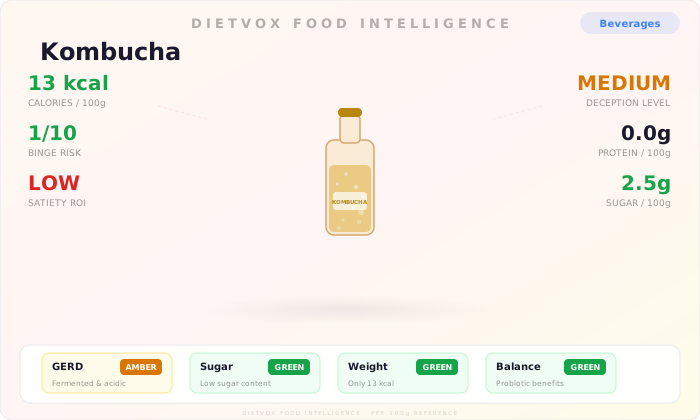
Kombucha

13 kcal Beverages
AMBER GERD
AMBER Sugar
AMBER Weight
AMBER Balance
Salmon illustration

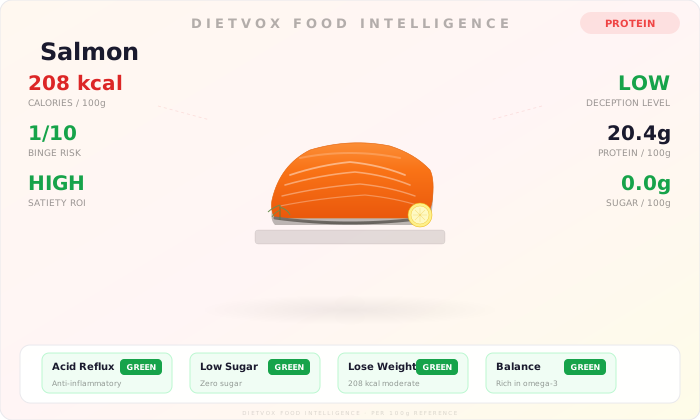
Salmon

208 kcal Protein
GREEN GERD
GREEN Sugar
AMBER Weight
GREEN Balance

Frequently Asked Questions

Can I eat Lemonade on a weight loss diet?

DietVox rates Lemonade AMBER for weight loss diet. Lemonade provides 40–50 kcal/100ml from sugar. A glass delivers 100–150 kcal with zero satiety. Consider water with lemon slices instead.

How does the sugar in lemonade affect weight loss?

Lemonade contains 9.6g of sugar per 100ml, contributing 'empty calories' that add to your overall intake without promoting fullness. High sugar intake can also lead to blood sugar spikes and crashes, potentially increasing hunger and cravings, making it harder to maintain a calorie deficit for weight loss WHO.

Are there better drink alternatives to lemonade for weight loss?

Absolutely. The best alternative is plain water, optionally infused with fresh lemon slices, cucumber, or mint for flavour without calories or sugar. Unsweetened herbal teas, black coffee (without added sugar or cream), or sparkling water are also excellent choices that support weight loss by providing hydration without caloric impact or promoting hunger FDA added sugars label guidance.

Can homemade lemonade be part of a weight loss diet?

Homemade lemonade offers more control over ingredients. By significantly reducing or eliminating added sugar, using natural zero-calorie sweeteners (like stevia or erythritol) in moderation, or simply enjoying unsweetened lemon water, you can make it a more weight-loss-friendly option. However, it still lacks protein and fibre, so it won't contribute to satiety.

Why is 'low calorie density' for lemonade misleading for weight loss?

While lemonade has a low calorie density (40 kcal/100ml), this can be misleading because these calories come almost entirely from sugar and provide no satiety. You can consume a large volume, accumulating many calories, without feeling full. In contrast, low-calorie-density foods ideal for weight loss (like vegetables) are also rich in fibre and water, which promote fullness PubMed.

Related Reading