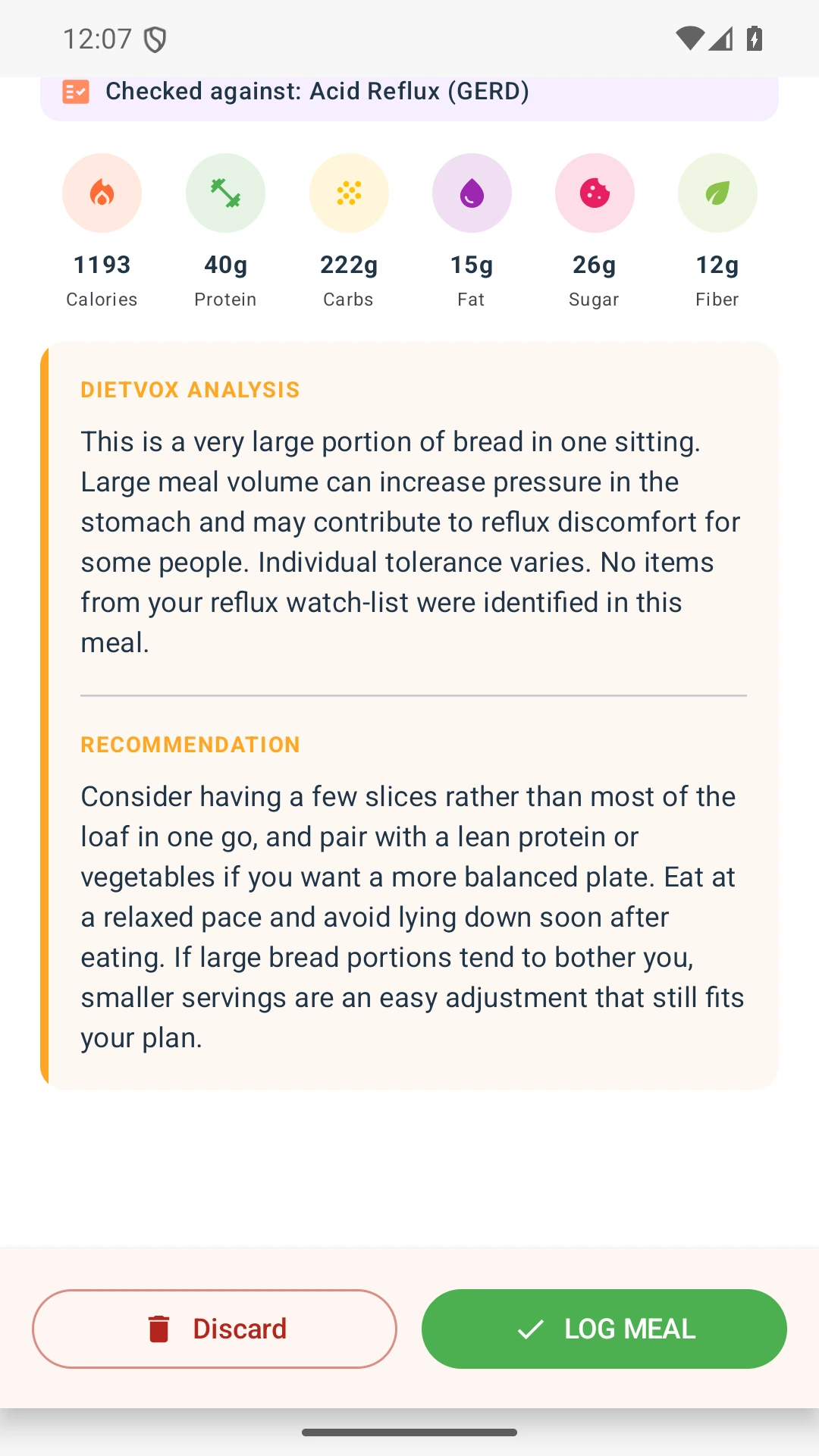
The bread aisle is full of health claims: "whole wheat," "multigrain," "sourdough," and "sprouted" can mean very different things. This comparison focuses on ordinary commercial whole-wheat bread versus ordinary commercial white bread, because brand formulas vary.

Nutrition Face-Off (Per Slice, About 30g)

Fibre - Whole-wheat bread usually wins. USDA FoodData Central entries put commercial whole-wheat bread at about 1.9g fibre per 28g slice, while common white bread entries are closer to about 0.6-0.8g per slice; MedlinePlus notes that adult fibre needs commonly fall around 21-38g per day depending on age and sex USDA FoodData Central (FDC ID 172688 and FDC ID 174924) MedlinePlus fibre overview.

Protein and calories - The difference is usually small. USDA FoodData Central entries show both common whole-wheat and white breads in the same broad calorie range per slice, with protein differences that are smaller than the fibre difference USDA FoodData Central (FDC ID 172688 and FDC ID 174924).

Added sugar - Either type can contain added sugar, depending on the brand. Use the FDA added-sugars line and the ingredient list rather than assuming whole wheat always means no added sugar FDA added sugars label guidance.

Glycemic response - Bread response varies by flour particle size, fermentation, fibre, serving size, and what you eat with it. International GI tables show wide variation across breads, so DietVox treats dense whole-grain or sourdough-style breads as better options than soft refined white bread for glucose control, while still recommending label checks and portion control International GI tables review.

DietVox Protocol Ratings

GERD (Acid Reflux)

White bread can be slightly easier for some people during an active reflux flare because it is bland and lower in fibre, but this is a DietVox tolerance call rather than a universal clinical rule. ACG guidance supports individualized trigger testing for reflux symptoms American College of Gastroenterology acid reflux guidance.

Both are still rated GREEN for GERD when eaten in normal portions and not paired with high-fat or acidic toppings.

Weight Loss

Whole wheat usually wins. Its higher fibre content can make the same portion more filling, and a 2017 randomized trial found that substituting whole grains for refined grains improved energy-balance measures in adults under controlled feeding conditions whole-grain randomized trial.

Low Sugar

Whole wheat usually wins, but labels decide. Both can fit a low-sugar protocol in moderation; choose bread with 0g added sugar when possible and verify it on the Nutrition Facts label FDA added sugars label guidance.

Maintenance

Either can work. MedlinePlus dietary guidance describes whole grains as higher in fibre and protein than refined grains, so whole wheat is the better default for everyday use, while white bread can still fit occasionally in an otherwise balanced diet MedlinePlus dietary guidelines overview.

The Label Trap

"Wheat" and "multigrain" do not necessarily mean 100% whole wheat. Look for whole-wheat flour or another whole grain first in the ingredient list, and use fibre plus added-sugar values to check whether the product matches the front-of-pack claim MedlinePlus dietary guidelines overview.

The strongest everyday choices: 100% whole wheat, dense whole-grain bread, or true sourdough-style breads with simple ingredients and enough fibre to justify the label.

The Verdict

For most DietVox users, whole-wheat bread is the better everyday choice because it usually provides more fibre and a stronger nutrient profile than white bread. The exception is short-term reflux tolerance, where a bland white bread may be easier for some people during active symptoms. Choose based on your primary protocol, portion size, and the exact label in front of you.

Scan any food. Get an instant RED/AMBER/GREEN rating.

DietVox analyses every food across 4 diet protocols — no guesswork.

Try DietVox Free →

Frequently Asked Questions

Is whole wheat bread actually healthier than white bread?

Yes, for most people. Whole wheat bread has 2-3x more fiber, a lower glycemic index, and more micronutrients (magnesium, zinc, B vitamins). The exception is GERD, where white bread's lower fiber content makes it gentler on the digestive system.

Does whole wheat bread have fewer calories than white bread?

No. Calorie counts are very similar — both about 70-90 calories per slice. The difference isn't in calories but in how your body processes them. Whole wheat's fiber slows digestion and provides better satiety.

Is sourdough bread healthier than both?

Sourdough has advantages over both. The fermentation process breaks down phytic acid (improving mineral absorption), produces organic acids that lower the GI further, and can make it easier to digest. Sourdough is an excellent choice across all protocols.

Can I eat bread on a weight loss diet?

Yes. Whole wheat bread is rated GREEN for weight loss by DietVox. The key is portion control — one slice with a meal is fine. The problems arise when bread becomes the main event (sandwich, toast with butter) rather than a supporting player.

If white bread is better for GERD, should I switch?

Only if you have active GERD symptoms that are triggered by high-fiber foods. For most people, the nutritional benefits of whole wheat outweigh the GERD considerations. If you do switch to white bread for GERD, choose a brand with minimal added sugar and consider adding fiber from other sources.

Related Reading