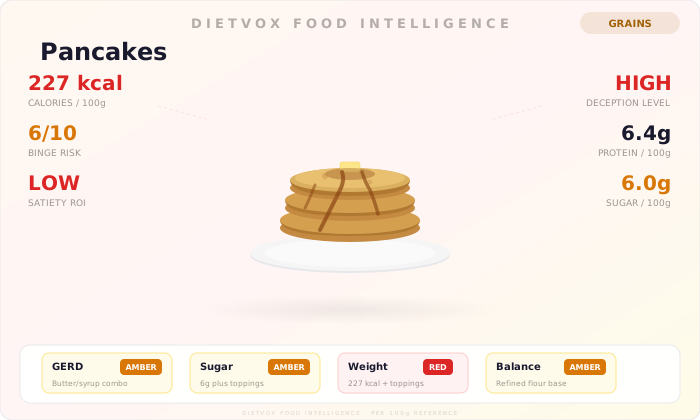
DietVox Rating: AMBER

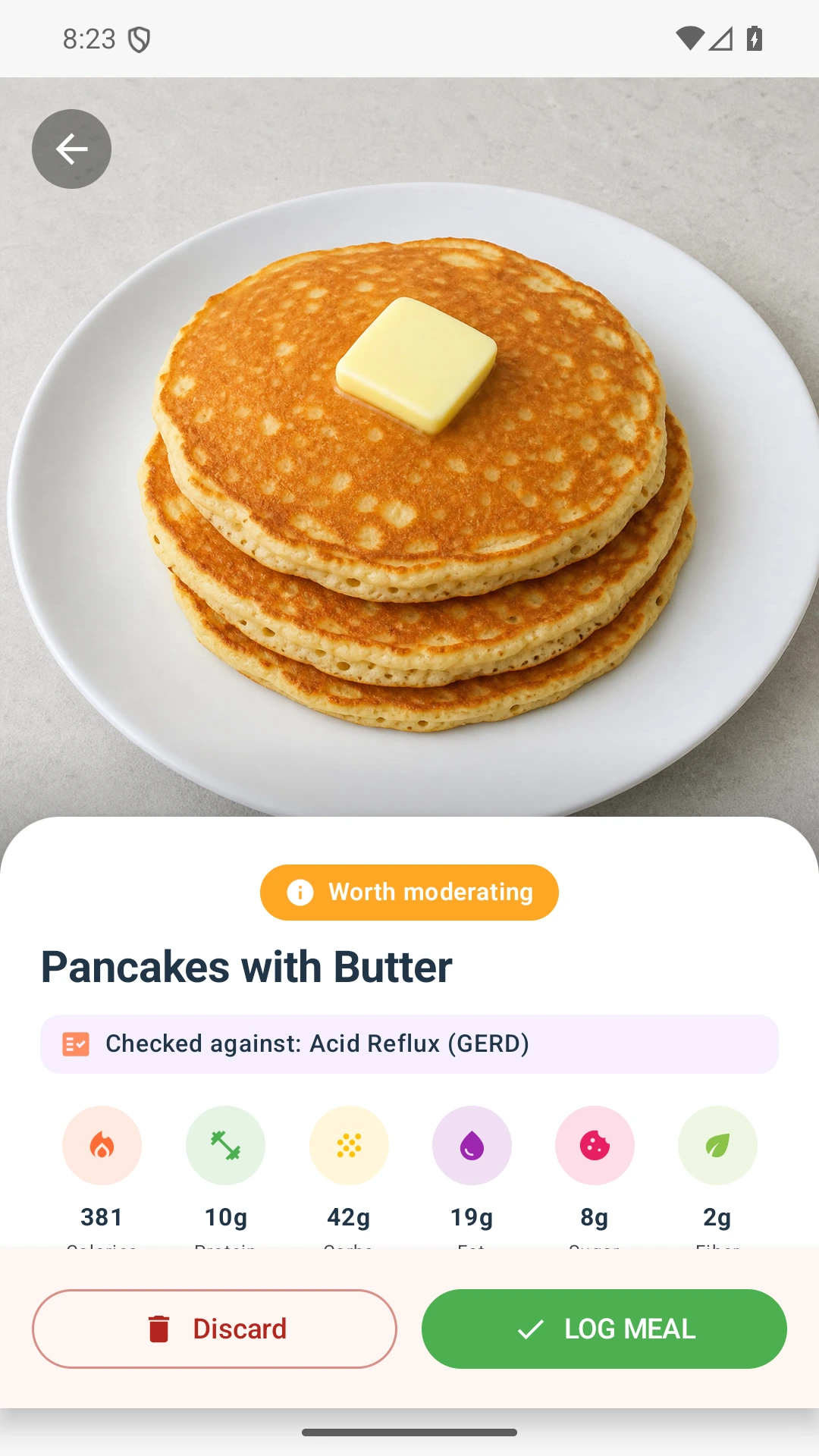
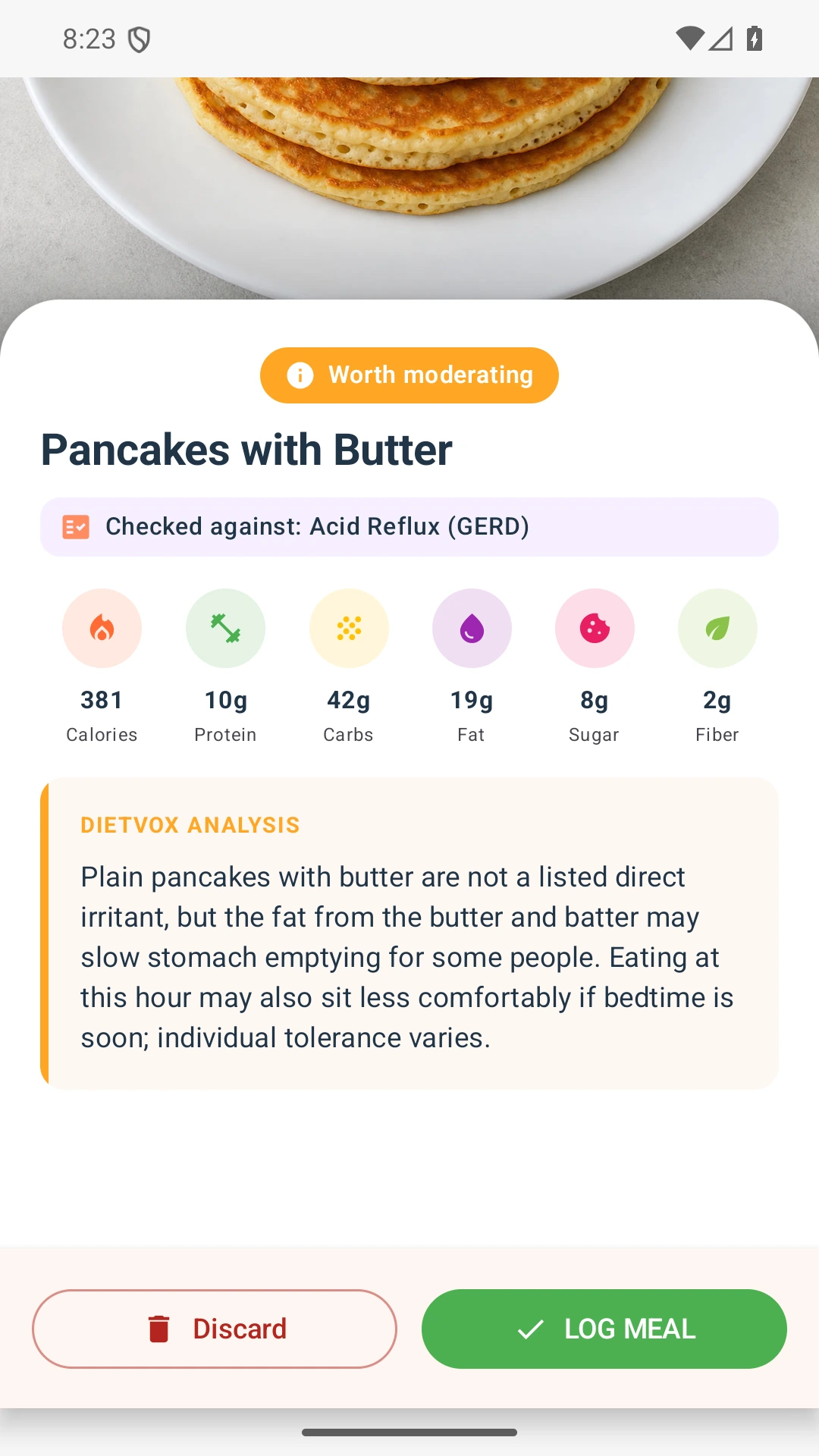
For individuals managing a GERD (Acid Reflux) Diet, the question of pancakes and acid reflux is a frequent concern. DietVox assigns pancakes an AMBER rating: they are not strictly forbidden but require caution and careful modification. The moderate risk stems less from the plain pancake itself and more from the typical preparation methods and high-risk toppings that often accompany them.

This rating signifies that while some people with GERD may tolerate plain, small portions of pancakes, they have the potential to trigger symptoms due to their fat content and the common addition of other triggers like butter, syrup, and acidic fruits. Understanding the nutritional profile and how to modify this popular breakfast food is key to enjoying it without consequence.

The GERD (Acid Reflux) Diet: A Quick Refresher

Gastroesophageal reflux disease (GERD) is a condition where stomach acid frequently flows back into the esophagus. A primary management strategy involves dietary modification to avoid foods that trigger symptoms. According to health guidance from institutions like the NHS and the American College of Gastroenterology acid reflux guidance, common triggers include high-fat, spicy, fried, and acidic foods. These foods can relax the lower esophageal sphincter (LES)—the muscular valve between the esophagus and stomach—or delay stomach emptying, increasing the likelihood of reflux.

Nutritional Profile of Pancakes: A GERD Perspective

To understand why pancakes are rated AMBER, we must analyze their nutritional composition through the lens of GERD management. According to the USDA FoodData Central (FDC ID 169875), a standard 100g serving of plain pancakes contains:

  • Calories: 227 kcal
  • Fat: 9.0g
  • Carbohydrates: 29.0g
  • Sugars: 6.0g
  • Dietary Fibre: 1.0g

Fat Content: The Primary Concern

The 9.0g of fat per 100g is a significant factor in the AMBER rating. High-fat foods are a well-documented trigger for GERD. The American College of Gastroenterology (ACG) guidelines note that fat can lower the resting pressure of the LES, making it easier for stomach contents to reflux. Additionally, fat slows down gastric emptying, meaning food sits in the stomach for longer, which can increase pressure and the potential for acid backflow. While 9.0g is moderate, this figure is for plain pancakes; adding butter or oil during cooking can easily double this amount.

Carbohydrates and Fibre

Pancakes are predominantly a source of refined carbohydrates. While not a direct trigger in the same way as fat, large portions of refined carbs can contribute to bloating and discomfort in some individuals. The very low fibre content (1.0g) means pancakes have a low Satiety ROI (Return on Investment). This can make it easy to overeat, and consuming large meals is a known mechanical trigger for reflux, as it increases pressure on the stomach and LES NHS.

The Topping Trap: How Add-ons Increase Reflux Risk

The most significant risk factor for pancakes in a GERD diet is the toppings. A plain pancake may be tolerable, but the following common additions can quickly turn it into a high-risk meal:

  • Butter and Margarine: These are almost pure fat, directly contributing to the mechanisms of LES relaxation and delayed stomach emptying.
  • Syrups and Jams: While the link between sugar and GERD is less direct than fat, high-sugar toppings can add significant calories and may exacerbate symptoms in some sensitive individuals. Many commercial syrups are also acidic.
  • Acidic Fruits: Toppings like orange segments, berry compotes, or pineapple can be problematic. The acidity can directly irritate an already-inflamed esophagus, causing a burning sensation characteristic of heartburn American College of Gastroenterology acid reflux guidance.
  • Chocolate and Cream: Chocolate contains both fat and methylxanthines (like caffeine and theobromine), compounds that have been shown to relax the LES. Whipped cream is also very high in fat, compounding the risk.

Practical Tips for Eating Pancakes with GERD

Managing GERD is about making strategic choices. If you wish to include pancakes in your diet, consider these source-reviewed modifications:

  1. Control Your Portions: A smaller meal is less likely to trigger reflux. Opt for one or two small pancakes instead of a large stack. Eating smaller, more frequent meals is a cornerstone of GERD lifestyle management Harvard Health Publishing.
  2. Modify the Recipe: Prepare pancakes at home where you can control the ingredients. Use low-fat or skim milk instead of whole milk, replace some of the all-purpose flour with whole-wheat flour for extra fibre, and minimize the oil or melted butter in the batter.
  3. Cook Smart: Use a non-stick pan with a light coating of cooking spray instead of frying pancakes in pools of butter or oil. This drastically reduces the added fat content.
  4. Choose Toppings Wisely: This is the most critical step. Swap high-risk toppings for GERD-friendly alternatives: - Instead of butter: Try a small dollop of low-fat Greek yogurt. - Instead of syrup: Use a small amount of pure maple syrup (which is less processed than pancake syrup) or top with sliced, non-acidic fruits like bananas or melons. - Instead of acidic fruits: A sprinkle of cinnamon or a small amount of honey can add flavour without acidity.
  5. Time Your Meal: Avoid eating pancakes late at night or within 2-3 hours of bedtime. Lying down with a full stomach makes it easier for acid to reflux into the esophagus American College of Gastroenterology acid reflux guidance.

The Verdict on Pancakes and GERD

Pancakes' AMBER rating for the GERD (Acid Reflux) Diet is a reflection of their potential, not a certainty, to cause symptoms. The risk is manageable but requires conscious effort. By focusing on portion control, low-fat preparation, and choosing GERD-friendly toppings, many individuals can still enjoy pancakes occasionally without triggering a reflux episode. Always monitor your personal tolerance, as trigger foods can vary from person to person.


Disclaimer: This article is for informational purposes only and does not constitute medical advice. Always consult a healthcare provider before making changes to your diet, especially if you have a medical condition.

Scan your foods with the DietVox app to get personalized ratings based on your specific dietary needs and health goals.

Last reviewed: June 2026

How It Works

Why Pancakes are Rated AMBER

Pancakes receive an AMBER rating for a GERD diet due to a combination of their inherent nutritional profile and the high-risk way they are typically consumed. The primary mechanisms that contribute to their potential to trigger acid reflux are:

  1. Moderate Fat Content and LES Relaxation: A standard 100g serving of pancakes contains 9.0g of fat. Dietary fat is a primary trigger for GERD because it can decrease the pressure of the lower esophageal sphincter (LES), the muscular valve that acts as a barrier against stomach acid. A relaxed LES allows acid to splash back into the esophagus more easily, causing heartburn and other symptoms American College of Gastroenterology.
  1. Delayed Gastric Emptying: High-fat meals, which pancakes often become once butter and other toppings are added, slow down the rate at which the stomach empties. This prolonged gastric residence time increases the volume and pressure within the stomach, raising the mechanical likelihood of a reflux event PubMed.
  1. The Compounding Effect of Toppings: The base pancake is only moderately risky, but it serves as a vehicle for common GERD triggers. Butter adds significant fat, syrups add a concentrated sugar load, and acidic fruit toppings like berries can directly irritate the esophageal lining. This layering of multiple trigger mechanisms (LES relaxation, direct irritation) is why a pancake breakfast can become highly problematic.
  1. High Meal Volume and Low Satiety: Pancakes are often consumed in large stacks, leading to a high-volume meal. A distended stomach puts physical pressure on the LES, which can force it open. Compounding this, the low fibre content of traditional pancakes provides poor satiety signals, making it easy to overeat and exacerbate this pressure-related reflux NHS.

Scan any food. Get an instant RED/AMBER/GREEN rating.

DietVox analyses every food across 4 diet protocols — no guesswork.

Try DietVox Free →

Try These Instead

Safer alternatives that won't trigger your symptoms.

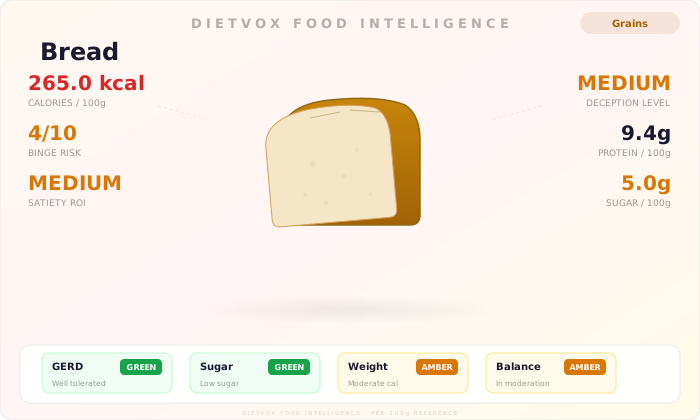
Bread illustration

Bread

265 kcal Grains
GREEN GERD
GREEN Sugar
AMBER Weight
GREEN Balance
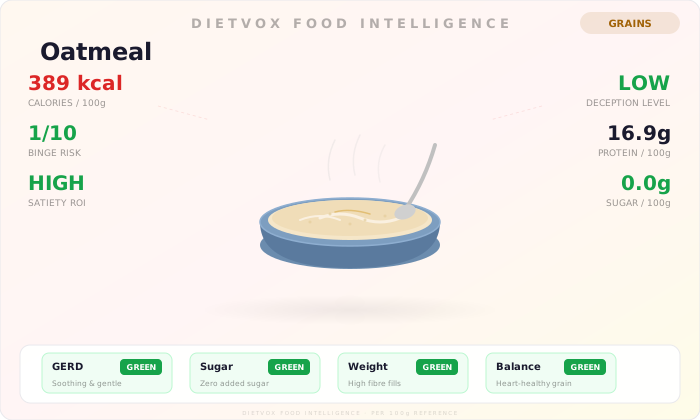
Oatmeal illustration

Oatmeal

389 kcal Grains
GREEN GERD
GREEN Sugar
GREEN Weight
GREEN Balance
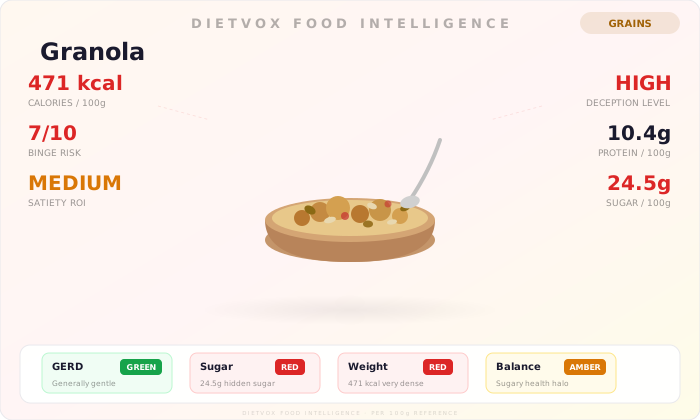
Granola illustration

Granola

471 kcal Grains
GREEN GERD
RED Sugar
RED Weight
AMBER Balance

Frequently Asked Questions

Are whole-wheat pancakes better for acid reflux?

Potentially. Whole-wheat pancakes provide more dietary fibre, which can promote better digestion and increase satiety, helping with portion control—a key factor in managing GERD. However, the primary reflux triggers in pancakes are the fat and sugar from the recipe and toppings, which remain a concern regardless of the type of flour used.

What are the best GERD-friendly toppings for pancakes?

Opt for low-fat and low-acid toppings. Good choices include sliced bananas, chopped melon, a sprinkle of cinnamon, a small drizzle of pure maple syrup, or a dollop of low-fat, non-acidic yogurt. Avoid high-fat toppings like butter and cream, and acidic ones like citrus fruits or berry compotes.

Does the way pancakes are cooked affect acid reflux?

Absolutely. Frying pancakes in a significant amount of butter or oil dramatically increases their fat content, a primary trigger for GERD symptoms. Using a non-stick pan with only a light mist of cooking spray is a much safer preparation method for an acid reflux diet.

Can the liquid used in the pancake batter (e.g., milk) trigger GERD?

Yes, it can. Whole milk is high in fat, which can relax the lower esophageal sphincter and worsen reflux. When preparing pancakes, choosing low-fat or skim milk, or a low-fat non-dairy alternative like almond milk, can help create a more GERD-friendly meal.

Is it better to eat pancakes for breakfast than later in the day?

Yes. It's generally advisable to eat potentially triggering foods earlier in the day. This allows plenty of time for digestion while you are upright and active. Eating a meal like pancakes close to bedtime increases the risk of nighttime reflux, as lying down makes it easier for stomach acid to travel into the esophagus.

Related Reading