First-party app output
DietVox scan examples
Yogurt scan
GREEN
View full analysis and scan recording
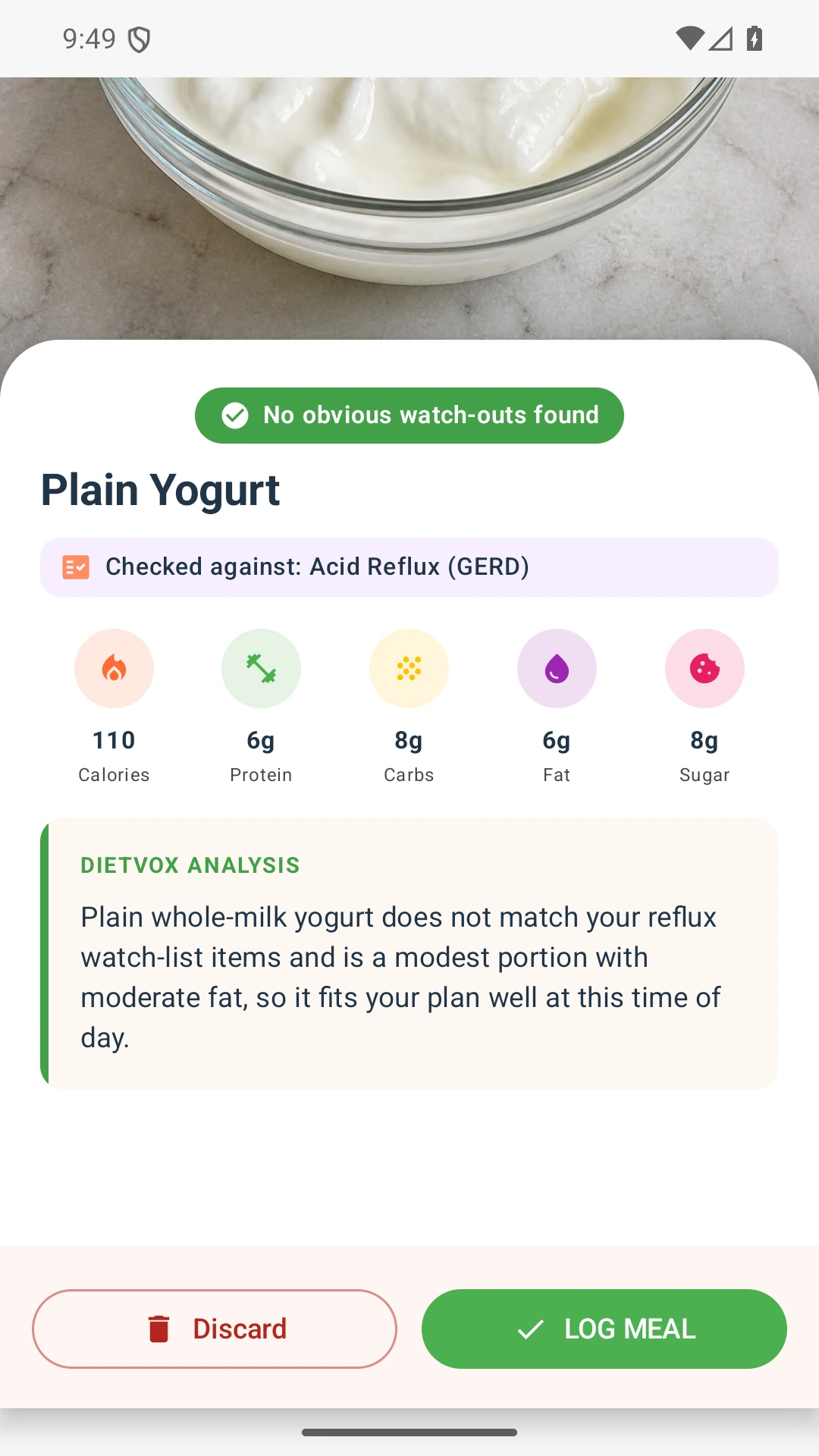
Scan recording
Greek Yogurt scan
GREEN
View full analysis and scan recording
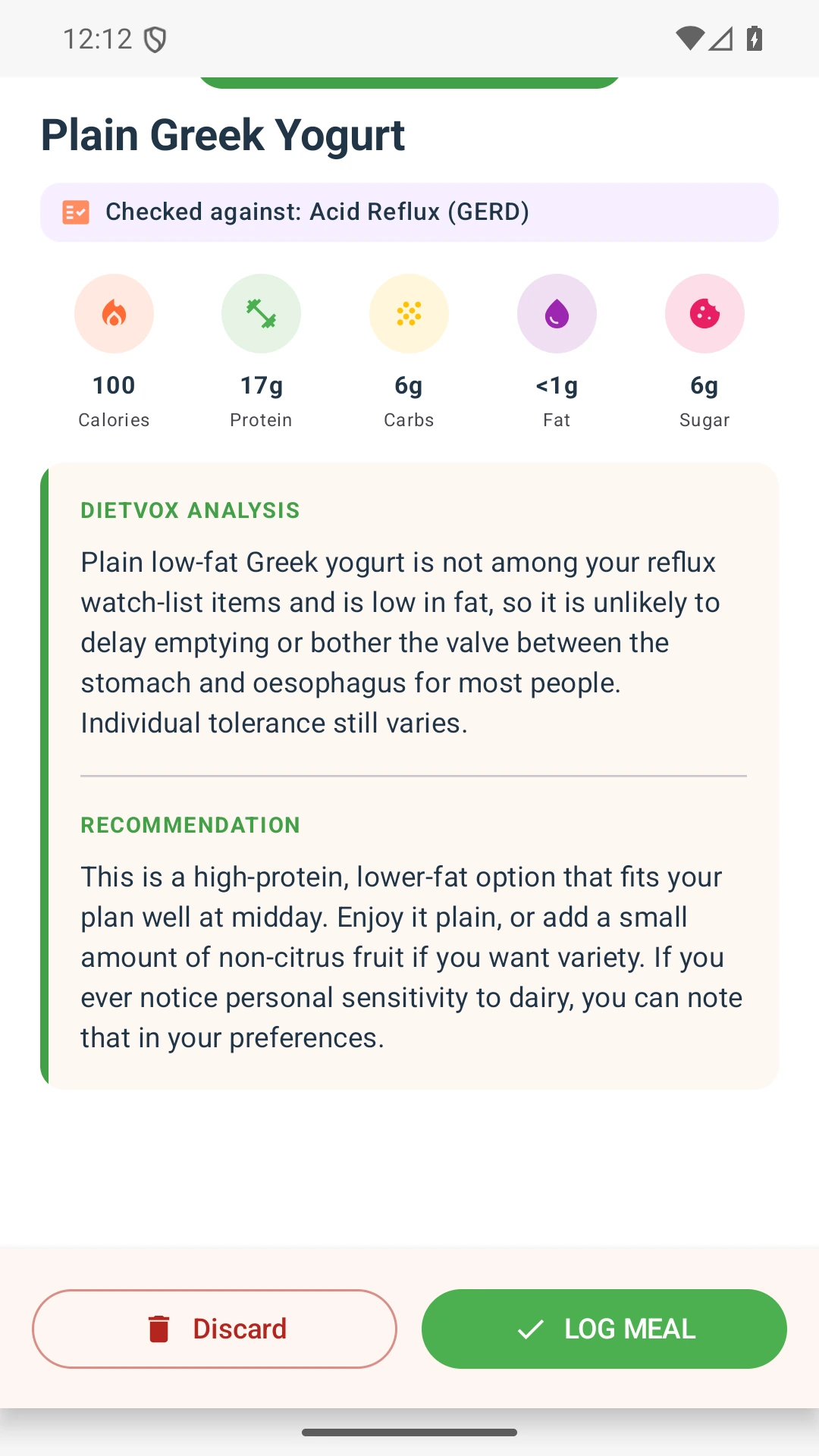
Scan recording
Direct answer: Neither Greek nor regular yogurt is automatically the better choice for every goal. NHS balanced-diet guidance places yogurt within the dairy group and recommends comparing lower-fat, lower-sugar options where appropriate.
Compare like with like
Plain, sweetened, flavoured, strained, whole-milk, lower-fat and dairy-free yogurts are different products. Compare the same serving basis and check fat, added sugar, protein, ingredients and fortification on the exact label.
Use the matching nutrition record
USDA FoodData Central separates food-composition records by product and preparation. A generic yogurt entry should not replace the package label for a branded product.
Sources and editorial status
NHS balanced-diet guidance and USDA FoodData Central were checked on 28 July 2026. DietVox Editorial prepared this comparison; it has not been medically reviewed.
Scan any food. Get an instant RED/AMBER/GREEN rating.
DietVox analyses foods across 4 diet protocols, with preparation and portion context.
Try DietVox Free →Frequently Asked Questions
Is Greek yogurt or regular yogurt better for gut health?
The live cultures and nutrient profile vary by product. Neither Greek nor regular yogurt can be assumed to improve an individual gut-health outcome; check the ingredient and nutrition label for the product you are comparing.
Does Greek yogurt have less lactose than regular yogurt?
Lactose content varies by brand, recipe and serving size. Compare the product label and use your own tolerance or clinician advice; this comparison does not establish that either yogurt is tolerated with lactose intolerance.
Which is better for baking — Greek or regular yogurt?
Greek and regular yogurt have different textures, so either may suit a recipe depending on the desired thickness and the manufacturer’s instructions. Test a small batch rather than assuming a universal substitution ratio.
Why is Greek yogurt more expensive?
Price can vary with brand, recipe, package size, production method and retailer. This page does not verify a fixed milk-to-yogurt ratio or a single reason for a price difference.
Can I eat yogurt on a low-sugar diet?
Both plain and flavoured yogurt products vary. Compare the Nutrition Facts label, including added sugars where shown, with the serving you plan to eat; a DietVox protocol rating is not a universal prescription.