First-party app output
DietVox scan example
Coffee scan
RED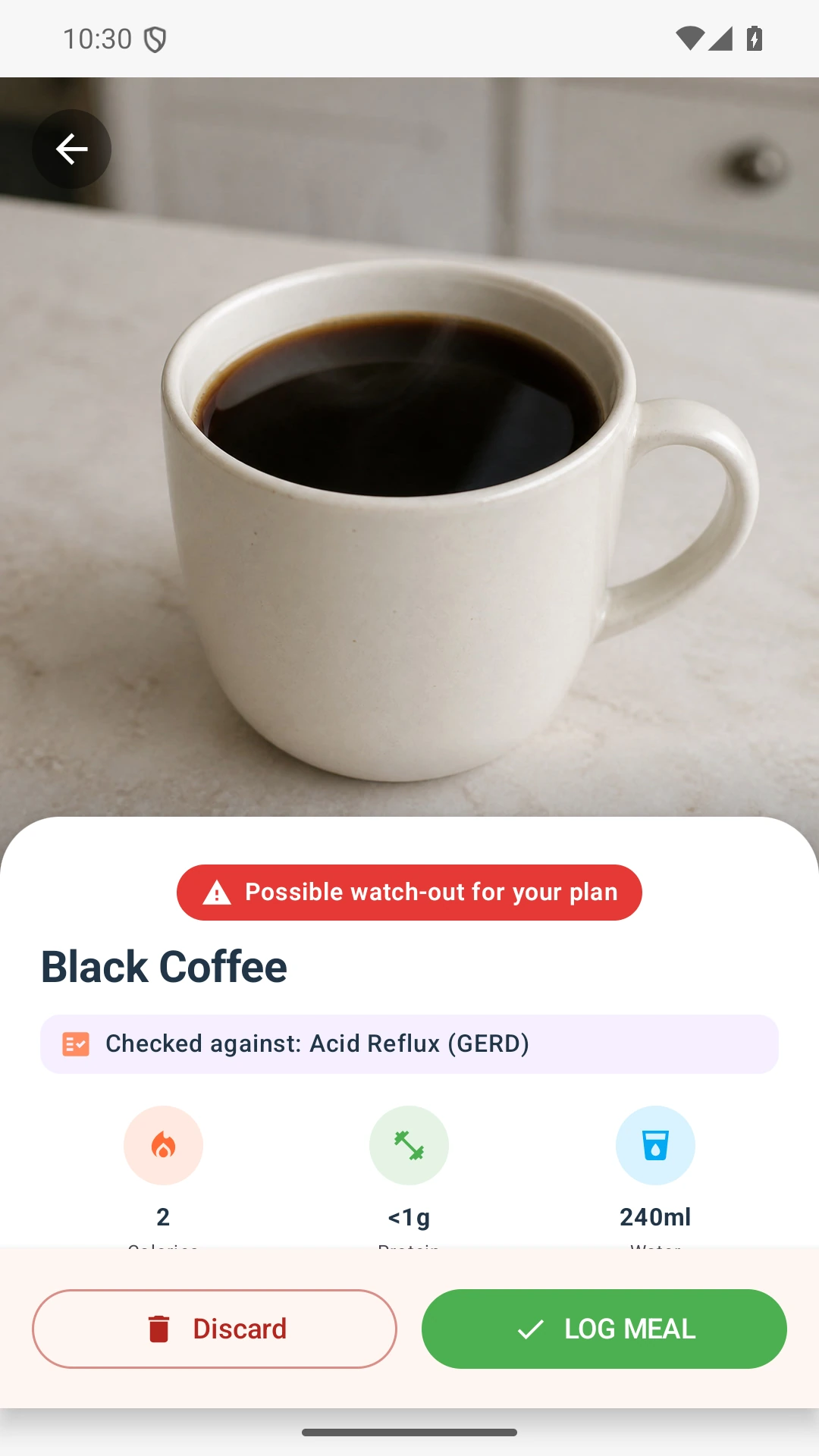
View full analysis and scan recording
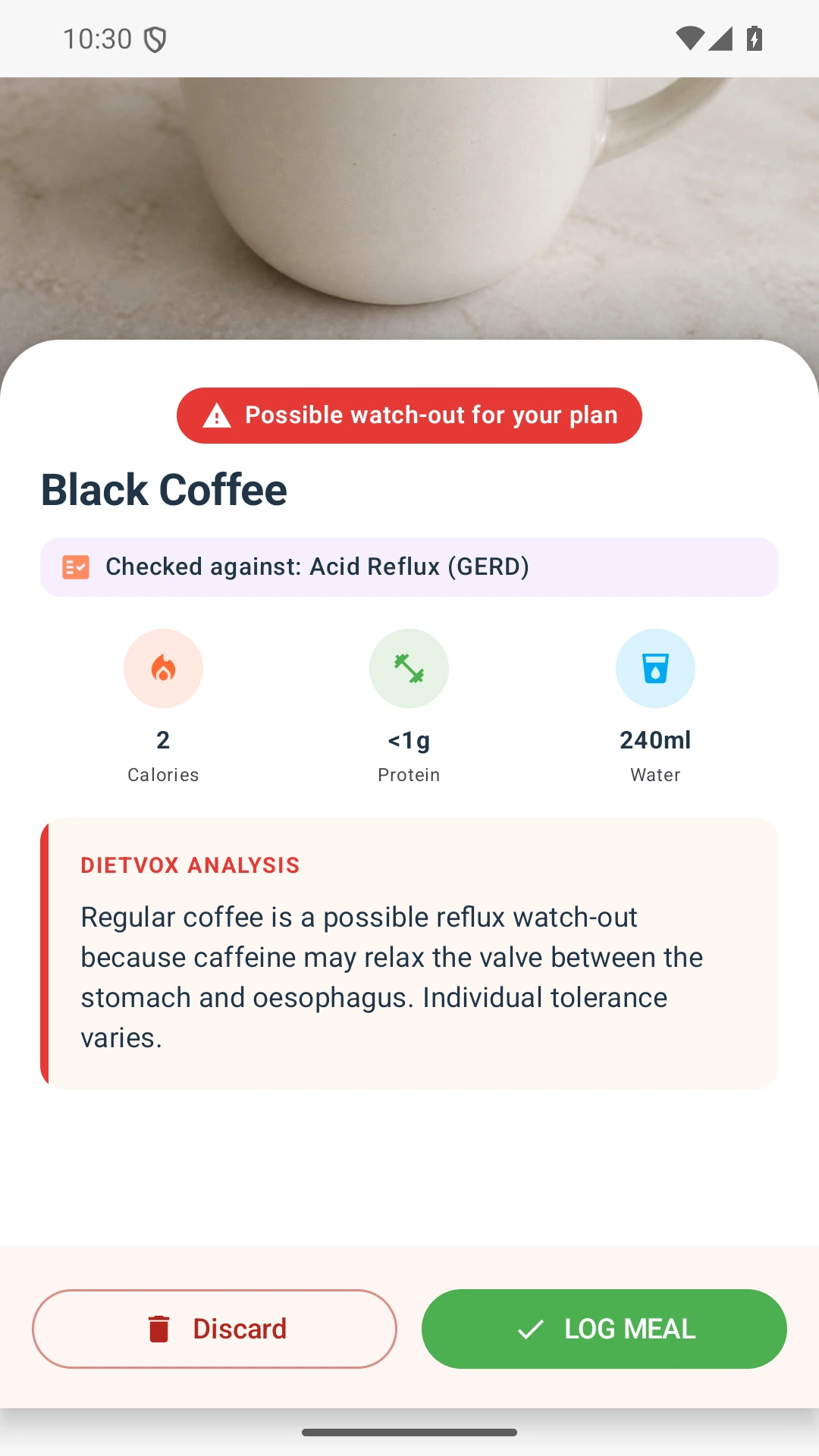
Scan recording
Direct answer: Coffee is commonly linked with reflux symptoms, but it does not affect every person in the same way. NIDDK guidance on eating, diet and GERD lists coffee and other caffeine sources among commonly reported triggers and recommends discussing foods or drinks that repeatedly increase symptoms.
What changes the answer?
Caffeine amount, serving size, roast, milk, cream, syrups, chocolate and drinking time can all change the beverage being assessed. Decaffeinated coffee is a separate product, not a guaranteed symptom-free substitute.
A practical comparison
- Compare one repeatable preparation at a time.
- Record the amount and additions rather than testing “coffee” as one broad category.
- If symptoms occur at night, NIDDK guidance on eating, diet and GERD notes that meal timing before lying down may matter.
Sources and editorial status
NIDDK guidance on eating, diet and GERD was checked on 28 July 2026. DietVox Editorial prepared this guide; it has not been medically reviewed.
Scan any food. Get an instant RED/AMBER/GREEN rating.
DietVox analyses foods across 4 diet protocols, with preparation and portion context.
Try DietVox Free →Frequently Asked Questions
Can I drink coffee if my GERD is well-controlled?
NIDDK lists caffeine among items commonly linked with GERD symptoms and notes that triggers vary by person. No coffee style or one-cup amount is established as safe; discuss ongoing symptoms with a clinician and use your own repeated response to guide choices. NIDDK
Is espresso better or worse than drip coffee for reflux?
There is no GERD-specific evidence that espresso is safer or worse than drip coffee. Both can contain caffeine, which NIDDK lists among common symptom links; compare your own response rather than relying on concentration or volume theories. NIDDK
Does adding milk to coffee help with acid reflux?
Adding milk changes a coffee recipe but does not establish that the drink will be tolerated. NIDDK lists caffeine and higher-fat foods among common symptom links; no milk type is proven to prevent coffee-related reflux. NIDDK
How long after quitting coffee do GERD symptoms improve?
No reliable coffee-withdrawal timetable for GERD improvement was identified. Track any recurring symptom pattern and seek clinical advice for persistent symptoms rather than expecting a fixed number of days or a lower-oesophageal-sphincter effect.
Is there a coffee that's safe for acid reflux?
No coffee is guaranteed to be safe for GERD. NIDDK lists caffeine among common symptom links and notes individual variation; a low-acid label, cold brew or a DietVox rating does not predict your response. NIDDK